



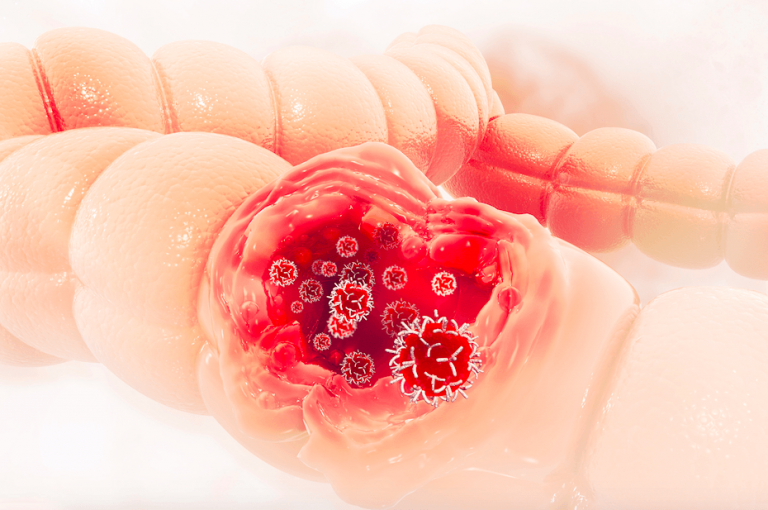
Colorectal cancers (of the colon and rectum) are among the most common cancers seen in both men and women. The incidence is around 6%. Significant advancements have been made in the diagnosis and treatment of colon cancers over the past decade. Thanks to these developments, both the life expectancy of patients has significantly increased, and their quality of life has improved. It should be noted that colorectal cancers are treatable if addressed early. With appropriate and timely treatment, it is possible to completely recover from the disease!
What are the symptoms of colorectal cancers?
The presence of some of the following symptoms should raise suspicion of cancer in the colon.
- Bloody stools
- Symptoms such as weakness, fatigue, and shortness of breath due to anemia
- Change in bowel habits, decrease in stool diameter
- Periods of constipation-diarrhea
- Inability to fully relieve oneself after defecation
- Mucous discharge after defecation
- Abdominal pain, abdominal swelling
- Nausea and vomiting in advanced stages
Who is more frequently affected?
- The frequency of colon cancer varies from country to country. It is more common in developed countries, while the rate is lower in underdeveloped countries. Those living in urban areas have a higher risk of the disease compared to those in rural areas.
- It is directly related to dietary habits. It is more common in those who consume excessive amounts of meat.
- It is more frequently seen in individuals who smoke, consume alcohol, and exercise less.
- The incidence increases with age, rising to 3-4% after the age of 60.
- Polyps; the presence of polyps in the colon is the most significant risk factor for the development of colorectal cancer.
- Family history of cancer; individuals with close relatives such as parents or siblings who have colon cancer have an increased incidence of the disease. Similarly, those with hereditary colon diseases like familial adenomatous polyposis (FAP) also have significantly higher risks.
- Inflammatory bowel diseases; there is a certain risk of colorectal cancer in long-term ulcerative colitis or Crohn’s disease.
- It is known that the incidence of colorectal cancer increases in individuals who have cancers of other organs such as the uterus, ovaries, or breast.
How are colorectal cancers diagnosed?
Diagnosis of colon cancers sometimes requires only a doctor’s examination, and sometimes additional examination with endoscopy (colonoscopy or rectosigmoidoscopy) may be sufficient. However, various laboratory tests or imaging methods such as ultrasound, computed tomography, MRI, and positron emission tomography (PET) are also used to understand the extent of disease spread or for post-treatment follow-up. Approximately half of the patients with colon cancer have already progressed to a certain stage by the time they consult a doctor. This means the disease has not remained confined to the colon but has spread to lymph nodes or distant organs like the liver or lungs. However, if the disease is detected at an early stage, treatment results are extremely good. Therefore, individuals with the aforementioned risk factors, as well as completely healthy individuals with no complaints, should undergo regular check-ups. Screening is performed considering the patient’s risk factors, including stool tests for hidden blood, abdominal CT, sigmoidoscopy, or colonoscopy. Screening for colorectal cancers should begin after the age of 50 for individuals with no risk factors.
Is there a relationship between hemorrhoids and colon cancer?
No, there is none! However, one of the most important symptoms of colorectal cancers is bleeding during defecation. Unfortunately, most patients with bleeding complaints think the cause is hemorrhoids! However, bleeding from the rectum can also be caused by colon cancers. Moreover, even if hemorrhoids are detected during examination in a patient with bleeding complaints, it must be considered that colon cancer may also be present. Therefore, in patients over 50, even in the absence of clinical suspicion, a colonoscopy should be performed before starting hemorrhoid treatment.
What are the treatment methods?
The main treatment method used for colon cancers is surgery. In addition to surgery, chemotherapy and radiotherapy (radiation therapy) are also used as adjunct or complementary treatment methods. The aim of surgical treatment is to remove all cancerous tissue, including lymph nodes that may have a risk of spreading, with clear surgical margins. In cancers outside the last parts of the colon, after removing the tumor, the remaining parts of the colon are joined together. After these surgeries, the patient continues to have bowel movements through the rectum as usual. However, in tumors located in the last 10 cm of the colon, the situation is a bit different. Since nutrition can be somewhat problematic here, sometimes a temporary ileostomy (bringing the small intestine to the outside of the abdomen) may be performed for protective purposes. Once it is deemed that the joined tissues have healed (usually after 2-3 months), a second surgery is performed to close the ileostomy, and the patient continues to have normal bowel movements. However, if the tumor is very low and involves the sphincter muscles that control defecation, the diseased part along with the anus may need to be removed, and the patient will have to perform bowel movements through a colostomy (bringing the colon to the abdomen) for the rest of their life. However, the number of patients who are condemned to colostomy has significantly decreased in light of technological advancements today. After surgery, additional treatments such as chemotherapy or radiotherapy are applied based on the pathological analysis of the removed tissue. In rectal tumors, if pre-operative tests indicate that the tumor is at a very advanced stage, radiotherapy or chemotherapy may also be administered before surgery (neoadjuvant chemo-radiotherapy). This application is particularly valid for tumors in the last 10 cm.
Are laparoscopic methods suitable for treating colorectal cancers?
One of the most significant developments in the treatment of colon tumors is the ability to perform surgeries in this region laparoscopically. Many recent studies have shown that colorectal tumors can be safely treated laparoscopically while adhering to oncological principles. With this method, patients spend a shorter time in the hospital after surgery, experience much less pain, and return to their active lives more quickly.
What to do if the disease metastasizes to other areas?
Colorectal cancers most frequently metastasize to the liver. While chemotherapy can be beneficial in liver metastases, the best results are achieved through surgery. Liver metastases can be removed either during the initial surgery or through a second surgery after a few months of chemotherapy. Approximately 15% of these patients also develop lung metastases. However, it is possible to treat only a very small portion of these patients surgically.