



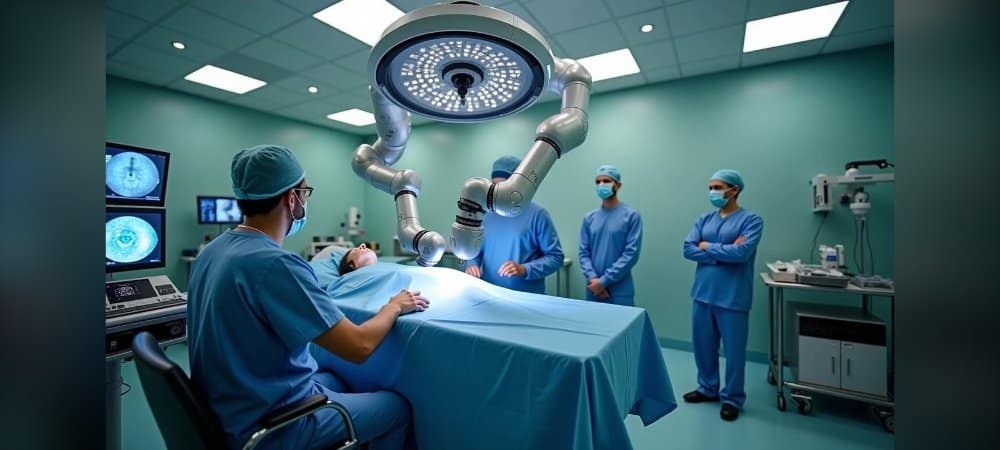
The gallbladder and bile ducts are an important part of your digestive system. Robotic cholecystectomy is a modern and advanced surgical technique used in gallbladder surgeries. Your gallbladder stores bile produced by the liver and helps in the digestion of fats after meals by delivering bile to your small intestine.
The risk of complications from cholecystectomy is very low, and it is a very common surgery. Most patients who undergo cholecystectomy can go home on the same day. Robotic gallbladder surgery, or robotic cholecystectomy, is performed through a few small incisions in your abdomen, during which the surgeon operates from a console located a few steps away from you. Another surgeon present at your head assists the surgeon at the console during the procedure.
What is Robotic Cholecystectomy?
Robotic cholecystectomy is the application of modern surgical technology to gallbladder surgeries. This method offers a more precise and safer alternative compared to traditional open surgery and laparoscopic methods.
Function of the Gallbladder
The gallbladder is a pear-shaped organ located on the underside of the liver. This small organ, located in the upper right part of the abdomen, has a capacity of about 50 ml. Its primary function is to store, concentrate, and release bile produced by the liver into the small intestine when needed.
The gallbladder can make the bile inside it about 10 times more concentrated. Especially when you consume fatty foods, the gallbladder contracts and empties its contents into the small intestine. This helps bile to digest and absorb fats. Within about half an hour after a meal, the gallbladder delivers more than half of its contents to the intestine and refills within an hour.
When is Cholecystectomy Necessary?
Cholecystectomy, or surgical removal of the gallbladder, may be necessary in various situations. The most common reason is gallstones. About one in ten people may have gallstones, but not all of them cause symptoms, and asymptomatic stones do not require treatment.
Cholecystectomy may be considered in the following situations:
- Severe abdominal pain caused by gallstones (especially in the upper right quadrant)
- Cholecystitis (inflammation of the gallbladder)
- Gallbladder dysfunction
- Bile duct obstructions
- Gallstone pancreatitis
Surgical intervention is recommended when other treatment methods, such as medication or dietary changes, do not provide relief. Cholecystectomy is a common surgery with a low risk of complications, and most patients can be discharged on the same day.
Definition of Robotic Surgery
Robotic surgery is an advanced technology where the surgeon performs the operation through a console instead of being next to the patient. In robotic cholecystectomy, the surgeon manages the surgery from a console a few steps away from the patient while another surgeon present at the patient’s head assists throughout the procedure.
This method is performed through several small incisions made in the patient’s abdomen. The robotic system provides magnified and clear images using a high-resolution 3D camera, allowing the surgeon to operate with greater precision. Robotic instruments move more precisely than the human hand and operate without tremors.
Technologies like the Da Vinci Robotic Surgical System enable surgeons to perform the surgery more easily, smoothly, and safely, while providing patients with a more comfortable, less painful surgery and a quicker return to daily life.
In Which Situations is Advanced Biliary Surgery Applied?
Advanced biliary surgery is applied in serious problems arising from bile ducts for various reasons. The precision and visual advantages offered by robotic surgery make these complex operations safer. So, in which situations are these advanced surgical techniques needed?
Bile Duct Obstructions
Narrowing or complete closure of the bile ducts for any reason prevents bile from passing into the intestines and leads to various problems in the digestive system. The most common symptoms include:
- Yellowing of the skin and eyes (jaundice)
- Abdominal pain (especially in the upper right area)
- Dark urine and pale stools
- Itching and fever
The most common cause is bile duct stones. However, congenital anomalies, sclerosing cholangitis, chronic pancreatitis, and complications from previous gallbladder surgeries can also cause obstructions.
Ultrasound is used as the initial diagnostic tool. However, when imaging is insufficient, computed tomography (CT) or magnetic resonance imaging (MRI) is preferred. MR cholangiopancreatography (MRCP) is superior to other methods in accurately showing the bile ducts and revealing the level of obstruction.
Robotic surgery allows for more precise intervention, especially when surgical removal of the obstruction is necessary.
Bile Duct Tumors
Bile duct cancer (cholangiocarcinoma) is a type of cancer that occurs in the bile ducts and often does not show symptoms in the early stages. It mostly originates from cells called cholangiocytes. When the disease is not diagnosed early, it can be fatal.
Bile duct cancers are classified into four based on their locations:
- Those located within the liver (intrahepatic)
- Those located outside the liver and near the liver (hilar)
- Gallbladder cancer
- Those located outside the liver and far from the liver (distal)
Cancer stages are classified according to the spread of the tumor. Those detected in the early stage can be treated surgically, while those detected in the advanced stage usually receive palliative care.
Robotic surgery provides better results by offering precise procedures, especially in cases where part of the liver needs to be removed or the bile duct needs to be reconstructed.
Biliary Pancreatitis and Complications
Bile stones are the most common cause of acute pancreatitis (inflammation of the pancreas) worldwide. Bile stones can block the bile ducts, leading to the development of pancreatitis. This condition is a potentially life-threatening complication.
The outcome of acute biliary pancreatitis depends on two factors: organ failure and pancreatic necrosis. Approximately half of the deaths in patients with acute pancreatitis occur within the first one or two weeks and are mostly due to multiple organ dysfunction syndrome.
Laboratory and radiological examinations are critically important for diagnosis. Elevated serum amylase and/or lipase levels help in identifying pancreatic inflammation.
In patients with acute biliary pancreatitis, endoscopic retrograde cholangiopancreatography (ERCP) is used to clear the bile duct before surgery, followed by laparoscopic cholecystectomy as the preferred treatment method. Robotic cholecystectomy provides a more precise and controlled surgical option during this process.
Robotic Surgical Methods and Application Areas
Today, technological advancements in the surgical field have brought a new dimension to the treatment of gallbladder and bile duct disorders. Robotic surgery offers more precise and controlled intervention compared to traditional methods.
Robotic Cholecystectomy
Robotic gallbladder surgery is performed through a few small incisions in your abdomen. These small incisions are a significant factor that accelerates your return to daily activities after surgery. During the procedure, the surgeon manages the surgery from a console a few steps away from you, while a second surgeon present at your head assists their colleague at the console.
The surgery is performed as follows:
- A 12 mm camera trocar is placed 1 cm above the umbilicus
- 8 mm trocars for robotic arms are placed in the right and left upper quadrants
- A 10 mm auxiliary port trocar is positioned on the right lateral side
The most important feature of the robotic system is that the surgeon’s movements are filtered and transferred to interactive robotic arms. This provides greater freedom of movement than the human wrist can achieve. This allows for maneuvers that the human hand cannot perform, especially when working in tight spaces.
The total procedure time is approximately 138 minutes. The average hospital stay for patients is about 1.6 days. The ability to perform fine dissections and the perception of depth with 3D imaging lead to low complication rates.
Robotic Bile Duct Reconstruction
Robotic surgical techniques provide significant advantages in the treatment of obstructions or cysts in the bile ducts. Especially in complex procedures such as choledochal cyst and bile duct reconstruction, the precision provided by the robotic system is vital.
Robotic bile duct reconstruction allows for easier dissection of the Calot triangle compared to conventional laparoscopy. Thanks to the instruments that can rotate 540 degrees, safe surgery is possible even in very tight spaces.
While robotic surgical arms filter out hand tremors, they allow for stable and precise movements during surgery. This provides a significant advantage, especially when working in delicate structures like the bile ducts.
Combined Robotic Procedures with ERCP
In patients with acute biliary pancreatitis, the bile duct can be cleared with endoscopic retrograde cholangiopancreatography (ERCP) before surgery, followed by robotic cholecystectomy. This combined approach yields effective results, especially in complex cases.
Robotic surgical systems offer high-resolution, 3D visualization of the surgical area. This advanced view allows for clearer visibility of the fine structures in the bile ducts, making robotic interventions after ERCP safer.
The precision of robotic surgery and endoscopic treatments reduce blood loss during the procedure. This helps lower blood transfusion rates and the risk of complications.
Many centers consider robotic cholecystectomy as an ideal starting surgery in general surgical interventions. The reason for this is that it is technically easy and repeatable. However, more complex procedures such as bile duct reconstruction can also be successfully performed with robotic surgery.
What are the Advantages of Robotic Surgery?
Robotic cholecystectomy and advanced biliary surgery offer many superior features compared to traditional methods. This modern surgical approach provides significant advantages for both patients and surgeons.
Smaller Incisions and Less Pain
In robotic gallbladder surgeries, only 6 holes of 8-15 millimeters each are made. Unlike the large incisions used in open surgery, these small holes provide significant benefits in the postoperative period. Patients experience less pain after surgery and the use of painkillers decreases. Less pain after surgery allows for a quicker return to daily life. Additionally, small incisions leave less scarring during the healing process, providing a cosmetic advantage.
Rapid Recovery Process
Patients are generally discharged on the same day or within 24 hours after robotic cholecystectomy. Due to minimal pain and reduced tissue damage, the return to daily activities is shortened. Most patients feel 70-80% better within a week and can return to desk jobs about a week later. The complete recovery time averages 2-3 weeks. This rapid recovery process offers significant advantages, especially for those with an active lifestyle.
Lower Risk of Complications
Robotic cholecystectomy significantly reduces the risk of complications compared to open surgery. Especially due to the precision of robotic surgery, the risk of damaging surrounding tissues is minimized. The likelihood of bleeding during surgery decreases, and the risk of infection is lower. Additionally, risks such as incision site hernias and opening of incision site stitches, which can be seen in open surgeries, are eliminated.
3D Imaging and Precision
Robotic surgical systems provide surgeons with three-dimensional high-resolution images. This advanced imaging system magnifies the surgical area 10-12 times, allowing even the finest details to be clearly seen. Thanks to real depth perception, the surgeon can see the gallbladder and surrounding delicate structures better and work safely. Real-time images are obtained with fluorescent imaging capability. These features provide significant advantages, especially in complex anatomical areas like the bile ducts.
Ergonomic Advantages for the Surgeon
During robotic cholecystectomy, the surgeon performs the procedure while sitting at a console in the operating room. This position reduces physical fatigue during long surgeries and helps the surgeon maintain focus for longer periods. The robotic arms’ ability to rotate 540 degrees provides much greater maneuverability than the human hand can achieve. Additionally, the robotic system filters out hand tremors, thereby reducing the risk of errors during surgery.
Preoperative and Postoperative Process
The preoperative and postoperative process of robotic cholecystectomy is as important for a successful surgery as the surgical technique itself. Proper management of this period accelerates your recovery and minimizes potential complications.
Preoperative Assessment
Before robotic cholecystectomy, your doctor will conduct a detailed assessment. Initially, blood tests and imaging scans will be requested. Your medical history will also be reviewed. The anesthesiologist will examine you before the surgery and assess any risk factors. Conditions such as heart diseases, severe COPD, craniovertebral anomalies, or increased intracranial pressure can pose risks for surgery.
Pneumoperitoneum (insufflation of gas into the abdomen) and deep Trendelenburg position may be risky for some patients. Therefore, preoperative assessment is critical for your safety.
Surgical Preparation and Anesthesia
You will be required to fast for 8-12 hours before the surgery. On the day of the surgery, you should arrive at the hospital a few hours before the scheduled time. You will be taken to the operating room with the assistance of a nurse. An intravenous line will be established, and sedative medications will be administered.
The anesthesiologist will administer general anesthesia using medications such as fentanyl, propofol, and rocuronium. Then, a tube will be placed in your trachea. Antibiotics will be given to prevent infection during the surgery. The abdomen will be inflated with carbon dioxide gas, and the robotic surgeon will perform the surgery from the console.
Postoperative Follow-up and Care
After robotic cholecystectomy, you will wake up in the recovery room. Your vital signs will be closely monitored. Most patients experience minimal pain and are relieved with painkillers. Generally, you will be allowed to eat and walk about 4-5 hours after the surgery.
Discomfort in the first 24 hours after minimally invasive surgeries resembles flu-like symptoms. Most patients are discharged on the same day, while some may stay in the hospital for one night. You can start light physical activities (such as walking) at the end of the first week.
Diet and Lifestyle Recommendations
The dietary regimen progresses in three stages:
- First 24 hours: Only clear liquids (water, clear tea, broth)
- First week: Soft and liquid foods, 5-6 small meals a day
- First 2-3 months: Low-fat diet (30-40 grams of fat daily)
Prefer foods containing soluble fiber. Consume vegetables boiled or steamed. Avoid fatty foods, spicy foods, fried foods, chocolate, and alcohol. Drink at least 2-2.5 liters of water daily. Wait at least 2.5-3 hours between meals and chew each bite thoroughly.
In Summary, Robotic Cholecystectomy and Advanced Biliary Surgery
In conclusion, robotic cholecystectomy and advanced biliary surgery offer many significant advantages compared to traditional methods. Firstly, due to small incisions, postoperative pain is minimized, while the recovery process is significantly accelerated. Additionally, 3D imaging technology and the precision of robotic arms allow surgeons to work safely even in the most complex cases.
Patients are generally discharged on the same day or the next day after robotic surgery. Thus, you can return to your normal life more quickly. However, it is crucial to adhere to the diet and lifestyle changes recommended by your doctor for complete recovery.
Robotic surgery is one of the most innovative solutions offered by modern medicine in the treatment of gallbladder and bile duct disorders. With less risk of complications and surgical comfort, robotic cholecystectomy has become an ideal option for many patients.
Undoubtedly, as with any surgical procedure, the correct patient selection and an experienced surgical team are the keys to success in robotic cholecystectomy. Therefore, it is very important to conduct a detailed assessment with your doctor before the operation and to ask your questions clearly.
Continuous advancements in robotic surgical technology promise even more impressive results in the future of gallbladder and bile duct surgery. Therefore, this modern surgical approach will continue to be an exciting treatment alternative for both patients and surgeons.
Frequently Asked Questions
How long does recovery take after robotic gallbladder surgery?
Most patients can walk and be discharged from the hospital on the same day. Returning to work is usually possible within a week, and full recovery takes two weeks. This duration is similar to the recovery time in manual laparoscopic surgery.
Does robotic gallbladder surgery leave a scar?
Most robotic surgeries leave three one-inch scars on the abdomen. In single-site robotic surgeries, only one scar remains near the navel. Surgical scars fade significantly over time.
Can you live without a gallbladder?
Yes, it is possible to live a normal and healthy life without a gallbladder. Some people may need to adjust their diet initially, but long-term effects are generally minimal.
What side effects can be seen after surgery?
Some individuals may experience mild side effects such as diarrhea or bloating, but these generally improve over time.
Fill Out the Form for Detailed Information and Contact!
Is robotic cholecystectomy painful?
You will not feel pain during the surgery, which is performed under anesthesia. Due to the small incisions, postoperative pain is less than in open surgery. Most people feel minimal pain after a week, and after a two-week recovery period, they are completely pain-free.
Robotic cholecystectomy offers a modern technique in gallbladder surgeries. This method provides less pain, rapid recovery, and a low risk of complications.
[/vc_column_text][/vc_column][/vc_row]