



Umbilical hernia, also known as belly button hernia, is a common condition seen at birth in approximately 20% of babies. However, umbilical hernias can also occur in adults. This condition involves the protrusion of intestines or fatty tissues through the area near the belly button.
Timely intervention significantly increases the success rate in the treatment of umbilical hernias. Today, robotic surgery has become an effective method used in the treatment of umbilical hernias. This method offers significant advantages over traditional methods with its technology that magnifies the surgical field 10-15 times and provides three-dimensional imaging.
In this article, we will explain what robotic umbilical hernia surgery is, how it is performed, and the advantages it offers in simple terms. You will also learn that in hernia treatments using the mesh technique, the recurrence rate of the hernia can be reduced to as low as 1%. Thanks to robotic surgery, your postoperative pain will also be significantly less compared to open surgery.
What is Umbilical Hernia?
Umbilical hernia, which occurs due to the herniation of intra-abdominal organs and tissues around the belly button, is a commonly seen condition in society. Herniations that occur from the belly button area, 3 cm above and below the navel, fall into the category of umbilical hernia. Hernias can vary in size from that of a hazelnut to that of an orange and can occur in both babies and adults.
Simply put, umbilical hernia is the problem of intestines or fatty tissues protruding through an area near the belly button. This condition occurs as a result of the weakening of the muscles and connective tissues in the abdominal wall.
Symptoms of Umbilical Hernia
The most prominent sign of umbilical hernia is the swelling seen around the belly button. This swelling becomes particularly noticeable when:
- Coughing or sneezing
- Crying (in babies)
- Standing
- Straining abdominal muscles
While this condition is generally painless in babies, it may present different symptoms in adults. In adults, umbilical hernia can cause pain and discomfort in the area. Large hernias can be clearly seen from the outside, while small hernias may only be noticeable during movement.
However, in the case of incarceration of the hernia, severe pain, nausea, vomiting, and inability to defecate may occur, which requires emergency intervention. Therefore, it is crucial to seek expert opinion for any abnormal structure noticed around the belly button.
Causes of Umbilical Hernia
In babies, umbilical hernia results from the incomplete closure of the canal in the belly button after the umbilical cord falls off after birth. The area of the umbilical cord that connects the baby to the mother in the womb closes after birth, and this closure process continues until the baby is 2 years old.
In adults, the primary factor in the formation of umbilical hernia is the increase in intra-abdominal pressure. Factors that increase this pressure include:
- Obesity and overweight
- Pregnancy (especially multiple pregnancies)
- Fluid accumulation in the abdomen (ascites)
- Heavy lifting
- Chronic cough
- Constipation
- Having undergone abdominal surgery
Umbilical hernias are most commonly seen in babies, premature births, and those born with low birth weight, while they are more frequently observed in women due to pregnancy compared to men.
Diagnosis of Umbilical Hernia
In most cases, a physical examination is sufficient for diagnosing umbilical hernia. Any swelling in the area where the belly button should be is a sufficient finding to suspect a hernia. During the examination, the doctor checks the nature of the swelling and whether the hernia can be pushed back into the abdominal cavity.
However, in some cases, especially in overweight patients or small hernias, imaging methods may be used:
- Ultrasound of superficial tissues: Used to determine the size of the defect and to understand whether any tissue has entered the defect.
- Computed tomography: Preferred when complications are suspected.
- MRI: Helps determine the exact location and size of the hernia.
These diagnostic methods are vital for identifying patients suitable for robotic umbilical hernia surgery. Accurate diagnosis plays a critical role in planning the robotic surgical treatment to be applied in subsequent stages.
What is Robotic Umbilical Hernia Surgery?
Robotic umbilical hernia surgery is an innovative solution offered by modern medical technology for the treatment of umbilical hernia. This surgical method is a minimally invasive approach that repairs the intestines or fatty tissue protruding through the belly button opening in the abdominal muscles. The robotic system offers many advantages over traditional open surgery and laparoscopic methods.
Robotic Surgical Technology
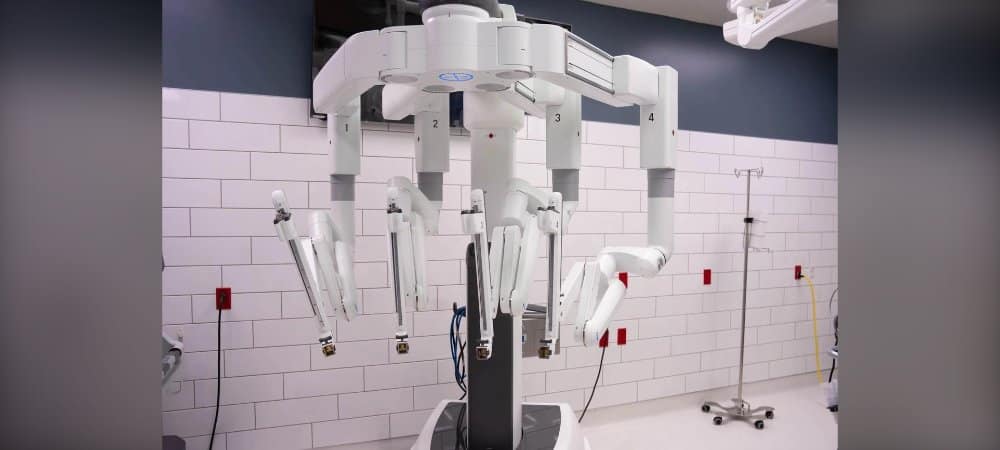
In robotic umbilical hernia surgery, the surgeon sits at a console and views the surgical field in three-dimensional (3D) and magnified form. This imaging system provides a 10-15 times enlarged and depth-perceiving view of the surgical area. The surgeon’s hand movements are transmitted to the patient through robotic arms. These arms execute the commands given by the surgeon with tremor-free precision, allowing for millimeter-level accuracy.
The robotic system allows the surgeon to move more flexibly than the human wrist through special instruments placed through small incisions made in the abdomen. This technology provides surgeons with a range of motion of up to 720 degrees, surpassing the limits of laparoscopy. Thus, umbilical hernia repair can be performed more precisely and effectively.
In fact, the robot does not perform the surgery on its own; it works as an extension of the surgeon’s hand. All hand movements made by the surgeon at the console are transmitted to the surgical area more precisely and sharply in real-time.
Differences from Other Treatment Methods
Robotic umbilical hernia surgery differs significantly from other treatment methods. Compared to open surgery, robotic surgery involves much smaller incisions. In open surgery, the surgeon makes a larger incision in the patient’s belly area to repair the hernia. The size of this incision slows down the patient’s recovery.
The fundamental difference between laparoscopic surgery and robotic surgery lies in the technological superiority of robotic surgery. In laparoscopic surgery, the surgeon performs the operation standing up with straight instruments that have limited mobility, using a two-dimensional (2D) view. In contrast, in robotic surgery, the surgeon controls the robotic arms from a seated console and views the surgical field in high-resolution three-dimensional form.
These technological advantages provide significant benefits, especially in the repair of umbilical hernias. For example, the secure stitching of the mesh to the abdominal wall can be performed more easily and effectively thanks to the maneuverability of the robotic arms.
Patients Suitable for Robotic Surgery
Robotic umbilical hernia surgery can be performed on almost all patients who can safely receive general anesthesia and are suitable for laparoscopic surgery. It is particularly preferred in the following situations:
- Large and complex umbilical hernias
- Recurrent (recurrence) hernias
- Umbilical hernias in obese patients
- Patients seeking the advantages of minimally invasive surgery
However, not every patient may be suitable for robotic surgery. Patients who may not be preferred for robotic umbilical hernia surgery include those with severe heart and lung failure, uncontrolled hypertension, patients with advanced-stage tumors, and those in emergency situations.
In conclusion, robotic umbilical hernia surgery is a modern approach that provides surgeons with superior vision and maneuverability in the treatment of umbilical hernia using technology. With the right patient selection, it offers a more comfortable treatment experience compared to traditional methods.
How is Robotic Umbilical Hernia Surgery Performed?
Advancements in today’s medical technology highlight robotic surgical options in the treatment of umbilical hernias. So how is this modern surgery performed? Let’s examine the stages of robotic umbilical hernia surgery.
Preoperative Preparation
Preoperative preparation for robotic umbilical hernia surgery is crucial for the success of the surgical procedure. First, a detailed assessment of the patient is conducted, and a final consultation with the surgeon is held. In this meeting, the informed consent form is checked, and the area to be operated on is marked on the patient’s skin with a waterproof pen.
The patient is positioned on the operating table lying on their back. Generally, one arm of the patient is kept outside for positioning the robot. The face and ventilation tube are protected by a metal frame mounted on the operating table. The surgery is performed under general anesthesia, and muscle relaxation is maintained at an optimal level until the robotic system is removed.
During the preparation process, the surgeon plans the umbilical hernia repair and decides how to adapt the robotic surgical technique to the patient’s characteristics.
Surgical Process
In robotic umbilical hernia surgery, the surgeon sits at a console a few steps away from the patient. Guided by the 3D high-resolution images provided by the robot’s special camera, the surgery is performed. The procedure is carried out through several small incisions made in the patient. The advantage of these small incisions is that they significantly facilitate the patient’s recovery process.
In most cases, a 10° Trendelenburg position (head-down position) is sufficient; however, in severely obese patients or those with inguinal-scrotal hernias, a 15° Trendelenburg position may be beneficial. The surgeon’s hand movements at the console are transmitted to the surgical area more precisely and sharply in real-time.
The surgical process begins with the incision of the peritoneum (abdominal lining). The incision is made in a wide, wing-like shape starting from the anterior superior iliac spine and extending laterally towards the midline. This approach provides a sufficiently large area for placing a large mesh. Following this, the hernia openings are prepared and visualized.
Mesh Technique Used in Surgery
The use of mesh in the treatment of umbilical hernia is currently the gold standard. The purpose of the mesh is to strengthen the weak area in the abdominal wall. In robotic surgery, large pore meshes that are at least 10×15 cm in size and visible on MRI are typically used. The mesh is placed to cover the hernia area by approximately 5 cm.
The positioning of the mesh starts from the Retzius space in the pubic symphysis area. The lower edge of the mesh is laterally and dorsocranially located in the Bogros space. Depending on the findings, a larger mesh (for example, 12×17 cm) may be used. In bilateral hernia repairs, the meshes overlap in the middle by 2-3 cm.
Modern meshes are biocompatible materials that can be safely used for a lifetime. With a properly sized and appropriately placed mesh, the likelihood of recurrence in the same area is significantly low (below 1-5%).
Postoperative Recovery Process
The recovery process after robotic umbilical hernia surgery is significantly faster and more comfortable compared to open surgery. The hospital stay is generally short. Patients can usually be discharged the day after surgeries for inguinal or umbilical hernias. For more complex abdominal wall hernias, this period may extend to 2-3 days.
Postoperative pain is minimal and is usually easily controlled with simple pain relievers. Patients typically:
- Can start light walks the day after surgery
- Can return to daily activities such as driving within a week
- Should avoid strenuous exercises and heavy lifting (more than about 5-10 kg) that increase intra-abdominal pressure for 4-6 weeks
It is important to keep the wound clean during the recovery process, perform regular dressings, and attend doctor check-ups regularly. Complete recovery occurs in most patients within 4-6 weeks. Avoiding unnecessary strain on the abdominal area forms the basis of the recovery process.
Advantages of Robotic Umbilical Hernia Surgery
Robotic surgery stands out as a modern method that offers various benefits in the treatment of umbilical hernia. Compared to traditional open surgery and laparoscopic techniques, it has many advantages that enhance patient comfort and improve surgical outcomes.
Less Pain and Faster Recovery
In robotic umbilical hernia surgery, only a few small incisions are used. These small incisions significantly reduce postoperative pain compared to the large incisions in open surgery. As a result, patients require fewer painkillers and return to their daily lives more quickly.
Thanks to the small incisions made in the abdominal area, the likelihood of tissue damage is much lower. This also ensures a more comfortable recovery period. Additionally, robotic surgery shortens the length of hospital stay compared to open surgeries. Many patients can be discharged on the same day or the day after robotic umbilical hernia surgery.
The rapid recovery process allows patients to return to their daily activities and work early. This situation provides a significant advantage, especially for those leading an active lifestyle or wanting minimal disruption in their work life.
Superior Image Quality and Precision
Robotic systems provide a 10-15 times magnified, high-resolution, and most importantly, three-dimensional (3D) view of the surgical field. This depth perception allows the surgeon to see delicate anatomical structures such as nerves and blood vessels much more clearly.
In robotic umbilical hernia surgery, the surgeon works under high-resolution 3D image guidance from the console. This technology provides much better image quality compared to laparoscopic surgery. Thus, all details of the hernia area can be clearly seen during the surgery.
The robotic arms that mimic the surgeon’s hand movements can rotate at angles that the human wrist cannot (540 degrees). As a result, it becomes much easier and more precise to suture and secure the mesh to the abdominal wall, especially in tight spaces. Moreover, the robotic system completely filters out the surgeon’s hand tremors, which increases precision.
Lower Risk of Complications
The use of clearer images and precise surgical techniques in robotic umbilical hernia surgery reduces the risk of damaging surrounding tissues and blood vessels during the operation. The risk of wound site infection is also minimal due to the small incisions.
Robot-assisted surgery minimizes recovery time and complication risk. In particular:
- The risk of wound site infection decreases
- Blood loss is minimized
- Overall complication rates decrease
In cases of very large hernias or those requiring abdominal wall reconstruction, the ability of the robotic system to suture precisely minimizes complication rates. Additionally, with the help of the robot, hernia openings can be closed more easily with sutures.
Aesthetic Results and Return to Daily Life
The small incisions used in robotic umbilical hernia surgery provide a better cosmetic appearance. Once healed, these incisions become nearly invisible and yield aesthetically satisfying results for patients.
The minimal pain after surgery and the rapid recovery allow patients to return to their normal activities more quickly. In fact, many patients can start their daily activities, such as driving, a week after surgery.
This rapid recovery provided by robotic surgery also has a positive psychological effect on patients. Being able to return to daily life quickly increases the quality of life and satisfaction of patients. This early return to work is of great importance, especially for working individuals.
Robotic technology transmits the surgeon’s hand movements to the surgical area more precisely and sharply. This allows for the successful repair of even complex abdominal wall hernias that are difficult to manage with traditional methods.
Frequently Asked Questions
How long does robotic umbilical hernia surgery take?
Robotic umbilical hernia surgery typically takes between 30 minutes and 2 hours. The duration varies depending on the size and complexity of the hernia. A standard umbilical hernia surgery is completed in an average of 30-60 minutes in most patients. Simple procedures can be completed in as little as 30 minutes, while complex repairs may take longer. The size, location of the hernia, and the patient’s overall health status are the main factors affecting the duration.
Will there be pain after surgery?
Minimal pain is felt after robotic umbilical hernia surgery. The pain is significantly less compared to open surgery. Most patients report feeling only mild discomfort rather than severe pain. Pain is usually easily controlled with simple pain relievers. There may be mild pain and tenderness in the area during the first few days, but this is temporary. Adequate rest and following the doctor’s recommendations during the postoperative period help keep pain to a minimum.
Does the hernia recur?
When the correct technique and appropriate mesh are used in robotic hernia surgery, the recurrence rate is quite low. The use of mesh forms the basis of hernia repair and reduces the risk of recurrence to below 1%. Modern meshes are biocompatible and can be safely used for a lifetime. With a properly sized and appropriately placed mesh, the likelihood of recurrence in the same area is below 1-5%. However, factors such as smoking, excessive weight, and heavy lifting can increase the risk of recurrence.
What is the cost of the surgery?
It is not possible to provide a single fixed price for robotic umbilical hernia surgery. The cost varies depending on the patient’s condition, the structure of the hernia, and the chosen surgical techniques. Robotic surgery is the surgical method that most affects the cost due to the advanced technology used. However, considering the long-term advantages and the reduced risk of complications, it is an option worth evaluating. The hospital’s equipment, the surgeon’s experience, and the quality of the materials to be used also affect the price.
Which patients are not suitable for surgery?
Robotic umbilical hernia surgery is generally not performed on patients with severe heart and lung failure, those with uncontrolled hypertension, patients with advanced-stage tumors, and those in emergency situations. It may also not be suitable for patients at risk of receiving general anesthesia. Since each patient’s situation is different, the decision for surgery should be made by the physician after a detailed evaluation.
In Summary, Robotic Umbilical Hernia Surgery
Robotic surgery in the treatment of umbilical hernia offers many more advantages compared to traditional methods. First of all, thanks to the small incisions, your postoperative pain is significantly reduced, and you can return to your daily life more quickly. Additionally, the three-dimensional high-resolution imaging system used in robotic surgery provides your surgeon with clearer vision during the operation.
Robotic umbilical hernia surgery is also superior in terms of aesthetics. Once healed, the small incisions become nearly invisible. Thus, you will not have concerns about unsightly appearance after surgery.
In robotic umbilical hernia surgeries performed with the mesh technique, the risk of recurrence is only around 1%. This rate is significantly lower compared to other methods. Therefore, your chances of long-term success increase.
Considering all these factors, robotic surgery emerges as a safe and effective option in the treatment of umbilical hernia. Your hospital stay is shorter, your postoperative pain is reduced, and your recovery process is accelerated. As a result, if you have umbilical hernia complaints, it would be beneficial to discuss the robotic surgery option with your doctor.
Robotic umbilical hernia surgery is a modern treatment method performed with minimally invasive techniques that provide rapid recovery. Learn how the surgery is performed and the advantages it offers in this article.