



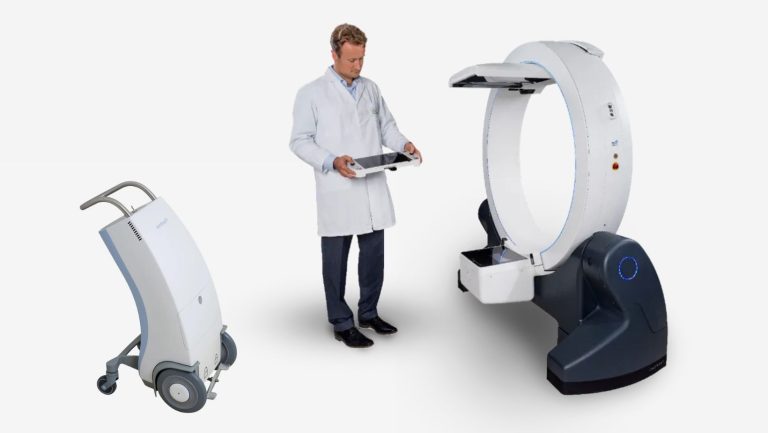
What is Brachytherapy?
Brachytherapy is a form of radiation therapy used in the treatment of certain types of cancer. It involves placing a radiation source inside or very close to the tumor. The radiation source allows for the release of a predetermined dose of radiation. The emitted radiation helps to destroy cancer cells and damage their genetic structure. Cancer cells with damaged genetic structures cannot grow or multiply. Brachytherapy can also be referred to as “internal radiation.” Internal radiation is a localized treatment procedure that functions on a specific area of the body. Brachytherapy, which helps to shrink cancerous tumors, supports the preservation of surrounding healthy tissue.
It is effective in controlling certain cancers such as head and neck, breast, uterus, cervix, prostate, and eye cancers. Brachytherapy can be performed alone or in conjunction with other treatment methods. The treatment duration with brachytherapy can be shorter. This is due to the ability to safely deliver larger doses of radiation to the tissue at once. Depending on the duration of the radioactive sources’ stay in the area, low or high dose rate techniques and permanent or temporary implants can be used. The placement of implants in the body is generally painless and can be done under sedation if necessary. However, the use of temporary or permanent, low dose or high dose implants is determined based on the type of cancer, its stage, and the treatment plan.
In Which Cancer Diseases is Brachytherapy Used?
Brachytherapy frequently involves the treatment of cancer types. It can be effective mainly in cancers that have not metastasized (spread). It is the most effective method for well-defined tumors located in specific areas of the body. The types of cancer commonly treated with internal radiation therapy include:
- Breast cancer,
- Brain cancer,
- Uterine cancer,
- Cervical cancer,
- Gallbladder cancer,
- Head and neck cancers,
- Eye cancer,
- Lung cancer,
- Prostate cancer,
- Skin cancer,
- Rectal cancer,
- Esophageal cancer,
- Vaginal cancer,
- Vulvar cancer.
Additionally, brachytherapy may be preferred in the treatment of soft tissue sarcomas. The radiation source placed in these areas focuses on the tumor in the region and delivers the radiation dose in a shorter time compared to external radiation. Brachytherapy can be applied to eliminate remaining cancer cells after the use of other cancer treatment methods. Internal radiation can also be used in conjunction with external radiation.
Brachytherapy in Prostate Cancers
Brachytherapy applications are a frequently used procedure in the treatment of prostate cancer. It can be a standalone treatment method for low and intermediate-risk prostate cancers. However, it can be used in conjunction with external radiation in high-risk prostate cancers. In some cases, brachytherapy may be preferred to eliminate recurrent cancers. Brachytherapy is not applied in prostate cancer patients with distant metastases, significant prostate defects, absence of the rectum, and potential surgical risks. Additionally, brachytherapy may not be applied in the presence of inflammatory bowel disease or if the IPSS score is greater than 20.
Radioactive sources are placed in the prostate with the help of transrectal ultrasound. This method allows for the application of low and high dose rate brachytherapy. Low dose rate brachytherapy can be permanently left in the prostate. The radiation rate of the source is released gradually over a few months. High dose rate brachytherapy remains in the prostate for about 15-40 minutes and delivers a high dose of radiation. The source is then removed, and no radiation remains in the body. Depending on the treatment plan, internal radiation may lead to toxicity symptoms such as urethritis, erectile dysfunction, prolonged use of a permanent catheter, and inability to urinate. Less frequently, rectal fistula and urinary incontinence may occur.
Brachytherapy in Lung Cancer
Brachytherapy is used in lung cancers in selected cases where the tumor is located in the main bronchi and causes airway obstruction. Unlike bronchial tumors, lung tumors can usually be treated with external radiation therapy. Healthy tissues in this area, such as the esophagus, heart, and spinal cord, are protected from exposure to brachytherapy radiation. High dose rate brachytherapy may be preferred for the local treatment of inoperable tracheobronchial tumors. For these patients, HDR brachytherapy can be a good option for alleviating symptoms and minimizing the risk of complications. The device placed inside or near the tumor delivers a high dose of radiation. The application of high dose radiation optimizes dose distribution and helps shorten the treatment duration.
The application of brachytherapy in these cases is determined by considering the location and extent of the obstruction, and it is monitored with computed tomography, endobronchial ultrasound, and chest X-ray. Clinical symptoms may include cough, pain, difficulty swallowing, and hemoptysis.
How is Brachytherapy Applied in Gynecological Tumors?
Gynecological tumors are common cases where brachytherapy is used. In the treatment of cervical or uterine cancer, brachytherapy is typically administered alongside external radiotherapy. However, brachytherapy can also be applied alone for early-stage and inoperable patients. High dose rate radiation is generally used, and various applicators may be utilized. Computed tomography is used in the planning and execution of the treatment. However, MRI may be preferred for monitoring soft tissues. Possible complications may include vaginal dryness, urethritis, urinary tract infections, urinary incontinence, and uterine perforation.
Brachytherapy plays a significant role in the administration of adjuvant (protective) treatment in endometrial or uterine cancer. In uterine cancer, a cylinder applicator is typically used and can be adjusted according to the required length. Large diameter cylinder devices may be used to reduce air gaps and the dose exposed to the vaginal wall. It is applied with computed tomography images. Treatment complications may include vaginal stenosis, vaginal dryness, and shortening.
Vaginal or vagina tumors are rarely seen among cancer types. In vaginal tumors, which constitute a small portion of gynecological tumors, both HDR and LDR brachytherapy can be used for treatment. The mucosa of the vagina is resistant to high dose rate radiation. In some cases, brachytherapy may be preferred as an alternative to other treatment methods such as surgery. Additionally, palliative brachytherapy may be recommended in patients diagnosed with cancer who have distant metastases.
Who Can Receive Gynecological Brachytherapy, What Are Its Advantages?
Gynecological brachytherapy can be applied in the treatment of gynecological tumors. Gynecological cancers include uterine (endometrial) cancer, cervical (cervix) cancer, and vaginal (vagina) cancer. Gynecological brachytherapy can be applied alone in the early stages of cancer, in conjunction with external radiotherapy, or as adjuvant therapy to surgery. The greatest advantage of gynecological brachytherapy is that while high doses of radiation are applied to the tumor, surrounding healthy tissues are preserved. While surrounding tissues are protected, an appropriate dose distribution can be achieved to the target tumor.
Brachytherapy is critically important in the management of gynecological cancers. In uterine cancer, brachytherapy can be used as a protective treatment alone in patients who have undergone surgery and have high-risk factors. In more advanced stage cancers, it is combined with external radiotherapy. In cervical cancer, it has curative effects in advanced stage patients. In cases of vaginal cancer, brachytherapy may be preferred for recurrent or newly diagnosed cancers. In vulvar cancer, it can be used as adjuvant treatment in early stages and as chemo-radiotherapy in advanced stages. In local and non-metastatic cancer cases, brachytherapy is often recommended for shortening the overall treatment duration and eliminating the target tissue.
Who Performs Brachytherapy?
Brachytherapy is a procedure that constitutes radiation therapy. Therefore, doctors specialized in radiation therapy, serving as radiation oncologists, are involved in the procedure. All these services are provided within integrated oncology. Success in brachytherapy treatments is achieved with the importance given to patient privacy and the experience of specialized doctors.
During brachytherapy, your doctor performs the placement of the radioactive material into a cavity in the body or directly into the tumor. This procedure uses needles and catheters. It is performed under anesthesia by healthcare personnel specialized in radiation oncology. In the case of temporary implants, you may need to stay in the hospital for a while. During this process, visitor restrictions may be applied. Visits from pregnant women and children may not be appropriate. After the placement of permanent implants, hospitalization may not be required. When the treatment plan is completed, the implants and catheters are removed from the body, and after removal, your body stops emitting radiation.
What Will You Feel During Brachytherapy?
The placement of radioactive material in the body depends on many factors. Brachytherapy treatment is applied based on the location of the cancer, its size, overall health status, and treatment goals. Brachytherapy treatment is primarily administered in two ways:
- Intracavitary brachytherapy: This method involves placing radioactive material into body cavities. The cavity where the material is placed must be near the tumor. It can be placed in cavities such as the vagina, uterus, breast, or trachea. The radioactive device can be in the form of a tube or cylinder of specific sizes. Imaging techniques such as CT and ultrasound are used during the placement of the device.
- Interstitial brachytherapy: The radioactive source is placed directly into the tumor. In interstitial brachytherapy, wires, balloons, needles, and tiny devices the size of rice grains are used. Special catheters and needles may be used for the placement of the devices.
Brachytherapy can be performed under anesthesia, and medications may be given to alleviate pain. The duration of the implant’s stay in the body depends on the type of brachytherapy. Implants placed with a catheter or applicator device can be monitored with imaging techniques. In patients undergoing high dose rate brachytherapy, the implant may be removed after sessions. In patients receiving low dose rate brachytherapy, the implant may be removed after each treatment or left in the body throughout the treatment. Pain relief or sedative medications may be given during the removal of the catheter and applicator.
What Are the Types of Brachytherapy Treatment Doses?
Brachytherapy has different varieties in terms of treatment dose and duration. There are primarily 3 types of brachytherapy methods. The types of brachytherapy treatment doses are as follows:
- Low Dose Rate (LDR): In this type of brachytherapy, the radiation source remains in the body for 1-7 days. During this period, it continuously emits low doses of radiation. It is necessary to stay in the hospital while LDR treatment is ongoing. Additionally, visitor restrictions may be implemented to avoid radiation exposure. When the treatment is finished, the radiation source and catheter are removed from the body.
- High Dose Rate (HDR): In this type of brachytherapy, the radiation source is left in place for 10-20 minutes and then removed. This is because the radiation source administers a high dose of radiation. Treatment can last for 2-5 days with two sessions per day or for 2-5 weeks with one session per day. The planning of the program may vary according to the type of cancer. During treatment, the catheter may remain in place or be placed before each treatment. Unlike low dose radiation treatment, hospitalization is not required. When the treatment is finished, the radiation source and catheter are removed from the body.
Although internal radiation is generally not dangerous over long distances, caution is recommended when interacting with people. Especially, it may be necessary to avoid interaction with children and pregnant women.
Frequently Asked Questions
The administration of cancer treatment can be achieved through many different methods. Brachytherapy, one of the treatment options, has a therapeutic and protective role. In this context, you can read the continuation of the article to see frequently asked questions and their answers regarding brachytherapy.
What Are the Methods of Brachytherapy Application?
Brachytherapy application methods can primarily be performed in two ways. These are:
- Intracavitary brachytherapy: The radioactive material is placed in the cavities surrounding the tumor.
- Interstitial brachytherapy: The radioactive material is placed directly into the tumor.
The method of brachytherapy application is determined based on the location of the tumor, its size, and the stage of cancer.
What is Intracavitary Brachytherapy?
Cavity means “body cavity.” Intracavitary applications involve placing radioactive material into body cavities. Intracavitary brachytherapy is not placed directly into the tumor. Instead, it is placed in the vicinity of the tumor, usually in gynecological cavities (uterus, vagina, cervix).
What is Interstitial Brachytherapy?
Interstitial brachytherapy encompasses applications placed inside the tumor. It can be applied together with intracavitary brachytherapy.
Why Hisar Hospital Intercontinental, Integrated Oncology?
At Hisar Hospital Intercontinental Integrated Oncology; we aim to provide our patients with the best healthcare services with our experienced team and multidisciplinary approach. As a healthcare group that has adopted the principle of “Patient-Centered Care,” ensuring that patients and their relatives feel at home and that their quality of life does not decrease is among our most important goals.
Choosing the right physician and center is of great importance to provide the most comfort to patients in the early diagnosis and effective treatment of cancer. You can prefer safe treatment with adequate equipment and personnel support in brachytherapy applications, and you can make an appointment at Hisar Hospital Intercontinental Integrated Oncology to discuss treatment methods with an expert physician and obtain information.