



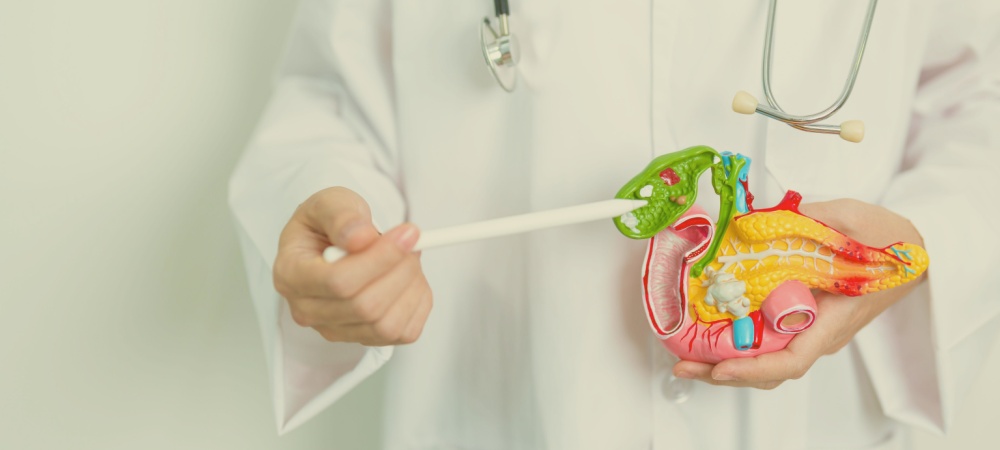
Bile duct cancer is a rare but rapidly progressing type of cancer that originates from the cells found in the bile duct. Also known in medical literature as cholangiocarcinoma, bile duct cancer is classified into three subgroups based on its location: intrahepatic, perihilar (Klatskin tumor), and distal. Symptoms such as jaundice, abdominal pain, weight loss, and itching are among the most common signs of bile duct cancer. However, since bile duct cancer can progress for a long time without showing any symptoms or because its symptoms can resemble those of other digestive system disorders, early diagnosis of the disease may not always be easy. While surgical treatment is often successful in patients diagnosed at an early stage, cancer treatment methods such as chemotherapy and radiotherapy may be required in advanced stages.
What is Bile Duct Cancer?
Bile duct cancer is a rare type of cancer that develops as a result of the abnormal growth or multiplication of cells in the bile duct, which is responsible for transporting bile produced in the liver for the digestion of fats and absorption of certain vitamins into the small intestine. If there is any abnormal problem, such as a blockage or tumor in the bile duct, the flow of bile can be adversely affected, leading to various health issues, primarily digestive system problems.
Bile duct cancer is divided into three subtypes based on the location of the tumor. Accordingly, the main types of bile duct cancer are as follows:
- Intrahepatic cholangiocarcinoma, which originates from the small bile ducts within the liver and usually presents symptoms at an advanced stage,
- Perihilar cholangiocarcinoma (Klatskin tumor), which is the most common type of bile duct cancer that develops in the main bile ducts just outside the liver,
- Distal cholangiocarcinoma, which begins in the cells in the part of the bile duct near the pancreas that opens into the small intestine.
Types of bile duct cancer other than intrahepatic bile duct cancer may also be referred to as extrahepatic bile duct cancer in some sources.
What are the Symptoms of Bile Duct Cancer?
Bile duct cancer is often a type of cancer that progresses without showing symptoms. As the disease progresses, various complaints may arise depending on the location and size of the tumor. The first symptom that comes to mind when talking about liver bile duct cancer is jaundice. If the bile duct tumor exerts pressure on the bile duct, preventing the flow of bile produced in the liver into the small intestine, bilirubin, a dark yellow-brown substance that is a component of bile, begins to accumulate in the body. When bilirubin, which is normally excreted with stool, accumulates excessively in the body, it can mix into the bloodstream, resulting in yellowing of the skin and the whites of the eyes. In patients with bile duct cancer, jaundice is often accompanied by symptoms such as itching, pale stools, and dark urine. Accordingly, the main symptoms of bile duct cancer are as follows:
- Yellowing of the skin and eyes, jaundice,
- Itching due to the accumulation of bilirubin affecting nerve endings,
- Pale and fatty stools due to bilirubin not reaching the intestines because of cancer,
- Dark urine,
- Pain felt especially in the upper abdomen,
- Nausea and vomiting,
- Loss of appetite,
- Unexplained weight loss,
- Feeling weak and fatigued,
- In some patients, high fever.
Since bile duct cancer is quite rare, the likelihood of the listed symptoms being caused by another health issue, such as hepatitis, is higher than that of bile duct cancer. Therefore, it is important to consult a specialist doctor without delay if one or more of the above symptoms are noticed to ensure an accurate diagnosis.
How Does Bile Duct Cancer Occur?
Bile duct cancer (cholangiocarcinoma) arises from the uncontrolled growth and multiplication of cells lining the bile duct due to various causes of genetic mutation. The exact cause of bile duct cancer is not fully known today. However, experts suggest that factors such as long-term inflammation, bile duct obstruction, or chemical exposure that can disrupt the cell cycle may increase the risk of developing the disease. The main risk factors for bile duct cancer are as follows:
- Primary sclerosing cholangitis (PSC): PSC is a bile duct disease that causes inflammation in the bile ducts and eventually leads to scar tissue formation. Over time, PSC can narrow and obstruct the bile ducts, disrupting bile flow. As chronic inflammation continues in the bile duct, the cell renewal cycle can be disrupted, increasing the risk of cancer development. According to research, PSC is a significant risk factor among those for bile duct cancer. The risk of developing cholangiocarcinoma in patients with primary sclerosing cholangitis ranges from 5% to 20%.
- Certain cancers: It can also develop as a secondary cancer due to the effects of cancers such as bile duct papilla cancer.
- Choledochal cyst: A congenital anomaly characterized by the formation of bile-filled sacs in the bile duct. If not treated early, these sacs can cause inflammation in the bile duct walls, leading to cell damage.
- Chronic liver diseases: Liver diseases such as hepatitis B, hepatitis C infections, and cirrhosis can particularly increase the risk of intrahepatic cholangiocarcinoma.
- Bile duct stones: Bile duct stones, or hepatolithiasis, can increase the risk of cancer by causing continuous irritation in the bile ducts if left untreated.
- Parasitic infections: Parasitic infections of the liver, such as Opisthorchis viverrini and Clonorchis sinensis, can increase the risk of cholangiocarcinoma.
- Older age: The risk of bile duct cancer may increase with age. Studies show that patients diagnosed with bile duct cancer are generally between the ages of 50 and 70.
- Obesity and type 2 diabetes: Some metabolic disorders can increase cancer risk by causing chronic inflammation.
- Genetic factors: Certain hereditary conditions, such as BAP1 gene mutation, and a family history of bile duct cancer may increase the risk. However, gene mutations thought to be associated with a higher risk of bile duct cancer are generally acquired rather than inherited throughout life. For example, changes that occur for various reasons in the TP53 tumor suppressor gene can increase the risk of developing bile duct cancer.
Additionally, unhealthy habits such as smoking and alcohol can lead to genetic damage, causing cancer. Although there are no scientifically proven methods for preventing bile duct cancer, developing healthy and balanced eating habits and avoiding harmful habits such as smoking and alcohol can minimize the risk.
How is Bile Duct Cancer Diagnosed?
The diagnosis process of bile duct cancer begins with a physical examination of the patient to check for symptoms such as jaundice. Experts primarily review blood tests during the diagnosis phase. In blood tests, elevated levels of liver function tests known as bilirubin, alkaline phosphatase, ALT, and AST may indicate obstruction in the bile ducts or liver damage. Levels of tumor markers such as CA 19-9 and CEA are usually found to be high in cholangiocarcinoma, but tumor markers alone are not definitive for diagnosis. Other health issues can also cause these values to rise.
In addition to laboratory tests, imaging methods also play an important role in diagnosing bile duct cancer. The first preferred method is usually abdominal ultrasound. This method can detect whether there is a mass in the liver or if there is cancer or obstruction in the bile duct. For more advanced imaging, computed tomography (CT) and magnetic resonance imaging (MRI) can be used. MRI cholangiopancreatography (MRCP) allows for detailed evaluation of the bile duct structure. To assess the possibility of metastasis of bile duct cancer in the body, specialists can examine whether there is metastasis of bile duct cancer using PET scans.
If a suspicious mass is detected in imaging methods, specialists may resort to biopsy for a definitive diagnosis. Biopsy samples are examined under a microscope by pathologists to investigate the presence of malignant cells. Additionally, mutation screenings may be conducted in genes such as IDH1, FGFR2, and BRAF. This way, doctors can assess the suitability of the cancer for targeted agents in advanced treatment planning.
After diagnosis, staging is important to determine the extent of the disease. The TNM staging system is used for bile duct cancer. The TNM system describes the size of the tumor (T), the spread to lymph nodes (N), and the metastasis to distant organs (M). According to this system, the stages of perihilar (hilar) cholangiocarcinoma, which is the most commonly seen bile duct cancer, are as follows:
- Stage 0 (carcinoma in situ): Abnormal cells are only found on the inner surface of the bile duct. Although these cells have not yet spread, they carry a risk of turning into cancer over time.
- Stage I: In this stage, cancer has progressed to the muscle and fibrous tissues of the bile duct wall but has not spread to surrounding tissues.
- Stage II: The tumor may have spread beyond the bile duct wall to surrounding fatty tissue or directly to liver tissue.
- Stage III: Stage III is further divided into three classes: IIIA, IIIB, and IIIC. In stage IIIA, the tumor is seen to have spread to one of the main vessels leading to the liver, either the portal vein or the right or left branch of the hepatic artery. In stage IIIB, the tumor spreads to both vessel branches or simultaneously involves one side’s bile duct and the opposite side’s vessel. In stage IIIC, cancer spreads to 1 to 3 nearby lymph nodes.
- Stage IV: The final stage of bile duct cancer is when the cancerous tissue spreads to other tissues and organs. Stage IV bile duct cancer is the most advanced stage of the disease. Stage IV is further divided into two sub-stages. Stage IVA is the stage where involvement of 4 or more lymph nodes is observed. In stage IVB, bile duct cancer metastasizes to distant areas of the body, such as the lungs, bones, distant parts of the liver, or the peritoneum.
Staging cancer not only helps understand the spread of the disease but also allows specialists to determine the treatment process accurately.
How is Bile Duct Cancer Treated?
The treatment of bile duct cancer can vary depending on the location of the tumor, its stage, the patient’s overall health status, and liver function. Surgical treatment is possible for patients diagnosed at an early stage. Surgical treatment is preferred in cases where the tumor can be completely removed. If the tumor is located in the bile ducts within the liver, a portion of the liver may need to be removed (hepatectomy) or the right/left lobe may need to be completely removed (lobectomy).
In cases where cancer starts at the point where the bile ducts separate from the liver, a portion of the liver, bile duct, gallbladder, nearby lymph nodes, and in some cases, part of the pancreas and small intestine may be removed. In distal bile duct tumors, the Whipple procedure, which involves the removal of the bile duct along with the pancreas and duodenum, may be performed.
In patients where surgical intervention is not possible, specialists may use cancer treatment methods such as chemotherapy, radiotherapy, and immunotherapy. In cases where cancer causes obstruction in the bile duct, drainage procedures may be performed to restore bile flow. One of the most commonly used methods is the ERCP procedure, which involves entering through the mouth with an endoscope. This method allows for both visualization of the obstruction in the bile duct and placement of a small tube to restore bile flow.
Frequently Asked Questions
What is the Life Expectancy for Bile Duct Cancer?
Bile duct cancer is usually diagnosed at an advanced stage, so life expectancy can vary depending on the patient’s overall health status. When examining the 5-year survival rates, it can be said that the life expectancy for stage 4 bile duct cancer ranges from 2-3%. However, in cases where the cancer has not spread beyond the bile ducts, the 5-year survival rate ranges from 18%-23%.
Is Bile Duct Cancer Dangerous?
Bile duct cancer is a rare but aggressive type of cancer. The fact that the disease often progresses without showing any symptoms and is diagnosed at an advanced stage can negatively affect the chances of successful treatment. However, being informed about prevention methods for bile duct cancer, getting vaccinated against hepatitis viruses, maintaining a healthy and balanced diet, and attending regular doctor check-ups can help reduce the risk of bile duct cancer.
Where Does Bile Duct Cancer Metastasize?
In patients with advanced bile duct cancer, metastasis can occur to nearby lymph nodes, different regions of the liver, lungs, bones, and the peritoneum.
What is the Risk of Death from Bile Duct Cancer?
Bile duct cancer is usually diagnosed at an advanced stage, so the risk of death may be higher compared to other cancers. The 5-year survival rates vary by stage, but in early stages, it ranges from 18% to 23%, while in advanced stages, it is around 2% to 3%. However, recent studies have shown that with early diagnosis and treatment, the 5-year survival rate can rise to 50%.
Is Bile Duct Cancer Genetic?
The vast majority of bile duct cancer cases are not genetic. However, mutations in certain genes such as BAP1, TP53, IDH1, and FGFR2 can increase cancer risk.
What Should Not Be Eaten for Bile Duct Cancer?
In patients with bile duct cancer, it is important to avoid certain foods to reduce digestive issues that may arise due to the disease itself or treatments applied. Especially, it is advisable to stay away from fatty and fried foods that are difficult to digest. Additionally, the consumption of spicy, overly fibrous foods, and gas-producing foods such as cabbage, broccoli, legumes, and cauliflower is not recommended. Furthermore, patients experiencing diarrhea should avoid high-fiber foods, dairy products, and caffeinated beverages that may increase bowel movements.
How Long Does Bile Duct Cancer Surgery Take?
The duration of bile duct cancer surgery varies depending on the complexity of the surgery performed, but it generally lasts between 2 to 5 hours. In surgeries such as the Whipple procedure or liver transplantation, the operation may take longer.
Do Bile Duct Polyps Lead to Cancer?
The vast majority of bile duct polyps are benign. According to studies, only about 5% of bile duct polyps turn cancerous. Polyps larger than 18 mm may need to be evaluated for cancer risk.
When bile duct cancer is diagnosed at an early stage, the chances of treatment are higher. Do not ignore the symptoms, consult our specialists, and to get detailed information, make an appointment or visit our General Surgery Department page.