



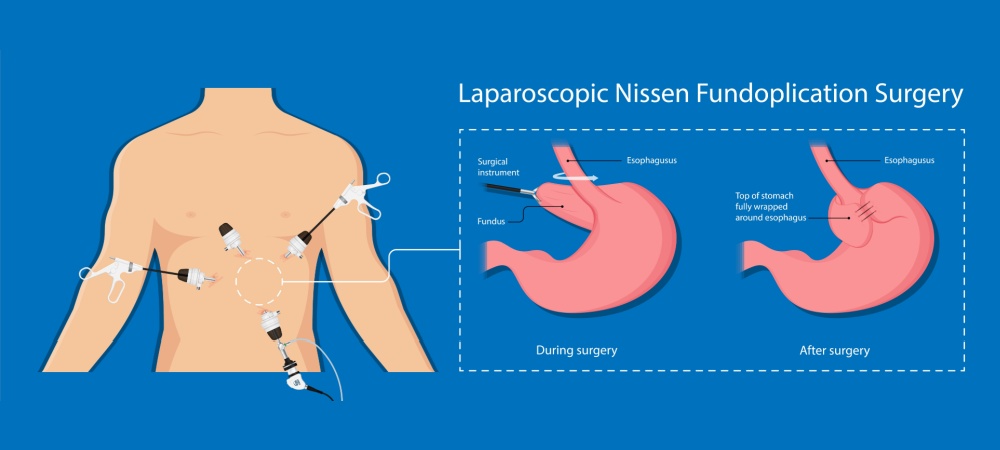
A stomach hernia is a health issue characterized by the upper part of the stomach protruding through the diaphragm, which separates the abdomen from the chest cavity. Hernias that occur in the stomach can lead to serious complications such as gastroesophageal reflux and ulcers. Stomach hernias, which present symptoms such as burning sensation in the stomach, indigestion, and difficulty swallowing, can be treated surgically when necessary.
What is a Stomach Hernia?
A stomach hernia, known in medical literature as a hiatal hernia, is the displacement of the upper part of the stomach, called the cardia and fundus, through the esophageal hiatus in the diaphragm into the chest cavity. A hernia is defined as the protrusion of an organ or tissue through an opening in the muscle or tissue that normally confines it, and it can occur anywhere in the body, primarily in the abdominal cavity. One of the most commonly encountered types of hernia is the stomach hernia. Studies show that approximately 55-60% of people over the age of 50 have a stomach hernia.
Stomach hernias are classified into various categories based on criteria such as the size of the hernia, how the stomach slides through the diaphragm, which part of the stomach has moved into the chest cavity, and whether other organs such as the small intestine or spleen are present in the hernia. The first types that come to mind when discussing stomach hernias are sliding hiatal hernias and paraesophageal hiatal hernias. Accordingly, the main types of stomach hernias can be listed as follows:
- Type I Stomach Hernia (Sliding Stomach Hernia): Type I stomach hernia, also known as sliding hernia, is the most common type of hiatal hernia. Studies show that approximately 95% of all stomach hernia cases consist of sliding stomach hernias. In these types of hernias, the part of the stomach that connects to the esophagus slides upwards through the opening in the diaphragm called the hiatus and then comes back down. Therefore, sliding type hernias usually do not present a fully formed hernia sac.
- Type II Stomach Hernia: Also known as paraesophageal stomach hernias, in type II stomach hernias, the upper part of the stomach (fundus) and sometimes other intra-abdominal organs slide through the esophageal hiatus in the diaphragm into the chest cavity, forming a hernia sac. In other words, unlike type I hernias, in paraesophageal hernias, a part of the stomach protrudes through the diaphragm and remains there, forming a hernia sac.
In addition to these, there are other types of hernias such as type III and type IV. Type III and type IV hernias are also evaluated in the category of paraesophageal stomach hernias. Type III hernias, which are thought to constitute approximately 80-90% of all paraesophageal hernias, exhibit both sliding and paraesophageal types of hernias together. Therefore, it is also referred to as combined stomach hernia. Type IV is the rarest type of stomach hernia. In these types of hernias, other intra-abdominal organs such as the large intestine, small intestine, and spleen may also be present in the hernia sac. Therefore, it is also referred to as multi-organ type stomach hernia.
What are the Symptoms of a Stomach Hernia?
The symptoms of a stomach hernia can vary depending on the type and stage of the hernia. For example, sliding type hernias, which constitute the majority of cases, may not cause any complaints. Therefore, stomach hernias are often only detected during routine screenings such as X-rays. Symptoms of stomach hernias generally resemble those of reflux. The main symptoms of a stomach hernia can be listed as follows:
- Burning sensation in the stomach, especially after meals,
- Chest pain not related to the heart,
- Bloating and indigestion after eating,
- Regurgitation of food, drinks, and stomach acid into the mouth,
- Difficulty swallowing or feeling like something is stuck in the throat while swallowing,
- Frequent need to burp,
- Sore throat due to irritation caused by regurgitated stomach fluid,
- Nausea, cough, hoarseness, waking up with a bitter taste in the mouth,
- Shortness of breath in cases where the hernia presses on the lungs.
In addition to the above symptoms, some patients with stomach hernias that are not treated early may experience gastrointestinal bleeding, bloody vomiting, and defecation.
How Does a Stomach Hernia Occur?
A stomach hernia can arise from congenital anatomical differences or can be acquired later. The main cause of hernias is the presence of weak points or openings in the tissues that separate different parts of the body. A stomach hernia occurs at the opening called the esophageal hiatus, where the esophagus passes through the diaphragm. If this opening widens due to increased intra-abdominal pressure, a part of the stomach may protrude upwards through the diaphragm. Trauma, surgical operations, and other factors can weaken the esophageal hiatus muscle, increasing the risk of hernia. The main factors that increase intra-abdominal pressure, and consequently the risk of stomach hernia, are as follows:
- Chronic cough and sneezing,
- Chronic constipation,
- Being overweight,
- Frequent vomiting for various reasons,
- Intense exercise or heavy lifting,
- Being pregnant or having given birth.
In addition to these, age is also one of the risk factors for stomach hernia. The risk of stomach hernia may be higher in adults over the age of 50.
How is a Stomach Hernia Diagnosed?
A stomach hernia, especially sliding type hernia, is often asymptomatic and can be accidentally diagnosed using imaging techniques when another health issue such as reflux is suspected. In patients with reflux symptoms such as heartburn and regurgitation of stomach fluid, doctors may first perform a pH test to assess whether there is acid in the esophagus. During the esophageal pH test, also known as 24-hour pH monitoring, a capsule that helps detect pH levels is placed in the esophagus, and a receiver the size of a pager that records data from the capsule is attached to the person’s waist. After the procedure, the capsule naturally detaches from the esophagus during normal activities such as eating and drinking, and is expelled from the body through the digestive tract within approximately 7-10 days. If stomach acid reflux is detected as a result of this test, further examinations may be utilized.
Most of the time, stomach hernias can be easily diagnosed using imaging methods such as X-rays and endoscopy. The main tests used in the diagnosis of stomach hernia are as follows:
- Chest X-ray, which helps visualize the inner part of the chest cavity where the esophagus is located,
- Esophagram, which aims to obtain a moving image of the esophagus during swallowing,
- Endoscopy, which helps examine the esophagus and stomach.
Additionally, esophageal manometry, which helps measure the contractions of the esophageal muscle, can assist in the diagnosis of stomach hernia.
How is a Stomach Hernia Treated?
The treatment of a stomach hernia can vary depending on the type of hernia and the severity of the symptoms. In cases where a hernia is accidentally detected, is relatively small, and does not cause any complaints, doctors may recommend waiting and monitoring the hernia for growth with routine check-ups before starting treatment. However, if the hernia causes symptoms such as stomach burning and indigestion, medications for stomach hernia may be used to neutralize stomach acid. It is difficult for a stomach hernia to heal spontaneously or with medications. The medications used may be insufficient to control symptoms, and if the hernia progresses, specialists may resort to surgical procedures to treat the stomach hernia. The hernia is treated using a laparoscopic method.
Frequently Asked Questions
What Happens If a Stomach Hernia Is Not Operated On?
Surgery may not always be necessary for patients with stomach hernia. However, it is important to know that the hernia will not resolve on its own. Symptoms may worsen, and the patient’s reflux complaints may increase. Quality of life decreases. In the long term, cancer may develop in the lower part of the esophagus due to acid exposure.
How Many Days Does It Take for a Stomach Hernia to Heal?
Patients are discharged the day after stomach hernia surgery. They can return to their daily lives. A diet consisting of softer foods is followed in the first 10 days.
Does a Stomach Hernia Cause Back Pain?
Depending on the size, content, and location of the hernia, a stomach hernia can cause back pain.
What Should Those with a Stomach Hernia Pay Attention To?
When it comes to symptoms of stomach hernia, the first things that come to mind are heartburn, chest pain unrelated to the heart, and symptoms of reflux such as indigestion. Lifestyle changes such as losing weight, reducing portion sizes, and avoiding fatty, spicy, and acidic foods and drinks can help alleviate symptoms for those with a stomach hernia.
How Can We Understand That We Have a Stomach Hernia?
A stomach hernia can be definitively understood through imaging methods such as X-rays, esophagrams, endoscopy, and esophageal manometry performed by specialist doctors.
Can a Stomach Hernia Change Position?
A stomach hernia can change position depending on the type of hernia. In sliding hernias, the upper part of the stomach can rise into the chest cavity and then come back down.
Which Department Should I Go to for a Stomach Hernia?
In cases where a stomach hernia is suspected, one can go to the gastroenterology department, which is a branch of internal medicine, or to general surgery.
Is Stomach Hernia Surgery Risky?
As with any surgical operation, there is a risk of complications such as bleeding and infection after hiatal hernia surgeries. However, the majority of hernia repair surgeries today are performed using laparoscopic methods, which minimizes the risk of complications.
Can a Stomach Hernia Heal Without Surgery?
Currently, there is no method to completely treat a stomach hernia without surgery. Some medications or lifestyle changes can help control symptoms.
Does Losing Weight Help with Stomach Hernia?
Since being overweight can exacerbate reflux symptoms, losing weight can help control symptoms such as stomach burning and regurgitation of stomach fluid.
Although a stomach hernia often progresses silently, it can lead to complaints that reduce the quality of life. Early diagnosis and treatment are very important to prevent serious complications in the long term.
If you are experiencing symptoms such as heartburn, indigestion, or difficulty swallowing, do not delay your health by making an appointment with our expert general surgery doctors.