



Secondary cataract is a condition that can be seen in 20% to 50% of patients within 5 years after cataract surgery. However, there is no need to worry. In fact, this condition is not the answer to the question of whether cataract recurs. To briefly answer the question of what secondary cataract is, it is not a real cataract, but a result of the natural healing process after surgery.
In this article, we will explain the causes, symptoms, and especially the treatment methods of cataracts performed with YAG laser in detail.
What is Secondary Cataract?
After cataract surgery, a real cataract cannot form on the artificial lens placed inside the eye. The artificial lens is made of plastic or other synthetic materials and does not become opaque like the natural lens of the eye. However, during the surgery, the back membrane of the lens capsule is intentionally left in place to keep the artificial lens stable.
This back membrane helps to maintain the position of the artificial lens in the eye for about 6 months after surgery. The legs of the lens adhere to the eye tissue during this time, and the membrane’s function is completed. Over time, the lens epithelial cells remaining in this back capsule begin to proliferate. As the cells multiply, the capsule thickens and loses its transparency.
This condition is medically referred to as “posterior capsule opacification” and is commonly known as “lens clouding” or “secondary cataract.” It is not actually a new cataract formation, but rather the thickening and clouding of the membrane left during surgery. This process can occur months or years after the surgery.
Does Cataract Recur?
Most patients who have undergone cataract surgery wonder, “Has the cataract formed again?” The answer is clearly no. The natural lens removed during surgery does not come back. Since the artificial intraocular lens is made of plastic, a cataract cannot develop again.
The deterioration in vision is not due to the lens itself but rather from the capsule left behind. Therefore, secondary cataract does not mean surgical failure. It is a result of the natural healing process and can be easily treated.
If you have had cataract surgery in one eye, a primary cataract may develop in the other eye in the future. This situation is independent of the artificial lens and is related to the aging process of the natural lens in the other eye.
Difference Between Secondary and Primary Cataract
Primary cataract is the clouding of the natural lens in individuals who have not undergone surgery due to aging or other reasons. It generally develops slowly over the years. Secondary cataract, on the other hand, is the clouding that occurs on the remaining back capsule after surgery.
From a source perspective, primary cataract is a deterioration of the lens’s own tissue. In secondary cataract, the lens has already been removed, and the problem is cellular proliferation in the capsule membrane.
The treatment methods are also different. The definitive treatment for primary cataract is surgery. Secondary cataract is mostly treated with YAG laser capsulotomy and does not require surgery. Therefore, the treatment of secondary cataract is much simpler and faster.
In terms of timing, once primary cataract is treated surgically, the same natural lens cannot become cloudy again. However, secondary cataract can appear months or years after surgery.
Causes and Risk Factors of Secondary Cataract
There are multiple reasons behind the formation of secondary cataract. These reasons are related to both the surgical process and the patient’s own characteristics.
Proliferation of Capsule Cells After Surgery
During cataract surgery, some cells on the lens capsule may remain in the eye when the lens is removed. These cells are called “lens epithelial cells.” The surgeon tries to clean these cells during the surgery, but some cells may remain hidden in the corners of the capsule at a microscopic level.
After the surgery, the natural healing processes in your eye come into play. During this period, lens epithelial cells become active and begin to proliferate. The cells form a thin membrane over the back capsule. Growth factors such as transforming growth factor-beta play a role in this process. Your body secretes these substances for tissue healing, but they can lead to unwanted opacities in the eye.
As the cells migrate and proliferate, the capsule thickens. Over time, it loses its transparent structure, and your vision becomes blurry again. This process can be delayed but cannot be completely prevented.
Age and Cell Activity
Your age directly affects the rate of secondary cataract development. In younger patients, cell renewal and proliferation are much faster. Therefore, the remaining cells in the eye after surgery multiply more actively.
Especially in childhood cataract surgeries, secondary cataract is almost inevitably common. It has been reported that in pediatric patients, issues such as recurrent opacities occur at a rate of 41% with YAG laser capsulotomy.
In older patients, however, the natural lens cells are less active. Therefore, secondary cataract may be rarer or appear later in older patients. However, even in completely healthy individuals, posterior capsule opacification can occur after cataract surgery.
Diabetes and Other Systemic Diseases
Diabetes is one of the significant factors that increase the risk of secondary cataract. In diabetic patients, posterior capsule opacification occurs more frequently. In uncontrolled diabetes, glucose levels rise, which increases sugar levels in the eye fluid and lens.
Your lens contains an enzyme that converts glucose into a substance called sorbitol. When sorbitol accumulates, it affects the cells and alters the healing process in the eye. Diabetes can also increase the risk by affecting wound healing and inflammation levels.
Cataracts also develop frequently in individuals undergoing cortisone treatment. The risk of secondary cataract is higher in eyes with uveitis, patients with retinitis pigmentosa, and traumatic cataracts.
Type of Lens Used and Surgical Technique
The type of artificial lens used in surgery plays an important role. In patients with hydrophobic intraocular lenses, less posterior capsule opacification has been reported compared to those with silicone and polymethyl methacrylate lenses. High-quality lenses made of hydrophobic materials adhere well to the posterior capsule and do not allow for clouding.
Modern surgical techniques and sharp-edged artificial lenses can prevent lens epithelial cells from migrating to the posterior capsule. The surgeon’s experience and the thoroughness of capsule cleaning during surgery also determine the risk. In high-quality lenses, clouding may not be seen for an average of 2 to 4 years, and sometimes even after 10 years.
What are the Symptoms of Secondary Cataract?
You may notice changes in your vision months or years after surgery. These changes usually develop slowly, so they may initially go unnoticed. However, over time, the symptoms become more pronounced and begin to affect your daily life.
Blurriness and Haze in Vision
The most common symptom of secondary cataract is blurriness in vision. Patients often describe this as “it feels like there is a thin veil in front of my eyes” or “I feel like my glasses are dirty, but cleaning them doesn’t help.” Your eyes, which got used to clear vision after surgery, may experience blurriness again over time.
This blurriness is similar to the windows of your home becoming dirty over time. The image that was once crystal clear now casts a veil over the clarity of the outside world. Clarity is lost at both near and far distances. For example, you may feel that you are struggling to read the newspaper or drive again.
You may also feel like your glasses prescription is changing frequently. However, even if you get new glasses, the problem will not improve because the source of the blurriness is not the glasses prescription but the opacification in the posterior capsule.
Light Sensitivity and Glare
When you look at a light source, you may see distortion, glare, or halos. Especially at night, you may experience seeing halos around car headlights and street lamps. These halos make light sources appear brighter and more diffuse than they are. Therefore, night driving can become challenging for many people.
Your eyes may glare in bright sunlight or bright lighting. You may feel the urge to squint. Traveling by car during the day can even become uncomfortable. Working under fluorescent lights may start to feel tiring.
Difficulty in Reading and Night Vision
You will especially feel a loss of clarity in fine tasks. Tasks that require detail, such as threading a needle or reading small print, become more difficult. Your eyes may get tired quickly when reading a book or looking at a phone screen.
Significant difficulties in night vision begin. It becomes harder to distinguish objects in dark environments. Blurriness or trying to focus can strain your eyes and brain. Occasionally, tension around the eyes, headaches, and concentration problems may develop.
Changes in Color Perception
Colors are perceived as faded and lacking vibrancy. Colors that you once saw as vibrant may now appear duller and more muted. The colors of a painting you loved may not seem as striking as before. You may have difficulty distinguishing the color tones of clothing.
Although this situation may sometimes go unnoticed, individuals involved in art or those with high color sensitivity can easily notice this difference. Additionally, although rare, double vision may occur. You may experience seeing two slightly shifted copies of the same image with one eye.
Diagnosis and Treatment of Secondary Cataract
After listening to your complaints, your doctor will perform a comprehensive eye examination. This process consists of several basic steps.
Eye Examination and Diagnostic Methods
In the visual acuity test, how clearly you see with or without glasses is measured. Your level of clarity after surgery is compared with your current condition. In the biomicroscopy examination, your pupil is dilated with drops. The doctor examines the position of the artificial lens and the amount of cloudiness in the back capsule under high magnification. This examination is a critical step in diagnosing secondary cataract.
In the fundus examination, the retina and optic nerve are checked. If the back capsule is very opaque, this examination may be difficult, but it is necessary to evaluate the retina as there may be other causes of vision impairment. In the retroillumination method, light is sent into the eye to make opaque areas more distinct. If necessary, advanced imaging methods such as optical coherence tomography are used.
What is YAG Laser Capsulotomy?
YAG laser capsulotomy is the gold standard for treating secondary cataract. This method opens a small window in the opaque area of the back capsule. Thus, light falls clearly on the retina again. The procedure is not surgery; it is completed within a few minutes in an outpatient setting. It does not require stitches, cuts, or dressings.
How is YAG Laser Procedure Applied?
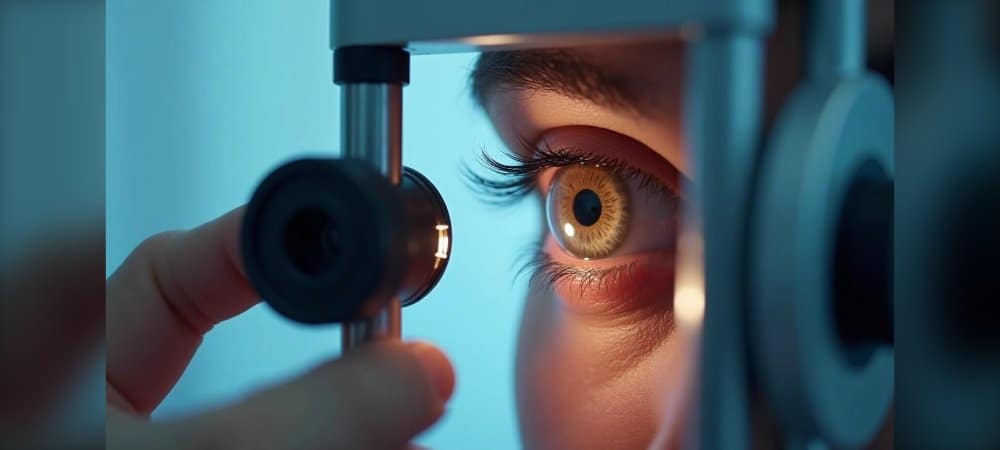
First, your pupil is dilated with drops. Then, anesthetic drops are applied, so you will not feel pain. You sit in the examination chair, placing your chin and forehead on the device. Your doctor focuses on the back capsule and uses laser shots to vaporize the back capsule. The procedure takes an average of 2-3 minutes. Typically, 5-15 laser shots are applied.
No instruments touch your eye, which minimizes the risk of infection. You will only feel brief flashes of light. After the procedure, your eye is not covered.
Recovery Process After Treatment
Visual clarity generally improves significantly on the same day or within a few hours. You may see blurry for the first 6 hours, but afterward, your vision level becomes better than before the procedure. Usually, 1 or 2 eye drops are prescribed, and they are advised to be used for 4-5 days.
You may see some floaters in front of your eye for a few days. These will continue until the fragments of the vaporized back capsule dissolve, but they will disappear within a few days. Patients can return to their normal lives the next day. Once the back capsule is vaporized with laser, it does not reform.
Risks and Complications of Treatment
YAG laser capsulotomy is a very reliable procedure. However, complications can occur, albeit rarely. An increase in intraocular pressure is seen at a rate of 1.8%. Uveitis occurs at 0.74%, macular edema at 0.74%, macular hole at 0.33%, corneal edema at 0.25%, retinal detachment at 0.16%, and retinal tear at 0.08%.
The risk of retinal detachment is about 1%, but after YAG laser capsulotomy, this risk increases to about 2%. Care should be taken, especially in highly myopic eyes. If you experience sudden vision loss or severe pain, you should contact your doctor immediately.
Methods and Recommendations for Preventing Secondary Cataract
It is not possible to completely prevent secondary cataract. However, some precautions can reduce the risk of formation or lay the groundwork for early diagnosis.
Regular Check-ups After Surgery
After cataract surgery, you need to go for regular check-ups every year. These examinations are important not only for secondary cataract but also for other eye problems such as glaucoma and macular degeneration. The first check-ups after surgery are usually done on the 1st day, 3rd day, and 3rd week. Afterward, your doctor will recommend an annual follow-up program.
To catch the chance of early diagnosis, you should not skip these check-ups. If interventions are made while symptoms are mild, both your comfort increases and the risk of vision loss decreases. Especially individuals over 40 should have an eye examination at least once a year. Regular examinations ensure the early detection of possible opacification.
Management of Systemic Diseases
If you have chronic diseases such as diabetes or high blood pressure, it is critical to keep these values under control for your eye health. Uncontrolled blood sugar negatively affects the healing process in the eye and can accelerate the formation of secondary cataract.
Your average blood sugar level for the last 3 months, i.e., HbA1c, should be at an ideal level before surgery. In the first month after surgery, you should pay more attention to blood sugar regulation than ever. Regular retinal examinations should also be conducted in diabetic patients after surgery.
Keeping your blood sugar levels constantly under control will keep the lens of your eye clear and healthy. Therefore, it is important to follow your doctor’s recommendations regarding nutrition and blood sugar control in many aspects.
Lifestyle Supporting Eye Health
Healthy lifestyle habits contribute positively to your eye health. Quitting smoking and limiting alcohol consumption support overall eye health. Smoking can lead to many eye diseases, including cataracts and macular degeneration.
A balanced diet supports the overall health of eye tissues. Be sure to consume foods rich in omega-3 fatty acids, vitamins C and E. Foods rich in fruits, vegetables, and antioxidants can delay age-related eye problems.
Wearing UV-protective sunglasses is essential. UV rays increase the risk of cataracts in the long term. Regular exercise and getting enough sleep also benefit your eye health.
Frequently Asked Questions About Secondary Cataract
Patients often ask some questions after surgery. These questions usually focus on similar topics. Below you will find answers to the most frequently asked questions.
How long does it take for secondary cataract to develop?
Secondary cataract largely appears within 2 to 4 years after surgery. However, in some individuals, this period may be longer than 5 years. The quality of the lens used and the surgical technique directly affect this duration. In high-quality lenses, clouding is seen on average between 2 and 4 years, and sometimes even after 10 years, there may be no clouding.
Not every patient develops at the same speed. In some individuals, it may not form in the first year, but blurriness may start three or four years later. This period may be shorter, especially in young patients and diabetic individuals.
Is the YAG laser procedure painful?
No, the YAG laser procedure is not painful. Anesthetic drops are applied to your eye before the procedure, so you will not feel pain or discomfort. You may see only brief flashes of light. No instruments touch your eye during the procedure, which provides comfort.
Will there be a recurrence of cloudiness after the procedure?
Once secondary cataract is treated, it does not recur. This is because the tissue causing secondary cataract has been completely removed. Once the back capsule is vaporized with YAG laser capsulotomy, it does not reform, and no new clouding occurs. The opened capsule does not become cloudy again. A cataract-surgery eye will not require another intervention for life.
Does secondary cataract require surgery?
No surgery is required for the treatment of secondary cataract. The treatment is performed in outpatient conditions with YAG laser. The procedure is usually completed within a few minutes. It does not require stitches, cuts, or dressings. Patients can return home on the same day after the procedure.
In which patients is the risk of secondary cataract higher?
Secondary cataract is almost inevitably common in childhood cataract surgeries. The risk is also higher in diabetic patients. Family history, high blood pressure, or certain metabolic syndromes can increase the risk. Individuals with additional eye conditions such as uveitis, trauma, retinitis pigmentosa, or high myopia may also be predisposed to the development of secondary cataract. The incidence is higher in patients under 60 years old due to the rapid healing potential of young tissues.
In Summary, Secondary Cataract
Secondary cataract is not a surgical failure but a result of the natural healing process. There is no need to worry when you notice blurriness in your vision. YAG laser treatment resolves the issue within minutes and does not recur for life.
It is especially important to attend regular check-ups after surgery. This increases your chances of early diagnosis and allows for quick intervention when necessary. If you have diabetes, keep your blood sugar under control.
If your cataract surgery was successful, the treatment for secondary cataract will also be successful. The only step you need to take to see clearly is to consult your doctor.