



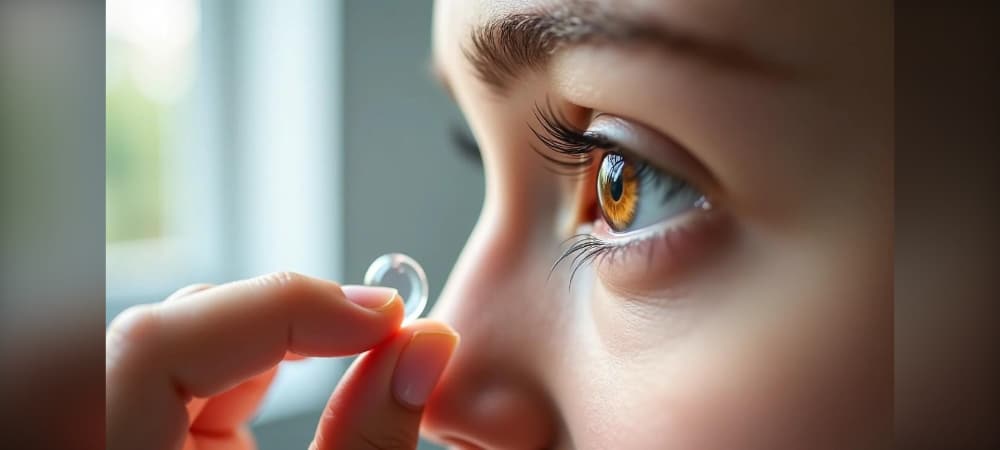
Contact lenses not only solve your vision problems but also serve as a practical solution that you can use for aesthetic purposes. They can correct various vision disorders such as myopia, hyperopia, astigmatism, and presbyopia. Moreover, they offer a wide range from soft lenses to rigid gas permeable lenses, colored contact lens options to hybrid lens applications. In this article, you will find answers to questions such as what contact lenses are, what they are used for, what types exist, and who they are applied to.
What Are Contact Lens Applications?
What are contact lenses and what are they used for?
Contact lenses are a type of thin and transparent lens placed on the cornea of the eye. They are used to correct vision disorders or for aesthetic purposes. These lenses, preferred as an alternative to glasses, are placed on the front surface of the cornea to correct imperfections in the eye.
Contact lenses move with your eyes and provide a full field of vision. You can see objects with the tip of your eye without the frame of your glasses obstructing your view, fogging up, or rain droplets splashing. Regardless of the weather conditions, they assist your vision wherever you go.
Areas of Application for Contact Lenses
Contact lenses are used for various purposes. They are preferred in areas such as correcting vision disorders, meeting aesthetic needs, and assisting in the treatment of certain eye conditions.
The most common area of use is for correcting vision defects. They are preferred by individuals with problems such as myopia, hyperopia, astigmatism, and presbyopia. They provide a wide field of vision and do not cause issues like fogging.
The use of colored contact lenses for aesthetic purposes is quite popular. They not only correct vision defects but are also preferred by those who want to change their eye color. Additionally, they can be used in prosthetic applications to improve the appearance in cases of permanent eye damage caused by accidents or eye diseases.
In therapeutic applications, contact lenses play an important role. They serve as a bandage in cases such as corneal scratches and sterile corneal ulcers. This allows you to keep your eye open while still maintaining visual function.
Differences Between Glasses and Contact Lenses
Contact lenses conform to the curvature of the eye, providing a wider field of vision and causing less visual distortion and obstruction compared to glasses. Glasses sit about 12 mm away from your eyes, which can distort peripheral vision.
When exercising or playing sports, contact lenses do not hinder you. They do not bounce or fog during movement, and you do not have to worry about them falling out of your eyes. They are an advantageous option when you need to wear sunglasses, protective eyewear, or helmets during your activities.
Aesthetically, contact lenses are placed directly on the cornea of the eye and are less noticeable. Glasses, on the other hand, can create an expression about your personality with their frames. You can wear your lenses every day or alternate them with glasses whenever you want.
Types of Contact Lenses and Application Types
Soft Contact Lenses
Soft lenses are made from hydrogel or silicone hydrogel materials. Their flexible structure allows them to easily adapt to the surface of the eye and be used comfortably. Hydrogel lenses are made from a polymer with high water retention capacity and are good in terms of oxygen permeability. Silicone hydrogel lenses provide higher oxygen permeability and offer a more comfortable experience for long-term use.
They come in daily, weekly, or monthly options depending on the usage period. Daily lenses are changed every day, require no maintenance, and are practical to use. Planned change lenses can be of the monthly type. Soft lenses are commonly used to correct vision defects such as myopia, hyperopia, astigmatism, and presbyopia.
Rigid Gas Permeable Contact Lenses
Rigid lenses are made from a special material that has oxygen permeability. They offer high optical quality and durability along with high oxygen permeability. They provide clear and sharp vision by correcting the shape of the cornea. They are suitable for correcting corneal astigmatism and for individuals with keratoconus.
Gas permeable lenses provide better vision quality compared to soft lenses. They are resistant to deposit buildup and can be used for a longer time. There is about a 20% exchange of tears under the lens, which creates an additional oxygen source for the cornea. They can also correct moderate corneal astigmatism.
Colored Contact Lens Applications
Colored lenses are cosmetically preferred to appear with a different eye color. They can also be used by individuals with refractive errors. They are produced to change or emphasize the natural color of the eyes. Both prescription and non-prescription options are available.
Quality and reliable lenses should be preferred, as low-quality lenses can cause irritation, infection, or corneal damage. The cleanliness and maintenance of the lenses are vital for protecting eye health.
Hybrid Lens Applications
Hybrid lenses combine the features of rigid and soft lenses. The optical center of the lens is made from rigid lens material, while the peripheral part is made from soft lens material. This combination offers both clear vision and comfort.
Since individuals with keratoconus have high astigmatism, adequate vision cannot be achieved with glasses and soft lenses. Since it can be difficult to get used to rigid lenses, not every patient can use them. Hybrid lenses solve this problem as they have a soft edge with a rigid center.
Torric and Multifocal Lens Applications
Torric lenses correct astigmatic refractive errors in the eye and contain astigmatic components. They are specially designed for individuals with astigmatism. Multifocal lenses correct the near vision defect that occurs after the age of 40. They provide both distance and near vision. These lenses, which correct presbyopia, are called bifocal or multifocal and change gradually from the center.
Who Are Contact Lenses Applied To?
Contact Lens Use by Age Groups
There is no specific age limit for using contact lenses. Starting to use lenses depends more on willingness and maturity than age. If you think your child exhibits responsible behavior at home and school, they may be ready to use contact lenses.
Generally, children aged 8 and older are considered suitable. In some cases, contact lenses can even be applied to infants if necessary. 90% of teenagers can successfully use contact lenses and take care of them. 80% of parents have reported that contact lenses increase their children’s self-confidence.
Children must be mature enough to understand hygiene rules and to put on and take off the lenses correctly. For children involved in sports or physical activities, lenses can be more practical than glasses. 65% of teenagers have indicated that contact lenses help them perform better in sports activities.
Individuals with Myopia and Hyperopia
Myopia is known as the inability to see far, while hyperopia is known as the inability to see close. Both of these vision disorders can be easily corrected with contact lenses. In individuals with myopia, the eyeball is longer than normal, causing distant objects to appear blurry. In hyperopia, the eyeball is shorter than normal, making it difficult to see nearby objects clearly.
Contact lenses can be safely used to correct these defects. They are an ideal solution for those who lead an active lifestyle, prefer not to wear glasses, or have aesthetic concerns. Suitability should always be evaluated by a detailed examination by an eye disease specialist.
Applications for Astigmatism Patients
Astigmatism occurs due to the irregular shape of the cornea or lens, causing light to not focus properly. It leads to blurry or distorted vision. If you have astigmatism, you can comfortably use contact lenses with the right lens selection.
Special toric contact lenses designed for astigmatism are required. These lenses help correct the curvature in the eye and minimize the effects of astigmatism. Both soft and rigid toric lens options are available. Soft toric lenses generally offer a more comfortable experience, while rigid toric lenses can provide clearer vision.
Keratoconus and Corneal Disorders
Keratoconus is a condition where the corneal tissue becomes soft and protrudes due to the effects of eye pressure, leading to visual distortions. In the early stages, soft lenses are used. However, most patients achieve quality vision with semi-rigid contact lenses.
Rigid gas permeable contact lenses apply pressure on the cornea to flatten the front surface of the eye and ensure proper focus of the image. Hybrid lenses have a rigid gas permeable center but a softer design at the edges. Scleral lenses are larger and cover the entire cornea, providing more comfort by making less contact with the corneal tissue in keratoconus patients.
Lens Applications for Presbyopia
Presbyopia is the loss of the ability to see clearly up close due to the loss of flexibility of the eye lens with age. It typically becomes apparent after the age of 40. Multifocal contact lenses can be an alternative for individuals who do not want to wear glasses.
Multifocal lenses can reduce the effects of presbyopia by providing clear vision at distance, intermediate, and near ranges. Monovision strategies can also be considered. In this application, one eye is planned to focus on distance while the other focuses on near.
Contact Lens Examination and Application Process
How is a contact lens examination performed?
Before starting to use contact lenses, you should make an appointment with an eye doctor. Your first contact lens examination will differ from a normal eye examination and is likely to take longer. Be sure to inform them that you are interested in contact lenses before the examination to ensure you get the correct appointment.
The examination includes additional tests beyond a standard eye examination. First, your eye numbers are measured, then the curvature and diameter of the cornea are determined. Your eye doctor will review your eye health history, check your vision, and evaluate the shape of your eye to provide you with a suitable recommendation. The quantity and quality of your tears will also be assessed; if there is insufficient tear production, you may need to avoid contact lens use.
A first-time contact lens examination typically lasts between 30 to 45 minutes. The appropriate trial lens needs to be placed on the eye, and a waiting period of 15-20 minutes is required. During this time, your eye doctor will also show you how to put on and take off your lenses and how to care for them.
Lens Prescription and Brand Selection
Lens prescriptions contain different parameters than glasses prescriptions. They include technical values that fit the anatomy of the eye, such as base curve, lens diameter, material type, and oxygen permeability. Choosing a lens based solely on the prescription number is one of the most common and risky mistakes.
Your contact lens prescription will include the brand of the lens, the curvature of the optical zone, the diameter of the lenses, and the expiration date for purchasing new lenses. The correct contact lens selection should be made based on the measurements and prescription provided by your eye doctor.
Trial Process and Adaptation
If the lens is found suitable, the doctor will write a contact lens prescription. During the trial lens application, your lens comfort, vision quality, and mobility on the eye surface will be evaluated. About a week after getting used to your contact lenses, you will need to return to your eye doctor for a follow-up visit.
Regular check-ups are planned after the first lens use. During the first week, the first month, and the third month, lens compatibility, eye health, and vision quality will be evaluated.
First Insertion and Adaptation Period
The contact lens insertion time is gradually increased each day for adaptation. This adaptation period can be 3-4 days for soft lenses and 2-4 weeks for rigid lenses. Generally, within a few days, the presence of the lens is forgotten.
In the first days, slight stinging, a feeling of fullness in the eye, and temporary tearing can be considered normal. However, persistent burning, sharp pain, or intense redness may indicate serious issues. These symptoms may suggest that the lens is not suitable for the eye, and expert advice should be sought.
Important Points in Contact Lens Use
Hygiene and Care Rules
Before putting on and taking off your lenses, wash your hands with soap for at least 1 minute. Use antibacterial soap and dry with a lint-free towel. Avoid oil and lotion-based soaps as they can stain your lenses.
Every time you remove your lenses, fill them with a clean contact lens disinfectant solution. Place the lens in your palm, add a few drops of solution, and gently rub it with your finger. Studies have shown that the rubbing method is the best way to clean lenses. Then rinse with fresh solution and place in a clean lens case.
Wash your lens case with fresh solution and leave it open to dry. Never use tap water or sterile water. Replace the lens case once a month and the solution bottle every three months after opening. Reusing used solution increases the risk of infection.
Usage Durations and Lifespan
Daily disposable lenses should be worn in the morning and discarded in the evening. They are designed to stay safe in the eyes for 8 to 16 hours. Weekly or bi-weekly lenses must be changed at the end of the specified period. Monthly lenses have a lifespan of 30 days, starting from the day the package is opened.
Expired lenses should never be used, even if they have not been opened. Over time, material degradation, risk of tearing, and risk of infection increase. Using your lenses beyond the specified period can lead to serious eye health problems.
Side Effects and Risks
If hygiene is not observed, dangerous diseases such as acanthamoeba keratitis may arise. Symptoms may include pain, redness, discharge, stinging, and sensitivity to light. If not controlled, it can lead to corneal ulceration, vision loss, and even blindness.
When Should They Not Be Used?
Do not wear lenses when you have a cold, flu, or upper respiratory infection until the infection passes. Do not enter the sea, pool, or shower with your lenses. If you experience redness, stinging, pain, or blurry vision, remove your lenses immediately and consult an eye doctor. Even if you have no complaints, have regular check-ups every six months.
Frequently Asked Questions
How many hours can contact lenses be worn?
Daily contact lenses can generally be worn safely for 8 to 12 hours. However, average usage times are around 13-14 hours. This duration may vary depending on the type of lens and doctor’s recommendations. You can wear them for longer or shorter periods according to your personal schedule, but be careful not to exceed the specified durations.
Do contact lenses harm the eyes?
Contact lenses do not harm the eyes when used correctly. However, failure to follow hygiene rules or wearing them for too long can lead to infections and discomfort in the eyes. Wearing lenses for too long, not cleaning them properly, or not changing them as your eye doctor has indicated can harm your eyes. Therefore, it is vital to follow care instructions.
Can you sleep with contact lenses?
Generally, it is not recommended to sleep with contact lenses. Sleeping with lenses increases the risk of infection by at least 5-6 times. It can increase the risk of infection and dryness in the eyes. Serious discomfort can occur when the cornea is deprived of oxygen. Special night lenses can be used with a doctor’s recommendation, but even this requires special permission.
What should be considered when using colored contact lenses?
When using colored lenses, you must undergo an eye examination. Regardless of whether they are prescription or non-prescription, you need to purchase lenses that fit the measurements given by the doctor. Ensure they have CE certification and approval from the Ministry of Health. It is important to follow hygiene rules, choose lenses suitable for your eye structure, pay attention to the usage duration, and remove the lenses if discomfort occurs.
How long is a contact lens prescription valid?
A contact lens prescription is generally valid for one year. It should be written within the last year considering that the patient’s refraction, corneal curvature, and tear characteristics may change. If there is a change in your vision, you should have a re-examination sooner than this period.
Where can contact lenses be purchased?
Contact lenses can be obtained from optical stores, clinics based on eye doctor recommendations, or reliable online sales sites. Contact lenses are medical devices and must be used only with a doctor’s recommendation according to our country’s laws. You can obtain your lenses from optical stores. Stick to approved sources and avoid suspicious ones.
In Summary, Contact Lens Applications
Contact lenses can correct many vision defects from myopia to hyperopia, astigmatism to presbyopia. You can find the option that suits you among soft, rigid, colored, or hybrid lenses. If you do not want to wear glasses or lead an active lifestyle, contact lenses are a practical alternative.
However, it is vital to adhere to hygiene rules when using lenses. Regularly wash your hands, keep your lens case clean, and pay attention to the specified usage durations. When used correctly, contact lenses do not harm the eyes. Always consult an eye doctor, undergo a detailed examination, and obtain a personalized prescription. Do not neglect regular check-ups and protect your eye health.
Contact lenses are used to correct vision disorders and for aesthetic purposes. They solve issues such as myopia, hyperopia, astigmatism, and presbyopia and offer a wide variety of lenses.