



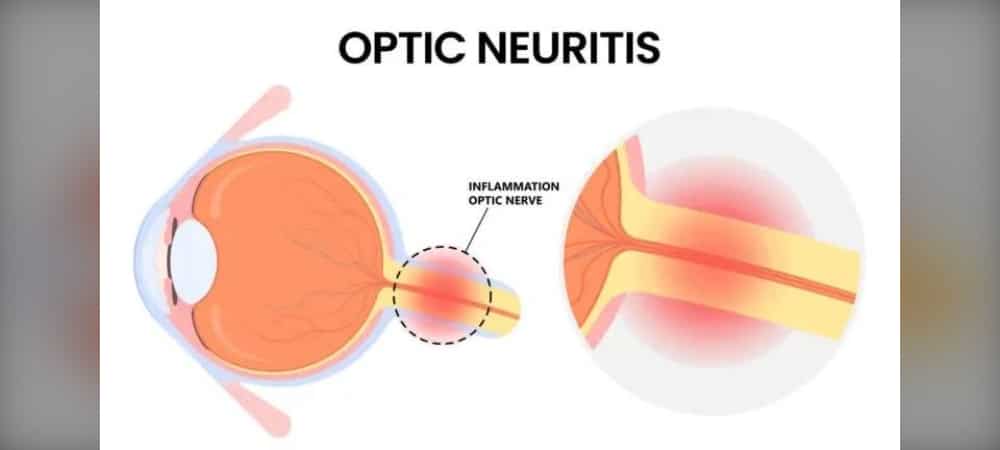
Optic neuritis is an inflammation that occurs in the optic nerve and directly affects your vision functions. Symptoms of optic neuritis, such as sudden vision loss, pain during eye movements, and seeing colors as faded, typically manifest within days. In this article, you will find everything you need to know about the causes, diagnostic methods, and treatment of optic neuritis.
What is Optic Neuritis?
The Optic Nerve and Its Function
The optic nerve is the main structure that carries images formed in the retina to your brain. You can think of it like an electrical cable. Each wire inside transmits a different part of the image. A single optic nerve exits from each eye and transmits signals to the brainstem in the form of electrical impulses.
The optic nerve starts from the back of the eye and extends to the visual center in the brain. Thanks to this structure, everything you see becomes meaningful and visual information is processed.
What Happens in Optic Neuritis?
Optic neuritis is the inflammation of the optic nerve. This inflammation can affect the entire nerve or just a part of it. Sometimes the sheath of the nerve is affected, and sometimes the part that enters the eye.
When inflammation occurs, swelling occurs in the optic nerve. When inflammation is present in the entire nerve or a part of it, the function does not fully occur, and you experience problems with vision. The disease usually affects one eye, and it is rarely bilateral.
Optic neuritis can occur at any time between the ages of 18 and 45. It is particularly more common in the 30s. It is seen more in women than in men. The disease starts very suddenly. Therefore, it is important to clarify the cause.
Differences Between Typical and Atypical Optic Neuritis
Optic neuritis is classified into two forms: typical and atypical, based on clinical reasons.
Typical optic neuritis is usually seen in young adults aged 20-45 and mostly affects one eye. More than 90% of patients experience pain that increases with eye movements. This form often presents as the first symptom of multiple sclerosis. Vision typically improves significantly on its own or with treatment within weeks or months.
Atypical optic neuritis exhibits different characteristics from the typical presentation. Both eyes may be affected, it may be painless, or it may not respond well to corticosteroid treatment. Severe and permanent vision loss may accompany significant swelling and bleeding at the optic nerve head. In atypical cases, the improvement of visual acuity may be weaker, and the risk of developing optic nerve atrophy is higher.
What are the Symptoms of Optic Neuritis?
Although symptoms vary from person to person, they generally follow a course that begins suddenly and progresses rapidly. Symptoms of optic neuritis appear within hours or days, and early recognition of the disease increases the success of treatment.
Vision Loss and Blurred Vision
Vision loss is the most important sign of optic neuritis. Most patients experience temporary vision reduction in one eye. Noticeable vision loss typically develops within hours or days. Vision may worsen further within a few days, and then usually improves partially or completely within weeks.
In most cases, visual functions return to near normal within 8-10 weeks. However, some patients may experience complete and permanent vision loss. The severity of vision loss varies from patient to patient, and some individuals may not lose vision completely.
Blurred vision may increase after exercising or taking a hot shower. Situations that raise body temperature can temporarily worsen vision, known as Uhthoff phenomenon.
Pain with Eye Movements
Individuals developing optic neuritis experience eye pain. This pain occurs with eye movements and particularly increases when looking to the sides or up and down. The pain is usually felt as a dull ache behind the eye.
Pain that increases with eye movements begins when vision worsens and disappears when vision improves. Sometimes, the pain may also be perceived as a dull ache behind the eye.
Disturbance in Color Perception
Disturbance in color vision is a characteristic finding for optic neuritis. Colors may appear faded or gray, especially along the red-green axis. Bright colors begin to look dull, and colors appear less vibrant than normal.
A decrease in the vibrancy of the color red is frequently observed. The perception of objects in the affected eye being less bright also indicates a reduced brightness perception.
Changes in the Visual Field
Various typical findings can be observed in the visual field. Central scotoma is one of the most common findings, and when the fibers of the optic nerve affecting the macula are involved, a gap occurs in central vision. A paracentral scotoma is a loss that encompasses the area between the center and the blind spot.
Dark spots or missing areas may appear in the visual field. Additionally, some patients may experience flashes of light or light flickering during eye movements. Flashes or light bursts can be particularly observed during eye movements.
When Should You See a Doctor?
If you experience sudden changes in vision and eye pain, you should see an eye doctor without delay. If you have pain in one eye or changes in vision that worsen within hours or days, seek medical attention as soon as possible.
If you have vision loss in both eyes, double vision, or numbness in one or more limbs, you should definitely consult an eye disease and neurology specialist.
Causes and Risk Factors of Optic Neuritis
Although the exact cause of optic neuritis is not always determined, it is thought to occur as a result of your immune system mistakenly targeting the optic nerve. Your body attacks its own tissues and damages the myelin sheath.
Relation to Multiple Sclerosis (MS)
The most well-known cause is multiple sclerosis. Optic neuritis is seen as the first symptom in 15-20% of patients diagnosed with MS. 15% of patients with multiple sclerosis start with optic neuritis.
After experiencing optic neuritis, the lifetime risk of developing MS is approximately 50%. This risk increases if lesions are present on brain MRI. However, if there are no new lesions on brain MRI, the long-term risk of developing MS is quite low.
50% of MS patients experience an episode of optic neuritis at some point in their lives. Autopsy findings have shown that more than 90% of MS patients have optic nerve involvement.
Autoimmune Diseases
Neuromyelitis optica is similar to MS but has a more severe course. In this disease, both the spinal cord and the optic nerve become inflamed. Recovery after attacks is less common compared to MS.
Myelin oligodendrocyte glycoprotein (MOG) antibody disorder causes inflammation in the optic nerve, spinal cord, and brain. Recovery from MOG attacks is generally better than from neuromyelitis optica.
Sarcoidosis, systemic lupus erythematosus, and Behçet’s disease can cause recurrent optic neuritis. These are autoimmune conditions where the body attacks its own tissues.
Infections and Medications
Viral infections such as measles, mumps, and influenza can lead to optic neuritis. The herpes virus is also among the triggering factors. A history of infection is present in 28.6% of cases.
Bacterial infections such as Lyme disease, syphilis, and cat scratch disease can also cause it. Viral and bacterial infections often trigger an autoimmune response.
Ethambutol, a medication used in the treatment of tuberculosis, is the most well-known drug that can cause optic neuritis. Additionally, methanol found in antifreeze, paint, and solvents is associated with optic neuritis.
Radiation therapy applied to the head and neck area is a significant risk factor. Uncontrolled diabetes can lead to inflammation of the optic nerve due to small vessel damage.
Age, Gender, and Genetic Factors
Optic neuritis can occur at any age, but it frequently appears in young adults aged 18-45. The average age is 30. It is most commonly seen between the ages of 20-40.
Women are at twice the risk compared to men. The gender difference is significant, with women having a much higher likelihood of developing it than men.
Optic neuritis is more common in the white race. Racial factors play a role in the frequency of the disease.
Certain genetic mutations may predispose individuals to optic neuritis or MS. Genetic factors increase the risk of developing the disease.
How is Optic Neuritis Diagnosed?
The diagnostic process requires a detailed evaluation and is supported by multiple tests. First, the timing of your complaints, how they progressed, and whether you have any accompanying problems are questioned. Previous similar experiences, known diseases, and medications you are taking are also important for diagnosis.
Eye Examination and Clinical Evaluation
The ophthalmologist performs a fundus examination to check for swelling or pallor in the optic nerve. In some patients, no findings may be observed. When the fundus is examined with an ophthalmoscope, dilation due to edema in the optic nerve can be seen. The optic disc is edematous in one-third of patients.
During the pupillary light reflex test, a bright light is shone in your pupil. In eyes affected by optic neuritis, constriction does not occur as it does in a healthy eye. This finding, known as Marcus Gunn pupil or RAPD, is an important sign indicating optic nerve dysfunction.
In the eye examination, edema at the optic nerve head, swelling due to edema, redness, and sometimes fine fleck-like hemorrhages may be observed. These structural changes are monitored throughout the treatment.
Vision Tests (Acuity, Field, Color)
Visual acuity is measured using the Snellen chart. Most patients experience reduced visual acuity in the first days. Visual acuity may vary in each patient throughout the diagnosis and treatment process.
Visual field tests are conducted using automated devices with static or dynamic methods. The patient’s ability to perceive light coming from the surroundings while looking at a fixed point is measured. The presence of any loss in the visual field is evaluated. These tests objectively reveal the impact of the disease.
Color vision tests assess your ability to distinguish between red and green tones. Your ability to distinguish the color red is particularly tested. Color vision and light reflexes are important functions affected by the optic nerve.
OCT and Visual Evoked Potentials
Optical coherence tomography provides a detailed analysis of the retinal layers and the optic nerve head. It shows a tissue section using the optical properties of tissues in real-time. It works based on infrared light. It evaluates the thickness of the optic nerve and the retinal structure.
The visual evoked potential test measures the time it takes for signals from the eye to reach the brain. The patient is shown patterns or flashing lights. Electrodes placed on the scalp record the electrical response of the brain to these stimuli. If there is a delay, it indicates a conduction disorder in the optic nerve. Prolongation of P100 latency provides strong support for the diagnosis.
MRI Imaging and Blood Tests
Magnetic resonance imaging shows whether there is inflammation or damage in the brain and optic nerve. When contrast material is used, inflammation in the optic nerve can be observed. Lesions specific to MS in the brain are investigated. Damaged areas in the brain are identified.
Blood tests are requested to determine the underlying cause. Various markers may need to be measured to detect autoimmune diseases or infections. A sedimentation test is performed to evaluate the relationship with temporal arteritis. Examination of cerebrospinal fluid may reveal the presence of cells, protein, and sugar levels.
How is Optic Neuritis Treated?
The treatment approach is based on slowing the rate of vision loss, accelerating recovery, and managing the underlying cause. The treatment for each patient is individualized and determined according to the severity of the attack.
Steroid Treatment and Administration Methods
High-dose corticosteroid treatment is the first option in the treatment of optic neuritis. A corticosteroid called methylprednisolone is usually administered intravenously. The treatment is applied for about 3 to 10 days, depending on the severity of the patient’s vision loss.
After intravenous steroid treatment, the oral tablet form is gradually reduced and discontinued. However, low-dose oral steroid treatment is not recommended alone, as it may increase the risk of new attacks.
Steroid medications help reduce inflammation and swelling in the optic nerve, facilitating faster recovery of vision. However, steroids do not significantly change the final level of vision in the long term compared to placebo; they primarily accelerate recovery.
Side effects may include weight gain, mood changes, facial flushing, stomach pain, and insomnia. In cases of severe vision loss or situations that do not respond well to steroid treatment, plasmapheresis or intravenous immunoglobulin treatment may be considered.
Immunomodulatory Treatments
If there is a disease such as MS, NMOSD, or MOGAD, a long-term treatment plan should be established. These treatments are used to regulate the immune system’s response. In patients at risk of MS, immunomodulatory treatment may be initiated after corticosteroid treatment in the first attack to delay the onset of MS.
Immunomodulatory drugs are administered to slow disease progression and reduce attacks. These treatments are usually managed by neurology specialists.
Duration of Treatment and Recovery Process
In the majority of patients with typical optic neuritis, vision significantly improves within a few weeks to a few months. More than 90% of patients return to near-normal visual functions within 8-10 weeks.
Even if visual acuity improves, some individuals may experience difficulty seeing colors as vividly as before, challenges in distinguishing contrast, or slight defects in the visual field. Starting treatment early reduces the risk of permanent damage.
Management of Recurrent Attacks
Optic neuritis can be a recurrent condition. The risk of recurrence depends on the underlying cause. In patients with MS, optic neuritis attacks may occasionally recur.
Ensuring that the treatment used is appropriate and effective is particularly important to reduce the risk of recurrence in optic neuritis associated with MS. Recurrent attacks increase the risk of permanent damage to the nerve, so regular follow-up is essential.
Frequently Asked Questions
Does optic neuritis cause permanent vision loss?
In most patients, vision significantly improves within a few weeks. More than 90% of patients return to near-normal visual functions. However, some individuals may not fully regain their previous level of vision.
Disturbance in color perception improves more slowly than visual acuity. Loss of contrast or defects in the visual field may be permanent. The timing of treatment initiation, the severity of inflammation, and the underlying cause affect the outcome.
Early treatment leads to better visual outcomes. In some patients, loss of color perception may persist even after recovering from optic neuritis. Therefore, it is important to start treatment without delay.
Does every optic neuritis turn into MS?
No, not every optic neuritis turns into MS. If there are no new lesions on brain MRI, the long-term risk of developing MS is quite low. Approximately 50% of patients who experience optic neuritis for the first time are diagnosed with MS within 15 years.
It is important to know that not every optic neuritis is related to MS. MS is a disease that causes destruction of the myelin sheath surrounding the nerves and presents with optic neuritis in about 20-30% of cases. However, optic neuritis can remain a single event.
What happens if left untreated?
Leaving optic neuritis untreated poses a serious risk for permanent vision loss. Once nerve tissue is damaged, complete recovery is rare. If the optic nerve is not treated in time, it may sustain irreparable damage.
Reduction in visual acuity may be permanent, and permanent damage may be observed in the form of blind spots in the visual field. In cases of optic neuritis caused by trauma, no successful results may be observed with any treatment.
Does the disease recur?
In some patients, optic neuritis may recur. The disease can be recurrent depending on the underlying cause. It may recur especially in autoimmune diseases.
Ensuring that the treatment used is appropriate and effective reduces the risk of recurrence, especially in optic neuritis associated with MS. In the presence of recurrent optic neuritis, the risk of reduction in visual acuity and permanent damage to nerve fibers increases. Optic neuritis attacks may occasionally recur in patients with MS.
What should be considered in daily life?
Regular check-ups are essential. Do not neglect changes in vision; you should have regular neurological and eye examinations. Regular eye exams are important to monitor the risk of recurrence of optic neuritis and the development of other conditions like MS.
It is important to protect against infections and maintain a lifestyle that balances immunity. Underlying diseases are investigated, and the optic nerve is monitored over the long term.
In Summary: Optic Neuritis
Although optic neuritis may seem serious, early intervention allows for recovery in most patients. You should see a doctor immediately when you notice symptoms such as vision loss and eye pain. Timely initiation of steroid treatment accelerates the recovery process and reduces the risk of permanent damage.
Regular follow-up is important, especially due to its association with MS. However, not every optic neuritis turns into MS, so it is sufficient to be under expert supervision without panicking. Your chances of treatment are high, and the majority of patients regain their visual functions within a few months. Do not neglect regular check-ups to protect your vision health.
Get comprehensive information about the symptoms, diagnostic methods, and treatment options for optic neuritis. Prevent vision loss with early diagnosis and treatment.