




How Does Breast Cancer Occur?
 The mammary gland consists of 15-20 lobes located around the nipple. Units called lobules, formed by cells that secrete milk in the breast, combine to form the lobes. Lobules are connected to each other by milk ducts, and the milk ducts merge towards the nipple. Each breast has blood and lymph vessels. Lymph vessels carry a colorless fluid called lymph, which contains cells that help us fight infections and diseases, and they drain into lymph nodes. There are many lymph nodes under the armpit, around the collarbone, and in the neck.
Breast tissue develops under the influence of hormones. The most important of these hormones are estrogen and progesterone. Milk ducts and lobules grow and develop under the effect of secreted hormones. For hormones to show their effects on the breast, they must bind to special sites (receptors) on the breast cells. Breast cancer develops with the uncontrolled proliferation of the cells that form these lobules or milk ducts.
What Are the Types of Breast Cancer?
 There are many types of breast cancer. These include:
Ductal Carcinoma
This is the condition where uncontrolled cell growth originates from the milk ducts. Although it is the earliest stage of breast cancer, it is the most common type of breast cancer.
Lobular Cancer
This type of breast cancer is seen less frequently. However, the risk of lobular cancer occurring in both breasts at the same time is higher than other types of breast cancer.
Inflammatory Cancer
In this type of cancer, the breast is large, edematous, warm, red, and sensitive because cancer cells cause blockages in the lymph vessels. The breast tissue may take on an appearance similar to an orange peel. Although inflammatory cancer is seen less frequently, it spreads rapidly. Breast cancer primarily spreads to the lymph nodes in the armpit via lymph vessels. The spread of cancer to other organs outside the breast is called metastasis. Breast cancer most commonly metastasizes to the bone, lungs, and liver.
What Are the Conditions That Increase the Risk of Developing Breast Cancer?
- The most important risk factor is age. As age increases, the risk of developing breast cancer also increases. Most breast cancers are seen over the age of 50.
- Family history is important. Those with first-degree relatives (such as mother, sister) with breast cancer have a higher risk of developing breast cancer. If the relative developed breast cancer before menopause, this risk is even higher.
- In those who have had breast cancer before, the risk of developing new breast cancer increases by 1% each passing year.
- Patients with bowel, ovarian, and uterine cancer also have a higher risk of developing breast cancer.
- Risk increases in those who have their first period at an early age (before age 12).
- Risk increases in those who enter menopause late (after age 55).
- The later the age of first pregnancy (especially over age 30), the higher the risk of breast cancer.
- It is thought that ending pregnancies before birth due to abortion or miscarriage increases the risk of breast cancer.
- It is seen more frequently in women who have never married.
- It is known that the risk of developing breast cancer increases slightly in those who use birth control pills and those who have received estrogen treatment for long-term menopause.
- Obesity, as in other types of cancer, increases the risk of breast cancer. On the other hand, there is no information that any diet reduces the risk of developing breast cancer.
- Alcohol intake (in large amounts) increases the risk of developing breast cancer.
- Exposure to radiation increases the risk of breast cancer.
Is Early Diagnosis Possible in Breast Cancer and Is There a Screening Test?
 Screening tests are procedures performed to catch a possible cancer early when there are no complaints. Screening programs such as regular doctor check-ups, mammography, and ultrasonography play a major role in early diagnosis. Thus, breast cancer can be diagnosed at very early stages before it causes any complaints in the patient. It should not be forgotten that early-stage breast cancer is a treatable disease.
Therefore:
- Have mammography and ultrasonography screenings at regular intervals, especially after the age of 40.
Although it cannot catch every breast cancer, mammography is the best method used for screening purposes today. Mammography is a special type of X-ray, it gives a small amount of radiation, and it is taken by compressing the breast between two plates. Every woman over the age of 50 should have a mammogram every year. Women in the high-risk group for developing breast cancer with a family history of breast cancer are recommended to have annual mammograms after the age of 40.
- Do not neglect your regular ultrasound and doctor examination between the ages of 20-40, even if you have no complaints.
Another screening method is breast examination by a doctor at certain intervals. Women between the ages of 20 and 40 should have a breast examination every 3 years, and those aged 40 and over should have it every year.
- Perform self-examinations at regular intervals.
It is recommended that women over the age of 20 examine their breasts every month in the bath, preferably while soapy, and check in front of the mirror whether there is an appearance in both breasts that was not there before. Just as everyone’s breast tissue is not the same, the breast tissue of the same person can have a different structure at different times. For example, during menopause, pregnancy, while taking birth control pills, or during the menstrual period, the breast has a different structure. It is natural to have sensitivity and tension in the breasts before menstruation.
- Become aware of the risks that cause breast cancer.
What Can Be the Symptoms of Breast Cancer?
 In early-stage breast cancer, the patient may have no complaints. Breast cancer usually does not cause pain. Mostly, one or more of the following symptoms are present.
- A palpable lump in the breast is the most common symptom.
- Discharge from the nipple (cloudy or bloody).
- Retraction of the nipple or on the breast skin.
- Enlargement, edema, redness in the breast.
- The breast skin having an orange peel appearance.
- Non-healing wound, ulcer on the nipple.
- Change in breast size and shape.
If the disease has spread to organs outside the breast (metastasized), different complaints appear depending on the organ it has spread to. For example, if it has spread to the bone, bone pain, bone fractures; if it has spread to the brain, complaints such as headache, nausea, vomiting, dizziness, visual disturbances, and even paralysis may develop.
How is Breast Cancer Diagnosed?
 Patients with the symptoms or complaints listed above must consult a doctor. After the doctor performs an examination, if they notice a lump or any suspicious situation in the breast, they will request a mammogram and refer the patient to a general surgeon. Usually, if there are suspicious findings on the mammogram, a breast ultrasound is also performed. With ultrasound, it can be understood whether the lump in the breast is filled with fluid or is solid. If there is a lump with fluid inside, it is called a cyst; a sample is taken from the cyst with a syringe and examined under a microscope. When a solid lump is detected in the breast, your doctor will want to take a sample from this lump by entering with a needle. This process is called a biopsy. Biopsy can be done sometimes by drawing a piece of breast tissue into a syringe with a needle (aspiration biopsy) or sometimes by removing a small piece from the lump in the breast with a special needle (tru-cut biopsy). General anesthesia is not required for either procedure; they can easily be performed under local anesthesia on an outpatient basis and do not require hospitalization.
How is Treatment Determined After Breast Cancer Diagnosis?
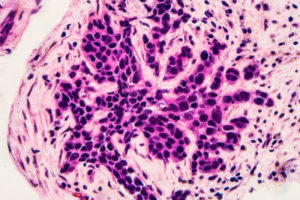
 The treatment of breast cancer primarily depends on how advanced the disease is, i.e., its stage. The stage of the disease is understood by investigating the size of the tumor after surgery, whether it has spread to the lymph nodes, and whether there is disease in other parts of the body outside the breast. Generally, after breast cancer is diagnosed by biopsy, most patients need to have the cancer removed surgically. In this surgery, the axillary (armpit) nodes on the side where the cancer is located are also often removed. The tumor and lymph nodes removed by surgery are examined under a microscope and a report is written. The department that writes this report is the pathology department, and the report they write is the pathology report. To understand whether the patient can benefit from hormone therapy, estrogen and progesterone receptors are determined in the cancerous tissue removed by surgery.
Features of the tumor written in the pathology report (such as the size of the tumor, the appearance of cancer cells under the microscope, whether the lymph nodes are involved by cancer cells, the presence of estrogen and progesterone receptors, and many other important features) play an important role in determining the treatment plan. Medical oncologists, general surgeons, and radiation oncologists decide together whether additional treatment is needed after surgery, and if so, which treatment should be given in which order, considering the patient’s features in the pathology report, age, whether they have entered menopause, and their general condition.
Before starting treatment, the doctor may request a chest X-ray, bone scintigraphy, abdominal ultrasound, and blood tests to understand whether the disease has spread to other organs. Considering all these features, the doctor explains to the patient how the most appropriate treatment will be. The final decision in treatment always belongs to the patient; the patient considers the treatment options presented and makes a decision. This decision-making period lasting for a few weeks has no negative effect on the disease.
Stages of the Disease
In early stages (Stage 1 and 2), the size of the tumor is small and sometimes it may not even have spread to the axillary lymph nodes.
As the stage increases (Stage 3), the size of the tumor, the number of lymph nodes it has spread to, and the area increase. It can also spread to the lymph nodes near the neck and breastbone. If it progresses a little further, the cancer also spreads to the chest muscles and ribs.
In the advanced stage (Stage 4, metastatic disease), the disease spreads to other organs such as the bone, liver, lungs, and brain.
What Are the Treatment Options?
 We can divide the treatment of breast cancer into two parts.
Local Treatment: Effective treatment applied to the area where the disease is located is called local treatment. Radiotherapy and surgical treatment are in this group of treatments.
Systemic Treatment: It is a type of treatment aimed at destroying cancer cells anywhere in the body. Chemotherapy and hormone therapy are in this group.
Patients may need both systemic and local treatment.
Surgical Treatment
Which type of surgery will be performed is determined by the size of the patient’s breast, the size of the tumor, the patient’s general condition, and their wishes.
Two types of surgical intervention are applied in breast cancer.
- The first group consists of breast-conserving surgeries where the entire breast is not removed, only the tumor is removed. These are:
Lumpectomy: Refers to the removal of only the tumor and the surrounding breast tissue. Usually, radiation therapy is given to the remaining breast tissue, and the axillary lymph nodes on the same side are removed.
Segmental Mastectomy: It means removing the lump in the breast together with the surrounding breast tissue and the thin membrane covering the chest muscles under the tumor. Usually, the axillary lymph nodes on the same side are also removed and radiation therapy is required after surgery.
- The second group includes surgeries that involve the removal of the entire breast. The decision whether to give radiation therapy following these surgeries is determined according to the characteristics of the tumor in the pathology report. This group of surgeries can be listed as follows:
Simple Mastectomy: Refers to the removal of the breast along with the surrounding fatty tissue and the skin over it; usually, axillary lymph nodes are removed in the same session.
Modified Radical Mastectomy: It is the most common surgery performed for breast cancer. It means removing the entire breast along with the axillary lymph nodes on the same side, the thin membrane covering the chest muscles, and sometimes a part of the chest wall muscles. The decision whether to give radiation therapy after surgery is determined according to the characteristics of the tumor in the pathology report. Today, in suitable patients, the technique where the first lymph node that the lymph flow goes to in the armpit, namely the sentinel lymph node, is sampled with a special blue dye given around the nipple is preferred. Thus, this lymph node is sent to pathology during surgery and examined rapidly with the frozen technique. If the result is negative, there is no need to remove other lymph nodes in the armpit, and problems that may arise from this procedure after surgery are avoided.
Radical Mastectomy: It is the removal of the breast along with the chest muscles and axillary lymph nodes. This surgery, which is only performed today when the tumor spreads to the chest muscles, was the most frequently performed surgery in the past.
Radiotherapy
Radiation therapy that uses high-energy X-rays to kill tumor cells and prevent tumor growth is called radiotherapy. Radiation can be given from a machine outside the body or through materials (radioisotopes) placed inside the cancerous tissue. It is not possible for patients receiving this treatment to spread radiation to the people they live with. Patients undergoing breast-conserving surgery definitely receive radiotherapy.
Depending on the characteristics of the patient and the tumor, sometimes radiotherapy and sometimes chemotherapy becomes the first treatment to be given after surgery. Radiotherapy can be given after chemotherapy is completed or between chemotherapy cycles.
Radiotherapy lasts for a total of 5-6 weeks; patients can come to the hospital 5 days a week, receive their treatment, and return home. Patients completing their radiotherapy are monitored at certain intervals by the doctors of this department for potential side effects that may develop due to radiotherapy.
Chemotherapy
Chemotherapy is the killing of cancer cells with drugs. It usually consists of more than one drug. Only nurses with special training in this field give chemotherapy. The number of times chemotherapy is given is expressed as a cycle (1st cycle, 2nd cycle, etc.), and usually the same drugs are repeated every 21 or 28 days. Chemotherapy is mostly given intravenously as a liquid in outpatient treatment centers or orally as a pill. Sometimes, depending on the patient’s general condition, the drugs given, or the way the drugs are administered, patients may need to receive their treatment while hospitalized.
After each cycle, patients are checked at the medical oncology outpatient clinic. During these checks, patients are examined, their complaints are heard if any, side effects of drugs are questioned, and some blood tests are requested to investigate whether they have caused any harm to other organs in the body.
Before each cycle, a blood count must be performed and shown to the authorized nurses who give the chemotherapy.
Whether a patient will receive chemotherapy after surgery and if so, how many cycles they will receive is determined by the features of the tumor in the pathology report. However, the patient’s age, general condition, and menopausal status also play an important role in making these decisions. It is not appropriate to give chemotherapy to patients whose general condition is poor enough to spend more than 12 hours a day lying down, as they will not be able to tolerate side effects. In patients for whom chemotherapy is planned, it is preferred to start chemotherapy within 3 weeks after surgery.
Hormonal Treatment
Hormone therapy is given to block the hormones that cancer cells need to grow. Most hormone therapy drugs are given orally as pills. These drugs act either by preventing the action of hormones in the body, by reducing their production, or by rendering the ovaries that produce these hormones non-functional.
Whether a patient will benefit from hormone therapy is decided after estrogen and progesterone receptors are determined. If the receptors are positive in patients receiving adjuvant chemotherapy, it is recommended to use Tamoxifen for 5 years following chemotherapy.
In elderly patients where it is thought that they cannot handle the side effects of chemotherapy, only hormone therapy after surgical intervention may be recommended without giving chemotherapy.
How is the Most Appropriate Treatment Option Determined?
In breast cancers that have not spread to any organ other than the breast, the first treatment is surgical removal of the tumor. Additional treatment given to patients who have no visible, detectable cancer left after surgery is called adjuvant therapy.
Adjuvant therapy is given to kill a small number of cancer cells that are not visible to the eye after surgery but are likely to have remained. Patients may receive only chemotherapy or only radiotherapy or both chemotherapy and radiotherapy or only hormone therapy as adjuvant therapy. Sometimes, adjuvant treatment after surgery may not be required in patients at a very early stage.
On the other hand, all patients undergoing breast-conserving surgery should receive radiation therapy after surgery. If the estrogen and progesterone receptors are positive in the breast tissue removed by surgery, this finding indicates that the patient’s tumor can grow under the influence of the estrogen hormone naturally present in the body. Hormone therapy is given to reduce or eliminate the hormones that cancer cells need to multiply.
In some cases, for example, if the tumor is too large to be removed surgically, the tumor is shrunk by giving chemotherapy before surgery (neoadjuvant therapy), and thus breast-conserving surgery can be performed on the patient. The patient receives the necessary adjuvant therapy after surgery.
In metastatic disease, hormone therapy or chemotherapy can be given to stop the progression of the disease. If there are only bone metastases, hormone therapy can be given. If there is spread to the liver, lung, or other organs besides the bone, chemotherapy can be given. The general condition of the patients must be good to receive chemotherapy. If the disease has spread to the brain, radiation therapy is preferred. Radiation therapy can be given to bone metastases to reduce bone pain. In patients with a single metastasis in the lung or liver, if the patient’s general condition is suitable, these metastases can be removed surgically.
What Are the Side Effects of Treatment?
Side Effects of Surgical Treatment
 After surgery, there may be temporary weakness in the arm and chest muscles on the operated side. Since nerve cells are cut or damaged during surgery, complaints such as burning, stinging, tingling, and numbness may develop in the surgical area. These complaints may pass within months or may be permanent in some patients. Since the axillary lymph nodes are removed, lymph circulation in that arm is insufficient. Therefore, that arm and hand should be protected more against any kind of injury or accident. If sentinel lymph node biopsy was performed on patients and the result was negative, patients do not need to protect their arms since other lymph nodes are not removed.
Side Effects of Radiotherapy
To prevent damage from the radiation to organs located right behind the breast, such as the heart and lungs, dose calculations are made and plates that act as protective shields are used for the necessary areas. Patients should rest as much as possible while receiving radiotherapy.
The skin in the treated area may turn red; it may be dry, sensitive, and itchy. Towards the end of the treatment, the same area becomes more wet and runny. This is a reaction of the skin to radiation. This area should be in contact with air as much as possible, and tight underwear and clothes should be avoided during this period. Throughout the time of receiving radiation therapy, this area should not be in contact with water. No lotion or cream should be used for this area without asking the doctor.
The effects of radiation therapy on the skin are temporary. However, the degree of affection varies from patient to patient. Sometimes the skin color in the area that received radiation therapy may remain darker than normal.
In metastatic disease, brain irradiation is performed especially for brain metastases. This procedure takes about 1 week or 10 days, and side effects such as nausea and vomiting may develop due to radiation therapy. For these situations, the radiotherapist explains to the patient the medications to be taken before and during the treatment.
Side Effects of Chemotherapy
As a general rule, chemotherapy affects rapidly proliferating cells. Blood cells that provide clotting during bleeding, provide our defense against diseases, and carry oxygen to the organs in our body are rapidly proliferating cells. These blood cells decrease in number about 1 week or 10 days after receiving chemotherapy, and therefore bruising or bleeding after minor procedures such as tooth brushing may occur. Normally, microbes that do not create disease when they enter our body because our defense system is strong can easily cause us to catch febrile diseases because the cells that provide our defense decrease after chemotherapy. During this period, being in crowded environments should be avoided to not catch germs from the people around.
In addition, it is recommended that raw vegetables and fruits (such as salad) that we eat by washing should be kept for at least 10 days before being eaten. This prohibition is not due to any effect of fruits and vegetables on your disease, but to protect you from microbes that are likely to have remained on the vegetable or fruit no matter how clean you wash it.
If you have a fever over 38.5°C for more than an hour, it is definitely recommended to consult your doctor. If you have a fever and your blood cells are found to be low in the blood count, you need to receive antibiotic treatment. This decrease in the number of your blood cells passes spontaneously within a week to 10 days, and the cells reach their normal numbers.
Another group of rapidly proliferating cells are digestive system cells and hair follicle cells. Therefore, after chemotherapy, hair usually falls out after the first week. Loss of appetite, nausea, vomiting, diarrhea, and mouth sores may develop in patients; almost all of these side effects can be controlled with drug treatment. The severity of these mentioned side effects of chemotherapy varies from patient to patient.
Today, it is rare to encounter long-lasting, permanent side effects with modern chemotherapies. However, some chemotherapy drugs can have negative effects on the heart. In those using such drugs, the doctor periodically requests tests to understand whether your heart is affected. Chemotherapy drug doses and chemotherapy cycle numbers used today are not at a level that will have a negative effect on the heart. There is a risk of developing blood cancer, namely leukemia, years after taking some chemotherapy drugs.
In addition, some cancer drugs affect the ovaries and kill egg cells, so the ovaries cannot produce estrogen, the female hormone, and patients enter menopause. Periods become infrequent or may stop, and in this case, women cannot get pregnant. Infertility caused by chemotherapy is permanent, especially over the age of 35-40. In younger patients, periods that are interrupted during chemotherapy may return to normal after a while.
Chemotherapy drugs are mostly given intravenously and can damage the vein they are given to over time, causing the vein to harden and become visible from the outside. If you have redness, swelling, and burning in the arm where you received the drug during or the day after receiving chemotherapy, you should inform your doctor immediately. Generally, the arm on the side where the breast was removed is not preferred for giving intravenous drugs. You should also avoid having injections in that arm for any other reason.
Side Effects of Hormonal Treatment
Side effects vary depending on the drug given as hormone therapy, but the most commonly used drug today is Tamoxifen. This drug prevents the use of estrogen in the body. Therefore, complaints related to menopause such as hot flashes, vaginal dryness, and irregular periods may develop in patients.
Serious side effects due to Tamoxifen are quite rare. One of them is the development of blood clots in the veins that carry dirty blood, especially in the veins in the legs. This can be treated by giving blood-thinning medications. Walking, not staying in a sitting position too much, and lifting the feet by putting a pillow under them in bed at night can be beneficial in preventing clot development.
Another serious side effect is that Tamoxifen increases the risk of developing uterine cancer. Large studies have shown that uterine cancer develops in 3 out of every thousand women using Tamoxifen. This small risk may remain quite insignificant besides the important effect of Tamoxifen in preventing breast cancer; however, a gynecological examination should still be performed at least once a year while using Tamoxifen.
What is the Chance of Recovery with the Given Treatment?
Sometimes patients want their chance of recovery to be expressed in numbers. In large studies, numerical percentage values are available regarding how long a patient at which stage can live on average. However, it should not be forgotten that these statistical values are an average of values belonging to thousands of patients, i.e., it would not be exactly correct to use them to predict what will happen to any breast cancer patient. What will happen in the future for two patients with breast cancer is different from each other. Many factors belonging to the tumor and the patient themselves, which we do not yet know today, are effective in two people catching the same disease showing different courses. Therefore, avoid comparing yourself with other patients.
Breast Cancer in Men
Breast cancer can occur in men, although it is rare. For every 100 women with breast cancer, one man is diagnosed with breast cancer. It is usually more common in men aged 60-65. Although the causes of the disease are not fully known, men with a family history of breast cancer are in the risk group. In addition, conditions such as estrogen exposure, liver disease, testicular inflammation, or removal of the testicles are among the factors that increase the risk of breast cancer in men.
Men with complaints such as a lump or thickening in the breast tissue, puckering or dimpling in the tissue covering the breast, inversion or swelling of the nipple, and discharge from the nipple are recommended to be examined by a specialist.
The diagnosis and treatment of the disease are similar to breast cancer seen in women. Imaging tests can be used for diagnosis. On the other hand, a definitive diagnosis can be made after taking a sample (biopsy) from the suspicious tissue and performing pathological examination. The most preferred method in treatment is surgery. In patients with small tumor size, the tumor and the surrounding breast tissue are removed with surgical intervention. In some cases, chemotherapy, radiotherapy, and hormone therapy can also be applied.
Breast Cancer and Pregnancy
Breast cancer can also be seen during pregnancy. Contrary to popular belief, neither pregnancy has a known negative effect on breast cancer nor does breast cancer have a known negative effect on pregnancy.
The treatment to be applied is determined according to the period of pregnancy. There is a risk of developing temporary or permanent infertility due to the effects of the drugs given to patients receiving chemotherapy on the ovarian cells. This risk is more pronounced in patients where breast cancer develops at ages close to menopause; in younger patients, pregnancy may be possible a while after chemotherapy is completed. Due to the effects of chemotherapy drugs on the ovaries, it is recommended that patients who want to become pregnant use birth control methods for the first two years after treatment and do not become pregnant during this period.
After Treatment
Patients who have completed their adjuvant therapy can return to their work lives as soon as they feel well. After mastectomy, some women may want to wear a prosthesis, and some may want a new one to be made in place of the removed breast by plastic surgeons (reconstruction). Both procedures have their own advantages and disadvantages. Reconstruction can be done during the surgery where the breast is removed, or it can be done after the treatment is completed. You can learn the risks and benefits of this surgery by talking to a plastic surgeon.
What Should Be Considered After Breast Cancer Surgery?
Do Not Make Common Misconceptions in Breast Cancer!
Wrong: If there is no lump, there is no cancer.
Right: There can be cancer even without feeling a lump. For this reason, breast screenings and mammography have a very important role in the early diagnosis of cancer.
Wrong: If there is no breast cancer in the family, there is no cancer risk.
Right: 80% of women with breast cancer do not have breast cancer in their families. This means that being a woman alone is to carry the risk of breast cancer.
Wrong: Breast cancer is not genetic.
Right: Besides genetic factors that trigger the formation of breast cancer, there are also environmental factors. Therefore, it would be wrong to say 100% genetic for breast cancer. About 10 percent of detected breast cancers are hereditary. However, people with a history of breast cancer in their family are in the risk group.
Wrong: Breast cancer is not seen in young women.
Right: Although breast cancer is seen more in women over 50, it can also be seen in young women.
Wrong: Breast cancer is not seen in men.
Right: Breast cancer is seen in men at a low rate, such as 1 male cancer for every 100 female cancers.
Wrong: Mammography is a very painful procedure and can damage the breast.
Right: You may feel discomfort because pressure is applied to the breast during mammography. However, this procedure does not damage the breast, usually no pain is felt, and it lasts very short. Mammography is already taken after the menstrual period when the breast is less sensitive.
Wrong: To understand whether the lump in the breast is cancer, surgery must be performed under general anesthesia.
Right: Most breast cancers can be diagnosed with a needle biopsy under local anesthesia without requiring surgical intervention.
Wrong: Giving birth and breastfeeding protect against breast cancer.
Right: Giving birth and breastfeeding do not protect against breast cancer, they only reduce the risk of catching it.
Wrong: Every lump in the breast is cancer.
Right: Not every lump in the breast is cancer; there are also benign tumors of the breast. However, when a lump is seen in the breast, a physician should be consulted immediately.
Wrong: People receiving breast cancer treatment should not get pregnant.
Right: Women who have completed breast cancer treatment and have no probability of recurrence can get pregnant.
Wrong: I am checking my breast and there is no lump that comes to my hand. Then there is no need for a doctor’s check-up.
Right: Some lumps may not be felt in a manual examination. For this reason, you should have your check-ups appropriate for your age regularly.
Wrong: I had discharge from my breast, it could be cancer.
Right: If the discharge from the nipple is bloody, it is suspicious and must definitely be investigated.
Wrong: Mammography causes cancer.
Right: The radiation received in mammography is very low, so it has no risk of causing cancer.
Wrong: Having a mammogram at a young age is inconvenient.
Right: There is no inconvenience in having a mammogram. However, in women under 35, a sufficient image cannot be obtained because the breast tissue is denser.
Wrong: Biopsy leads to the lump in the breast becoming cancerous.
Right: Biopsy procedure is the most reliable way to understand whether the lump is cancerous. The nature of the lump does not change with biopsy.
Wrong: In breast cancer surgeries, the entire breast is removed.
Right: The surgery method is determined according to the stage of the disease, the type of cancer, and the characteristics of the patient. Today, breast-conserving surgeries are preferred as much as possible.
Wrong: If the entire breast is removed in breast cancer surgeries, the cancer will not recur.
Right: When breast cancer is diagnosed early, the recurrence rate is very low. There is always a possibility of cancer disease recurring or appearing elsewhere.
Wrong: Stress causes cancer.
Right: Stress is an important factor in cancer. However, it does not start cancer on its own.
Wrong: Cancer has female and male types. Female cancer spreads faster.
Right: Cancer does not have a gender. There is a misconception, especially in Anatolia, that cancers that spread immediately are female cancers. However, there is no such thing in medicine. There are types of cancer, some types can follow a slightly more benign course.