



What is thyroid?
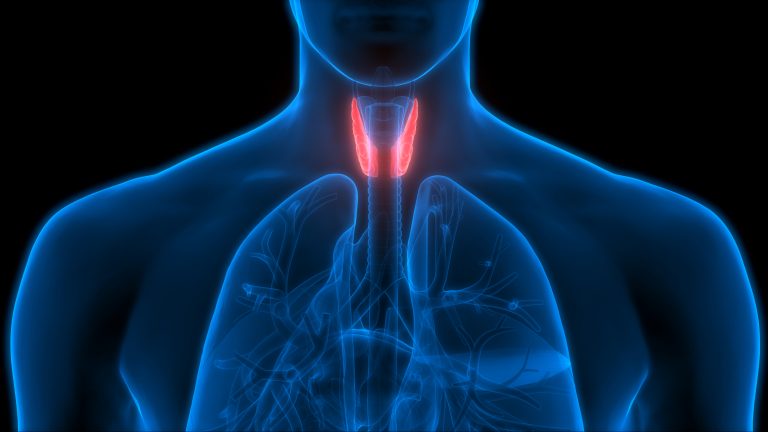
The thyroid gland is a butterfly-shaped organ located in the front of the neck, just below the cartilage called the Adam’s apple. It weighs approximately 20 grams and secretes hormones that are vital for our body.
What are the functions of the thyroid gland?
The thyroid gland secretes T3-T4 hormones. These hormones enter the bloodstream and regulate our metabolism, controlling its speed. In different organs and tissues of the body, they affect functions concerning many different systems such as heart rate, cholesterol level, weight, mental state, and menstrual cycle. Various diseases of the thyroid gland are seen in approximately 30-40% of the population. Thyroid gland diseases are more common in women.
What are the common diseases of the thyroid gland?
- Goiter
- Thyroiditis
- Thyroid cancers
- What is goiter?
- Goiter occurs as a result of the growth of the thyroid gland due to various reasons. Generally, these growths occur in the form of nodules developing in the thyroid gland. They can be single or multiple. They can also be in the form of cysts containing fluid. In diffuse goiter, the thyroid gland is generally enlarged. Although they are very common, they are mostly benign. Nodules can be millimetric in size or reach large sizes that cover the entire neck. Thyroid nodules must be examined.
- What are the symptoms?
- They are largely asymptomatic. However, they may present as an enlarging mass in the front of the neck. As the size increases, they can cause complaints of shortness of breath, difficulty swallowing, and hoarseness. Hyperactive nodules that secrete too much thyroid hormone into the blood manifest themselves with an increase in heart rate, irritability, weight loss, tremors and sweating in the hands,
- insomnia, and diarrhea. Hypothyroidism symptoms include slowing of the heart rate, weight gain, constipation, depression, fatigue, brittle and falling hair, dry skin, forgetfulness, and menstrual irregularities.
- What is Hyperthyroidism?
- The condition in which the thyroid gland secretes more hormone than necessary is called hyperthyroidism (toxic goiter). Toxic goiter can be with or without nodules. Toxic goiter without nodules is also called Basedow Graves’ Disease.
Hyperthyroidism
Symptoms of hyperthyroidism (toxic goiter);
- Palpitations,
- Tremors in the hands and body,
- Sudden weight loss,
- Hair loss,
- Itching,
- Feeling of fullness in the throat,
- Eating and drinking water excessively due to excessive appetite,
- Excessive sweating,
- Getting tired quickly,
- Irritability are common complaints.
Some patients complain of nausea, diarrhea, vomiting, and very frequent bowel movements. All of these may not be present at the same time. Some of these complaints are in the foreground, and other complaints can only be expressed through the doctor’s questioning. In some patients with non-nodular goiter, enlargement of the eyes and protrusion of the eyes forward are possible. In the examination of patients, it is seen that the heart rate is significantly increased, breathing is accelerated, hands are shaking, and the palms are sweaty.
Hypothyroidism treatment
Following the confirmation of the diagnosis as a result of blood tests, it is possible to provide very rapid improvement by giving the missing thyroid hormone. These patients have to use medication throughout their lives. There is no standard dose of thyroid hormone used in treatment. For this reason, the real and correct maintenance dose must be found through measurements and follow-ups to be made in each patient.
How to recognize a thyroid nodule?
The thyroid is checked in front of a mirror. For this, it should be checked whether there is an enlargement or swelling just below the Adam’s Apple in the front of the neck. The thyroid gland is located in this region. These checks should be done by leaning the head back. If an enlargement or swelling is seen in this area, a physician should be consulted.
What should be done in the diagnosis of thyroid nodules?
If a nodule is detected in your thyroid gland, your follow-up and treatment should be performed by an endocrinology specialist or an endocrine surgeon. Your doctor will take detailed information from you about your risk factors, perform your examination, and request the necessary tests. The first tests to be requested are blood thyroid hormone levels and thyroid ultrasonography. In most patients, a fine needle biopsy is also performed to obtain cell samples from the nodules in the thyroid gland. This procedure is called thyroid fine needle aspiration biopsy. It is often performed under ultrasonography and in the presence of a pathologist. Another method frequently used in thyroid nodules is thyroid scintigraphy. With this diagnostic method, information can be obtained about whether thyroid nodules work too much (hot nodule) or too little (cold nodule).
Treatment of thyroid nodules
The treatment of thyroid nodules depends on the characteristics of the nodule. If the thyroid fine needle aspiration biopsy shows that it is benign, small nodules that do not tend to grow can be monitored. Sometimes, thyroid hormone therapy may be preferred to prevent the nodules from growing or to shrink them. If the thyroid ultrasonography shows that the nodules tend to grow, needle biopsies should be repeated. Patients whose needle biopsy results show suspicious cells are taken for surgery. In addition, surgery is preferred for patients who experience shortness of breath and difficulty swallowing as a result of the pressure felt in the trachea and esophagus.
Are thyroid surgeries risky? Will there be a scar in the surgery area?
Like many branches of surgery, minimally invasive (less harmful) techniques are at the forefront in thyroid surgery today. With the developments in technology, thyroid surgery is performed with devices that close the vessels without the need for sutures or ligation.
In appropriate cases, it is possible to perform the surgery through a very small incision. This advanced technology uses high-frequency ultrasonic energy to eliminate hydrogen bonds in the proteins in the tissue.
Blood vessels close with less thermal damage at a relatively low temperature (80°C). During thyroid surgery, it is possible to protect the nerves going to the vocal cords and the parathyroid organs that provide the calcium balance of the body, which have a high risk of injury, in a less bleeding environment and with relatively less heat.
Studies have shown that the duration of surgery is shortened with this method compared to the classical method. In addition, since thyroid surgery can be completed with less bleeding, the patient’s need for painkillers after surgery can be significantly reduced. Avoiding a wide skin incision naturally helps to achieve a more aesthetic appearance and quicker recovery.
Patients often stay in the hospital for one night after the operation and are sent home the next day. There is no need for voice restriction after the surgery. They can return to their normal lives in a short time. Since the incision is closed with aesthetic methods, there is no need to remove sutures.
Who is at Risk?
- People with a family history of thyroid diseases such as goiter, thyroid nodules, thyroid cancer, and thyroiditis,
- People who have previously undergone surgery for a thyroid nodule,
- Smokers,
- Women in menopause,
- People who receive radiation therapy (radiotherapy) for the head and neck should have their controls and follow-ups regularly.