



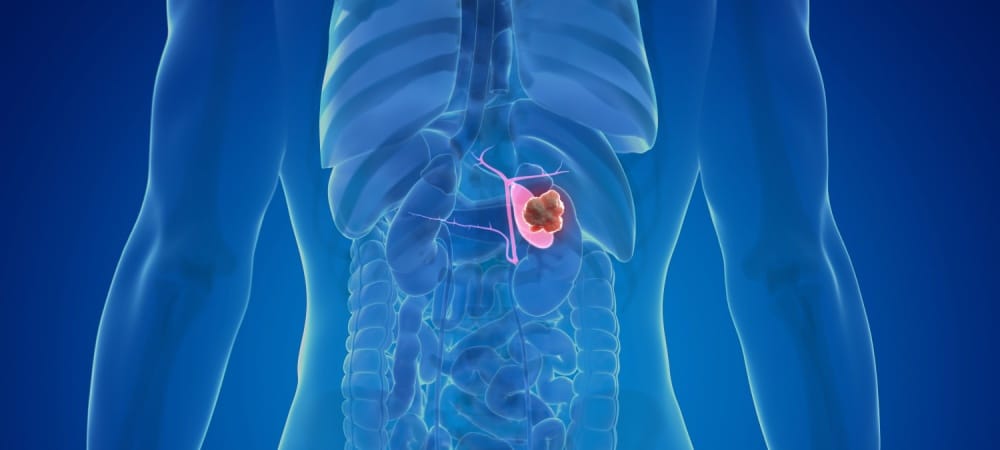
Gallbladder cancer is a disease that occurs as a result of malignant cell growth in the gallbladder. The gallbladder, located on the right side of the abdomen, is responsible for storing bile produced in the liver and used in digestion. Cancerous cells can form and spread in the mucosal layer of the gallbladder due to various risk factors. In the early stages, it may not cause symptoms and may go unnoticed until advanced stages. However, when symptoms begin to appear, they can resemble conditions such as cholecystitis and biliary colic. The gallbladder, located inside the internal organs, can allow cancer to grow unnoticed.
Gallbladder cancer is graded in 4 stages. When cancer is diagnosed in the early stages, the chance of recovery is higher. However, when gallbladder cancer metastasizes, it can be difficult to control with treatment. Metastasis can occur to surrounding organs, more distant organs, lymph nodes, and blood vessels. Stage 4 gallbladder cancer is a risky period in terms of life expectancy. Treatment options include chemotherapy, radiotherapy, and surgery.
What is Gallbladder Cancer?
Gallbladder cancer is a type of cancer that develops as a result of abnormal and rapid proliferation of gallbladder cells. Gallbladder cancer cases constitute the majority of general biliary tract cancers. The gallbladder is a pear-shaped organ located under the liver. Bile, which is necessary for the digestion of fats in the body, is produced in the liver and stored in the gallbladder. During the breakdown of food in the stomach and intestines, bile is released from the gallbladder into the small intestine, aiding in fat digestion.
It is a rarely seen health issue and can be divided into several types. Most gallbladder cancers are of the adenocarcinoma type. Less commonly, they can develop as squamous, adenosquamous, sarcoma, and neuroendocrine tumors. Cancer can metastasize from the gallbladder to other parts of the body. Staging can be performed to assess whether the cancer has spread and to what extent it has spread. Gallbladder cancer is classified according to the staging method as follows:
- Stage 0: Known as carcinoma in situ, this is the earliest stage. Abnormal cell growth is observed before cancer develops.
- Stage 1: Cancer spreads to the mucosal layer and muscle wall of the gallbladder. No spread to surrounding lymph nodes or the body is observed.
- Stage 2: Cancer spreads beyond the muscle walls to the connective tissues. No spread to surrounding lymph nodes or the body is observed.
- Stage 3: Cancer shows spread to the outer wall of the gallbladder, liver, lymph nodes, and surrounding tissues.
- Stage 4: Gallbladder cancer is defined as the final stage. Cancer shows spread to at least three lymph nodes, distant organs, and blood vessels.
What are the Symptoms of Gallbladder Cancer?
Diagnosing gallbladder cancer can be difficult because symptoms do not appear in the early stages. Most cases diagnosed in the early stage are found during surgery. When advanced gallbladder cancer begins to show symptoms, it presents nonspecific signs. Therefore, it can be confused with other gallbladder diseases. Symptoms may indicate gallbladder cancer directly or indirectly. Commonly observed symptoms of gallbladder cancer include:
- Fever,
- Jaundice in the eyes and skin,
- Upper abdominal pain,
- Nausea and vomiting,
- Presence of a mass in the abdomen,
- Unexplained weight loss,
- Abdominal bloating,
- Loss of appetite.
Advanced and severe stage gallbladder cancer may show signs such as bile duct obstruction, bile tree, and duodenal fistula. Intestinal obstruction, ascites, palpable abdominal masses, and liver enlargement are among the late-stage symptoms of metastatic gallbladder cancer.
What Causes Gallbladder Cancer?
Gallbladder cancer tends to develop due to chronic inflammation and genetic mutations. Chronic inflammation is a common source for most risk factors of gallbladder cancer. Inflammatory factors that affect the gallbladder from the inside and outside can stimulate cell inflammation and growth. Therefore, various health issues affecting the gallbladder and its surroundings are associated with cancer development caused by chronic inflammation. Other oncological causes include mutations such as CDKN2a and TP53. The growth, proliferation, and death of cells are controlled by oncogenes. Additionally, genes that prevent cells from dividing faster than normal and ensure that cells die at the right time are called tumor suppressor genes. DNA changes that prevent the activation of oncogenes and tumor suppressor genes are referred to as mutations. For a cell to transform into a cancerous cell, mutations often need to occur in multiple genes. Genetic changes, chronic inflammation, toxins, and risk factors causing injury to the gallbladder include:
- Gallstones,
- Abnormalities in the gallbladder and pancreatic ducts,
- Gallbladder calcification,
- Gallbladder polyps,
- Inflammatory bowel disease,
- Primary sclerosing cholangitis,
- Congenital bile cysts,
- Congenital abnormalities of the pancreas, gallbladder, and ducts,
- Infections by Helicobacter pylori and Salmonella typhi,
- Occupational exposures such as methylcellulose and radon,
- Some medications.
Additionally, obesity, smoking and tobacco use, alcohol consumption, and poor dietary habits can be other carcinogenic sources.
How is Gallbladder Cancer Diagnosed?
Gallbladder cancer diagnosis is aided by symptoms, family history, medical history, and medication use. Various tests can be applied to detect the presence and stage of cancer. Commonly used tests for diagnosis include:
- Carcinoembryonic antigen (CEA): CEA, secreted by healthy and cancerous cells, is a tumor marker.
- CA 19-9 test: High levels of the tumor marker CA 19-9 may indicate cancer.
- Liver function tests: When the amount of substances released from the liver is higher than normal, the possibility of cancer is considered.
- Blood tests: Gallbladder cancer blood values can indicate the function of various organs and overall health status.
- Ultrasound: Allows visualization of gallbladder tumors and polyps, bile obstruction, and cholecystitis.
- Computed tomography (CT): Detailed imaging of internal organs using X-rays.
- MRI: Gadolinium contrast injected into the bloodstream is used for detailed imaging of cancerous cells.
- PTC: X-ray of the liver and bile ducts is taken with the help of dye injected under the skin.
- ERCP: An endoscopic procedure to visualize the liver, gallbladder, and ducts.
- Endoscopic ultrasound (EUS): Sonogram images of tissues are created through endoscopy inserted from the mouth or rectum.
- Laparoscopy: Allows examination of organs by placing a laparoscope through small incisions made in the abdominal wall.
- Biopsy: Involves taking tissue samples for microscopic examination.
How is Gallbladder Cancer Treated?
Gallbladder cancer treatment is determined based on the staging method. In early-stage cancer cases, treatment methods aimed at completely eliminating the cancer and preventing new cancer formation are applied. The preferred treatment methods for the presence of early-stage cancer are mainly as follows:
- Chemotherapy: A drug treatment used to stop the proliferation of cancer cells and eliminate cancerous cells. In gallbladder cancer, chemotherapy can also be used to eliminate remaining cancerous cells in the body after surgery.
- Radiotherapy: Radiation sent to the body causes cancerous cells to be damaged and die. This slows tumor growth and minimizes damage to healthy cells. It may be preferred to eliminate remaining cancerous tissues after surgery.
- Surgery: Gallbladder cancer surgery involves the removal of the gallbladder and surrounding tissues. Additionally, cancerous tissues such as affected parts of the liver and lymph nodes need to be surgically removed.
Advanced, recurrent, inoperable, and metastatic cancers cannot be completely treated. However, some treatment methods can alleviate severe symptoms and extend life expectancy. Immunotherapy strengthens the body’s natural defense mechanism against cancer with substances produced in the body or in the laboratory. Targeted therapy is a treatment that targets cancerous cells with specific gene mutations.
Frequently Asked Questions
What are the Risk Factors for Gallbladder Cancer?
The risk factors for gallbladder cancer mainly include genetic mutations, toxins, and chronic inflammation. Commonly among these factors are gallstones, gallbladder polyps and cysts, abnormalities of the pancreas and gallbladder, gallbladder calcification, the use of certain medications, and exposure to toxins.
Can Gallbladder Cancer be Detected Early?
Gallbladder cancer is often not detectable in the early stages. This may be due to the asymptomatic progression of gallbladder cancer in the early stages, showing similar symptoms to other gallbladder diseases, and remaining more in the background of the liver. Cancer detected in the early stage is often found due to other medical procedures.
At What Age is Gallbladder Cancer Seen?
The risk of gallbladder cancer generally increases with age. Since the development of malignant tumors and the emergence of symptoms follow a prolonged profile, the age of diagnosis may be high. It is commonly seen in the elderly population.
What are the Symptoms of Gallbladder Cancer?
The symptoms of gallbladder cancer generally include jaundice, fever, upper abdominal pain, nausea and vomiting, presence of a mass and bloating in the abdomen, loss of appetite, and unexplained weight loss. In advanced cases, signs of bile duct obstruction, liver enlargement, intestinal obstruction, bile obstruction, and ascites may be observed.
Can Gallbladder Cancer be Completely Removed by Surgery?
If cancer is diagnosed in the early stage and has not metastasized to another area, the gallbladder can be completely removed. This operation is called cholecystectomy. However, in cases where cancer has spread to organs other than the gallbladder and towards the liver, the gallbladder, the affected part of the liver, and part of the bile ducts may be surgically removed.
Does Gallbladder Cancer Require Chemotherapy?
Gallbladder cancer may require chemotherapy. Chemotherapy drugs taken orally or intravenously play a role in eliminating cancerous cells. In early-stage cases, doses of chemotherapy may be given before and after surgeries. Additionally, chemotherapy may be applied to control cancer in patients where surgery is not possible.
Does Gallbladder Cancer Metastasize?
Tinea infection is a disease that can recur. Repeated close contact, infections from different body areas, fungi that can be transmitted from animals and soil, misdiagnosis and treatment, resistance to medications, and non-compliance with the treatment process can cause tinea to recur.
What is the Life Expectancy for Gallbladder Cancer?
The life expectancy for gallbladder cancer may depend on the stage at which the diagnosed cancer is. Cancer diagnosed in the early stage can often be cured with appropriate and timely treatment. However, the survival rate may be low for gallbladder cancer diagnosed in advanced stages.
Does Gallbladder Cancer Recur?
Gallbladder cancer may recur after treatment depending on various conditions. The cancer may recur in the gallbladder or in other body areas where it has metastasized. The risk of cancer recurrence may depend on the stage, treatment management, and post-treatment habits.
Which Doctor Should I See for Gallbladder Cancer?
For gallbladder cancer, one should consult specialists in Gastroenterology, General Surgery, or Oncology. A multidisciplinary approach is important in the diagnosis and treatment process.
The success of treatment increases when gallbladder cancer is diagnosed early.
To consult with Hisar Hospital specialists in General Surgery and to get detailed information, create an appointment now here.