



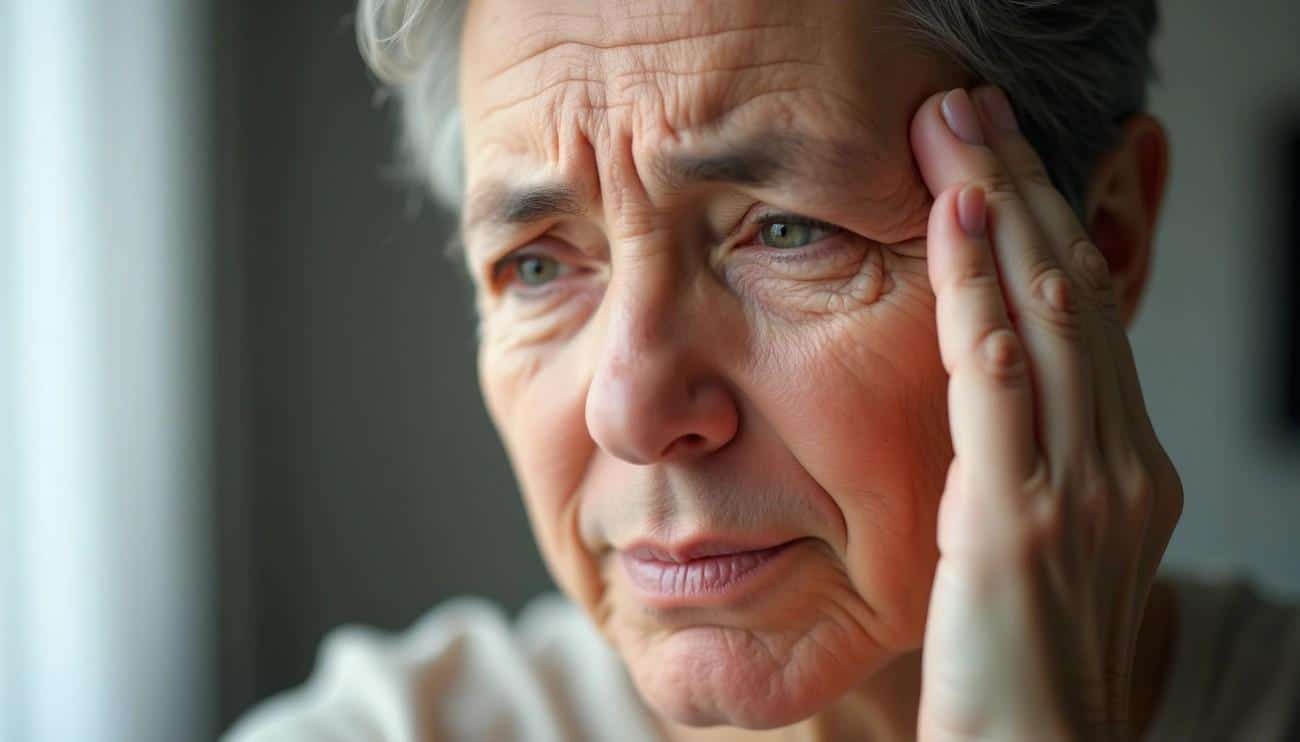
Blepharospasm is a condition that causes your eyes to close involuntarily and repeatedly. When you cannot control your eyes, both your daily activities become difficult and your quality of life can be negatively affected. This rare condition, diagnosed in about 2,000 people each year in the U.S., can progress if not noticed early on.
In this article, you will find answers to questions such as what blepharospasm is, what its symptoms are, what causes it, and how it is treated. You can also learn detailed information about botox treatment, diagnostic methods, and lifestyle changes to better manage your condition.
What is Blepharospasm?
The term blepharospasm comes from Ancient Greek. “Blepharon” means eyelid, and “spasmos” means contraction. It is the involuntary contraction of the muscles that close your eyelids. This condition, which is much more severe than a normal eye twitch, can cause your eyes to close at regular intervals.
When your eyelids close without your control, even simple activities like driving or reading become difficult. Muscle contractions appear as rhythmic spasms and can last from a few seconds to hours. In severe cases, your eyes may remain tightly closed, making it nearly impossible to open them.
Essential Blepharospasm and Its Types
Blepharospasm is seen in two main types:
Primary (Essential) Blepharospasm: Occurs spontaneously without being linked to any other disease. It is thought to be caused by changes in brain chemistry. It is also known as “benign essential blepharospasm” and is a benign condition. It is associated with dysfunction in the basal ganglia. Muscle contractions may also be observed in other parts of the body.
Secondary (Symptomatic) Blepharospasm: Develops due to another health issue. Surface problems of the eyes, such as dry eyes, keratitis, and conjunctivitis, can be triggering factors. It can also arise from neurological diseases such as Parkinson’s, Huntington’s, and Multiple Sclerosis. Reflex blepharospasm occurs when the surface of the eye is irritated due to a foreign body or inflammation.
When blepharospasm is accompanied by oromandibular dystonia, meaning that the jaw and facial muscles are also affected, this condition is referred to as Meige Syndrome.
Who Is Affected by Blepharospasm?
Blepharospasm typically occurs in individuals over the age of 50. The average age of onset is 56. Approximately 73% of cases begin after the age of 50. Its prevalence has been determined to be 3-5 per 100,000 in different populations.
It is 2 to 3 times more common in women than in men. Although the exact reason for this gender difference is not fully explained, hormonal differences and genetic predispositions may play a role.
The condition is chronic and shows progressive worsening in the first 5 years, followed by stabilization. Spontaneous recovery is quite rare, occurring in less than 2%. Progression is observed in 75% of cases.
What Are the Symptoms of Blepharospasm?
Early Symptoms
In most individuals, involuntary contractions of the eyelids can develop without any warning signs. You may start to notice a gradual increase in the frequency of blinking. In some cases, symptoms that begin in one eye may eventually affect both eyes.
You may experience dryness, burning, and a gritty sensation in your eyes. You may also feel discomfort as if there is a foreign object in your eye. Increased sensitivity to bright light develops, causing you to blink more frequently.
The initial symptoms are usually noticed while driving or watching television, i.e., when you are focused on a task. You may experience eye fatigue and blurred vision. Symptoms may decrease or completely disappear during sleep.
In the early stage, these symptoms may be confused with dry eye disease. Symptoms can be mild but may progress over months.
Advanced Symptoms
As the disease progresses, blinking, strabismus, and involuntary eyelid closure episodes occur more frequently. Your eyelids close tightly, and your eyebrows may furrow. Other signs may develop in other areas of the lower face, such as the wrinkling of the mouth.
Your eyelids may remain closed for extended periods, and you may have significant difficulty opening them. In some cases, you may need to manually try to open your eyes. Muscle contractions and spasms increase.
During stressful moments, contractions intensify. Difficulty in keeping your eyelids open significantly restricts your daily activities. Muscle contractions that start around the eyes may gradually progress to the cheeks, mouth area, and rarely the neck muscles.
Functional Effects
The uncontrolled closing of your eyelids can hinder activities such as reading, watching television, and driving. You may experience a condition referred to as functional blindness. Although there is no functional problem with your eyeball, you may face serious issues with vision because you cannot keep your eyelids open.
In 15-66% of cases, the disease leads to functional blindness. There may be dangers in activities that require attention, such as going up and down stairs or navigating in public spaces. Your social relationships may deteriorate, and your quality of life may be negatively affected.
As your eyelids close frequently, your tear film may not distribute properly. Temporary dryness may occur on the surface of the eye, resulting in complaints of blurred vision. Light sensitivity creates a vicious cycle: light leads to more blinking and increased spasms.
What Causes Blepharospasm? What Are the Causes?
The exact cause of blepharospasm is not fully understood. However, it is thought to be related to a dysfunction in the part of the brain responsible for movement coordination. Imbalances in chemical messengers between nerve cells can send incorrect or excessive signals to the muscles around the eyes.
Neurological Causes
Special centers in your brain called basal ganglia finely regulate your body movements. If a communication disorder occurs in these centers, involuntary contractions can arise. Imbalances in neurotransmitters like dopamine play a significant role.
Some scientific studies suggest that mutations in genes such as GNAL or CIZ1 may be effective in the development of this condition. These mutations disrupt dopamine signaling and trigger contractions at critical points of movement control.
Neurological disorders such as Parkinson’s disease, dystonia, and multiple sclerosis can increase the risk of blepharospasm. Eye lid spasms can also be observed in movement disorders such as Wilson’s disease and tardive dyskinesia. Brain injuries due to stroke, trauma, or tumors can also contribute to the development of blepharospasm.
Eye-Related Causes
Untreated chronic dry eyes are one of the most important factors triggering blepharospasm. Inflammations on the surface of the eye can reflexively create spasms. Surface problems such as keratitis, conjunctivitis, and contact lens intolerance can also lead to this condition.
Eye irritation, the sensation of a foreign body, and light sensitivity can initiate involuntary contractions. Inflammation of the eyelids, such as blepharitis, also poses a risk. Allergies, infections, or disorders in the contact between the eye surface and eyelids can lead to twitching.
Triggering Factors
Stress and fatigue significantly increase the severity of contractions. When the brain perceives danger, it releases certain hormones and neurotransmitters at higher levels. This can disrupt sensitive signaling in the basal ganglia and trigger blepharospasm.
Exposure to bright light worsens symptoms. Environmental factors such as wind, air pollution, and allergens can also trigger contractions. Excessive caffeine consumption and an irregular lifestyle may also be effective.
Risk Factors
Individuals with a family history of blepharospasm are at higher risk. Genetic factors may play a role in the development of blepharospasm. The frequency of occurrence increases in families with a history of dystonia or tremor.
Some medications can cause blepharospasm as a side effect. Neuroleptic drugs, antipsychotics, and some medications used in Parkinson’s treatment can trigger this condition. Individuals who have experienced head trauma or facial injury are at increased risk.
Vitamin and mineral deficiencies can also be effective. Low vitamin D levels have been detected in more severe cases. Stress, anxiety, and electrolyte imbalances are also among the risk factors.
How Is Blepharospasm Diagnosed?
Your doctor will initiate a specific examination and evaluation process when diagnosing blepharospasm. An ophthalmologist or neurologist will carefully listen to your symptoms and review your medical history. This condition is usually diagnosed after ruling out other diseases.
Physical Examination and Evaluation
The diagnostic process begins with a clinical evaluation. Your doctor will ask when your symptoms began, how they progressed, and how frequently you experience them. They will carefully examine how your eyelids move, the duration and frequency of the contractions.
During the physical examination, involuntary contractions of your eyelids are observed. Your doctor will check whether the contractions occur simultaneously in both eyes or unilaterally. It is evaluated whether the contractions decrease when you perform certain movements, such as raising your eyebrows.
It is checked whether other muscle groups around your eyes are affected. To rule out similar conditions like hemifacial spasm, movements in other areas of your face are examined. Your doctor will also observe the behavior of your eyelids while you are speaking or resting.
Tests Used
Various tests may be performed to confirm the diagnosis or rule out other conditions. An eye examination assesses your visual acuity, eye pressure, and the back of your eye. Triggering factors such as dry eyes or surface problems are investigated.
A neurological examination is conducted to evaluate the functions of your nervous system. Electromyography may be used to gather information about brain chemistry and nerve transmission. This test measures how your eyelid muscles respond to nerve stimuli.
In some cases, magnetic resonance imaging may be performed to assess whether there is a brain-related disorder. This imaging method is used to confirm that the condition is benign and essential. While it is not mandatory to diagnose, investigating underlying causes is important.
Differential Diagnosis
Before diagnosing blepharospasm, other diseases that show similar symptoms must be ruled out. If the contraction occurs only on one side of your face, there is a high likelihood of hemifacial spasm. While hemifacial spasm always remains unilateral, blepharospasm almost always becomes bilateral, even if it starts unilaterally.
Difficulty in voluntarily opening the eyelid may be confused with eyelid opening apraxia. Reflex blepharospasm occurs due to irritation or inflammation on the surface of the eye. Inflammation of the eyelids, such as blepharitis, may also show similar symptoms.
Ophthalmologists and neurologists often work in collaboration. This team approach ensures accurate diagnosis and the development of an appropriate treatment plan. Most of the time, the diagnosis of blepharospasm is largely made through clinical observation and experience.
How Is Blepharospasm Treated?
The primary goal of blepharospasm treatment is to alleviate your symptoms and improve your quality of life. Treatment options are determined based on the severity of your condition and your response to other methods. Today, multiple effective treatment options are available, and most patients can manage their symptoms with these treatments.
Blepharospasm Botox Treatment
Botulinum toxin injections are considered the gold standard in the treatment of blepharospasm. This treatment is extremely easy and effective. Injections made into the muscles around your eyes temporarily block muscle-nerve communication and stop the contractions.
During the application of botulinum toxin, injections are made into specific points around your eyes. Dose adjustment is critical and is very different from normal aesthetic injections. It must be performed by an experienced physician.
The effect begins within a few days and typically lasts for 3-4 months. In some patients, this duration may extend with regular applications. Often, one injection is sufficient. However, since its effect is temporary, it needs to be repeated.
The most common side effect is temporary drooping of the eyelid adjacent to the injection site. This does not occur in every patient and usually resolves on its own within 3-4 weeks.
Medication Treatment
Medication treatment is generally not as effective as botulinum toxin. Some medications may help reduce muscle spasms, but their effectiveness is limited. Muscle relaxants, benzodiazepines, or anticholinergics may be used.
The side effects of these medications can be limiting. You may experience drowsiness, dizziness, and dry mouth. Antidepressant treatment may be recommended if necessary.
Surgical Treatment
Surgical treatment is an alternative option for patients who do not respond adequately to botulinum toxin injections. In rare cases, interventions such as the removal of a portion of the eyelid muscles may be necessary.
In a myectomy surgery, the involuntarily contracting eyelid muscles are surgically removed. This procedure stops the contractions and provides relief to patients. Adequate eyelid opening is ensured after surgery.
Stepwise surgical treatment can yield very good results in patients who cannot be controlled with injections. In some cases, smaller amounts of botulinum toxin injections applied less frequently may still be necessary.
Lifestyle Changes and Supportive Approaches
Reducing stress is of great importance in treatment. Relaxation techniques such as regular walking, breathing exercises, and meditation can calm your nervous system. Adequate and quality sleep can also alleviate your symptoms.
Limiting caffeine and similar stimulants may be beneficial. The use of artificial tears and wearing sunglasses can provide supportive benefits. Care should be taken to continue treatment for dry eyes.
A balanced diet and a regular lifestyle can help reduce your symptoms. It is also important to avoid bright lights and rest your eyes.
Frequently Asked Questions
Does blepharospasm go away?
Blepharospasm is a chronic and progressive condition. The likelihood of spontaneous complete recovery is quite low, around 5%. If left untreated, contractions tend to become more frequent over time.
However, with appropriate treatment, your symptoms can be controlled for a long time. With early diagnosis and treatment, your symptoms can be managed. Success rates of up to 90% are achievable with botox injections. Therefore, although the disease may not completely disappear, significant improvements in your quality of life can be achieved.
This progressive condition can lead some patients to complete eyelid closure and functional blindness. Today, blepharospasm is seen as a treatable condition.
Is blepharospasm dangerous?
Blepharospasm does not damage the structure of your eye. There is no functional problem with the eyeball itself. Essentially, it is not a dangerous disease.
However, if left untreated, it can seriously reduce your quality of life. The contractions in the eye can negatively affect your daily life, leading to significant problems regarding eye health. Activities such as driving, reading, and watching television become difficult.
Contractions may frequently increase and can complicate daily life. If left untreated, you may find it impossible to perform even your daily functions because you cannot open your eyes. You may struggle to drive and walk on the road.
Does blepharospasm cause blindness?
No, blepharospasm does not cause blindness. There is no relationship between this disease and the visual pathways. There is no damage to your eyeball.
In reality, you may experience a condition referred to as “functional blindness.” Because your eyelids are involuntarily kept tightly closed, you may find yourself unable to see your surroundings. This temporary loss of vision does not lead to permanent damage. However, when you cannot open your eyes, you face the situation of functional blindness.
You may have 20/20 vision, but if you cannot keep your eyelids open long enough to drive or read, you can be considered functionally blind. A person must use alternative techniques to perform tasks that normally require vision.
How long does botox treatment last?
Botox injections are typically effective for 3 to 4 months. The temporary relaxation of the muscles allows eyelid movements to return to normal and reduces contractions. The treatment effect lasts for about three to four months.
The effects of botox usually take two or three days to become noticeable. The effect begins within the first week and reaches its maximum level in the second week. The main effect appears within 2-3 days.
After this period, the muscles need to be re-injected. Treatment is generally repeated every 3-4 months. The drug is eliminated from the body, and its effectiveness diminishes during this time. It has also been observed that this duration extends with regular applications.
The most common side effect is temporary drooping of the eyelid adjacent to the injection site. This does not occur in every patient and usually resolves on its own within 3-4 weeks.
In Summary, Blepharospasm
Blepharospasm can significantly affect your quality of life, but it is a treatable condition today. Early diagnosis is crucial when you notice involuntary contractions in your eyes. Successful results are achieved in 90% of patients with botox injections. If left untreated, your symptoms may worsen over time, making your daily activities difficult.
If you experience excessive blinking, light sensitivity, or a feeling of closure in your eyes, you should consult an ophthalmologist. With the right treatment, you can manage your symptoms and return to your normal life. With regular follow-up and appropriate treatment options, blepharospasm is a manageable condition.
Blepharospasm is characterized by involuntary contractions of the eyelids. Learn about its symptoms, diagnostic methods, and treatment options. Early diagnosis is important to improve your quality of life.