



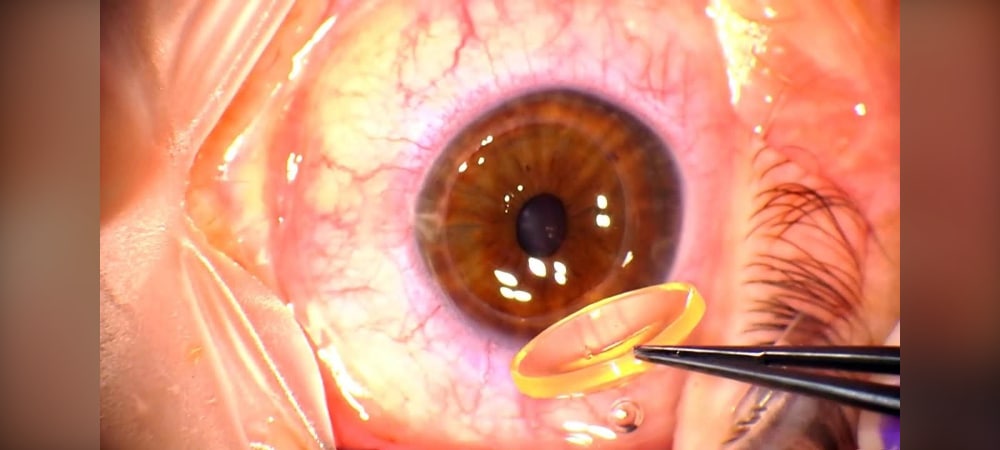
Penetrating keratoplasty is an effective surgical method in which all layers of the cornea are replaced with healthy donor tissue. This treatment is generally applied in serious conditions such as keratoconus, corneal opacities, corneal dystrophies, and eye traumas. The surgery is performed by removing the damaged cornea with a special cutting tool and stitching healthy tissue in its place. In this article, you will find answers to questions such as what penetrating keratoplasty is, who it is applied to, how the surgical process works, and what to pay attention to during the recovery period.
What is Penetrating Keratoplasty?
Cornea Anatomy and Function
The cornea, located at the front of your eye, is a transparent, dome-shaped tissue. It refracts light to focus it on the retina. The transparency and optical properties of the cornea are critical for visual function.
The cornea consists of five different layers. The outermost layer is the epithelium, which has a very rapid renewal capability. Just beneath it is the Bowman layer, which provides structural strength to the cornea. The stroma, which makes up about 90% of the cornea’s thickness, holds the secret to the cornea’s transparency. The Descemet membrane is a thin but resilient layer. The innermost endothelial layer is a single cell layer that maintains the transparency of the eye.
The avascular structure of the cornea provides a significant advantage in tissue transplants. It makes it difficult for the cells that cause tissue rejection to reach foreign tissue. Therefore, corneal transplants yield more successful results compared to other organ transplants.
Definition of Full Thickness Transplant Method
Penetrating keratoplasty is a surgical procedure in which all layers of the cornea are replaced with donor cornea. In this method, the diseased corneal tissue is completely removed. A tissue of approximately the same size is prepared from healthy donor cornea and transplanted to the patient.
The donor cornea is stitched to the recipient cornea with approximately 16 individual stitches or a single continuous stitch, or both methods can be used together. The duration of the surgery is about 45-60 minutes. A circular section of about 7-7.5 mm is cut from the center of the cornea using a vacuum circular blade called a trepan.
Differences from Other Corneal Transplant Methods
Penetrating keratoplasty is a classical method preferred in advanced cases where all layers are involved. However, modern methods that only change the diseased layer are also used today.
In the Deep Anterior Lamellar Keratoplasty (DALK) method, only the anterior layer of the cornea is replaced. The innermost endothelial cells remain in place. This significantly reduces the risk of rejection of the transplanted cornea. Wound healing is faster, and stitches are removed in a shorter time.
Descemet Membrane Endothelial Keratoplasty (DMEK) only changes the inner layer. It is applied especially in cases where only the endothelial layer is damaged, such as Fuchs dystrophy. The most important feature of this surgery is the absence of numerous stitches. Additionally, since the anterior layers of the cornea are the patient’s own tissue, the cornea is more resistant to trauma.
Who is Penetrating Keratoplasty Applied to?
Penetrating keratoplasty is a treatment option applied in certain corneal diseases. This surgery comes into consideration when sufficient benefit cannot be obtained from glasses, contact lenses, or drop treatments. It is preferred when there is damage to multiple layers of the cornea or when other transplant methods are not suitable.
Patients with Advanced Keratoconus
In the early stages of keratoconus, glasses or contact lenses may be sufficient. Crosslinking treatment can stop the progression of the disease. However, in cases where the corneal tissue is largely damaged, penetrating keratoplasty may be necessary.
The corneal layer bulges forward and thins. This prevents the light in the eye from being refracted correctly. The dome shape of the cornea is distorted and becomes conical. When the deterioration is at a level that does not allow the patient to continue their education, work, and social life despite all treatments, the decision for corneal transplantation is made.
Corneal Opacities and Cloudiness
Loss of transparency in the cornea can result from many causes. Infection can cause scar tissue and new blood vessels to form in the cornea. This situation is particularly common after herpes virus keratitis.
In contact lens users, the risk of infection increases when hygiene rules are not followed. Severe keratitis damages the corneal tissue and causes cloudiness. Additionally, if the cornea becomes cloudy due to accidents or if its integrity is severely compromised, transplantation is required.
Corneal Dystrophies
Hereditary corneal diseases lead to progressive deterioration in the cornea. Fuchs endothelial corneal dystrophy is a disease in which the inner cell layer undergoes degenerative changes. In this disease, the endothelial cells on the inner surface of the cornea deteriorate. When the cells lose their function, the cornea swells and becomes cloudy.
Among stroma dystrophies, macular, granular, and lattice dystrophies are included. In penetrating keratoplasty surgeries performed for corneal stroma dystrophy, macular dystrophy was observed in 52.6%, granular dystrophy in 31.6%, and lattice dystrophy in 15.8%. In an average follow-up of 26.3 months, 84.2% of the grafts remained transparent.
In granular and lattice dystrophies, recurrence of the disease is the most important factor. In granular dystrophy, significant recurrences have occurred in five eyes. In macular dystrophy, recurrence is rare.
Eye Traumas and Injuries
Physical injuries, cuts, or chemical burns to the eye can cause severe damage to the cornea. When the damage to the eye is permanent and other treatments do not yield results, penetrating keratoplasty is performed.
Failed Previous Transplant Surgeries
After corneal transplantation, the body’s immune system may attack the donor cornea, leading to tissue rejection. If the previous transplant is rejected or if graft failure develops over time, re-transplantation may be necessary. If required, corneal transplant surgery can be repeated, and the results are good.
How is Penetrating Keratoplasty Performed?
The success of the surgical process begins with proper preparation and planning. Before penetrating keratoplasty, your eye doctor will conduct a comprehensive evaluation and determine the steps you need to follow until the day of surgery.
Preoperative Preparation and Tests
Your doctor will first perform a detailed eye examination. Corneal topography will create a map of your cornea. Pachymetry measurement will determine your corneal thickness. Advanced imaging methods like OCT will analyze the condition of your cornea layer by layer.
Measurements of your eye will be taken to determine the appropriate donor cornea size. Conditions that could lead to complications after surgery will be identified. Your medications and supplements will be reviewed. Medications that may need to be stopped before or after surgery will be identified.
If there are issues such as infection or swelling in or around the eye, these conditions need to be treated. Otherwise, the likelihood of a successful transplant decreases. If you are using blood-thinning medications, you may be asked to stop them a week before surgery, according to your doctor’s advice.
When an appropriate donor cornea is obtained, you will be called for surgery. The corneal tissue can maintain its viability in special solutions for about a week. The waiting period may last several months.
Surgical Procedure Steps
The surgery is usually performed under local anesthesia. Your eye and surrounding area will be numbed, but you will not be completely unconscious. General anesthesia may be preferred in children or in necessary situations.
The duration of the surgery varies between approximately 30-60 minutes. The steps of the procedure are as follows:
- The eyelids and surrounding area are cleaned appropriately.
- A small device is placed to keep your eyelids open.
- The surgeon determines the diameter of the cornea to be used for the transplant.
- The damaged cornea is circularly removed with a special cutting tool called a trepan.
- The donor cornea is cut to the appropriate size and stitched in place.
- It is fixed with approximately 16 fine stitches using microsurgery techniques.
Postoperative Initial Care
You may be kept under observation in the hospital for one day after the surgery. In the first few days, eye drops and antibiotic treatment are applied. Your eye will be protected with a bandage for several weeks.
In the first few days after surgery, symptoms such as blurred vision, mild pain, a burning sensation, redness in the eye, sensitivity to light, and tearing are normal. These symptoms will decrease over time. It is necessary to use the prescribed drops regularly to prevent infection and inflammation.
To protect your eye, use an eye shield or glasses. Be careful not to press or scratch your eye. Physical activity should be restricted. Avoid heavy activities that could cause pressure on the eye.
Recovery Process and Follow-up
The recovery process after surgery requires patience. Your vision improvement progresses slowly, and it is essential to attend regular doctor check-ups during this period. You may feel discomfort such as burning and tearing during the first few weeks. These symptoms are normal and will decrease over time.
What to Pay Attention to in the First Weeks
A protective bandage is used on the day of surgery. During the first week, you can only take a shower washing below the neck. Normal bathing can be done after the first-week control examination unless your doctor states otherwise.
You should be careful not to press or scratch your eye. During the first month, avoid lifting heavy loads. For example, avoid lifting 5 kg or more and jobs that require excessive bending and straightening. It is recommended to use a plastic eye protective cover while sleeping.
To prevent dust from getting into your eye and to protect it from simple impacts, use temporary prescription or non-prescription glasses according to your doctor’s recommendation. If you experience pain, burning, redness, or vision loss lasting more than 24 hours, contact your doctor without waiting for your appointment date. This situation may arise from loosening or breaking stitches, inflammation in the cornea, or rejection reactions.
Stitch Removal Process
Your doctor will decide when the stitches will be removed after the surgery. This period is at least a few months after the surgery. Generally, all stitches are removed within a year. Stitches can be removed based on the patient’s age, the condition of the cornea, and can be started early for correcting astigmatism, up to 1-1.5 years later.
The removal of stitches is a relatively comfortable and painless procedure that can be performed with drop anesthesia. Some stitches can be removed individually to correct irregularities in the cornea and related astigmatism. Consequently, your vision may improve.
Regular Check-ups and Follow-up Program
The first check-up is performed on the first day after surgery. Subsequently, check-ups are conducted every month during the first year, including the first week. An average of 8-10 check-ups are performed within the first year. After that, you will be followed up with check-ups every three months for about 1-2 years.
The frequency of check-ups gradually decreases. Regular check-ups are necessary to prevent possible complications. Vision generally improves significantly within the first year after surgery.
Medications to be Used
It is very important to use the prescribed medications carefully. It is recommended to use antibiotic drops for about 1 month and steroid drops for about 1 year in decreasing doses. Generally, only eye drops are used.
Antibiotic and steroid eye drops are used according to the doctor’s recommendation. Steroid drops suppress your immune system and prevent the rejection of new tissue. Tissue rejection occurs in 5-30% of cases, but it is eliminated in most patients with steroid drops.
Advantages and Risks of Penetrating Keratoplasty
Like any surgery, penetrating keratoplasty carries both advantages and risks. In this section, you will learn about the benefits of the treatment and the problems you may encounter.
Benefits of the Treatment
Penetrating keratoplasty is the most effective treatment option for severe corneal damage. Since all layers of the cornea are replaced, patients generally experience significant improvement in vision. In studies, 88.2% of the monitored patients had transparent grafts. Additionally, 79.4% of cases showed an increase in visual acuity.
Corneal transplantation is a surgery performed more than 40,000 times annually worldwide. Among all transplant surgeries, corneal transplantation is the most frequently performed and successful group. The transparency and avascular nature of the cornea provide a significant advantage. Therefore, corneal transplants are more successful compared to other organ transplants. The overall success rate is between 85-95%.
When the appropriate patient is selected, the success rate is high. In suitable patient profiles, corneal transplantation is a long-term and permanent treatment. This operation, performed to restore visual function, significantly improves the patient’s quality of life.
Possible Complications and Side Effects
No surgical intervention is without risks. There are rare problems that may arise after surgery. Infections can develop in the eye during or after surgery. Symptoms of infection include excessive redness in the eye, intense tearing, severe pain, and swelling in the eye.
Increased intraocular pressure (glaucoma) may occur after surgery. The frequency of postoperative glaucoma has been detected in 46.8% of patients. If severe pain, blurred vision, headache, and a feeling of pressure in the eye occur, you should urgently consult an eye doctor.
Astigmatism may develop in some patients after corneal transplantation. Due to the irregular curvature of the cornea, light cannot focus properly on the retina. This can lead to blurred or double vision. Loss of corneal transparency usually occurs due to tissue rejection and infection.
Problems such as loosening or infection of stitches may occur. Serious but rare complications such as bleeding and retinal detachment are also present. Corneal edema is the swelling of the transplanted cornea due to its inability to function adequately.
Risk of Tissue Rejection and Precautions
Tissue rejection occurs in 5-30% of corneal transplants after surgery. Tissue rejection is the body’s immune system’s effort to recognize and eliminate the transplanted tissue. Cloudiness and vascularization occur in the new corneal tissue, and vision decreases, but the transplanted tissue does not disappear.
Since corneal tissue is avascular, the risk of rejection is lower compared to other organ and tissue transplants. However, the transplanted cornea can still be rejected even years later. Therefore, regular follow-up with an eye doctor after corneal transplantation is important.
You should be aware of the symptoms of tissue rejection. Redness in the eye, sensitivity to light, decreased vision, and pain are the first signs of tissue rejection. If any of these complaints arise, you should consult your doctor immediately.
In most patients, tissue rejection is treated and eliminated with steroid drops at a rate of 90%. Steroid drops suppress your immune system and prevent the rejection of new tissue. If the drops are insufficient, high-dose steroid medications may need to be administered intravenously. With early intervention, this situation can usually be controlled.
Frequently Asked Questions
How long does the surgery take?
The penetrating keratoplasty surgery takes an average of 30-60 minutes. If other additional procedures will be performed during the surgery, the duration may be slightly longer. The procedure is performed under local or general anesthesia and under a microscope.
How is the donor cornea obtained?
The donor cornea is obtained from individuals who have suffered brain death but have healthy corneas. Corneal tissue is obtained from eye banks in Ankara and Istanbul in our country. Ideally, the cornea is taken within the first 12 hours after death. The obtained corneal tissues can be kept in special solutions for up to 14 days. Detailed tests for infectious diseases such as AIDS, hepatitis, and syphilis are performed before obtaining the donor cornea. Since the cornea is an avascular tissue, blood group compatibility is not required.
When will vision improve after surgery?
Your vision improvement occurs between a few weeks to a few months. In full-thickness transplants, reaching the final vision level may take 6 to 12 months. Your vision may be blurry for the first few months. Maximum vision may take up to a year to achieve. After stitches are removed and glasses or contact lenses are provided, additional improvement in your vision may be achieved.
Is lifelong medication necessary?
No, continuous medication is not required. It is essential to use medications in decreasing doses for the first year. It is recommended to use antibiotic drops for about 1 month and steroid drops for about 1 year. Generally, only eye drops are used.
When can I return to normal life after surgery?
People who do not work in dusty environments and do not engage in heavy physical labor can return to work three weeks after their surgery. Students can return to school two weeks later. Depending on your job and how quickly your vision improves, you may return to work within a week after surgery. Heavy exercise and lifting heavy objects are prohibited for the first few weeks.
In Summary, Penetrating Keratoplasty
Penetrating keratoplasty is an effective treatment method that restores your vision in cases of severe corneal damage. Although the surgical process requires patience, the success rates are quite high.
In summary, it is very important to attend regular check-ups as recommended by your doctor. Use your medications without interruption and protect your eye from trauma.
Your vision improvement may take several months, but most patients are satisfied with the results. If you experience any discomfort after surgery, consult your doctor immediately.
Early intervention prevents possible complications. Follow the instructions given for a healthy recovery process.