



[/vc_column_text][/vc_column][/vc_row]
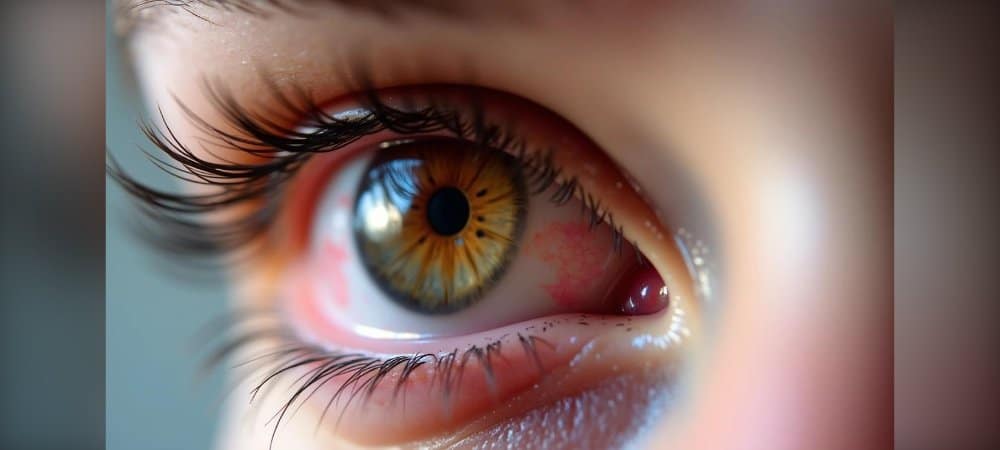
Adenoviral conjunctivitis manifests with symptoms such as redness, watering, and itching in the eye. For detailed information on treatment and prevention methods, read our article.[/vc_column_text][/vc_column][/vc_row]
Fill Out the Form for Detailed Information and Contact!
Adenoviral conjunctivitis manifests with symptoms such as redness, watering, and itching in the eye. For detailed information on treatment and prevention methods, read our article.
[/vc_column_text][/vc_column][/vc_row]
Fill Out the Form for Detailed Information and Contact!
Adenoviral conjunctivitis is the longest-lasting and most severe type of infectious eye infection. The risk of transmission is quite high due to the virus’s ability to survive on surfaces for weeks. Generally, outbreaks are seen in winter and spring months.
Although the symptoms of viral conjunctivitis can be bothersome, most cases improve within 1 week to 10 days. In this article, you will find answers to questions about the symptoms of adenoviral conjunctivitis, diagnostic methods, treatment of adenoviral conjunctivitis, and how adenoviral conjunctivitis resolves. We will also discuss ways to prevent it in detail.
What is Viral Conjunctivitis?
Viral conjunctivitis is an eye infection caused by the infection of the conjunctiva, which covers the outer surface of the eye, by viruses. The most common cause is adenoviruses.
Adenoviral conjunctivitis leads to inflammation of the eyelids and the white part of the eye. It manifests with symptoms such as redness, watering, itching, burning, and a gritty feeling in the eye. Unlike bacterial types, adenoviral types exhibit more watery and transparent discharge rather than a thick yellow-green discharge.
Conjunctiva and Eye Structure
The conjunctiva is a transparent membrane that covers the white part of the eye (sclera) and the inner surface of the eyelids. This membrane serves as a protective layer covering the surface of the eye.
Conjunctivitis, which is an infection of the conjunctiva, is one of the most common causes of red eye. When the virus infects this membrane, a sensitive and inflamed eye condition occurs.
What is Adenovirus?
Adenovirus is classified among double-stranded DNA viruses. There are more than 50 types of adenoviruses that can cause infection in humans. Each can lead to different diseases.
These viruses infect mucous membranes. They can cause a wide range of clinical manifestations, from respiratory infections to eye infections, gastrointestinal disorders to bladder infections. The most common infections include upper respiratory tract infections and conjunctivitis.
Adenoviruses are quite resistant to the external environment. They can remain alive on doorknobs, towels, or surfaces for a long time. Because of this characteristic, they can cause outbreaks in institutional settings such as schools and hospitals.
Types of Viral Conjunctivitis
Among viral conjunctivitis types, adenoviral type is the most significant. It causes intense redness, swelling, crusting, and light sensitivity. The patient may even have difficulty opening their eye.
Viral infections affecting the nose and throat in colds and flu can also cause conjunctivitis. It manifests as mild watering, redness, and light sensitivity in the eyes. The herpes virus can also cause conjunctivitis. These viral types resolve with the use of anti-inflammatory drops and, if necessary, antiviral ointments.
Adenoviral conjunctivitis can last 4-6 weeks. In severe cases, corneal involvement may persist for months.
What are the Symptoms of Viral Conjunctivitis?
Symptoms of adenoviral conjunctivitis typically begin suddenly and can be severe enough to disrupt daily life. Depending on the type of virus and the body’s resistance, symptoms can range from mild to severe.
Physical Symptoms in the Eye
The most prominent symptom in the eye is intense redness. Due to inflammation, the blood vessels in the eye swell, causing edema. The redness can be so pronounced that it can lead to panic among patients due to subconjunctival hemorrhages.
Swelling of the eyelids begins in the early stages of the disease. The swelling usually starts in one eye and quickly spreads to the other. Spot-like hemorrhages and dirty yellow membranes called membranes may form on the inner surface of the eyelids.
Excessive watering and crusting can be seen in the eye. The discharge in viral infections is clear or slightly yellow. In the mornings, the eyelids may stick together, making it difficult to open them. Swelling of the lymph nodes in front of the ear is also frequently observed.
Pain and Discomfort
A gritty feeling, burning, and the sensation of having sand in the eye are among the symptoms of adenoviral conjunctivitis. The severity of discomfort varies from person to person. Some patients may experience mild soreness, while others may have severe pain.
The patient may even have difficulty opening their eye. This situation can hinder daily activities, going to work, and driving. Discomfort increases, especially when membranes form on the inner side of the eyelid.
Vision-Related Symptoms
Light sensitivity is a common symptom seen in all adenoviral conjunctivitis cases. This sensitivity increases especially in sunlight outdoors. There may be an inability to look at bright light.
Blurred vision or complaints of hazy vision may occur. Vision disturbances may indicate that the inflammation has spread to the cornea. Therefore, vision-related symptoms should be taken seriously.
Onset of Symptoms
After the virus is transmitted, a 4-7 day incubation period occurs. Subsequently, symptoms appear suddenly. The disease starts in one eye and quickly spreads to the other.
Symptoms usually worsen in the first 3-5 days. Most patients show improvement within 1 week to 10 days. The average duration of the disease is 2-4 weeks. In children, fever, sore throat, and runny nose may also be observed.
Corneal Spots and Complications
7-10 days after the onset of symptoms, white spots may form on the transparent layer of the eye in 30-80% of patients. These spots are called subepithelial infiltrates.
Corneal spots can cause blurred vision and light sensitivity. The spots may resolve within a few weeks, but if they are more intense, they can lead to significant vision loss. Their reduction or disappearance may take months or even years. The patient must be under the care of an eye doctor during the illness; otherwise, permanent vision loss may occur.
How is Viral Conjunctivitis Diagnosed?
Diagnosis by Eye Examination
Diagnosis is usually made by the eye doctor based on the symptoms observed during the examination without the need for any tests. Your doctor will examine your eyes and ask you about your symptoms and medical history.
First, a detailed history and complaints of the patient are taken. Conjunctivitis can be diagnosed through the eye doctor’s biomicroscopic examination. The symptoms and clinical picture observed in the patient are evaluated.
The distinction between viral, bacterial, or allergic conjunctivitis is also made by the doctor. Clinically diagnosing viral conjunctivitis and viral infections of the eye surface, such as keratitis, is not easy and can be confused with bacterial infections. Therefore, an examination by an experienced eye doctor is necessary.
PCR Test and Rapid Testing Methods
If there is doubt about the diagnosis, PCR testing and rapid testing methods can be used with eye swabs and tears. A sample of eye discharge can be taken for laboratory analysis to determine the underlying cause of the infection.
In patients suspected of viral or chlamydial conjunctivitis, multiplex PCR is recommended to detect adenovirus, herpes simplex virus, and chlamydia trachomatis in the swab. PCR tests are used to detect the DNA of pathogens such as adenovirus and HSV and are highly reliable.
Multiplex PCR has a sensitivity of 98% for adenovirus, 92% for HSV, and 100% for Chlamydia. Although the sensitivity of PCR in detecting pathogens is higher in corneal scrapings compared to tear samples, tear samples can be used when corneal scraping is not possible.
Rapid test platforms like AdenoPlus provide practical and quick results in detecting adenovirus. These tests can be quickly applied in a clinical setting and provide results in a short time. However, while these rapid tests can provide high specificity, they may not be as sensitive as PCR.
If symptoms do not improve within a few weeks or if the condition worsens, laboratory tests may be necessary. Laboratory tests are recommended especially in cases of suspected chlamydial infection in newborns, patients with weakened immune systems, cases with abnormally heavy eye discharge, and suspected gonorrheal infections.
When Should You See a Doctor?
If you have symptoms of adenoviral conjunctivitis in your eye, especially if there is blurred vision, it is recommended to see an eye doctor immediately. Early treatment helps prevent more serious problems.
If symptoms such as eye discharge, watering, blurred vision, and light sensitivity accompany, it is necessary to see an eye doctor quickly. If the diagnosis is not made correctly and recovery is not achieved, different complications may arise in the eye.
In cases of eye inflammation in newborns, immediate treatment is required. Newborns are particularly vulnerable to microbes that may come from the birth canal, and these microbes can lead to serious consequences.
How is Viral Conjunctivitis Treated?
Course of the Disease and Recovery Time
In the treatment of adenoviral conjunctivitis, the body’s own defense system is relied upon. It is necessary to wait until the immune system overcomes the virus. This process typically takes 7-14 days.
The recovery time depends on the individual’s immune status, the severity of the infection, and the effectiveness of the treatment. In mild viral types, symptoms may resolve in 4-5 days. However, in cases of adenoviral conjunctivitis, even with medication, recovery can take 3-4 weeks.
In most patients, improvement is seen within 1 week to 10 days. In cases of severe infections or complications, symptoms may last longer. If there is corneal involvement, recovery may take a bit longer.
Treatment Options
Viral conjunctivitis generally does not require special treatment. The disease tends to be mild and self-limiting. Treatment is more focused on alleviating symptoms.
Cold compresses can be applied to relieve discomfort in the eye. Artificial tears can reduce dryness and discomfort in the eye. These methods should be used regularly to alleviate patients’ complaints.
Special attention should be paid to hygiene. Supportive medication may be applied to relax the eye surface and prevent the addition of other microbes.
Use of Antiviral and Antibiotic Drops
Antibiotics have no effect on viruses. Therefore, antibiotic drops do not treat viral conjunctivitis. However, in some cases, antibiotic eye drops may be used to help prevent secondary bacterial infections.
In some cases, antiviral eye drops may be used. Especially in conjunctivitis caused by the herpes virus, the use of antiviral ointment is necessary.
In the early stages, specially prepared antiseptic drops, anti-inflammatory drops, and antibiotic drops are used. On the other hand, the use of corticosteroid drops in the early stages prolongs the duration of the disease. At this stage, the membranes formed on the inner surface of the eyelids should also be cleaned.
Treatment of Corneal Spots
In the final stages of the disease, corneal involvement occurs. Small round white spots form on the cornea. At this stage, corticosteroid drops must be used.
Corneal spots can cause blurred vision and light sensitivity. Even with corneal involvement, most patients recover without any sequelae. It is recommended to consult an eye doctor for the treatment of corneal spots associated with adenoviral conjunctivitis.
To ensure the treatment is correct and effective, an appropriate treatment option will be determined according to the severity of the symptoms. Early treatment ensures more effective and rapid treatment of the infection, reduces the contagiousness of the virus, and prevents complications.
Approach to Treatment in Children
Adenovirus infections are common in children and highly contagious. The treatment approach is similar to that in adults, but there are some differences.
Generally, treatment may not be necessary, but in some cases, antiviral eye drops may be used. In children, additional symptoms such as fever, sore throat, and runny nose may be observed. In this case, supportive treatments are applied.
Attention should be paid to eye hygiene, and hands should be washed frequently. Drops prescribed by the doctor should be used regularly. Sometimes ointments or eye drops may be prescribed.
Transmission of Viral Conjunctivitis and Ways to Prevent It
Ways of Transmission
Adenoviral conjunctivitis is an extremely contagious disease. It easily spreads from one person to another through contact. Hands, surfaces, and objects that come into contact with the eye discharge of an infected person become sources of transmission.
Transmission occurs through contact with virus particles suspended in the air. Droplets released during sneezing and coughing can spread the infection. It can easily spread even from close environments. The likelihood of transmission increases because the virus can remain on contaminated surfaces for weeks.
Those who come into contact with the eye discharge of an infected person or touch surfaces contaminated with this discharge can contract the infection. It spreads easily through tears or hands that come into contact with the eye. Sharing personal items such as towels, forks, spoons, and eye cosmetics can also lead to transmission.
Duration of Contagiousness
A person infected with the virus begins to spread the virus before showing symptoms. Contagiousness can begin before symptoms appear and can last up to 2 weeks. For the following 2 weeks, the person’s ability to transmit the virus continues.
Contagiousness lasts for about 10-14 days. The potential for airborne transmission can lead to all individuals in the household becoming infected after one family member contracts the disease from outside. When one family member catches viral conjunctivitis, usually all family members sequentially contract the disease.
Hygiene Rules and Precautions
Hand hygiene is the most important rule. Hands should be cleaned and disinfected at regular intervals throughout the day. Avoiding touching the eyes with dirty hands is crucial for disease prevention.
Avoid contact with infected individuals. It is essential not to share personal items such as towels, tissues, makeup products, and other cosmetics. Infected individuals should avoid touching their eyes as this is significant for transmission to the other eye and other individuals.
Regular disinfection of frequently and commonly used surfaces prevents the spread of the virus. Items such as tables, countertops, phones, and remotes should be cleaned regularly. When coughing or sneezing, the mouth should be covered with hands, and hands should not come into contact with the eyes.
Transmission and Prevention in Children
Adenovirus infections are commonly seen in children and are highly contagious. The infection spreads through tears, sneezing, coughing, surface contact, or improper application of hygiene rules. Children usually contract the infection in schools, playgrounds, or crowded places.
Children should be encouraged to follow hygiene rules and avoid touching their eyes. It is important for sick children to stay home and not be sent to school to prevent other children from contracting the infection. A child with contagious conjunctivitis should not be sent to school for the duration recommended by the doctor.
At-Risk Environments
Adenoviral conjunctivitis is seen in outbreaks in places where people are in close contact. The most common areas include schools, daycare centers, military barracks, crowded workplaces, and hospitals.
Swimming pools provide a suitable environment for the spread of the infection. Entering pools that are not properly cleaned can lead to virus transmission. Individuals who have had an eye infection should avoid swimming. Avoiding crowded environments and public transport is also among the precautions that can be taken.
Frequently Asked Questions
Patients often have many questions about adenoviral conjunctivitis. We have answered the most frequently asked topics.
How long will it take for me to recover?
In mild cases, symptoms decrease within 4-5 days. However, adenoviral conjunctivitis generally lasts 2-4 weeks. If there is corneal involvement, recovery may take several months. You need to wait until your immune system overcomes the virus.
When can I return to work or school?
You are contagious for 10-14 days after the onset of symptoms. It is recommended to stay home until your eye discharge and redness decrease. You should not return to group settings without your doctor’s approval.
Do I need to use antibiotics?
Antibiotics are ineffective against viruses. Therefore, antibiotic drops do not provide any benefit for viral conjunctivitis. Only if there is a risk of secondary bacterial infection may your doctor prescribe antibiotics. You should not use antibiotics on your own.
Will the disease resolve on its own?
Yes, viral conjunctivitis resolves on its own. Your immune system fights the virus, and over time the symptoms disappear. However, you can use supportive treatments to reduce your discomfort. Cold compresses and artificial tears can help.
Can I wear contact lenses?
No, do not wear contact lenses during the illness. Lenses can worsen the infection and lead to corneal damage. You should use glasses until you recover. It is also recommended to start with new lenses.
Can I wear eye makeup?
Avoid eye makeup during the infection. Makeup products can carry the virus and spread the infection to the other eye. You should also discard the makeup products you used. Starting with new products is safer.
What is the difference from bacterial conjunctivitis?
In viral types, the discharge is clear and watery. In bacterial types, there is a thick yellow-green discharge. Viral conjunctivitis lasts longer and is more contagious. Treatment approaches are also different because bacterial types are treated with antibiotics.
What should I do to avoid transmitting it to my family?
Wash your hands frequently and avoid touching your eyes. Do not share your towel and pillowcase. Regularly disinfect surfaces. Try not to sleep in the same room with family members.
In Summary, Viral Conjunctivitis
Although viral conjunctivitis can be bothersome, it often resolves on its own. Your symptoms will decrease within 1 week to 10 days.
The most effective way to prevent the disease is to follow hygiene rules. Wash your hands frequently, avoid touching your eyes, and do not share your personal items.
When you notice redness, discharge, and blurred vision in your eye, consult an eye doctor immediately. With the correct diagnosis and appropriate treatment, you can prevent complications. Do not use antibiotic drops on your own as they are ineffective against viruses.
Stay away from crowded environments until your symptoms pass to prevent the spread of the virus.
Fill Out the Form for Detailed Information and Contact!
[/vc_column_text][/vc_column][/vc_row]
Fill Out the Form for Detailed Information and Contact!
Adenoviral conjunctivitis manifests with symptoms such as redness, watering, and itching in the eye. For detailed information on treatment and prevention methods, read our article.
[/vc_column_text][/vc_column][/vc_row]