



Enoftalmi is a condition where the eye is drawn further inward than its normal position. This condition usually arises due to orbital fractures resulting from accidents, aging, or various diseases. Symptoms of enoftalmus include a sunken appearance of the eye, double vision, and restriction in eye movements. In this article, we will thoroughly examine topics such as what enoftalmus is, what its symptoms are, how enoftalmus is diagnosed, and what treatment options are available.
What is Enoftalmus?
Enoftalmus is defined as the backward displacement of the eyeball within the orbit (eye socket). It can be described as the backward movement of a normally sized eyeball. In this case, the size of the eye does not change, but its position is different from normal.
The volume of the eyeball remains normal, but the walls or contents of the orbit (fat tissue, muscles) change. Therefore, enoftalmus is not an independent disease but a symptom or syndrome. The frequency of occurrence depends on the underlying cause.
In orbital fractures, the fat tissue and muscles around the eye sag into the sinus cavities along the fracture line, creating a sunken appearance in the eye. This situation causes distortions in facial symmetry. In some patients, double vision, restrictions in eye movements, and losses in depth perception may be observed.
A Hertel difference of 2 mm or more between the eyes is considered clinically significant. Below this threshold, the effect may be considered cosmetic and asymptomatic.
Who is Affected by Enoftalmus?
Enoftalmus can be congenital (present at birth) or acquired (developing after birth). It can occur in one eye (unilateral) or both eyes (bilateral).
The most common form occurs after trauma following orbital wall fractures. It typically arises after car, truck, and motorcycle accidents or physical fights. This condition is more frequently seen in men.
With conservative treatment of isolated fractures, delayed enoftalmus develops in approximately 7-10% of patients. The risk is significantly higher in larger defects (medial and inferior wall, more than 50% of the fundus area).
Congenital conditions such as silent sinus syndrome can cause enoftalmus. Aging can also lead to enoftalmus.
What are the Symptoms of Enoftalmus?
Visual Symptoms
The most prominent symptom of enoftalmus is the sunken appearance of one or both eyes. The eye appears smaller or set back compared to normal because it is drawn inward. This can be easily noticed when looking in the mirror.
Drooping of the upper eyelids (ptosis) may be observed. The eyelid falls lower than normal, giving the eye a more closed appearance. Additionally, a deep groove may form on the eyelid. This groove becomes pronounced due to the space created in the eye socket.
Some patients may experience dry eye problems. Changes in the position of the eyelid can lead to insufficient protection of the eye surface. This situation creates discomfort.
Functional Symptoms
Double vision (diplopia) is one of the common symptoms of enoftalmus. The displacement of the eye alters the visual axis, causing objects to appear double. This issue is particularly pronounced in moderate to severe cases.
Restrictions in eye movements may occur. The eye cannot move freely within the orbit. Looking sideways or up and down becomes difficult. This restriction becomes more pronounced when scar tissue or fibrosis develops.
Difficulty focusing may be observed. Your eyes may not be able to focus clearly on a point. Blurred vision may also occur. In severe cases, narrowing of the visual field can occur.
You may experience a feeling of pressure or heaviness in your eye. This discomfort can be constant or intermittent. Eye discomfort can affect your daily activities.
Facial Asymmetry and Other Signs
Facial features become asymmetric. One side of the face does not align perfectly with the other. Your doctor can observe this asymmetry, along with drooping eyelids and misalignment of the eyeballs, just by looking.
Some symptoms require emergency medical intervention:
- Sudden vision loss or significant changes in vision
- Severe eye pain or discomfort
- Signs of infection such as redness, swelling, or discharge from the eye
- Trauma to the eye or surrounding area
If you experience any of these emergencies, seek medical attention immediately. Early intervention reduces the risk of permanent damage.
Causes of Enoftalmus
Trauma-Related Enoftalmus
Blows to the eye socket are the most common cause of enoftalmus. Motor vehicle accidents, physical fights, sports injuries, and falls lead to orbital fractures. Blows to the face, such as punches or hard impacts like a tennis ball, are particularly risky.
Blow-out fractures are a typical result of orbital trauma. When the thin bones forming the orbital floor or inner wall break, the fat tissue and muscles around the eye can sag into adjacent sinuses. This creates a noticeable sunken appearance in the eye.
Retrobulbar hemorrhage is bleeding that occurs behind the eyeball. It leads to a decrease in the volume of orbital contents, causing the eye to sink. Atrophy can develop in the fat packs after trauma. Even without a bone fracture, over time, fat cell death can occur, leading to late-onset enoftalmus.
Changes in the Eye Socket
Silent sinus syndrome is a rare condition. The gradual collapse of the maxillary sinus causes the orbital floor to descend. This syndrome is usually painless and progresses slowly. Patients are often diagnosed when they notice facial asymmetry.
Post-surgical changes can lead to enoftalmus. After surgeries that remove tissues in the orbital area or treat tumors, fibrosis and scar tissue can form. These tissues can cause the eye to retract.
Orbital tumors can cause the eyeball to displace. Depending on the location of the tumor, erosion of bone or fat can lead to enoftalmus. Some individuals may be born with congenital enoftalmus due to inadequate development of orbital structures.
Age-Related Enoftalmus
Natural loss of orbital fat occurs with aging. This causes the eye to appear more sunken. It is usually a slow process. The loss of fat tissue and muscle tissue around the eye creates involutional enoftalmus.
Age-related changes in bone also play a role. Older adults are more sensitive to age-related orbital changes. Changes in the tissues of the eye socket affect the position of the eyelids.
Disease-Related Causes
Infections such as orbital cellulitis lead to inflammation and changes in the orbital structure. Chronic infections contribute to the formation of fibrosis. Exposure to toxins or radiation also plays a role in the development of this condition.
Autoimmune conditions such as Graves’ disease can cause changes in the position of the eye. Scleroderma or other connective tissue diseases can lead to atrophy of orbital fat. Genetic syndromes affecting connective tissue also contribute to the development of enoftalmus.
Poor nutrition, especially deficiencies in essential vitamins and minerals, affects overall eye health. Habits such as smoking and excessive alcohol consumption increase risk. Men are at higher risk, particularly due to higher rates of trauma. Individuals with a history of trauma, autoimmune diseases, or previous eye surgeries are at greater risk.
How is Enoftalmus Diagnosed?
Your doctor will use multiple methods to diagnose enoftalmus. The diagnostic process begins with a comprehensive evaluation. First, a detailed patient history is taken to understand when the complaints started and any possible contributing factors.
Physical Examination
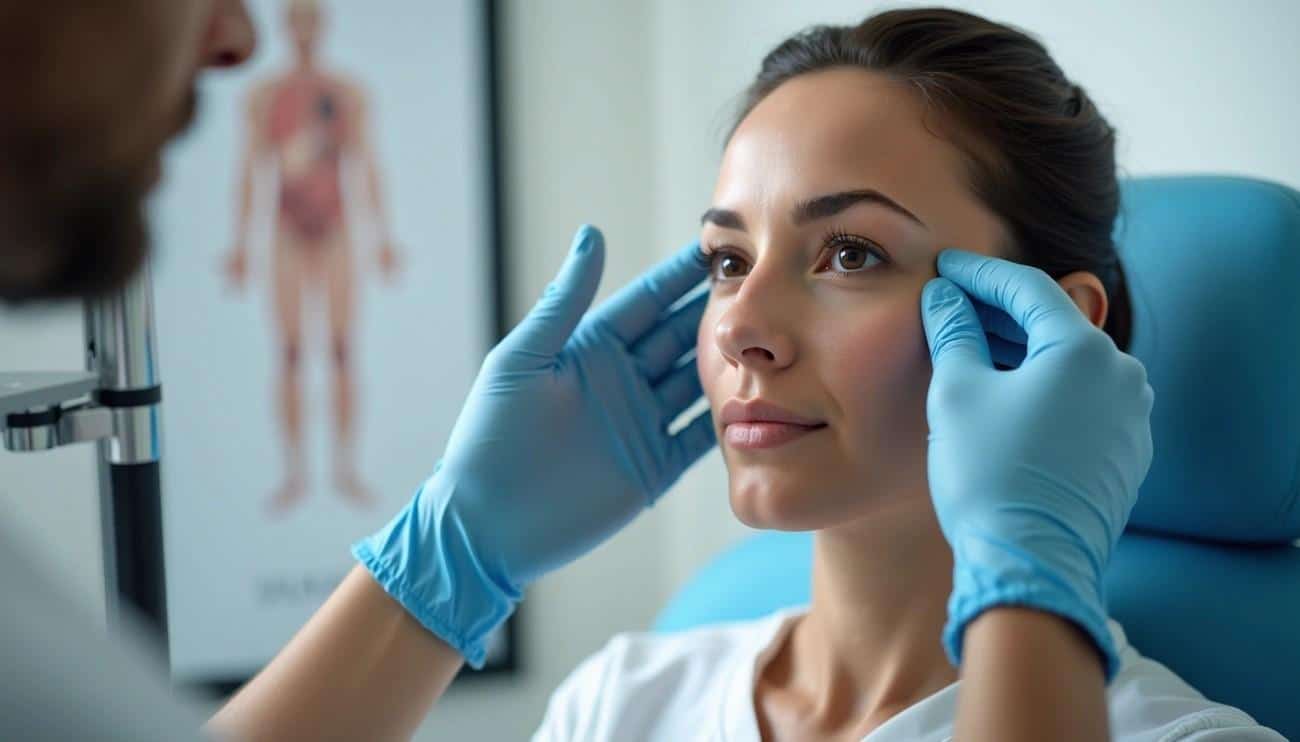
In most cases, your doctor can see your enoftalmus just by looking. Especially if one eye is affected, the difference is quite pronounced. During the physical examination, the appearance of your eyes and surrounding structures is focused on.
Your doctor will perform a comprehensive eye examination. This examination includes measurements related to the position of the eye in relation to the orbit. The degree to which your eye has been drawn inward, your eye movements, and your light reflexes will be assessed. Additionally, the condition of your eyelids and your facial symmetry will be examined.
Your visual acuity will be measured, and your intraocular pressure will be checked. Visual function tests may be performed to assess the effects of enoftalmus on your vision. Tests for double vision and visual field defects may also be conducted.
Imaging Techniques
Imaging studies are used to confirm the diagnosis and identify underlying causes. Computed tomography (CT) scans provide three-dimensional images of body parts by combining X-rays and computers. CT scans are used to evaluate the orbital bony structures. They are effective in identifying conditions such as fractures, tumors, or sinus issues.
Magnetic resonance imaging (MRI) scans produce images using magnets, radio waves, and computers without radiation. MRI scans provide detailed images of the orbit and help identify structural changes or injuries. MRI is preferred for diagnosing soft tissue pathologies.
Measurement Techniques
Exophthalmometry measures how far your eye has protruded or retracted from the orbital socket. This measurement tool numerically determines the degree of enoftalmus. The Hertel exophthalmometer takes measurements based on the orbital edge points.
Naugle exophthalmometry provides more precise measurements based on the upper and lower orbital edges. It offers quick, reliable, and repeatable results. It can accurately measure the position of the eyeball even after thyroid decompression surgeries or lateral orbitotomies.
In some cases, blood tests may be conducted to check for underlying autoimmune disorders or infections. You may be referred to an ophthalmologist for specialized tests if necessary. Essentially, the diagnostic process is completed by combining the onset of symptoms, physical findings, and imaging results.
Treatment and Management of Enoftalmus
The treatment of enoftalmus varies depending on the underlying cause and the severity of the condition. In mild cases, observation may be sufficient, while in severe cases, surgical intervention may be necessary. Individual factors are considered during the treatment process.
Surgical Treatment Options
Orbital reconstruction is the primary surgical method applied in traumatic enoftalmus cases. Implants are used to repair the orbital floor or walls. This procedure restores the lost volume in the eye socket and corrects the anatomical position of the eye. Surgery is typically performed through a hidden incision made inside the eyelid.
Titanium plates, nylon sheets, septal cartilage, and calvarial bone are frequently used to support the orbital floor. If necessary, special implants can be placed in the eye socket for support.
Endoscopic sinus surgery is applied in cases such as silent sinus syndrome. The aim is to open the maxillary sinus ostium, ensure sinus drainage, and perform decompression. A wide antrostomy is performed to prevent recurrence. This treatment aims to restore ventilation of the maxillary sinus and correct enoftalmus.
Fat injection or placement of orbital implants may be used to correct volume loss. Various reconstruction procedures are applied in cases requiring cosmetic correction. The recovery process varies from person to person, but most patients can return to their daily lives within a few days.
Medication Treatment
The treatment of enoftalmus may involve starting or stopping medications. In autoimmune conditions, anti-inflammatory medications or corticosteroids may be prescribed to reduce inflammation. Treating underlying conditions may sometimes lead to improvement in enoftalmus.
In thyroid eye disease, it is important to treat the underlying cause, such as controlling inflammation. Treating infections or removing tumors can alleviate enoftalmus.
Follow-Up and Complications
In mild cases or if the condition is stable and does not cause significant symptoms, observation may be sufficient. Small and stable fractures can heal with follow-up. If there is no functional problem, the condition is monitored.
On the other hand, treatment of enoftalmus can lead to complications. Worsening of symptoms may be observed. Loss of facial symmetry can occur. There is a risk of vision loss and double vision. Loss of eye movements may occur.
Changes in eye findings are monitored during the patient’s evaluation six months later. If left untreated, enoftalmus can become permanent, but with appropriate surgical intervention, the sunken appearance of the eye can be corrected.
When to See a Doctor?
If you experience any accident that causes a blow to your eye or face, it is essential to see a healthcare professional. It is important to consult your doctor if you develop any vision problems, such as blurred vision or double vision.
You should seek medical attention immediately if you experience any of the following conditions:
- Sudden vision loss or significant changes in vision
- Severe eye pain or discomfort
- Signs of infection such as redness, swelling, or discharge from the eye
- Trauma to the eye or surrounding area
Early intervention increases the success of treatment and reduces the risk of complications.
Frequently Asked Questions About Enoftalmus
What is the Difference Between Enoftalmus and Exophthalmos?
These two conditions are opposites of each other. Enoftalmus is the inward retraction of the eye. Exophthalmos is the outward protrusion of the eye. In enoftalmus, the eye migrates inward into the eye socket, while in exophthalmos, the eyeball is pushed outward from the orbit.
Both conditions have different causes. Enoftalmus is usually caused by trauma or conditions like silent sinus syndrome. Exophthalmos is mostly associated with thyroid diseases or orbital tumors. In fact, in some cases, exophthalmos in one eye can create a pseudo-enophthalmos appearance in the other eye.
Is Enoftalmus Dangerous?
Enoftalmus is not a life-threatening condition on its own. However, it may indicate health issues that require attention. The severity of the condition depends on the underlying cause.
If left untreated, some complications may arise. Psychological distress due to changes in appearance may occur. There is a risk of vision loss. Therefore, early diagnosis and treatment are very important.
Worsening symptoms, loss of facial symmetry, and double vision may develop. There may be permanent loss of eye movements. Therefore, it is necessary to monitor your condition and intervene when needed.
Does Enoftalmus Resolve on Its Own?
Enoftalmus typically does not resolve on its own. If the underlying cause is not treated, the condition can become permanent. However, the course of the condition varies depending on what it is related to.
Young patients treated for trauma or silent sinus syndrome generally show a very good course. Surgical correction for fractures can restore the eye to a normal or near-normal position. Complete correction is more difficult in cases involving significant scar tissue or fat loss.
The prognosis largely depends on the cause and the success of treatment. Patients who receive early intervention have better outcomes. Waiting without treatment does not improve the condition.
Can Enoftalmus be Prevented?
There are ways to reduce the risk of enoftalmus. Preventing fractures in the bones of the eye and face is the most effective method. Using protective equipment is very important. You should wear protective glasses while playing sports, working in hazardous jobs, or engaging in risky activities.
Careful driving reduces the risk of accidents. You should avoid physical fights. These precautions significantly reduce the development of trauma-related enoftalmus.
A balanced diet, avoiding smoking, and following hygiene rules can also help. These lifestyle changes protect your overall eye health. Regular eye check-ups are beneficial for early diagnosis. This way, potential problems can be addressed before they progress.
In Summary: Enoftalmus
There is no need to panic if you notice a sunken appearance in your eye. However, you should not neglect it. Enoftalmus may be a sign of serious underlying conditions. Early diagnosis leads to more successful treatment options. Be sure to consult your doctor, especially after trauma or when experiencing changes in vision.
Do not forget to take preventive measures in your daily life. Simple steps like wearing glasses while exercising and careful driving can make a big difference. Regular eye check-ups also help you catch potential issues early. Be proactive for your health.
Enoftalmus is a condition where the eye is drawn inward. Learn detailed information about its symptoms, diagnostic methods, and treatment options. Early diagnosis and treatment are important.