


What is Cervical Herniation, Its Symptoms, and Treatment Methods?
One of the most significant causes of neck pain complaints seen in adults is cervical herniation. Cervical herniation occurs as a result of wear and/or tear in the discs located between the vertebrae in the neck region. Depending on the severity of the herniation, the patient’s complaints may vary. If cervical herniation is not diagnosed and treated in the early stages, it can significantly impair the quality of life in later periods. What should those with cervical herniation pay attention to in daily life? What is the treatment for cervical herniation? You can find the answers to these questions and more detailed information about cervical herniation in the continuation of the article.
What is Cervical Herniation?
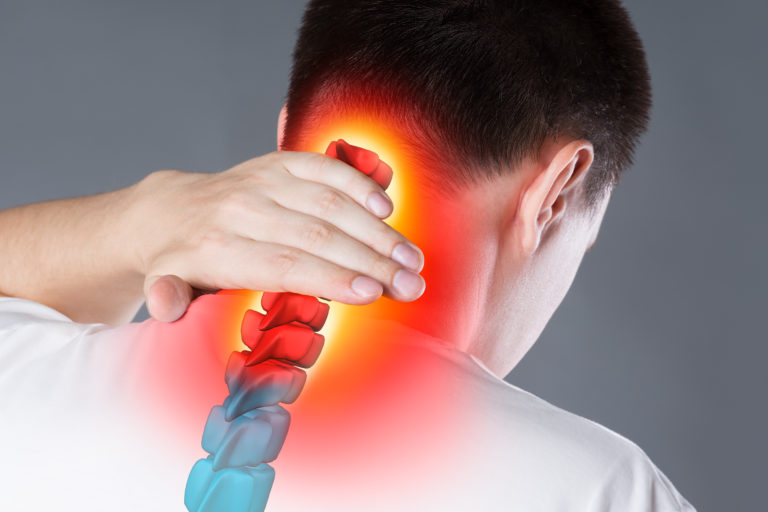
The upper part of the body is connected to the lower part through the spine. The spine is a long bony structure formed by approximately 32-34 vertebrae stacked on top of each other. Seven of the vertebrae are located in the neck region. The majority of the spine is made up of cartilaginous structures called discs, which are located between the vertebrae. The discs act like cushions, allowing the load on the vertebrae to be distributed over a wider area, making it easier for the vertebrae to move. Outside the discs, there is a fibrous band known in medical literature as the annulus fibrosus. This connective tissue keeps the disc in place between the vertebrae and prevents it from shifting. Inside the disc, there is a jelly-like central structure known as the nucleus pulposus. Due to reasons such as excessive load on the vertebrae, the connective tissue outside the discs can tear, causing this jelly-like structure to protrude outside the annulus fibrosus. This condition, also referred to as disc herniation or hernia, is generally observed in the cervical or lumbar vertebrae. In short, cervical herniation is a joint problem that can develop due to the wear, tear, or displacement of the discs located between the cervical vertebrae.
Causes of Cervical Herniation
Cervical herniation can occur as a result of sudden movements or due to wear and tear in the discs with advancing age. The main causes of cervical herniation are as follows:
- Wear and tear of the discs due to aging,
- Sudden twisting of the upper body,
- Heavy lifting,
- Excessive physical activity,
- Incorrect posture,
- Genetic predisposition
Symptoms of Cervical Herniation
One of the most important causes of pain felt in the neck and surrounding areas worldwide is cervical herniation. However, not every neck pain is caused by cervical herniation, nor does every cervical herniation cause pain. Neck pain usually arises from the pressure of the disc protruding outside the vertebrae on the nerves and spinal cord. Due to the pressure of the disc on the nerves, patients may experience other complaints as well. The pain associated with cervical herniation may not only be felt in the neck. So where does cervical herniation pain radiate? Cervical herniation pain can spread to the arm, back, and head regions. In some patients, the damage caused by the disc on the nerves can lead to inflammation in the body, increasing the intensity of the pain. In addition to pain, the main symptoms seen in patients with cervical herniation can be listed as follows:
- Pain radiating to one arm or both arms,
- Pain radiating to the back,
- Difficulty moving,
- Headache,
- Stiffness in the neck,
- Difficulty falling asleep,
- Numbness and tingling sensations in the hands and fingers,
- Weakness in the hands and fingers,
- Weakness in the arms,
- Dizziness and loss of balance,
- Muscle loss and thinning in the arms
If one or more of the symptoms listed above are present, it is essential to seek medical attention at the nearest healthcare facility without delay to help prevent the progression of the herniation.
Stages
The symptoms of cervical herniation vary according to the stage of the disease. In the initial stages, cervical herniation may not show any symptoms. However, in later stages, symptoms, especially pain, may intensify. Cervical herniation is examined in 4 stages based on the way the connective tissue outside the disc tears and the internal structure of the disc protrudes. These stages are as follows:
- Disc bulging: This stage is considered the initial stage. At this stage, the disc begins to protrude outside between the vertebrae. Patients may not show any symptoms at this stage.
- Disc protrusion: In this stage, similar to the bulging stage, the disc protrudes outside between the vertebrae. However, while in the bulging stage the disc spreads over a wider area, in the protrusion stage, the disc protrudes asymmetrically from a narrower area. Patients may not show any symptoms in the protrusion stage either. However, if the protruding disc puts pressure on a nerve and/or the spinal canal, complaints such as numbness and tingling in the hands, arms, and fingers may arise.
- Disc extrusion: Disc extrusion is the stage where the annulus fibrosus outside the disc is completely torn, and the jelly-like structure inside the disc extends outside the capsule towards the spinal canal. If there is pressure on a nerve at this stage, patients may experience symptoms such as pain and numbness.
- Sequestered disc: This stage of the herniation is when the jelly-like substance inside the disc completely separates from the disc and protrudes outside. At this stage, the pressure on the nerves is stronger. Consequently, symptoms such as pain, numbness, and weakness in the muscles are more commonly observed.
Diagnosis Methods for Cervical Herniation
Cervical herniation typically does not show any symptoms in the early stages, but it can significantly impair the patients’ quality of life in later stages. Therefore, early diagnosis is crucial in the treatment of cervical herniation. So, which department should examine cervical herniation? Individuals with neck pain complaints should first make an appointment with a doctor specializing in Brain and Nerve Diseases. Patients who present to clinics with complaints of neck pain, arm pain, and numbness in the hands will first have their medical history taken by a specialist doctor. Subsequently, a physical examination is conducted. At this stage, the doctor may ask the patient to squeeze their hand or push their hand with their arm. The purpose here is to test the patient’s arm strength. Along with these, various radiological imaging methods are frequently used in the diagnosis of cervical herniation.
How is it Diagnosed?
After the brain and nerve diseases specialist physically examines the patient, they may request certain tests to be conducted. Commonly used methods for diagnosing cervical herniation include:
- X-ray,
- MR (Magnetic Resonance),
- CT (Computed Tomography),
- In necessary cases, EMG (Electromyography)
Treatment Methods for Cervical Herniation
When determining the treatment for cervical herniation, the stage of the disease and the patient’s complaints are primarily considered. The majority of patients diagnosed with cervical herniation can be treated without surgery. At this point, patients are informed about what they should pay attention to. So, what should individuals with cervical herniation be cautious about in daily life? What should be done at the onset of cervical herniation? Correct posture is essential for spinal health. Patients diagnosed with cervical herniation should pay more attention to maintaining the correct posture. It is important to choose a chair or sofa that helps maintain an upright position while sitting and to use a pillow that keeps the neck in the correct position while sleeping. Individuals with cervical herniation should take preventive measures such as maintaining the correct posture in daily life, regularly exercising to strengthen the neck and back muscles, and avoiding heavy lifting. However, these methods may not always be sufficient to relieve pain. In this case, it is necessary to seek medical attention to start treatment after necessary examinations. Depending on the stage of the disease, different treatment options such as medication, physical therapy, and surgical treatment are available.
Non-Surgical Treatment Methods for Cervical Herniation
When planning the treatment for cervical herniation, the pressure the herniation exerts on the nerves, i.e., the stage of the disease, is examined first. In the early stages of the disease, symptoms may improve with rest. Therefore, in the first few days when symptoms begin, doctors may recommend that patients rest for a few days and avoid straining the neck muscles. If rest is not sufficient, physical therapy may be a solution. Physical therapy should be administered by a qualified physiotherapist. During physical therapy, patients may receive treatments such as cold-hot compresses, massage, dry needling, pain relief, and muscle strengthening electrical stimulation. If non-surgical treatment for cervical herniation is not effective, other treatment methods may be beneficial.
Traction and Stretching Methods in Cervical Herniation
There are various options for the treatment of cervical herniation. One of these is the traction and stretching method. This treatment method must be performed by a physical therapy specialist and physiotherapist. The goal of this treatment is to reduce tension in the neck area. In both traction and stretching methods, the patient lies on their back. In the traction method, the patient’s head is moved towards their chin, while in the stretching method, the head is moved backward. These movements are repeated several times.
Medication Treatment for Cervical Herniation
Medication treatment also plays an important role in the treatment of cervical herniation. At the onset of pain, patients may be advised to take pain relievers and muscle relaxants. However, these medications should be used under the supervision of a qualified doctor.
Spinal Injection Method in Cervical Herniation Treatment
In cases where the pain and numbness are very severe, the spinal injection method can be used to relieve pain. In this method, the specialist doctor injects corticosteroids into the area of herniation under radiological imaging guidance. This can reduce pain, swelling, and inflammation in the area of herniation.
Cervical Herniation Surgery
Cervical herniation surgery is usually recommended in the final stages of the disease. At this stage, the pressure the herniation exerts on the nerves is strong, and the symptoms are more severe. Therefore, in patients who do not achieve positive results with non-surgical treatments, surgical methods are attempted to relieve the pressure on the spinal cord and nerves. Cervical herniation surgery is fundamentally based on two principles: discectomy and laminectomy. In laminectomy, the surgeon reaches the nerve roots using microsurgical techniques and widens the area where the nerve roots exit to reduce pressure here. Discectomy involves the complete removal of the disc. In both of these methods, the patient is under general anesthesia. So what are the risks of cervical herniation surgery and how long does it take? The duration of cervical herniation surgery varies depending on the procedure performed. Discectomy operations may take slightly longer compared to laminectomy. Generally, the duration of cervical herniation surgeries ranges from 2 to 4 hours. Like any surgery, cervical herniation surgery also has some risks. Thanks to microsurgical techniques, the risk of complications after surgery is lower today. However, some side effects may occur after surgery. These include:
- Bleeding,
- Infection,
- Bruising,
In addition to these, although rare, nerve, muscle, and joint damage may occur after cervical herniation surgery. However, the risk of such side effects is quite low when performed by qualified and experienced doctors. The recovery process after cervical herniation surgery varies depending on the method used. After surgery performed using microsurgical techniques, patients can usually stand up with a neck brace on the same day and be discharged the next day. It is important for patients to wear a neck brace for at least 1 week after surgery. Additionally, patients are advised to avoid sudden movements and to sit and lie down in the correct position. So does the herniation recur after surgery? There is a possibility of recurrence after surgery. However, after a successful surgery, this risk is quite low. Moreover, maintaining a healthy lifestyle after surgery can also reduce the risk of herniation.
Spinal Fusion Surgery in Cervical Herniation
This surgical method is a technique used to reduce movement between the cervical vertebrae. For this purpose, after the herniated disc between the cervical vertebrae is removed, a bone graft is placed between the vertebrae. This reduces movement between the vertebrae.
Exercises for Cervical Herniation
Neck pain is a health issue that significantly affects individuals’ quality of life. So does neck pain go away on its own? Resting and doing some exercises can help alleviate neck pain. Some exercises that can be applied in cervical herniation include:
- Shoulder stretching by interlocking both hands behind the neck,
- Resisting force while pushing the head forward with the hands from behind,
- Placing hands on the forehead and resisting force while pushing the head backward,
- Trying to turn the head with one hand while preventing it with the other hand placed on the opposite side of the head
Exercises like these can help alleviate the symptoms of cervical herniation. However, performing a wrong movement can exacerbate the herniation. Therefore, it is essential to consult a qualified doctor before starting treatment for cervical herniation. Do not neglect to seek medical attention at the nearest healthcare facility for any neck pain situation.