



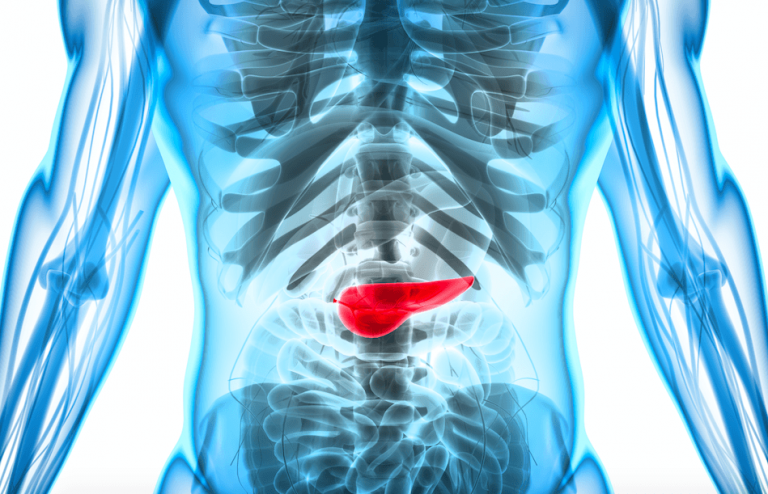
The pancreas is one of the most vulnerable organs in the body, located horizontally behind the stomach, and has a sponge-like structure approximately 15 cm long. Its head is adjacent to the duodenum, while its tail is next to the spleen. The pancreas is responsible for secreting various hormones and enzymes, regulating blood sugar levels with its internal secretion insulin, and managing the digestion of food in the duodenum with its external secretion pancreatic juice. If these hormones do not function properly, diabetes, or sugar disease, develops.
Pancreatic cancer occurs due to the uncontrolled proliferation of cells in the pancreas. The World Health Organization reported that in 2020, the number of cases diagnosed with pancreatic cancer accounted for 2.6% of all cancers. Although this figure may not seem alarming, pancreatic cancer is difficult to detect early due to its location and often presents few symptoms. Late diagnosis can negatively affect treatment success. However, not skipping routine doctor check-ups plays a significant role in preventing pancreatic cancer, just as it does with other types of cancer.
What Are the Stages of Pancreatic Cancer?
Cancerous cells may start in a small area but can spread throughout the body in various ways. The cells either invade surrounding normal tissues, reach other parts of the body through lymphatic channels, or spread to other parts of the body via the bloodstream, known as metastasis. Pancreatic cancer is classified into stages based on its size and the area it has spread to.
Stage 1
The tumor is localized only in the pancreas.
Stage 2
The tumor expands locally and reaches near lymph nodes.
Stage 3
The tumor approaches major vessels or nerves near the pancreas, but there is no metastasis at this stage yet.
Stage 4
The tumor metastasizes and spreads to distant organs.
What Are the Types of Pancreatic Cancer? 
Most pancreatic cancers progress insidiously and consist largely of endocrine tumors. This cancer begins in the ducts that carry pancreatic juice. Tumors found in the hormone-secreting cells of the pancreas are referred to as Endocrine Tumors. Pancreatic cancer is also classified into different groups based on its progression in the body.
Localized Pancreatic Cancer
In this type of cancer, the tumor has progressed along with blood vessels and other tissues. Surgical intervention is not preferred for these types of tumors. Surgical methods may be applied only to open blocked bile ducts or to intervene in obstructed small intestines. Typically, treatment involves chemotherapy alone or chemotherapy combined with radiotherapy. After reducing the cancerous cells, a suitable ground for surgical intervention can be prepared.
Metastatic Pancreatic Cancer
In this type of pancreatic cancer, cancerous cells have spread to other organs as well. The tumor usually spreads first within the abdomen and liver, then can reach the lungs, bones, and brain. Chemotherapy and radiotherapy are preferred for treatment.
Recurrent Pancreatic Cancer
This occurs when cancer reappears in the same area or another point after treatment for pancreatic cancer has been completed in recovering patients. If cancer appears in a distant location, it is usually in the liver, but over time it can spread to other organs as well. In this case, treatment similar to metastatic pancreatic cancer is applied.
Neuroendocrine Pancreatic Cancer
This is divided into two groups:
Resectable (Surgical Intervention Suitable)
Refers to cancers that are suitable for surgical interventions. Various imaging methods are used to determine the stage and location of the cancer. If conditions are appropriate, the tumor is surgically removed.
Unresectable (Surgical Intervention Not Suitable)
This tumor type generally consists of slow-growing tumors, making molecular imaging systems particularly effective in diagnosis. It is a type that is not suitable for surgical intervention. However, effective treatment methods are available.
What Causes Pancreatic Cancer? 
Although the exact development of pancreatic cancer is not yet known, some risk factors are prominent.
These include:
- Smoking and tobacco use
Being a smoker and using tobacco is an important risk factor for pancreatic cancer, just as it is for other types of cancer. Smoking and tobacco increase the likelihood of developing pancreatic cancer by 2 times.
- Diabetes
Type 2 diabetes, especially associated with obesity, increases the risk of pancreatic cancer.
- Obesity and Nutrition
Obesity alone poses a risk for pancreatic cancer. Even individuals who are not obese but have significant fat accumulation around the waist are more prone to pancreatic cancer. Additionally, those who follow an unhealthy diet rich in meat and fatty products are also at risk for pancreatic cancer.
- Exposure to chemicals like pesticides
- Pancreatitis
Pancreatitis, a painful condition, also increases the risk of cancer.
- Age
The risk of developing pancreatic cancer increases with age. Pancreatic cancer is more frequently seen in individuals over 45 years old.
- Family history
The risk increases for those with first-degree relatives who have had pancreatic cancer.
What Are the Symptoms of Pancreatic Cancer? 
Pancreatic cancer is referred to as a silent cancer due to its low likelihood of early diagnosis. A tumor in the pancreas may initially show no symptoms. Therefore, in many patients, pancreatic cancer is usually diagnosed at an advanced stage.
Early signs may include:
- Dark-colored urine,
- Fatigue-weakness,
- Jaundice (starts in the white part of the eye and then spreads to the entire skin),
- Loss of appetite and weight,
- Nausea-vomiting,
- Diarrhea or indigestion
- Pain in the upper abdomen radiating to the back can also be noted.
How Is Pancreatic Cancer Diagnosed? 
Doctor Examination
The doctor listens to the patient’s complaints and medical history if they present with the above symptoms. The patient’s abdominal region is examined, and any pain or palpable mass is checked through physical examination.
Blood Tests
Blood tests are conducted to examine the levels of certain substances secreted by the liver. If the measured values are found to be abnormal, it may indicate disease in the organs and tissues from which the values originate. These tests can provide helpful information regarding pancreatic tumors.
Abdominal Ultrasound
Typically, an abdominal ultrasound is performed first. High-frequency sound waves sent into the abdomen create echoes when they hit tissues. This allows visualization of the abdominal cavity and organs.
Magnetic Resonance Imaging
This is one of the effective methods used for diagnosing pancreatic cancer. This technique examines the relationship of the pancreas with surrounding tissues and scans for findings within the liver.
Computed Tomography
This imaging method guides cancer diagnosis. To obtain a clearer image, a contrast agent may be administered orally. Through the contrast agents given, the size, location, and relationship of the tumor with other neighboring organs are examined.
Positron Emission Tomography (PET Scan)
This method is generally preferred to detect malignant cancers in the body. First, a glucose labeled with a radionuclide is injected into the patient. Then, areas where glucose accumulates are examined. Cancerous cells appear darker in areas where glucose is concentrated and can be easily detected.
Endoscopic Retrograde Cholangiopancreatography
An endoscopic method is used to enter the duodenum and visualize areas such as the pancreatic duct, bile ducts, and the main bile duct. Because pancreatic cancer can sometimes cause these ducts to narrow, leading to bile flow obstruction and subsequently jaundice.
 What Are the Treatment Methods for Pancreatic Cancer?
The size of the tumor, the stage of the disease, and the patient’s overall health are important in determining the treatment method.
If the cancer is not at a very advanced stage, the only treatment method is surgical. For tumors in the head of the pancreas, Whipple Surgery is performed. In this procedure, the distal part of the stomach, the main bile duct, the gallbladder, the entire duodenum, and the head of the pancreas are removed. It is a difficult and lengthy surgery. For tumors in the body and tail, removing the affected part of the pancreas along with the spleen is sufficient. This is a relatively easier intervention.
If the patient’s overall condition is very poor or jaundice is at a very advanced stage, sometimes an ERCP (a procedure performed endoscopically without anesthesia) is done to place a stent in the main bile duct to reduce jaundice. In some cases, permanent stents are placed in cases that are too advanced to be operable.
If the tumor cannot be removed, radiotherapy and chemotherapy may be tried. If cancer has spread to other organs, only chemotherapy is applied. Additionally, patients who have undergone surgery may also receive chemotherapy or radiotherapy in the postoperative period, depending on the stage of their disease.
Ways to Prevent Pancreatic Cancer
Although there is no direct way to prevent pancreatic cancer and no definitive measures, adopting a healthy lifestyle is very important.
To achieve this:
- First, if you smoke, make sure to quit smoking.
- Avoid alcohol.
- Focus on fruits, vegetables, and grains in your diet.
- Exercise regularly.
- Pay attention to maintaining your ideal weight.