



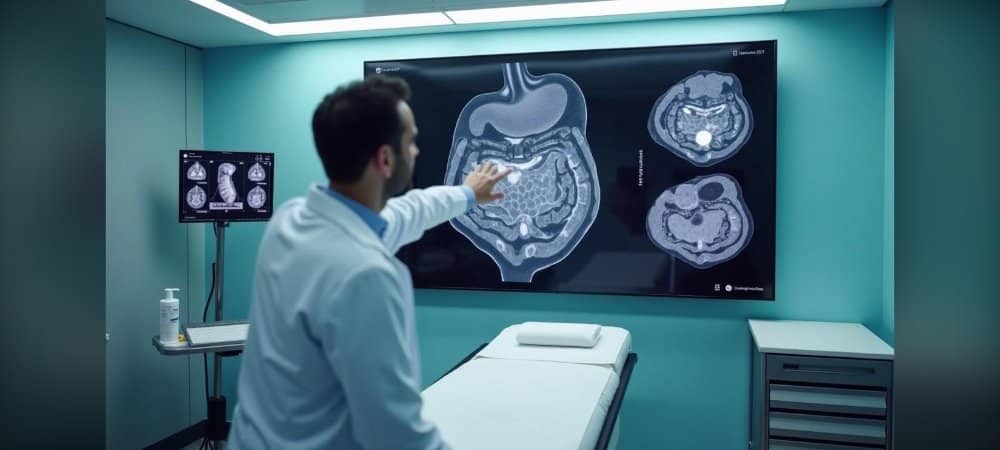
Small intestine cancer is a rare type of cancer. It occurs due to the abnormal proliferation of cells in its wall and may not be easily noticeable in the early stages.
Symptoms usually appear late, but you should be cautious when experiencing complaints such as abdominal pain, loss of appetite, weight loss, nausea, and vomiting. These symptoms are often confused with other digestive system diseases, which can delay diagnosis. Small intestine bleeding accounts for about 5% of all digestive system bleeding.
In this article, you will find answers to questions such as what small intestine cancer is, what its symptoms are, how it is diagnosed, and how it is treated. You will also learn about the four main types of small intestine cancer: adenocarcinoma, carcinoid tumor, lymphoma, and sarcoma.
What is Small Intestine Cancer?
Small intestine cancer is a rare type of cancer that develops in the small intestine, an important part of the digestive system. This cancer forms due to the abnormal proliferation of cells in the wall of the small intestine and can significantly affect the digestive process.
Structure and Function of the Small Intestine
The small intestine is a tube-shaped organ that extends from the stomach to the large intestine. Approximately 5-7 meters long, this organ constitutes the longest part of the digestive system. The small intestine consists of three main sections:
- Duodenum: The section closest to the stomach, approximately 20-25 cm long, that surrounds the pancreas in a C shape.
- Jejunum: The middle section, approximately 2.5 meters long.
- ileum: The last section, approximately 3 meters long.
The primary function of the small intestine is to digest and absorb the nutrients you eat. It also plays an important role in your immune system. Thanks to its special cells, it fights off bacteria and viruses that enter your body. Additionally, it produces hormones that aid digestion and facilitates vitamin absorption.
The Process of Cancer Formation
Small intestine cancer generally begins with changes in the DNA of healthy cells. Under normal conditions, cells grow and divide in an orderly manner according to the body’s needs. However, when a cell’s DNA is damaged, it continues to divide uncontrollably.
As a result of this uncontrolled division, the accumulated cells eventually form a tumor. Cancerous cells can grow and affect surrounding tissues and may spread to other parts of the body (metastasis).
Types of Small Intestine Tumors
Small intestine cancer is seen in four main types:
- Adenocarcinoma: The most common type of small intestine cancer. It usually develops in the duodenum and starts in the cells lining the inner surface of the small intestine. As it grows, it can obstruct the intestine.
- Carcinoid Tumor (Neuroendocrine Tumor): These tumors develop in neuroendocrine cells in the small intestine, which are responsible for hormone production. They tend to grow slowly, and symptoms may not be seen for years.
- Lymphoma: It starts in a type of white blood cell called lymphocytes, which are an important part of your immune system. There are two main types: Hodgkin lymphoma and non-Hodgkin lymphoma.
- Sarcoma: Develops in tissues such as muscle, connective tissue, or blood vessels. The most common subtype is gastrointestinal stromal tumor (GIST).
Since each type develops differently, their effects on the body and treatment methods also vary. Small intestine cancer accounts for only 1-3% of all digestive tract cancers.
What are the Symptoms of Small Intestine Cancer?
Insidiously progressing small intestine cancer usually does not show obvious symptoms in the early stages. However, as the disease progresses, your body begins to send some signals. Being aware of these symptoms increases the likelihood of early diagnosis and treatment.
Abdominal Pain and Digestive Issues
One of the most common symptoms of small intestine cancer is abdominal pain. This pain usually occurs in cramps and may worsen after meals. The pain is mostly felt in the stomach area and around the navel. In advanced stages of the disease, the pain may also radiate to the back.
Digestive issues are also among the frequently seen symptoms. You may experience indigestion and difficulty digesting food. These problems usually arise due to the tumor narrowing the intestinal channel.
Loss of Appetite and Weight Loss
Loss of appetite is a typical symptom of small intestine cancer. You may start to lose interest in foods you normally enjoy. Over time, loss of appetite can lead to significant weight loss.
Weight loss usually occurs rapidly and suddenly. This situation can arise due to loss of appetite caused by cancer, fatigue, or insufficient absorption of nutrients (malabsorption). Weight loss can also lead to a decrease in muscle mass.
Blood in Stool and Anemia
Small intestine cancer tumors can cause bleeding, leading to blood in the stool. The blood may sometimes appear bright red, while at other times it may be seen as dark brown. There may also be hidden blood loss in the stool that is not visible.
Continuous blood loss can lead to anemia. Symptoms of anemia include fatigue, weakness, dizziness, and pale skin. If you are experiencing unexplained fatigue for a long time, you should discuss this with your doctor.
Bloating, Nausea, and Vomiting
A feeling of bloating in the abdomen is another symptom of small intestine cancer. Bloating can occur due to obstruction or insufficient absorption of food. If you notice a swelling or mass that can be felt in the abdominal area, you should consult a healthcare professional immediately.
Nausea and vomiting are also common symptoms. These usually arise due to the tumor partially or completely obstructing the intestine. Nausea and vomiting may become more pronounced, especially after meals.
Changes in Bowel Movements
Small intestine cancer can cause changes in your normal bowel habits. You may experience diarrhea or constipation. Diarrhea is usually watery and oily, while constipation can be prolonged and severe.
Intestinal obstructions may also be seen in advanced stages of the disease. Some patients may present to the hospital with sudden complaints of intestinal obstruction without showing any previous symptoms. If you experience recurrent episodes of intestinal obstruction, this situation must be investigated.
The presence of these symptoms does not definitively diagnose small intestine cancer, but it is an important reason to consult a doctor. The time from the onset of complaints to diagnosis can vary between 3-16 months.
What Causes Small Intestine Cancer?
Scientists have not yet definitively determined the exact cause of small intestine cancer. However, some risk factors have been identified for this disease. These factors may increase a person’s likelihood of developing cancer.
Genetic Factors
Genetic predisposition plays an important role in the development of small intestine cancer. If you have a family history of small intestine cancer or other digestive system cancers, your risk of developing this cancer may be higher. The risk is particularly more pronounced in individuals with first-degree relatives who have this type of cancer.
Genetic factors also form the basis of some hereditary syndromes. In this case, mutations in the DNA structure prepare the ground for uncontrolled cell division and tumor formation.
Hereditary Syndromes
Some hereditary syndromes significantly increase the risk of small intestine cancer. These syndromes include:
- Lynch syndrome (HNPCC): A hereditary disorder that increases the risk of many types of cancer, including small intestine cancer.
- Familial Adenomatous Polyposis (FAP): A syndrome characterized by the formation of numerous polyps in the intestinal walls.
- Peutz-Jeghers syndrome: A rare genetic disorder that causes polyp formation in the digestive system.
- Li-Fraumeni syndrome and Gardner syndrome can also trigger the development of small intestine cancer.
Individuals with these syndromes are advised to undergo regular screening tests. Additionally, obtaining genetic counseling services may also be beneficial.
Inflammatory Bowel Diseases
Chronic inflammatory bowel diseases can increase the risk of small intestine cancer. In particular, Crohn’s disease can cause long-term inflammation in the wall of the small intestine, raising the risk of cancer. Other inflammatory bowel diseases, such as ulcerative colitis, are also among the risk factors.
These diseases cause chronic damage to the inner surface of the intestines and can lead to abnormal cell proliferation over time. Individuals with inflammatory bowel disease have a higher rate of colon cancer compared to others.
Diet and Lifestyle Effects
Unhealthy eating habits can increase the risk of small intestine cancer. Diets high in fat and low in fiber are among the risk factors. Additionally, lack of physical activity and obesity can also elevate cancer risk.
Celiac disease is also a risk factor for small intestine cancer. Individuals with celiac disease may experience abnormal cell growth and proliferation in the small intestine when consuming gluten.
Smoking, Alcohol, and Radiation Exposure
Smoking and alcohol consumption are responsible for one-third of all cancers, not just small intestine cancer. The risk of cancer is higher in smokers compared to non-smokers. Similarly, excessive alcohol consumption can cause changes in cells that may lead to cancer.
In particular, individuals who consume more than four drinks a day and smoke two packs of cigarettes have a nearly 40-fold increase in the risk of digestive system cancers. Radiation exposure, especially after radiation therapies applied to the pelvic area, can also increase the risk of small intestine cancer.
Knowing the risk factors for small intestine cancer is important for early diagnosis and treatment. If you think you are in a risk group, it would be beneficial to have regular check-ups.
How is Small Intestine Cancer Diagnosed?
Diagnosing small intestine cancer can be quite difficult because the symptoms are often confused with other digestive system diseases. Your doctor may resort to various diagnostic methods based on your complaints and risk factors.
Physical Examination and Symptom Evaluation
The diagnostic process usually begins with a comprehensive physical examination and evaluation of your symptoms. Your doctor will check your abdominal area for swelling or masses. They will also ask when your symptoms started, their severity, and frequency.
At this stage, if you have complaints such as long-standing abdominal pain, weight loss, or blood in the stool, you should definitely share this with your doctor. This information is crucial for accurately guiding the diagnostic process.
Endoscopy and Colonoscopy
Endoscopic methods are used to visualize the inner wall of the small intestine. These include:
- Gastroscopy: Allows examination of the esophagus, stomach, and beginning of the small intestine through the mouth.
- Enteroscopy: Visualizes deeper parts of the small intestine.
- Double-balloon enteroscopy: Used to examine a wider section of the small intestine.
Additionally, capsule endoscopy is a valuable diagnostic tool. In this method, a capsule containing a camera that you swallow takes numerous images as it passes through the digestive tract. This allows your doctor to evaluate the interior of your small intestine.
Colonoscopy is performed using a flexible tube inserted through the anus to examine the large intestine and the last part of the small intestine.
Imaging Methods (CT, MRI, PET)
Imaging tests are frequently used to detect abnormalities in the small intestine:
CT (Computed Tomography) scans create detailed images of the abdominal and pelvic regions. A special method called CT enterography uses contrast material to visualize the small intestine more clearly.
MRI (Magnetic Resonance) scans provide detailed images without using radiation. MR enterography is specifically designed for evaluating the small intestine.
PET (Positron Emission Tomography) scans show the metabolic activity of cancerous cells and help determine whether the disease has spread to other parts of the body.
Additionally, methods such as barium radiography (passage radiography) can also be used in diagnosis.
Biopsy and Laboratory Tests
For a definitive diagnosis, examination of a suspicious tissue sample (biopsy) is necessary. Biopsy is usually taken during endoscopy and examined in a pathology laboratory.
Blood tests also provide important information during the diagnostic process. A complete blood count is performed to detect the presence of anemia. Additionally, stool tests are used to determine if there is hidden bleeding.
Sometimes, diagnosis can also be made during emergency surgery due to intestinal obstruction or bleeding.
How is Small Intestine Cancer Treated?
The treatment of small intestine cancer is planned individually according to the type and stage of the disease. The primary goal of treatment is to completely eliminate or control the cancerous tissue.
Surgical Intervention and Resection
Surgical intervention is often the preferred first treatment method for small intestine cancer. Different surgical methods can be applied depending on the size and location of the tumor.
In the resection procedure, surgeons remove the cancerous part along with a small portion of the surrounding healthy tissue and reconnect the ends of the intestine. This allows your digestive system to continue functioning normally. If the cancer affects a small part of the small intestine, this method is usually sufficient.
Sometimes, it may not be possible to remove the entire cancerous tissue. In this case, surgeons can perform a bypass surgery to relieve the obstruction. The bypass procedure allows food to pass by the cancerous area and alleviates your complaints.
For cancers in the duodenum, Whipple surgery may be performed. This complex surgical procedure involves the removal of the head of the pancreas, bile ducts, and a portion of the duodenum.
Chemotherapy and HIPEC
Chemotherapy is a treatment method that uses powerful drugs to kill cancer cells. Chemotherapy is recommended if there is a risk of cancer recurrence after surgery or if the cancer has spread to other parts of the body.
HIPEC (Hyperthermic Intraperitoneal Chemotherapy) is a special chemotherapy method applied in abdominal cancers. In this treatment, after tumors are removed surgically, heated chemotherapy drugs at 41-43 degrees Celsius are administered into the abdominal cavity. This fluid circulates in the abdomen for about 60-90 minutes. Heated chemotherapy penetrates cancer cells more effectively and kills small tumor cells that are not visible.
Radiotherapy and Immunotherapy
Radiotherapy is a less commonly used treatment method for small intestine cancer. It is generally preferred to eliminate remaining cancer cells after surgery, reduce pain, or stop bleeding.
Immunotherapy is a treatment approach that helps your immune system fight cancer. Cancer cells sometimes produce special proteins to evade the immune system. Immunotherapy drugs intervene in this process, allowing the immune system to recognize and destroy cancer cells. It can be used in advanced-stage small intestine cancer patients deemed suitable based on test results.
Multidisciplinary Treatment Approach
The key to success in treating small intestine cancer is a multidisciplinary approach involving physicians from different specialties. A team including gastroenterologists, surgeons, oncologists, radiologists, and pathologists develops the most appropriate treatment plan for each patient.
Your treatment plan is personalized according to the type and stage of cancer, the location of the tumor, whether there is intestinal obstruction, and your overall health status. In some cases, a single treatment may be sufficient, while in most cases, applying different treatment methods together (combined treatment) yields more effective results.
In early stages, surgical intervention can lead to a long disease-free life. However, even in advanced stages, modern treatment methods can extend your lifespan and improve your quality of life.
In Summary: Small Intestine Cancer
Although small intestine cancer is rare, knowing its symptoms can be life-saving. It is extremely important to consult your doctor, especially when experiencing unexplained abdominal pain, weight loss, and digestive issues. Remember that early diagnosis significantly increases treatment success.
The diagnostic process can sometimes be long and complex. However, thanks to modern imaging methods and endoscopic procedures, the disease can now be detected more easily. Therefore, you should take your complaints seriously and not neglect necessary check-ups.
Treatment options include surgery, chemotherapy, radiotherapy, and immunotherapy. Your doctor will determine the most appropriate treatment for you based on the type, location, and stage of the disease. Additionally, each patient’s treatment is planned individually.
Knowing the risk factors and making lifestyle changes is also important. Healthy eating, regular exercise, and reducing tobacco and alcohol consumption can help protect your intestinal health. Additionally, if you have a genetic predisposition, it would be beneficial to have regular screenings.
In conclusion, being informed about small intestine cancer and paying attention to the signals your body sends is vital. With early diagnosis and proper treatment, successful outcomes can be achieved in this disease. If you have concerns about your health, you should consult a specialist without delay.
Frequently Asked Questions
You can find answers to your questions about small intestine cancer in this section. We have compiled the most frequently asked questions for better understanding of the disease.
At what ages is small intestine cancer seen? This type of cancer is generally more common in individuals aged 60 and older. However, it can rarely occur at younger ages, especially if genetic factors are involved.
Where does small intestine cancer metastasize? The liver, lungs, and intra-abdominal lymph nodes are the most common sites for metastasis.
Can small intestine cancer be completely cured? Yes, complete recovery is possible in cases diagnosed early and treated appropriately. Early diagnosis significantly increases the success rate. Where is small intestine pain felt? This type of pain is usually felt around the navel.
Can cancer recur after treatment? Yes, there is a risk of recurrence after treatment. Therefore, regular doctor check-ups are important.
How long does the chemotherapy process take? The chemotherapy process can last from 6 months to several years, depending on the condition of the tumor.
What is small intestine cancer, what are its symptoms, how is it diagnosed, and what are the treatment methods? You can find detailed information about small intestine cancer in this article.