



[/vc_column_text][/vc_column][/vc_row]
Robotic small bowel resection offers precise and minimally invasive surgery with rapid recovery, less pain, and minimal scarring. It is ideal for Crohn’s disease, tumors, and obstructions.[/vc_column_text][/vc_column][/vc_row]
Fill Out the Form for Detailed Information and Contact!
Robotic small bowel resection offers precise and minimally invasive surgery with rapid recovery, less pain, and minimal scarring. It is ideal for Crohn’s disease, tumors, and obstructions.
[/vc_column_text][/vc_column][/vc_row]
Fill Out the Form for Detailed Information and Contact!
Robotic small bowel resection, which removes the damaged or diseased part of your small intestine, is one of the effective treatment methods offered by modern surgery. The idea of removing a part of your intestine may be concerning, but in fact, the small intestine is 20 to 30 feet long, and you can live without a portion of it.
Small bowel resection can be performed as an open, robotic, or laparoscopic procedure. However, robotic bowel surgery offers significant advantages over traditional methods. In this article, we will discuss what small bowel resection is, in which cases it is applied, and the advantages of robotic surgery in this procedure in a simple and understandable way.
What is Robotic Small Bowel Resection?
The surgical procedure performed to remove a problematic section of your intestines is called “intestinal resection.” This procedure can be applied to the small intestine, large intestine, or rectum depending on the patient’s intestinal health and needs.
Definition of Small Bowel Resection
Small bowel resection is a surgical procedure performed due to various health issues occurring in the small intestine. In this operation, the problematic intestinal area is removed, and the healthy parts are connected. The procedure can be performed in cases of obstruction, cancer, or other serious disorders.
Small bowel resection can be performed in three different types depending on the area removed:
- Duodenectomy: The procedure for removing the duodenum (the first part of the small intestine). It is usually performed due to tumors or serious damage occurring here.
- Jejunectomy: The procedure for removing the jejunum (the middle part of the small intestine). It is applied due to serious infections or tumors.
- Ileectomy: The procedure for removing a portion of the ileum (the last part of the small intestine). It is performed due to diseases or inflammations occurring in this area.
What is Robotic Surgical Technique?
Robotic small bowel resection is an advanced surgical method that uses robotic systems to remove the damaged or diseased part of the small intestine. In this method, several small incisions are made in the abdominal area to perform the procedure.
During robotic surgery, the abdominal area is first inflated with gas. This allows the surgeon to see the internal organs better. Then, miniature lights, cameras, and small instruments are used to locate, cut, and remove the diseased area.
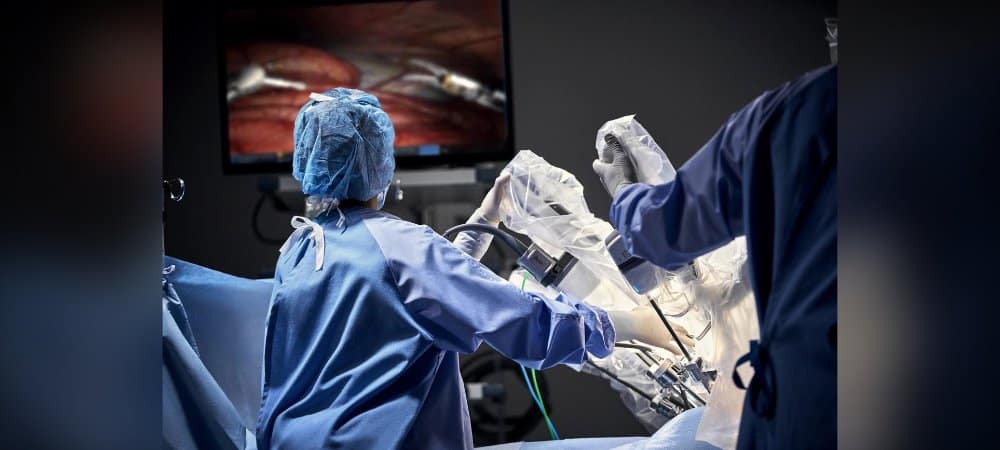
The surgeon remotely controls the operation using a robotic console. In this system, the surgeon’s external hand movements are transferred to the abdomen with precision by the robot. Robotic arms can reach areas that the surgeon’s hand cannot and can perform several surgical instrument functions simultaneously.
A particularly important point is that robotic surgery allows for a three-dimensional view of the operated area in detail. This enables more precise surgical procedures while preserving small nerves and vessels.
Differences from Traditional Surgery
Robotic small bowel resection differs from traditional open surgery in significant ways:
Incision size and scar: In open resection, a large incision is made in the abdominal area, while in robotic surgery, only a few small incisions are made in the abdominal area. This prevents large scars from forming post-surgery.
Imaging quality: In robotic surgery, the surgeon can see the area being operated on closely, in three dimensions, and in great detail. This is a significant advantage compared to open surgery.
Surgical precision: The robotic arm’s unlimited movement capability inside and the precise transfer of the surgeon’s hand movements allow for more precise surgical procedures.
Recovery process: After robotic surgery, the patient’s recovery process is faster. Since the intestinal tissues are less damaged, the process of returning to normal life is facilitated.
Bleeding control: The amount of bleeding in robotic surgery is less. This reduces the risk of complications after surgery.
Length of hospital stay: After robotic surgery, patients can return to their pre-surgery dietary habits more quickly, and the length of hospital stay is shorter.
In conclusion, robotic small bowel resection is a modern surgical approach that is more precise, less invasive, and prioritizes patient comfort compared to traditional methods.
In Which Cases is it Applied?
Robotic small bowel resection plays an important role in the treatment of various small bowel disorders. This surgical approach offers patients an encouraging treatment option depending on the type and progression of the disease. So, in which cases is this method applied?
Crohn’s Disease
Crohn’s disease is a chronic inflammatory bowel disease that causes thickening of the intestinal wall and ulcers. This disease can affect the mouth, esophagus, stomach, small intestine, large intestine, and anus, but it most commonly affects the last part of the small intestine and the large intestine.
Robotic small bowel resection is especially preferred in the following situations:
- Failure to achieve positive results with drug therapy
- Inability to continue drug therapy due to side effects
- Development of narrowing or fistula in the intestine
- Formation of abscess in the abdomen
- Development of abscess or fistula around the anus
Depending on the severity and duration of Crohn’s disease, narrowing can develop in the intestinal canal, leading to symptoms such as abdominal pain, nausea, vomiting, and bloating. Robotic surgery allows for the precise removal of the diseased area, improving the patient’s quality of life.
Small Bowel Tumors
Benign or malignant tumors that develop in the small intestine are a significant indication for robotic small bowel resection. These tumors can disrupt the normal function of the intestine, leading to obstruction or perforation.
Small bowel tumors can be safely removed using minimally invasive approaches. Robotic surgery offers a faster and easier recovery process without the need for large abdominal incisions required in open surgery.
Robotic surgery is an ideal option, especially for tumors that are not close to critical structures such as the pancreas and liver. However, open surgery may be necessary for large tumors and those close to critical structures.
Intestinal Obstruction
Intestinal obstruction is one of the emergency situations that require small bowel resection. Obstruction can occur due to tumors, adhesions, twisting of the intestinal loops, or other reasons.
Robotic small bowel resection offers the following advantages in cases of intestinal obstruction:
- Less trauma due to smaller incisions
- Rapid recovery process
- Less pain after surgery
- Faster return to normal intestinal functions
Intestinal obstruction is a serious condition that prevents the passage of food, fluid, or gas accumulating in the small intestine and requires emergency intervention. Robotic surgery provides the opportunity for precise intervention in this situation.
Trauma and Injuries
Severe injuries occurring in the small intestine can result from trauma. For example, a person who has experienced abdominal trauma from an accident may have damage to the small intestine. Furthermore, digestive system surgery may be necessary for injuries resulting from trauma.
Robotic surgery provides the following benefits in intestinal repair after trauma:
- Precise removal of damaged tissue
- Preservation of healthy tissues
- Reduced risk of complications after surgery
Other Small Bowel Diseases
Robotic small bowel resection can also be applied in the following situations:
Small bowel perforation: When a hole or tear occurs in the wall of the small intestine, surgical intervention may be necessary. Perforation can occur after trauma, ulcerative colitis, or Crohn’s disease.
Small bowel fistulas: A fistula is an abnormal connection between the intestines and another organ, cavity, or skin surface. Small bowel fistulas can occur due to Crohn’s disease, diverticulitis, abscesses, or surgical interventions.
Bleeding situations: Severe bleeding occurring in the small intestine can also be treated with robotic surgery.
In conclusion, robotic small bowel resection is an effective option in the treatment of various small bowel diseases. This approach accelerates the healing process and improves the quality of life for patients due to its minimally invasive nature and the advantages it offers.
Advantages of Robotic Small Bowel Resection
Robotic surgery offers various advantages to patients undergoing small bowel resection operations. Compared to traditional open surgery, the robotic system provides a less traumatic surgical process and significantly improves your quality of life. This technological advancement has opened a new era in the treatment of your small bowel issues.
Smaller Incisions and Less Scarring
Robotic small bowel resection does not require a large incision in your abdomen. Instead, several small incisions are made in the abdominal area, and the surgery is performed through these incisions. The incisions typically range from 2-4 cm to 8 millimeters in size. While open surgeries leave a large scar on your abdomen, this is not the case in robotic surgery.
These small incisions cause less damage to surrounding tissues. Additionally, the scars left on your body after surgery are minimal in size. This allows you to feel better aesthetically.
Faster Recovery Process
The recovery process after robotic surgery is much faster than open surgery. Thanks to the minimally invasive approach, you can return to your normal life in a shorter time. The speed of your intestines returning to normal function also increases.
Minimal tissue trauma is the most important factor that accelerates your recovery process. After robotic small bowel resection, you can return to your dietary habits more quickly. Thus, you can adapt to your daily life rapidly.
Less Pain and Discomfort
Due to the absence of large surgical incisions, postoperative pain is significantly reduced. After robotic bowel surgery, less pain relief may be sufficient. Thanks to small incisions and minimally invasive techniques, the sensation of pain is significantly reduced.
Moreover, your discomfort after surgery is much less compared to traditional open surgery. Patients generally experience a more comfortable recovery process.
Shorter Hospital Stay
The length of hospital stay after robotic small bowel resection is usually between 3 to 5 days. In contrast, this duration may extend to 7-10 days in open surgeries. This difference allows you to return to your normal life more quickly.
The acceleration of recovery reduces your hospital stay. Additionally, since the speed of your intestinal activities returning to normal increases, you may be discharged from the hospital earlier.
Lower Risk of Complications
Robotic surgery reduces the risk of bleeding, infection, and tissue damage compared to traditional open surgery due to its minimally invasive approach. Precise and controlled surgery reduces bleeding during the operation. Moreover, small incision areas decrease the likelihood of infection.
Additionally, the rate of local recurrence after operations performed with robotic surgery systems is lower compared to open surgeries. Thanks to controlled surgery, postoperative risks are significantly reduced.
More Precise Surgical Control
The robotic system allows the surgeon to perform movements with millimetric precision. These features offer the surgeon the following advantages:
- Unlimited movement capability of robotic arms inside
- Ability to move at a 720-degree angle
- Filtering of the surgeon’s hand tremors
- Three-dimensional and 10 times magnified high-resolution images
Thanks to this advanced technology, the presence of vessels and nerves can be clearly seen. The robotic system is especially useful for distinguishing and protecting small nerves and vessels. As a result, while providing a more comfortable working environment for the operating surgeon, a safer operation is performed for you.
How Does the Surgical Process Progress?
Robotic small bowel resection surgery is a process performed with one of the most advanced technological methods in modern medicine. Knowing what to expect from pre-operative preparations to the recovery period will help you go through the operation process more comfortably.
Pre-operative Preparation
First, a detailed evaluation is conducted before robotic small bowel resection. During this process, blood tests, imaging tests (such as CT, MRI), and anesthesia examination are completed. Your surgeon will utilize these tests to determine the exact location and condition of your disease while creating the surgical plan.
Bowel cleansing is an important step to reduce the risk of infection. Generally, a liquid diet is applied 24-48 hours before surgery, ensuring that your intestines are completely emptied. During this period, you may be asked to consume:
- Water
- Clear fruit juices
- Fruit-flavored drinks
- Tea or coffee without milk or cream
- Strained tomato or vegetable juice
- Fat-free broth
Additionally, it may be necessary to stop or adjust the doses of blood-thinning medications before surgery. These adjustments are important to reduce the risk of bleeding.
Anesthesia and Start of the Surgery
Robotic small bowel resection surgeries are performed under general anesthesia. Thus, you will not feel any pain during the surgery. The anesthesia specialist will create an appropriate anesthesia plan after evaluating your suitability for anesthesia.
You will be positioned appropriately for the surgery (usually in lithotomy or modified lateral position). After this stage, the robotic arms are covered with sterile drapes, and your abdomen is inflated with CO2 gas. This procedure is necessary for the surgeon to see the internal organs better.
Use of the Robotic System
Several small incisions (approximately 8 mm) are made in your abdominal wall, and robotic ports are placed through these incisions. A three-dimensional robotic camera is placed in one of the incisions, while robotic arms are connected to the others.
After positioning the robot (the docking process), your surgeon moves to the console. At this stage, one surgeon stands next to your operating table while the other surgeon is at the console. The surgeon sitting at the console performs the operation with 10-15 times magnified, high-resolution, and vibration-free 3D images.
While controlling the robotic arms with computer assistance, these arms mimic the surgeon’s hand and wrist movements. This system offers more movement capability (540 degrees) than the human hand, and all stages of the surgery are conducted from here.
During the operation, after the diseased part of the small intestine is disconnected from the surrounding tissues, it is removed from the body, and the healthy parts are joined together to create a new connection (anastomosis). After the surgery is completed, the robotic arms are detached, and the small incisions are closed.
Post-operative Process
The recovery process after robotic small bowel resection is remarkably faster compared to open surgery. Your length of hospital stay is usually 3-5 days, while this duration may extend to 7-10 days in open surgeries.
From the 6th hour after the surgery, you will start taking short walks. This is very important for the initiation of intestinal movements and the expansion of your lungs. Your intestinal movements generally return within 1-2 days, and you can quickly transition from liquid foods to solid foods.
Your dietary progression is as follows:
- On the first day, feeding is generally started with intravenous nutrition and clear liquids
- Your diet is gradually increased as you pass gas
- When discharged, a low-residue (low-fiber) diet is recommended
After discharge, you can generally take care of yourself and move comfortably within the house. Returning to a desk job is usually possible within 2-3 weeks. Your recovery process will be evaluated during the follow-up examination conducted 1-2 weeks after surgery, and your pathology results will be reviewed.
Frequently Asked Questions
How long does the surgery take?
Robotic small bowel resection surgery typically takes between 3-5 hours. This duration may vary depending on the individual’s specific condition and the complexity of the surgery. Robotic general surgical procedures are mostly completed within 1 to 4 hours. However, what matters is not the speed of the surgery but ensuring it is performed safely and in a controlled manner. Therefore, some complex cases may take longer.
What is the recovery time?
The length of hospital stay after robotic small bowel surgery is generally between 3-5 days. This duration is much shorter than the 7-10 day stay in open surgeries. The initial recovery period lasts 4-6 weeks, while returning to normal activities may take a few months. Returning to a desk job is usually possible within 2-3 weeks. It is recommended to avoid heavy activities for the first 6 weeks after surgery.
How should nutrition be after surgery?
Post-operative nutrition progresses gradually. Initially, liquid foods are started, and solid foods are gradually introduced. In the first days, intravenous nutrition and clear liquids (water, broth, tea) are preferred. As your intestinal movements begin, you can transition to soft foods like yogurt and soup. In the following days, continue with low-residue, easily digestible foods. You should avoid fatty, spicy, and gas-producing foods.
What are the risks and complications?
The risk of complications in robotic small bowel resection is low. Possible risks include wound site infection, bleeding, and most importantly, anastomotic leakage (leakage from the connection site). Additionally, infections, blood clots, and urinary issues may occur. Rarely, technical malfunctions may occur in the robotic system, or the surgery may be converted to open surgery. The experience of the doctor and proper patient selection minimize these risks.
In Summary, Robotic Small Bowel Resection
In conclusion, robotic small bowel resection is one of the most effective surgical methods offered by modern medicine. Compared to traditional open surgery, this technological approach significantly eases your life. Thanks to smaller incisions, minimal scars remain on your body, and your recovery process accelerates.
When you choose robotic surgery for your intestinal problems, your postoperative pain level decreases significantly. Additionally, your length of hospital stay is shorter, and you return to your daily life more quickly.
When small bowel resection is necessary due to Crohn’s disease, tumors, obstructions, or trauma, robotic surgery offers you significant advantages. Your surgeon can see the finest details with 3D imaging and precise robotic arms, protecting your vessels and nerves.
Your nutrition, which starts with liquid foods in the first days after surgery, quickly returns to its normal routine. The risk of medical complications is lower compared to open surgery. Thus, you achieve better health through a safer path.
Robotic small bowel resection provides more precise results than traditional methods, thanks to robotic arms that mimic the surgeon’s hand and wrist movements. This precision makes a significant difference in the treatment of your small bowel issues.
It is important to openly discuss all your questions with your doctor and carefully follow the pre-operative preparation process for a successful outcome. The advantages provided by robotic technology ensure that your small bowel surgery is less traumatic and that your quality of life rises rapidly.
Fill Out the Form for Detailed Information and Contact!
[/vc_column_text][/vc_column][/vc_row]
Fill Out the Form for Detailed Information and Contact!
Robotic small bowel resection offers precise and minimally invasive surgery with rapid recovery, less pain, and minimal scarring. It is ideal for Crohn’s disease, tumors, and obstructions.
[/vc_column_text][/vc_column][/vc_row]