



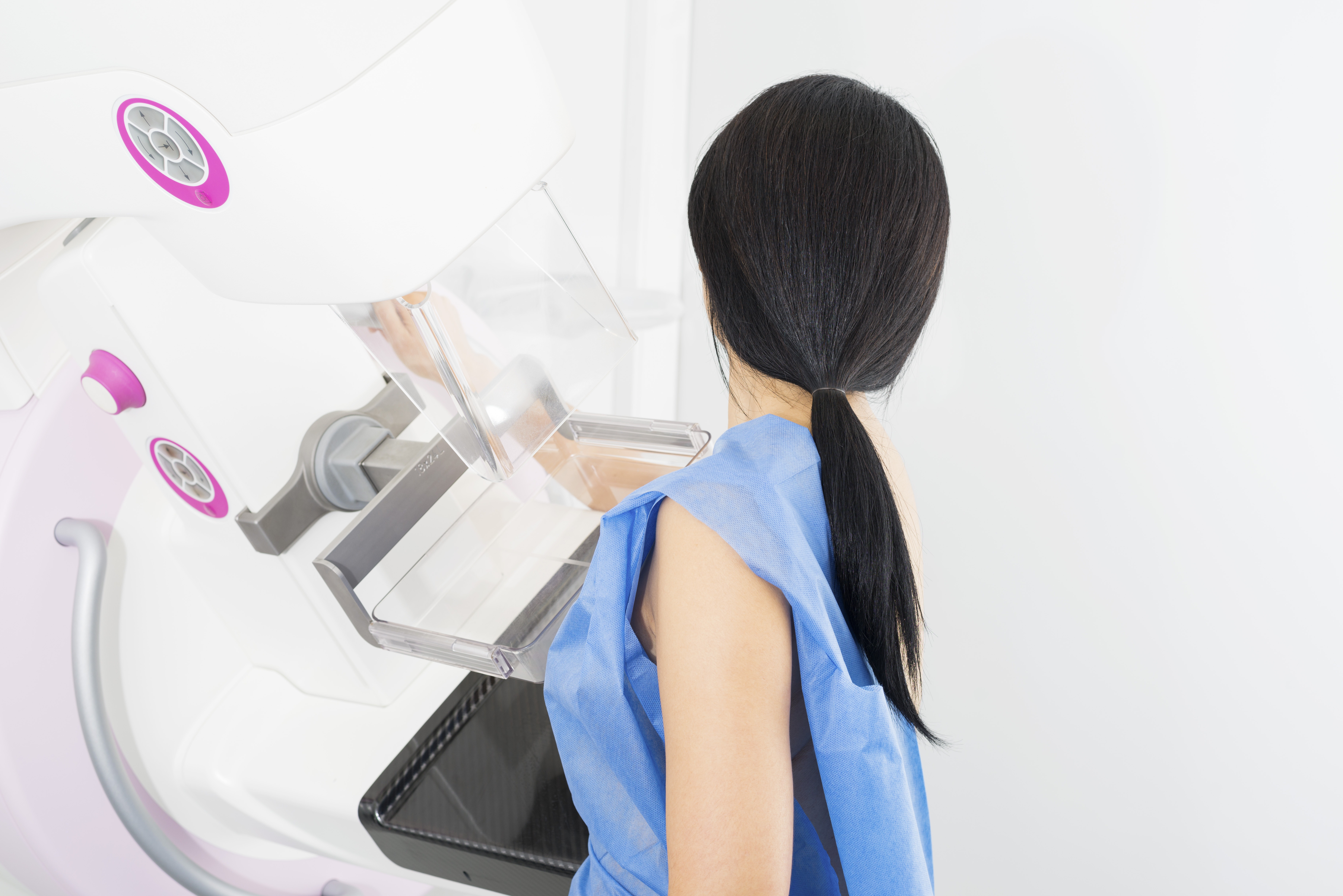
The Biggest Helper in Early Diagnosis of Breast Cancer is Mammography…
Breast cancer is the most common type of cancer in women. One in eight women will be diagnosed with breast cancer in their lifetime. More than 200,000 women are diagnosed with breast cancer in the U.S. each year.
What is Mammography? Why Mammography?
Mammography, which is used as the most effective method for early diagnosis of breast cancer, where the chance of survival is high with early detection, is a special imaging method that uses low-dose radiation to examine breast tissue in detail and is considered the ‘gold standard’. Small masses and changes in the breast that are not detected by clinical examination can be revealed by mammography. With mammography, there is a chance to detect changes in the breast up to 2 years earlier compared to manual examination.
Unless your doctor suggests a different program, the World Health Organization (WHO) believes that it is necessary to have a mammogram once a year after the age of 40. Mammography is not recommended for women under 35 due to the dense breast tissue, reduced sensitivity of mammography, and the high radiation sensitivity of breast tissue during this period.
Why Digital Mammography?
The most significant advancement in mammography devices is the Full Field Digital Mammography systems. In Full Field Digital Mammography, images are created in a computer environment using an electronic detector instead of X-ray film.
- The high contrast resolution of images obtained from Full Field Digital Mammography provides a significant advantage in detecting very early signs of breast cancer, such as calcification areas and small nodules. This system offers more detailed examination opportunities, especially for women with dense breast tissue and fibrocystic changes.
- The radiation received by breast tissue in digital mammography is only 1/10th of that in standard mammography.
- The examination time is much shorter. The absence of film development processes significantly reduces the patient’s waiting time. One minute after the mammogram is taken, the image can be viewed digitally on a monitor, and corrections can be made while the patient is still in the imaging room if necessary. There can be no repeats due to the imaging technique and film development process, thus the patient does not receive unnecessary radiation.
- The digital mammography images obtained are evaluated on very high-resolution large monitors. These monitors allow for magnification, brightness, and contrast adjustments for more detailed examination.
- It is important to compare the current mammography evaluation with previous examinations. The obtained digital mammography images can be archived in a computer environment. Thus, patients’ previous test results are stored digitally and can be compared with new ones.
- During mammography, some patients may complain of pain due to breast compression. In digital mammography, the LORAD Selenia device compresses the breast to the necessary amount for a quality examination while reducing the pain the patient may feel.
How to Prepare for a Mammogram?
- Before planning a mammogram, discuss any new findings and problems with your breasts with your doctor. Additionally, inform your doctor about any previous surgeries, hormone use, or family or personal history of breast cancer. If your breasts are sensitive a week before your menstrual period, do not schedule your mammogram during this time. Always inform your doctor or radiology technician of any possibility of pregnancy. Be sure to bring all your documents from your previous examination.
- The American Cancer Society (ACS) also provides the following recommendations:
- On the day of the examination, do not apply deodorant, talcum powder, or lotion to your armpits or breasts. These can appear as white spots on the X-ray film.
- Inform the technician performing the examination about any breast complaints or problems you may have.
- If possible, bring your previous mammograms to the examination.
- Ask when your results will be ready; do not assume the results are normal until you hear from your doctor or regarding the mammography results.