



What is Kidney Cancer?
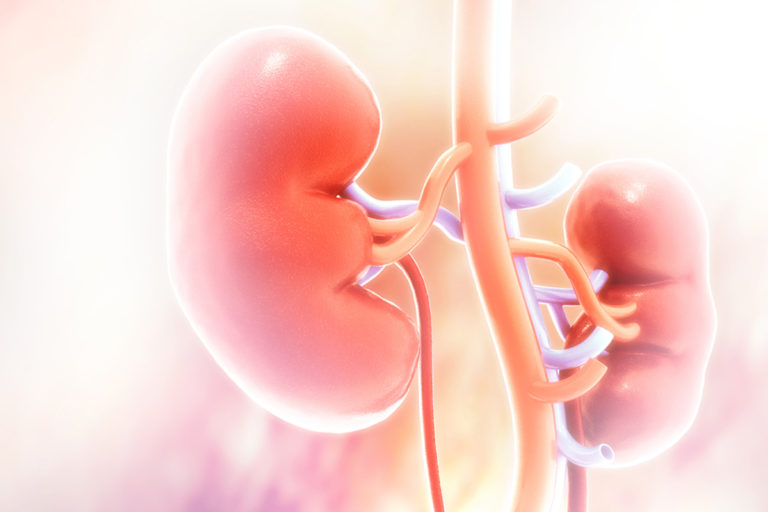
 Kidneys, which are part of the excretory system, are bean-shaped and located behind the abdominal organs, one on each side of the spine. The kidneys have four main functions in our body.
- They help maintain the body’s fluid balance.
- They control blood pressure.
- They facilitate the excretion of metabolic waste such as uric acid, creatinine, and urea through urine.
- They contribute to the production of blood cells in the bone marrow through the hormones they secrete.
Kidney cancer occurs when the cells in the kidney tissue become damaged due to environmental or hereditary factors and grow uncontrollably, forming a mass or tumor in that area. Kidney cancer can develop in the urine-producing part of the kidney or in the collecting basin where urine is gathered. The American Cancer Society has stated that kidney cancer is one of the 10 most common types of cancer. The type of kidney cancer that occurs more commonly in adults is renal cell carcinoma. Kidney cancer is a disease that develops quite slowly. Therefore, regular doctor check-ups can be life-saving.
What Causes Kidney Cancer? 
Although the exact causes of kidney cancer are not fully understood, there are some risk factors that can trigger cancer formation.
- The risk of kidney cancer is higher in individuals aged 50 and over.
- Men are twice as likely to develop kidney cancer compared to women.
- Obesity.
- Alcohol and tobacco consumption.
- High blood pressure.
- Metal workers exposed to substances like asbestos and cadmium.
- Having kidney disease and undergoing long-term dialysis.
- Those with a family history of kidney cancer in first-degree relatives.
 What are the Symptoms of Kidney Cancer?
Kidney cancer is a stealthy disease that may not show many symptoms in its early stages. However, some symptoms may be observed in later stages.
These include:
- Blood in urine.
- Abdominal pain.
- Unexplained back pain and swelling in the lower back.
- Fatigue.
- Loss of appetite.
- Anemia.
- Unexplained high fever.
- Palpable mass in the abdomen.
How is Kidney Cancer Diagnosed?
Since diagnosing kidney cancer in its early stages can be difficult, regular doctor check-ups are very important. A person presenting with one or more of the above symptoms will first undergo a physical examination by a physician. Subsequently, urine and blood tests may be requested to measure levels such as creatinine in the blood. Additionally, imaging tests such as ultrasound, Magnetic Resonance Imaging (MRI), and Computed Tomography (CT) can provide detailed information about the size, type, and spread of the cancer.
 How is Kidney Cancer Treated?
For patients diagnosed with kidney cancer, a suitable treatment plan is determined based on the type and stage of the cancer, the patient’s age, and overall health through a multidisciplinary approach. Surgical intervention is the first treatment option to be considered. Depending on the condition of the tumor, a portion of the kidney may be removed through a procedure called partial nephrectomy, or the entire kidney may be removed through radical nephrectomy.
Additionally, methods such as ablation, cryotherapy, chemotherapy, and radiotherapy may also be utilized.