



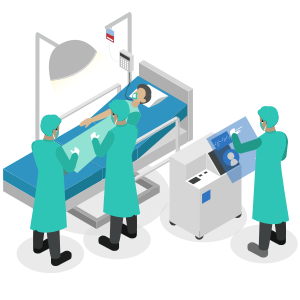
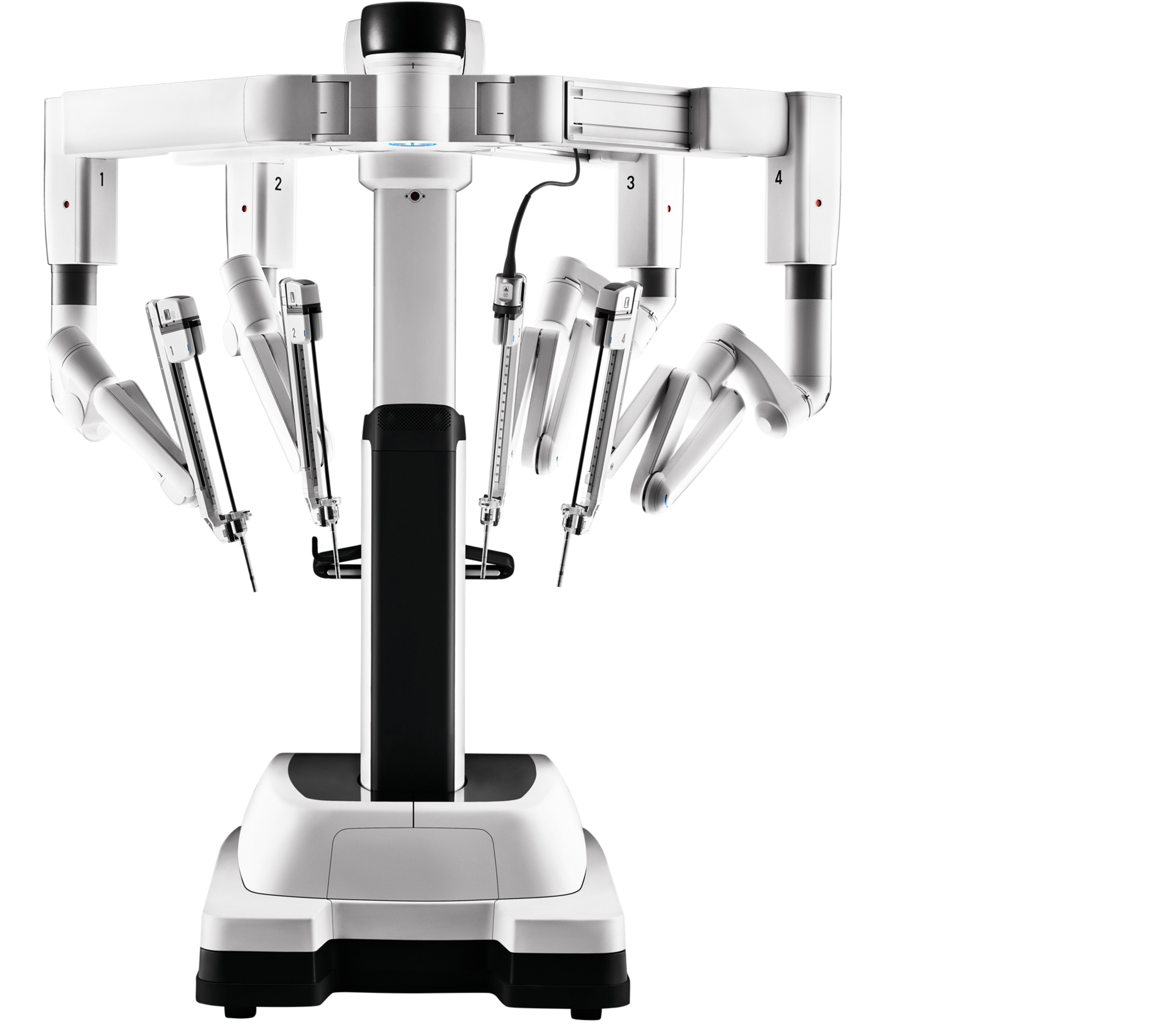
Da Vinci Robotic Surgery
The Da Vinci robotic surgery system is a technology that has been used in over 12 million surgeries worldwide for more than 25 years, enabling physicians to perform more successful surgeries across various fields such as general surgery, gynecology, urology, thoracic surgery, ENT, and pediatric surgery. The Da Vinci robotic surgery system consists of three main components that are interconnected in the operating room via fiber optic connections and operate entirely under the physician’s guidance. These components are called the Patient Side Unit, Surgeon Console, and Imaging Tower.
The Patient Side Unit is where the patient connects to the robotic surgery system. It consists of four robotic arms. An endoscope is attached to one arm of the patient unit, allowing the physician to visualize inside the body, while the other three arms hold instruments controlled by the physician.
The Surgeon Console is the control unit that allows the operating surgeon to move the arms at the patient side unit and transmits all hand movements of the surgeon seamlessly. It includes a stereo viewer that provides 3D vision, a left-right panel for ergonomic adjustments, and a touch panel for zoom and image settings. There are foot pedals that facilitate the transition between instruments and activate the energy unit.
The Imaging Tower is the unit where the endoscope is attached and the system’s processor is located. The imaging tower includes a touch screen and an energy unit. The Patient Side Unit and Surgeon Console connect to this unit via fiber optic cables.
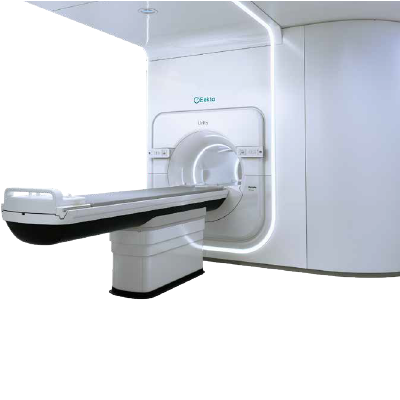
Elekta Unity 1.5 Tesla MR Linac
MR-LINAC is an “intelligent radiotherapy” method that targets tumors using special imaging and measurements to eliminate them with radiation.
With more advanced equipment than classical radiotherapy, MR-LINAC provides new and significant benefits to patients and radiation oncologists thanks to the addition of MR (Magnetic Resonance) to radiotherapy.
With the MR-LINAC method, even tumors in moving organs can be irradiated and eliminated with precision during treatment. While the tumor is being irradiated, the surrounding healthy tissues are preserved with great accuracy. By identifying the most active and aggressive parts within the tumor, higher doses of radiation can be delivered to that area.
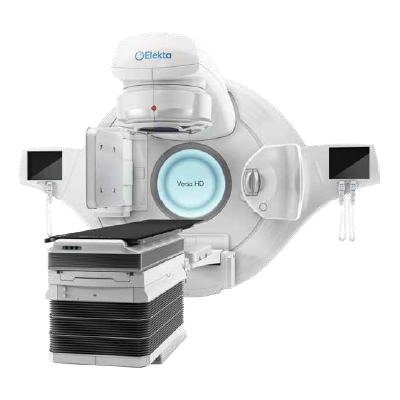
Versa HD Linac
The modern linear accelerator (Linac) is a device that produces high-energy X-rays and electron beams for the treatment of cancer patients. The foundation of radiation therapy is based on the interaction between matter and radiation. Thanks to the Simetry feature in the Elekta Versa HD device, potential errors can be prevented by monitoring tumor and healthy organ movements during treatment. It can provide treatment for brain tumors using special devices up to 1 mm.
Thanks to the Surface Tracking System (SIGRT):
- Reliable treatment
- Prevention of wrong patient and wrong area risks
- Ability to monitor patient movements at all times
- No need for marker marking
- Treatment option without masks for claustrophobic patients
- No exposure to radiation
Targeted Radiation Therapy in Cancer Treatment: Brachytherapy
The brachytherapy method is used to increase the dose received by the tumor before or after external radiotherapy, aiming to enhance local control of the disease.
Brachytherapy is a type of radiotherapy applied in the treatment of cancer patients. This type of treatment uses radiation to kill cancer cells. Brachytherapy targets cancerous cells biologically and is particularly applied to cancerous areas in the body such as the breast, prostate, lung, brain, liver, and stomach. It is frequently used successfully in the treatment of gynecological cancers (uterus, cervix, vagina), lung cancer, and skin cancers.
Robotic and Fully Automatic Drug Preparation
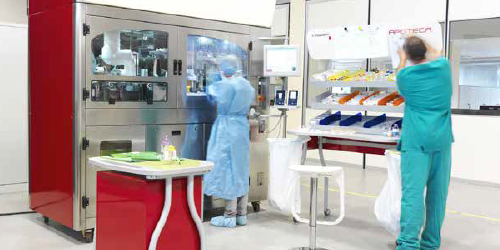
In a dedicated chemotherapy unit on a separate floor of the hospital, patients are treated in a comfortable environment while the medications prepared for them are done automatically and robotically, without human touch, in a sterile manner, ensuring patient safety.
Patient and Environment-Friendly Anesthesia Device
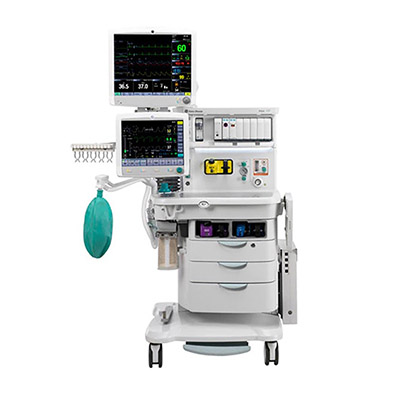
In our hospital, routine low-flow anesthesia applications are carried out with anesthesia devices that are patient, environment, and economy-friendly, supported by the experience of our specialized physicians and the entire anesthesia team. With this application, the fresh gas flow given to the patient in one minute is reduced from 4-5 liters to 0.4-0.5 liters. Thus, it aims to prevent discomfort that may occur in patients’ lungs, especially in long-lasting cases.
High Accuracy Rate in Cancer Diagnosis and Treatment – PET/CT
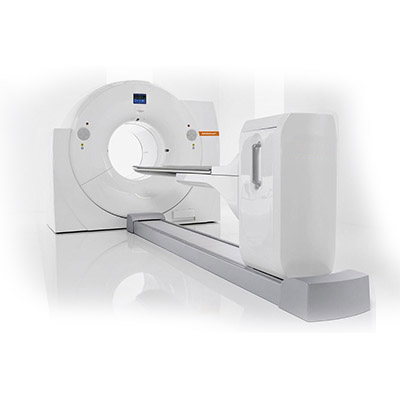
The PET-CT device is an advanced imaging method formed by the combination of positron emission tomography and computed tomography. It allows for the acquisition of 3D images of changes in the body and the tracking of cancerous cells. With high-quality lesion detectability and spatial resolution features, it provides accuracy in detecting the smallest cancer lesions. PET-CT is particularly utilized in identifying the location of newly developed metastases and the stage of cancer.
C-Arm X-ray Reducing Surgery Time
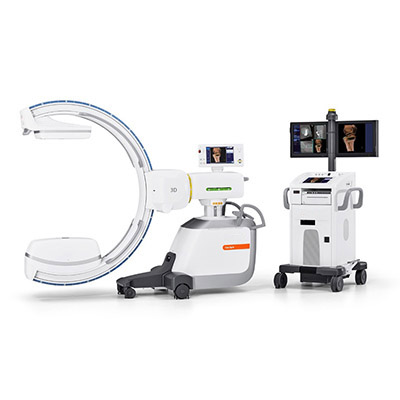
The C-arm X-ray device provides precise imaging capabilities with a volume of 16 cm, allowing for 3D images in dense tissues and heavy patients. The automatic location convenience and wide patient acquisition depth facilitate routine surgical operations for our physicians and offer a more comfortable experience for patients. Furthermore, especially in overweight patients, it increases diagnostic accuracy with high X-ray permeability.
Simultaneous Biopsy Capability with Mammography
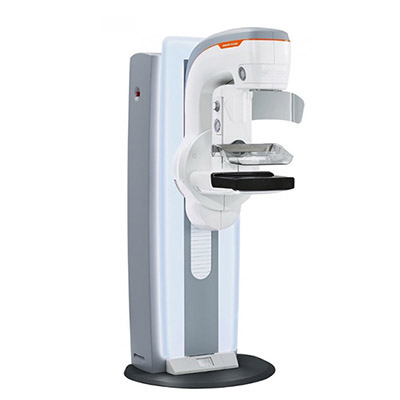
With our next-generation mammography device, effective images and successful results can be obtained in breast screenings. Thanks to high mAs values, new technology compression improvements, software, and hardware, the average dose received during imaging is reduced while keeping patients at minimal stress levels. One of the most sought-after features by patients, the Storataktik Biopsy performed during mammography is made possible with our mammography device. Additionally, with advanced technology breast tomosynthesis and 3D imaging capabilities, even the smallest lesions can be successfully detected, increasing the chance of early diagnosis in breast cancer.
Computerized Drug System Operating with Fingerprint
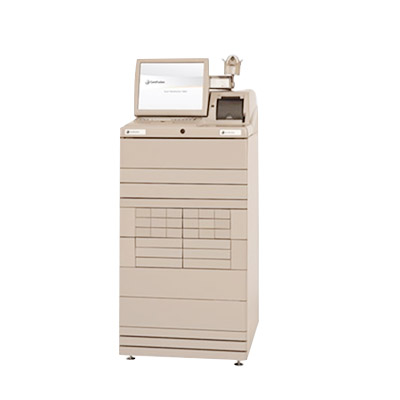
Our hospital aims to elevate patient experience and safety to the highest level with current technological equipment. The drug management system is a closed system through which prescribed medications for hospitalized patients are taken in the desired amount, in the patient’s name, using a special method. In a controlled and secure manner, the system, accessed with the personal password and fingerprint of the user nurse, allows tracking of who, when, and how much medication was taken. Thus, the system minimizes medication errors.
Fast Scanning and High Diagnostic Value with 640 Slice Tomography System
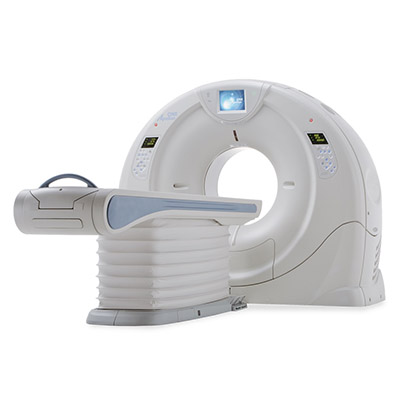
The new high-end Computed Tomography system using X-rays plays an effective role in early diagnosis and treatment processes. The system scans 640 slices and a 16 cm area in a single rotation, significantly reducing the radiation dose given to our patients thanks to its fast imaging technology. As the world’s most powerful scanner, the new CT system offers 3D examinations with the highest diagnostic value and quality. Additionally, coronary CT angiography can be performed for our emergency patients 24 hours a day with the tomography system.
3 Tesla MR with a Wider and More Comfortable Design
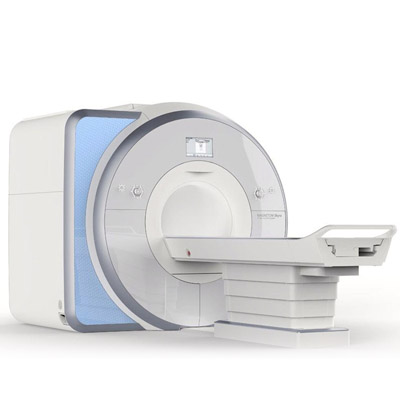
The 3 Tesla MR, used in the early diagnosis and treatment of diseases, is one of the most advanced imaging methods. In addition to enabling the detection of small lesions with high image quality, maximum patient comfort is targeted. For many, MR can be a dark, noisy, and frightening process. The 3 Tesla MR offers a more satisfying experience for patients with its wider design and Cinema Vision MR Video System. The MR process can be completed without the need for sedation, thanks to the opportunity to watch 3D films and television.
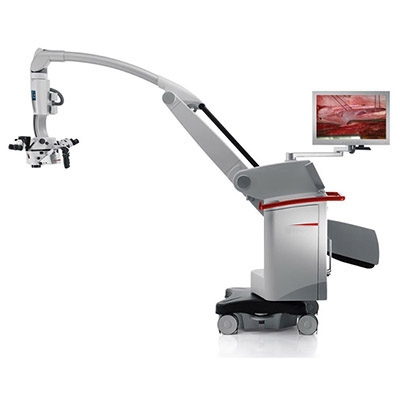
High Precision in Neurosurgery Operations – Surgical Microscope
The Surgical Microscope aims to protect the patient from the risk of paralysis and prevent damage to healthy cells with its sharp focus during delicate brain and nerve surgery operations. Especially in tumor surgery, it provides a safe surgical opportunity by identifying the tumor area and focusing on the tumor, yielding the best results. The device, equipped with special FusionOptics technology, advanced optics, and three integrated fluorescent modes, offers the best support for precise movement during surgery.
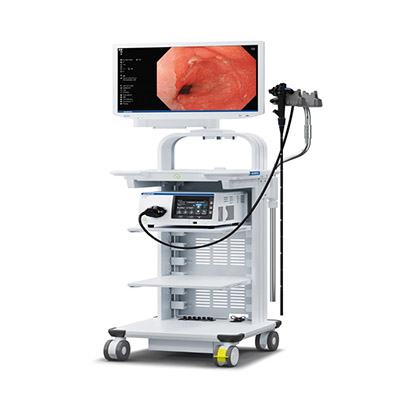
Next Generation Endoscopy – High-Resolution Endoscopy System
The high-resolution endoscopy system applies non-surgical advanced endoscopic techniques in the treatment of early-stage esophageal, stomach, and colon cancers and polyps. With HD quality imaging technology, it allows for the removal of tumors in the digestive system using the ESD method without any incisions in the body and enables the clear removal of early-stage polyps in the digestive system. Additionally, it is used as an endoscopic treatment method for rare diseases such as achalasia, diffuse esophageal spasm, and excessive contraction of the esophagus.
Minimum X-ray Waiting Time – Mobile X-ray
Mobile X-ray provides images that facilitate the diagnosis and treatment process with its high image-enhancing feature. With a powerful battery system, motorized driving capability, and positioning flexibility, it can be quickly and easily transported to any desired section within the hospital. This way, the waiting time for X-rays for our patients is minimized.