



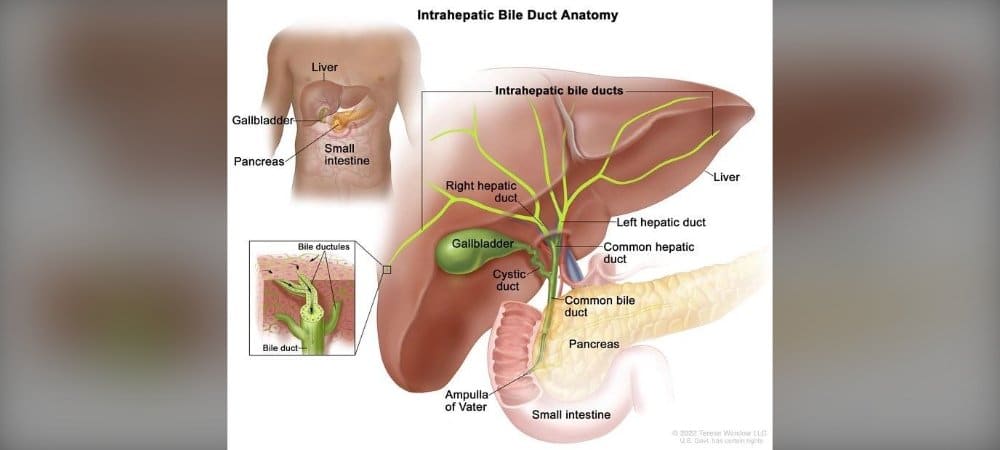
Cholangiocarcinoma is a rare and challenging type of cancer that occurs in the small ducts that carry bile, a digestive fluid. Also known as bile duct cancer, cholangiocarcinoma is often diagnosed at an advanced stage due to its insidious progression. Unfortunately, by the time a diagnosis is made, more than half of patients may no longer be candidates for surgery.
The answer to the question of what cholangiocarcinoma is actually refers to a malignant tumor that develops in the ducts that transport bile produced in the liver to the intestines. This type of cancer is the fifth most common among cancers that can develop in the digestive system. Although it is more frequently seen in individuals over the age of 50, it can occur at any age. In this article, you will also find answers to questions such as what bile duct dilation is, what cholangiocellular carcinoma is, and what intrahepatic cholangiocarcinoma is.
What is Bile Duct Cancer (Cholangiocarcinoma)?
Bile duct cancer is a type of cancer known in medical terms as cholangiocarcinoma, which develops from bile duct tissue. In recent years, its incidence has increased, making it more common than gallbladder cancers.
What is Cholangiocarcinoma?
Cholangiocarcinoma is a malignant tumor that arises from the abnormal proliferation of cells that make up the bile ducts. This type of cancer develops in the ducts that carry bile produced in your liver to your small intestine. Although it is rare, it is usually diagnosed at advanced stages due to its insidious progression and lack of symptoms in the early stages. Unfortunately, this can limit treatment options.
Bile duct cancer is classified into different types based on its anatomical location. It can occur inside the liver (intrahepatic), at the liver’s hilum (hilar), or outside the liver (extrahepatic). The most common form originates from the junction of the right and left main bile ducts (bifurcation) in approximately 60% of cases.
Function of the Bile Ducts
The bile ducts are a complex system of channels that connect the liver to the gallbladder and small intestine. This system allows bile produced in the liver to reach the digestive system. The primary function of bile is to assist in the digestion of fats.
The bile ducts are primarily composed of three sections:
- Intrahepatic (within the liver) bile ducts
- Hilar (at the liver hilum) bile ducts
- Extrahepatic (outside the liver) bile ducts
Bile fluid not only facilitates the absorption of nutrients but also helps eliminate waste products from the body. This system, which starts from small channels within the liver and merges into the main bile duct, extending to the duodenum, plays a vital role in the proper functioning of the digestive system.
What is Cholangiocellular Carcinoma?
Cholangiocellular carcinoma (abbreviated as CA) is another medical term used for cholangiocarcinoma. The abbreviation “CA” stands for “cancer” or “carcinoma.” This term refers to cancer that develops from bile duct cells.
This type of cancer is generally more common in individuals over 50 years old and is more prevalent in men. Conditions such as chronic liver diseases, gallstones, and primary sclerosing cholangitis are also among the risk factors.
Although bile duct cancer is rare, its incidence increases with age. This disease is quite challenging in terms of diagnosis and treatment, as the initial symptoms often appear when the disease is already at an advanced stage.
Types of Bile Duct Cancer
The classification of bile duct cancers is based on the tumor’s location in the body. This classification is crucial as it directly affects treatment planning. Bile duct cancers are divided into three main types based on their anatomical locations, and each may present different symptoms.
What is Intrahepatic Cholangiocarcinoma?
Intrahepatic cholangiocarcinoma is a type of cancer that originates from the small bile ducts within the liver. This type is considered the second most common primary cancer seen in the liver after hepatocellular carcinoma. These cancers, which develop away from the main bile ducts within the liver, account for approximately 10-15% of primary liver cancers.
Intrahepatic cholangiocarcinoma can typically arise in two different areas:
- Near larger bile ducts, closer to the liver hilus
- In the peripheral areas of the liver, further away from the main ducts
These tumors are often diagnosed at advanced stages because they usually do not show significant symptoms in the early stages. The most common complaints among patients are nonspecific symptoms such as abdominal pain, loss of appetite, and weight loss.
Perihilar (Klatskin Tumor)
Perihilar cholangiocarcinoma, also known as Klatskin tumor, is a type of cancer that occurs in the area where the right and left main bile ducts meet, just outside the liver (hilus). It constitutes 50-60% of all bile duct cancers, making it the most common type.
Klatskin tumors develop in the area where the left and right hepatic ducts merge to form the common bile duct, connecting to the cystic duct from the gallbladder. These tumors are classified into four types according to the Bismuth classification:
- Type I: Cancer is distant from the common hepatic duct and bifurcation
- Type II: Cancer is in the common hepatic duct and involves the bifurcation
- Type III: Cancer is in the common hepatic duct, involving the bifurcation and right or left hepatic duct
- Type IV: Cancer involves both the bifurcation and right and left ducts
The most notable feature of Klatskin tumors is that they cause symptoms such as jaundice, abdominal pain, and fever by obstructing the bile ducts. Early diagnosis is critical for treatment success.
Distal Cholangiocarcinoma
Distal cholangiocarcinoma is a type of cancer that develops in the section of the bile duct near the pancreas, opening into the small intestine. It accounts for approximately 10-30% of all cholangiocarcinomas. Due to its location, differential diagnosis with pancreatic head cancer is important.
These tumors typically present with symptoms such as jaundice, abdominal pain, and weight loss due to obstruction. The treatment approach for distal cholangiocarcinoma usually involves a surgical procedure known as duodenopancreatectomy (Whipple surgery).
Correctly identifying the type of bile duct cancer is vital in selecting the most appropriate treatment approach. However, early diagnosis is the most important factor in increasing treatment success across all three types. Regular health check-ups for individuals in high-risk groups can increase the likelihood of early detection.
Symptoms and Early Warning Signs
Bile duct cancer often progresses insidiously without symptoms in the early stages. The disease is usually noticed through complaints that arise when the tumor begins to obstruct the bile ducts. Recognizing these symptoms is vital for early diagnosis.
Jaundice and Skin Itching
The most common and noticeable symptom of bile duct cancer is jaundice. It manifests as yellowing of the skin and the whites of the eyes. This condition arises from the accumulation of a substance called bilirubin in the blood due to the tumor obstructing the bile ducts. Jaundice is one of the first symptoms detected in cholangiocarcinoma patients.
Bilirubin accumulation also leads to severe itching of the skin. This itching can be felt all over the body and can occur without any rash. It may be particularly bothersome at night and does not improve with regular moisturizing creams.
Abdominal Pain and Bloating
As the tumor grows, pain and a feeling of fullness may develop, especially in the upper right part of the abdomen, just below the ribs. In some patients, this pain may radiate to other areas of the abdomen or back. The pain can be dull or cramp-like and may intensify over time.
Due to the obstruction of bile flow, a feeling of bloating in the abdomen is also a common complaint. These symptoms are not exclusive to cholangiocarcinoma and can also be seen in other digestive system diseases.
Weight Loss and Loss of Appetite
Unintentional and unexplained weight loss is a significant symptom of advanced bile duct cancer. Due to the cancer cells affecting metabolism, sudden and noticeable weight loss can occur without any dietary changes.
Additionally, loss of appetite is a common issue. Cancer can reduce appetite by causing pain in the body and disrupting the normal functions of the digestive system. Emotional stress can also contribute to loss of appetite.
Dark Urine and Pale Stool
Due to the failure of bile pigments to reach the intestines normally, the color of urine becomes noticeably darker. At the same time, the stool loses its normal brown color provided by bile and takes on a pale appearance (like clay or white paste).
This duality of symptoms is one of the clearest signs of bile duct obstruction and should be taken seriously.
Fatigue and Tiredness
Persistent fatigue and a feeling of exhaustion are other commonly observed symptoms in bile duct cancer. This condition arises from cancer cells utilizing the body’s nutrients and energy sources.
Fatigue may initially be mild but can reach a level that affects even daily activities as the disease progresses. Continuous fatigue that does not improve with rest should be taken seriously.
If you are experiencing any of the above symptoms, especially jaundice, unexplained weight loss, or abdominal pain, it is crucial to consult a doctor without delay.
Causes and Risk Factors
Although the exact cause of cholangiocarcinoma is not always identifiable, certain health issues and lifestyle factors can significantly increase the risk of developing this disease. Knowing these risk factors is vital, especially for individuals in high-risk groups.
Primary Sclerosing Cholangitis (PSC)
Primary sclerosing cholangitis is a disease that causes inflammation in the bile ducts and leads to scar tissue formation over time. This condition can narrow and obstruct the bile ducts, disrupting bile flow. Patients with PSC have a significantly higher risk of developing cholangiocarcinoma—research indicates this risk ranges from 5% to 20%.
PSC is thought to be an autoimmune disease. Interestingly, about 70% of PSC patients also have an inflammatory bowel disease such as ulcerative colitis. The relationship between these two diseases suggests that bacterial products or toxic bile acids that can pass through the inflamed intestinal mucosa may reach the liver and cause chronic inflammation.
Chronic Liver Diseases
Damage to the liver due to chronic diseases increases the risk of cholangiocarcinoma. Conditions that cause scarring of the liver, such as cirrhosis, can disrupt the normal functioning of cells and create a conducive environment for cancer development.
Hepatitis B and Hepatitis C infections are also significant risk factors, especially for intrahepatic cholangiocarcinoma. These viruses can cause long-term inflammation in the liver, disrupting the cell renewal cycle and leading to genetic changes.
Additionally, congenital bile duct issues pose a risk. Individuals born with choledochal cysts, which cause enlarged and irregular bile ducts, have a higher risk of cholangiocarcinoma.
Liver Parasites and Hepatitis
Liver parasites are a significant risk factor for cholangiocarcinoma, particularly in Southeast Asia. In these regions, parasites such as Opisthorchis viverrini and Clonorchis sinensis, which originate from consuming raw or undercooked fish, can inhabit the bile ducts. These parasites can cause chronic inflammation in the bile ducts, leading to cancer development over time.
Hepatitis viruses can affect not only the liver but also the bile ducts. Inflammation caused by chronic hepatitis infection can lead to DNA damage and disruptions in the cell cycle, triggering cancer formation.
Advanced Age, Smoking, and Genetic Factors
Cholangiocarcinoma is most commonly seen in adults over the age of 50. The accumulation of DNA damage and weakening of the immune system with age can create a suitable environment for cancer development.
Smoking is directly associated with an increased risk of cholangiocarcinoma. The harmful substances in cigarettes can damage DNA, leading to genetic mutations and ultimately cancer development.
Certain genetic factors and familial conditions can also increase risk. Some hereditary conditions, such as BAP1 gene mutations and a family history of bile duct cancer, can elevate risk. However, the genetic changes that pose a risk for cholangiocarcinoma are generally acquired mutations rather than inherited ones.
Patients with type 1 or type 2 diabetes may also see an increased risk of cholangiocarcinoma. Additionally, obesity and being overweight are among the risk factors for bile duct cancer.
Diagnosis Methods and Process
Accurate diagnosis is the first and most crucial step in the treatment of bile duct cancer. The fact that cholangiocarcinoma often presents symptoms at advanced stages complicates the diagnosis process. However, various diagnostic methods today allow for earlier detection of this disease.
Blood Tests and CA 19-9
Liver function tests provide important clues in the initial evaluation of bile duct cancer. These tests measure enzyme and bilirubin levels that indicate problems in the liver and bile ducts.
CA 19-9 is a protein that is excessively produced by bile duct cancer cells and is an important tumor marker. A CA 19-9 value above 37 U/mL in a blood test is considered abnormal. Particularly high values, such as 1000 U/mL, may indicate pancreatic or bile duct cancer. However, a high CA 19-9 value does not always mean cancer; it can also be seen in other conditions such as bile duct inflammation or obstruction.
Imaging Techniques (CT, MRCP)
Imaging techniques help doctors visualize abnormalities in internal organs. Ultrasound is often the first method used and can detect masses in the liver or bile duct dilation.
Computed tomography (CT) creates cross-sectional images of the abdominal region, evaluating tumor spread and its relationship with other organs. It is particularly successful in detecting tumors larger than 1 cm.
Magnetic resonance cholangiopancreatography (MRCP) is a non-invasive technique used to obtain detailed images of the bile and pancreatic ducts. MRCP provides three-dimensional images without the need for contrast material and is increasingly used as an alternative to ERCP.
ERCP and Endoscopic Examination
Endoscopic retrograde cholangiopancreatography (ERCP) is an advanced method used for both diagnostic and therapeutic purposes. In this procedure, access is gained through the mouth to reach the duodenum after the stomach, and contrast material is injected into the bile ducts from the area where the bile ducts open.
During ERCP, obstructions, stones, or tumors in the bile ducts can be directly visualized. Biopsy samples can also be taken, strictures can be dilated, or stents can be placed. The procedure typically lasts 30-60 minutes under anesthesia.
Endoscopic ultrasound (EUS) is another diagnostic method used to examine the distal bile ducts, gallbladder, and regional lymph nodes.
Biopsy and Pathological Evaluation
For a definitive diagnosis, a sample of tumor tissue must be taken and examined under a microscope. Biopsies can be obtained during ERCP using brush cytology or needle aspiration.
Due to the difficulty of obtaining surgical biopsies from bile ducts, diagnosis is usually made using brush cytology obtained during ERCP. This method can detect cancer cells in approximately 30-40% of cases, while new techniques can increase this rate up to 70%.
Pathological examination reveals findings such as abnormal nuclear shape, enlarged nuclei, and irregular cell clusters that suggest cancer. In some complex cases, additional tests such as immunohistochemistry or molecular studies may enhance diagnostic accuracy.
In Summary: Bile Duct Cancer (Cholangiocarcinoma)
Bile duct cancer is a serious disease that is difficult to detect in its early stages. The disease may be advanced by the time symptoms appear. Therefore, it is crucial for individuals with risk factors to not neglect regular check-ups.
If you experience jaundice, abdominal pain, weight loss, or excessive fatigue, you should consult a doctor without delay. Especially if these symptoms occur together, you can increase the likelihood of early diagnosis.
If you are in a high-risk group, you should be more vigilant. Regular health check-ups can be life-saving if you have primary sclerosing cholangitis, chronic liver diseases, or a family history of bile duct cancer. Additionally, not smoking and adopting a healthy lifestyle can reduce your risk.
Today, thanks to blood tests, imaging methods, and endoscopic examinations, bile duct cancer can be diagnosed at earlier stages. This increases the success of treatment. Surgical treatment may be possible in cases diagnosed early.
In conclusion, while bile duct cancer is a challenging disease, being aware of risk factors and taking symptoms seriously can save lives. Regular health check-ups and being sensitive to changes in your body are the most important steps in the treatment of this disease.
Frequently Asked Questions
We have answered the frequently asked questions about bile duct cancer. Here are the most commonly asked questions:
What happens if the bile duct is obstructed? Jaundice primarily develops in bile duct obstruction. There is dilation in the bile ducts within the liver. With increased pressure and bacteria, bile duct inflammation (cholangitis) may develop. This condition can be fatal.
What are the stages of bile duct cancer? Bile duct cancer is divided into three stages. In the first stage, cancer is within the bile ducts and responds best to surgery. In the second stage, cancer has spread to nearby organs. In the third stage, it has spread to nearby organs, and in the fourth stage, it has spread to distant organs.
Can bile duct cancer be cured? This cancer is usually diagnosed late, so the duration of recovery depends on the presence of metastasis. The chances of success increase with early diagnosis.
Where does bile duct cancer metastasize? It can spread to nearby organs such as the liver, pancreas, stomach, gallbladder, and to distant organs via lymph nodes or the bloodstream.
Is bile duct cancer genetic? It is mostly not genetic, but some hereditary syndromes or diseases like primary sclerosing cholangitis can pose a risk.
What is bile duct cancer (cholangiocarcinoma), and what are its symptoms? Get detailed information about early diagnosis and treatment methods. Health check-ups can save lives.