



Pancreatic Ductal Adenocarcinoma is the most common type of pancreatic cancer, accounting for 95% of all pancreatic cancers. You may be searching for information about this disease because you or a loved one is experiencing some symptoms.
In fact, pancreatic ductal adenocarcinoma is a rather insidious disease and often shows no symptoms in the early stages. Since pancreatic adenocarcinoma constitutes ninety-five percent of malignant pancreatic tumors, early diagnosis is of great importance. As the disease progresses, symptoms such as jaundice, back pain, dark urine, and pale stools may appear. In this article, we will explain what pancreatic ductal adenocarcinoma is, its symptoms, diagnosis, and treatment processes in a clear and understandable manner.
What is Pancreatic Ductal Adenocarcinoma?
Pancreatic ductal adenocarcinoma is the most malignant type of tumor seen in the pancreas and constitutes about 95% of all malignant pancreatic tumors. This type of cancer starts from the cells lining the ducts (ducts) in the pancreas and progresses insidiously.
Structure and Function of the Pancreas
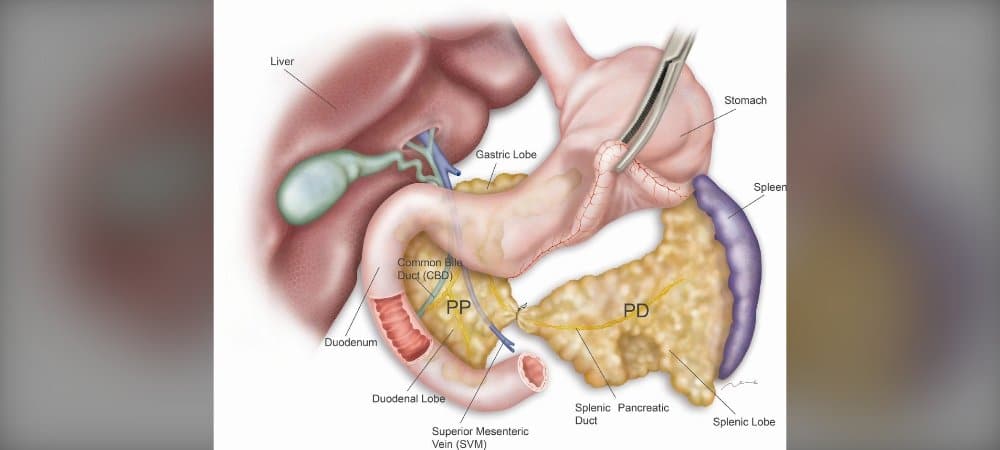
The pancreas is a leaf-shaped organ located in the abdominal cavity behind the stomach, approximately 15-20 cm long. This gland, resembling the end of a hockey stick, consists of three main parts: head, body, and tail. The pancreas has both endocrine (internal secretion) and exocrine (external secretion) features, performing two important functions.
For the digestive system, the pancreas secretes enzymes such as amylase, lipase, and trypsin that help break down food. On the other hand, it has Langerhans islets that produce vital hormones like insulin and glucagon to regulate blood sugar levels. Through this dual function, the pancreas plays a critical role in the body’s metabolic balance.
Cells Where Ductal Adenocarcinoma Develops
As the name suggests, pancreatic ductal adenocarcinoma begins in the small ducts (ducts) inside the pancreas. These cells normally help transport digestive fluids produced by the pancreas to the small intestine. However, when mutations occur in these cells for various reasons, uncontrolled growth begins, leading to tumor formation.
This type of cancer originates from the exocrine cells found in the pancreas and develops in the pancreatic ducts. About two-thirds of the tumors are located in the head of the pancreas (the part close to the small intestine), while the rest are seen in the body or tail of the gland.
Difference Between Pancreatic Adenocarcinoma and Other Tumors
Two types of tumors can develop in the pancreas: exocrine tumors and neuroendocrine tumors. Pancreatic ductal adenocarcinoma falls under the exocrine tumor group and constitutes an average of 93% of pancreatic tumors.
Other periampullary tumors (tumors of the distal common bile duct, ampulla of Vater, and duodenum) and pancreatic cystic tumors have different behavior patterns and treatment methods. In particular, neuroendocrine tumors arise from hormone-producing cells and represent only 5% of all pancreatic tumors.
Pancreatic ductal adenocarcinoma progresses more aggressively compared to other tumors and is usually diagnosed in advanced stages. This type of cancer, which often goes symptomless in its early stages, can cause symptoms such as digestive problems, jaundice, back pain, and weight loss in later stages.
Therefore, pancreatic ductal adenocarcinoma is known as the most common type of pancreatic cancer that progresses insidiously, is difficult to diagnose early, and originates from the cells in the pancreatic ducts.
Symptoms of Pancreatic Ductal Adenocarcinoma
It is quite rare for pancreatic ductal adenocarcinoma to show symptoms in its early stages. However, as the tumor grows and progresses, various symptoms begin to emerge. These symptoms may vary depending on the location of the disease in your body and how advanced it is.
Painless Jaundice and Itching of the Skin
Jaundice is one of the most common and striking symptoms of pancreatic ductal adenocarcinoma. Especially in tumors located in the head of the pancreas, the bile duct gets blocked, leading to yellowing of the skin and the whites of the eyes. This condition, medically termed “obstructive jaundice,” usually appears without pain and is a reason for patients to consult a doctor. Jaundice is often accompanied by widespread and uncomfortable itching of the skin, which results from the accumulation of bile acids in the blood irritating the nerve endings in the skin.
Dark Urine and Pale Stools
Jaundice does not occur alone. The bile pigment “bilirubin” that cannot be excreted from the body accumulates in the blood and is attempted to be eliminated through urine by the kidneys. As a result, the urine takes on a very dark color, resembling “tea or cola color.” Meanwhile, the stool turns pale, close to white, because the bile pigments that normally give stool its brown color cannot flow into the intestines. These two symptoms are important signs that can help detect pancreatic cancer in its early stages.
Loss of Appetite and Weight Loss
One of the first symptoms frequently seen in patients with pancreatic cancer is loss of appetite and unexplained weight loss. Patients may experience significant weight loss without a clear reason. This symptom is particularly more common in cancers of the head of the pancreas. Loss of appetite and weight loss may arise from the body’s metabolic response to cancer or as a result of the tumor affecting digestive functions.
Back Pain and Fatigue
As cancer progresses, pain that starts in the upper abdomen and radiates to the back is commonly seen. This pain often worsens at night and can become more severe when lying down. Especially in tumors that have spread towards the back of the pancreas, the pain radiating to the back is more pronounced. Chronic fatigue and weakness are also common symptoms seen in patients with pancreatic cancer. Particularly in advanced stages of the disease, significant fatigue occurs due to disruptions in the body’s energy balance.
Digestive Problems and Diarrhea
Since the pancreas produces digestive enzymes, various digestive problems arise when the tumor affects this function:
- Bloating and indigestion
- Nausea and vomiting
- Fatty, foul-smelling stools (steatorrhea)
- Severe and persistent diarrhea
These symptoms arise from the inability to properly digest food and can contribute to weight loss. Additionally, pancreatic cancer patients may experience changes in bowel movements, leading to diarrhea or constipation.
When you notice all these symptoms, especially when painless jaundice, dark urine, and pale stools occur together, it is vital to consult a doctor without delay.
Diagnosis Process and Methods Used
Accurate diagnosis of pancreatic ductal adenocarcinoma is vital for appropriate treatment planning. Since symptoms usually appear when the disease is in an advanced stage, various imaging techniques and tests are used for a definitive diagnosis.
Computed Tomography (CT)
Computed tomography is the primary examination method for diagnosing pancreatic cancer. A contrast-enhanced CT scan provides detailed information about the size, location, and relationship of the tumor with surrounding tissues. It also provides important information for evaluating the operability of the tumor, vascular involvement, and lymph node spread. The accuracy rate of CT scans is 100% for lesions larger than 15 mm. However, this rate may drop to 67% for smaller tumors.
Magnetic Resonance Imaging (MRI)
MRI allows for more detailed imaging of soft tissues and is particularly more sensitive than CT in evaluating possible liver metastases. It can be used as an alternative for tumors not detected by CT and is quite successful in showing liver metastases. The accuracy rate of MRI is approximately 83%, and this rate is gradually increasing with technological advancements.
Endoscopic Ultrasound (EUS)
Endoscopic ultrasound is the method with the highest accuracy rate for diagnosing pancreatic cancer (93-100%). EUS provides imaging from a very close angle to the pancreas using a high-frequency ultrasound probe placed at the end of the endoscope. Thus, even lesions smaller than 1 cm, which cannot be detected by standard imaging methods, can be easily identified.
The greatest advantage of EUS is that biopsy can be performed during the same session. Fine-needle aspiration biopsies (FNAB) performed under EUS guidance increase diagnostic sensitivity to 85-95% and specificity to 100%. It has superiority over other diagnostic methods, especially in evaluating small tumors.
Biopsy and Laboratory Tests
For a definitive diagnosis, a sample must be taken from suspicious tissue (biopsy). The most commonly used biopsy method in pancreatic cancer is fine-needle aspiration performed under EUS guidance. In this procedure, while the mass is clearly visualized with EUS, a thin needle advanced through the endoscope safely obtains cell samples from the mass.
Laboratory tests look for tumor markers such as CA 19-9 and CEA. Elevated levels of these markers may indicate pancreatic cancer. Additionally, in cases of bile duct obstruction, abnormal results may also be seen in bilirubin and liver function tests.
Staging: From 0 to 4
Staging of pancreatic cancer is used to understand how far the tumor has progressed and to create an appropriate treatment plan. Staging is done based on the TNM system (Tumor, Lymph Nodes, Metastasis).
- Stage 0: Cancer is limited to the cells in the pancreatic ducts and has not spread to surrounding tissues (carcinoma in situ).
- Stage I: The tumor is limited to the pancreas, with no spread to lymph nodes or distant organs.
- Stage II: The tumor has invaded nearby tissues outside the pancreas or spread to lymph nodes, but there is no distant metastasis.
- Stage III: Cancer has spread to the major blood vessels or nerves surrounding the pancreas.
- Stage IV: Cancer has metastasized to distant organs such as the liver or lungs.
For accurate staging, advanced imaging methods such as CT, MRI, EUS, and sometimes PET-CT are used together.
Treatment Options and Application Criteria
The treatment of pancreatic ductal adenocarcinoma is determined based on the stage of the disease and the overall health status of the patient. The correct treatment approach is crucial for extending the patient’s lifespan and improving their quality of life.
Surgical Intervention (Whipple Surgery)
Whipple surgery is the most effective treatment method for pancreatic cancer. In this procedure, the head of the pancreas, duodenum, gallbladder, and part of the bile duct are removed. The remaining organs are then reconnected to preserve the function of the digestive system. This complex surgery requires high experience, so it is important to be performed in specialized centers. According to statistics, only 15-20% of pancreatic cancer patients are in a condition suitable for surgical treatment at the time of diagnosis.
Chemotherapy and Radiotherapy
Chemotherapy is a drug treatment used to destroy cancer cells or stop their growth. Protocols such as Gemcitabine and FOLFIRINOX are commonly used. It can be applied to eliminate microscopic cancer cells remaining after surgery. Radiotherapy works by sending high-energy rays to cancer cells and often yields more effective results when used in conjunction with chemotherapy.
Immunotherapy and Targeted Treatments
In recent years, new developments have been made in the treatment of pancreatic cancer. Especially in patients with KRAS G12D mutation (40-45% of cases), new targeted therapies have been developed. New drugs such as INCB161734 and setidegrasib show promising results both alone and in combination with chemotherapy. Immunotherapy works by enhancing the body’s immune system against cancer cells and can be evaluated particularly in patients with specific genetic characteristics (such as MSI-H).
Criteria for Treatment Eligibility
When determining treatment options, the following factors are considered:
- The size, location, and spread of the tumor
- The overall health status and age of the patient
- Other accompanying diseases
Criteria for surgical eligibility include the degree of tumor involvement with major vessels, whether there is spread to distant organs, and whether the patient is in a condition to tolerate surgery. In patients who are not suitable for surgery, chemotherapy, radiotherapy, or palliative treatments are preferred.
Post-Treatment Follow-Up Process
Regular follow-up after treatment is vital. Patients are called for check-ups every 3-4 months in the first year and every 6 months in subsequent years. During the follow-up process, blood tests (tumor markers such as CA 19-9) and imaging methods (CT, MRI) are used. Additionally, patients who have undergone Whipple surgery may need changes in their dietary habits. Initially starting with liquid foods, they gradually transition to soft and easily digestible foods. Pancreatic enzyme support and insulin therapy, when necessary, are also part of the process.
Risk Factors and Life Expectancy
The risk of developing pancreatic ductal adenocarcinoma is influenced by various factors. Understanding these risk factors and life expectancy is crucial for early diagnosis and proper treatment planning.
Genetic Predisposition and Family History
About 10% of pancreatic cancers are hereditary. Individuals with a family history of pancreatic cancer have a higher risk of developing the disease. The risk increases 3-5 times in first-degree relatives (mother, father, siblings) with a history of pancreatic cancer. More strikingly, the risk can increase up to 30 times in individuals with three or more family members having pancreatic cancer. Genetic mutations such as BRCA1, BRCA2, and PALB2 are also factors that increase the risk of pancreatic cancer.
Smoking, Alcohol, and Obesity
Smoking is the most significant preventable cause of pancreatic cancer. Studies show that smokers have a 2-3 times higher risk of developing pancreatic cancer compared to non-smokers. Additionally, smoking is responsible for about 30% of pancreatic cancer cases. Excessive alcohol consumption also increases the risk by 1.5-2 times. Furthermore, obesity is an important risk factor. Every 5-unit increase in body mass index raises the risk of pancreatic cancer by 10%.
Diabetes and Chronic Pancreatitis
Diabetes doubles the risk of developing pancreatic cancer. Interestingly, diabetes can sometimes present as the first symptom of pancreatic cancer. Especially in individuals over 50 years old, sudden onset diabetes in those without a family history of diabetes may indicate undiagnosed pancreatic cancer. Patients with chronic pancreatitis are also at much higher risk of developing pancreatic cancer. In these patients, the risk is 10-15 times higher than in healthy individuals.
Organs Where Metastasis Occurs
Pancreatic cancer most frequently metastasizes to the liver. Studies have shown that the rate of liver metastasis can reach up to 83.6%. The second most common site is lung metastases (26%). Additionally, the peritoneal area (abdominal lining) and distant lymph nodes are also common areas for pancreatic cancer spread. This pattern of spread directly affects the stage of the disease and the treatment plan.
Factors Affecting Life Expectancy
Life expectancy in pancreatic ductal adenocarcinoma depends on many factors. The most important is the stage of the disease. In localized (limited to the pancreas) cancer, the 5-year survival rate can be as high as 44%. In cases of regional spread, this rate drops to 15%, and in the presence of distant metastasis, it falls to 3%. The proportion of patients who may be eligible for surgical treatment is only about 10-15%. The patient’s overall health status, tumor characteristics, and response to treatment are also other factors affecting life expectancy. The 5-year survival rate for metastatic pancreatic cancer is approximately 3%, and treatment is usually performed with chemotherapy.
In Summary: Pancreatic Ductal Adenocarcinoma
As seen, pancreatic ductal adenocarcinoma is a disease that progresses insidiously and is often diagnosed late. It is vital to notice symptoms such as painless jaundice, back pain, and weight loss. If you experience any of these symptoms, you should consult a doctor without delay.
Knowing the risk factors and having regular health check-ups can increase the success of early diagnosis. Lifestyle changes such as reducing smoking and alcohol consumption and maintaining a healthy weight can help lower the risk of the disease. Additionally, individuals with a family history of pancreatic cancer are advised to be more cautious.
However, thanks to advancements in the medical field, diagnostic and treatment options are improving. Surgical intervention, chemotherapy, and newly developed targeted drugs are increasing patients’ lifespan and quality of life. Therefore, early diagnosis, the correct treatment approach, and regular follow-up are the keys to achieving positive outcomes in pancreatic cancer.
In conclusion, being informed about pancreatic cancer and raising awareness is of great importance. This way, you can notice symptoms early, avoid risk factors, and seek appropriate medical help when necessary. Remember that, as with any disease, early diagnosis can save lives in pancreatic cancer.
Frequently Asked Questions
We have compiled frequently asked questions about pancreatic ductal adenocarcinoma for you. In this section, we answer the most common questions related to the disease.
Where does pain occur in pancreatic cancer? Pain is usually felt in the upper abdomen and radiates to the back.
Can pancreatic cancer occur at a young age? Although it is mostly seen in older ages, it can also develop in younger individuals with genetic predisposition.
Which blood test reveals pancreatic cancer? There is no single blood test for a definitive diagnosis, but tumor markers such as CA 19-9 and CEA can assist in diagnosis.
Can pancreatic cancer be seen on ultrasound? Yes, ultrasound can help detect cancer by creating images of the pancreas. Two types of ultrasound are used: abdominal ultrasound and endoscopic ultrasound.
Can pancreatic cancer be cured with surgery? If diagnosed in the early stage, the tumor can be completely removed through surgery, leading to recovery. After Whipple surgery, the patient can return to normal life within approximately 6 months.
Where does pancreatic cancer metastasize first? The cancer can primarily spread within the abdomen and to the liver. It can then spread to the lungs and bones.
Pancreatic ductal adenocarcinoma constitutes 95% of pancreatic cancer. Early diagnosis is difficult, with symptoms including jaundice, back pain, and weight loss. Explore treatment options.