


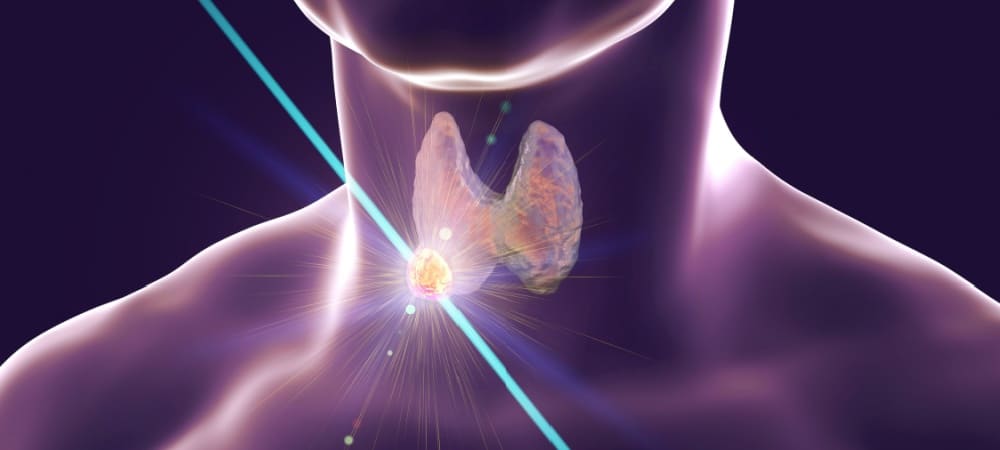
The thyroid gland is an important endocrine gland located in the neck that regulates the body’s metabolism. Benign or malignant nodules can occasionally form in this gland.
In the past, surgical methods were frequently preferred for the treatment of thyroid nodules, but with the advancement of medical technology, less invasive methods have come to the forefront. One of these methods is non-surgical thyroid nodule ablation. In non-surgical thyroid nodule ablation, the nodule is accessed with a thin needle under local anesthesia after numbing the skin, using energy sources such as radiofrequency or microwave. This stops the growth of the nodule and reduces the patient’s complaints.
What is Thyroid Ablation?
Thyroid ablation is a treatment method used to eliminate benign or malignant nodules in the thyroid gland without the need for surgical intervention. In this method, a thin needle is guided to the thyroid nodule under ultrasound, and the nodule tissue is heated with energy sources such as radiofrequency or microwave, destroying the cells that make up the nodule. This stops the growth of the nodule and reduces the patient’s complaints.
Thyroid ablation has advantages over traditional surgical methods, such as being less invasive, allowing the patient to return to daily life more quickly, reducing the risk of complications, and most importantly, preserving the thyroid gland. Therefore, it is considered a primary treatment method for thyroid nodule treatment.
How is Thyroid Ablation Treatment Applied?
Thyroid ablation is generally performed under local anesthesia as an outpatient procedure. Before the procedure, the patient is thoroughly evaluated, and various imaging methods (such as ultrasound, CT, and MRI) are used to obtain detailed information about the size, vascularization, location, and structure of the thyroid nodule. The stages of the thyroid ablation procedure are as follows:
- Preparation: The patient is given intravenous painkillers and prophylactic antibiotics, lies comfortably on their back, and the area to be treated is cleaned with antiseptic solution.
- Anesthesia: A local anesthetic is applied to numb the treatment area.
- Needle Placement: A thin needle is directed to the thyroid nodule via ultrasound.
- Energy Delivery: The needle tip is connected to a device that produces radiofrequency or microwave energy, and energy is delivered to the nodule for a specified duration.
- Post-Procedure: An ice pack is applied to the area after the procedure to prevent swelling and pain. The patient is discharged after a short rest period.
What are the Advantages of Non-Surgical Thyroid Ablation?
Non-surgical thyroid ablation offers many advantages over traditional surgical methods in the treatment of thyroid nodules. These advantages make it a more comfortable and effective treatment option for patients. Some of the advantages of non-surgical thyroid ablation include:
- Minimal Invasiveness: Since the ablation procedure does not require a surgical incision, it can be comfortable and stress-free for the patient.
- Quick Recovery: Patients can return to daily life shortly after the procedure.
- Short Procedure: The procedure duration is generally short, and the hospital stay is minimal.
- Cosmetic Advantage: Since no incisions are made on the body during the procedure, it does not leave scars and is more aesthetically pleasing.
- Preservation of Thyroid Functions: Since only the nodule tissue is targeted, the remaining thyroid tissue is preserved.
Who is Suitable for Non-Surgical Thyroid Ablation Treatment?
Non-surgical thyroid ablation may not be suitable for all thyroid nodule patients. However, it is a highly effective treatment method for patients meeting certain criteria. Some of the necessary conditions for non-surgical thyroid ablation include:
- Nodule Size: More successful results are obtained in small or medium-sized nodules.
- Number of Nodules: It can be applied to one or multiple nodules.
- Nodule Type: It is generally preferred for benign nodules.
- Patient’s General Health Status: It can be applied to patients in good general health.
- Those Who Do Not Respond to Other Treatment Methods: It is an alternative option for patients who do not respond to other treatment methods.
Are There Risks or Side Effects of Non-Surgical Thyroid Ablation Treatment?
As with all medical procedures, there may be some risks and side effects associated with thyroid ablation. Some of these risks include:
- Hoarseness or Roughness in Voice: In very rare cases, temporary hoarseness may occur.
- Difficulty Swallowing: Temporary difficulty in swallowing may occur after the procedure.
- Bleeding: Rarely, a small amount of bleeding may occur during or after the procedure.
- Infection: There is a rare risk of infection at the treatment site.
- Neurological Complications: In very rare cases, neurological complications such as nerve damage may occur.
The likelihood of these risks occurring may vary depending on the patient’s general health status, the characteristics of the nodule, and the doctor’s experience.
Frequently Asked Questions
How Long Does the Thyroid Ablation Procedure Take?
The duration of the thyroid ablation procedure varies depending on the size and number of nodules and the area being treated, but it generally lasts between 30 to 60 minutes. Light sedation or local anesthesia is applied before the procedure to help the patient relax. Thanks to anesthesia, there is no pain or discomfort during the procedure.
Will I Feel Pain During and After This Treatment?
In non-surgical thyroid nodule ablation treatment, local anesthesia and intravenous painkillers are applied in some patients. Therefore, no pain is felt during the procedure. After the procedure, there may be mild pain, tenderness, and swelling in the treatment area. If your complaints increase, it is important to consult your doctor. Your doctor may recommend a suitable painkiller to alleviate the pain.
How Long is the Recovery Period? When Can I Return to Daily Life?
The recovery process in thyroid ablation is quite fast. In most cases, patients can return to routine life immediately after the procedure. However, it is important to avoid heavy physical activities for the first few days after the procedure, drink plenty of fluids, and regularly take the medications recommended by the doctor.
How are Follow-ups and Controls Done After Ablation Treatment?
Regular follow-ups after ablation treatment are very important to evaluate the effectiveness of the treatment and to detect possible complications early. During the follow-up process, the following procedures are generally performed:
- Blood Tests: Blood tests are requested to check thyroid hormone levels and other values.
- Ultrasound: Ultrasound is performed to evaluate the condition of your thyroid gland and nodules.
- Physical Examination: Any swelling or tenderness in your neck area is checked.
The frequency of follow-ups may vary depending on the patient’s condition and the doctor’s recommendation. Generally, more frequent follow-ups are done in the first year, and less frequent follow-ups in subsequent years. Follow-ups are conducted in collaboration with endocrinology and interventional radiology.
Does Thyroid Ablation Eliminate the Need for Surgery in the Future?
Thyroid ablation is considered a less invasive and safer alternative to surgery, especially for the treatment of benign thyroid nodules. However, thyroid ablation may not be sufficient alone for all thyroid diseases. Some conditions that may require surgery after thyroid ablation include:
- Large and Widespread Nodules: Surgical treatment may be necessary for very large nodules or nodules covering a large part of the thyroid gland.
- Malignant Tumors: Surgical treatment is generally preferred for cancerous thyroid nodules.
- Recurrent Nodules: Surgery may be necessary in case of recurrence of the nodule after ablation. Additionally, ablation may also be performed as a second or third session.
While thyroid ablation plays an important role in the treatment of thyroid diseases, it does not mean that surgical methods will be completely eliminated. Since each patient’s situation is different, the treatment method is determined based on the patient’s characteristics and the doctor’s evaluation.
Can Thyroid Ablation Treatment Be Applied During Pregnancy or Breastfeeding?
Thyroid ablation treatment is generally not applied during pregnancy and breastfeeding. The energy sources used in the ablation procedure (such as radiofrequency or microwave) may pose potential risks to the fetus or breastfeeding baby. Therefore, different treatment methods are evaluated for women experiencing thyroid nodule problems during pregnancy or breastfeeding.
For women with thyroid disease during pregnancy and breastfeeding, medication treatment is generally preferred. However, since each patient’s situation is different, the treatment plan should always be evaluated by an endocrinologist.
Non-surgical treatment method for thyroid nodules, thyroid ablation offers an effective and safe solution without the need for surgical intervention. However, to maintain the success of the treatment and monitor the patient’s overall health, regular doctor check-ups are of great importance.
In the follow-up programs implemented at Hisar Hospital; blood tests, thyroid ultrasound, and physical examination are conducted to closely monitor the course of the nodule and thyroid functions. This way, possible recurrences or complications can be detected early, allowing the treatment process to be reshaped.
If you would like to learn more about thyroid nodules, their causes, and treatment options, you can visit our Thyroid Nodule page.
For a detailed evaluation and personalized treatment plan regarding thyroid ablation, you can contact the Hisar Hospital Interventional Radiology Department and easily apply through the appointment form.