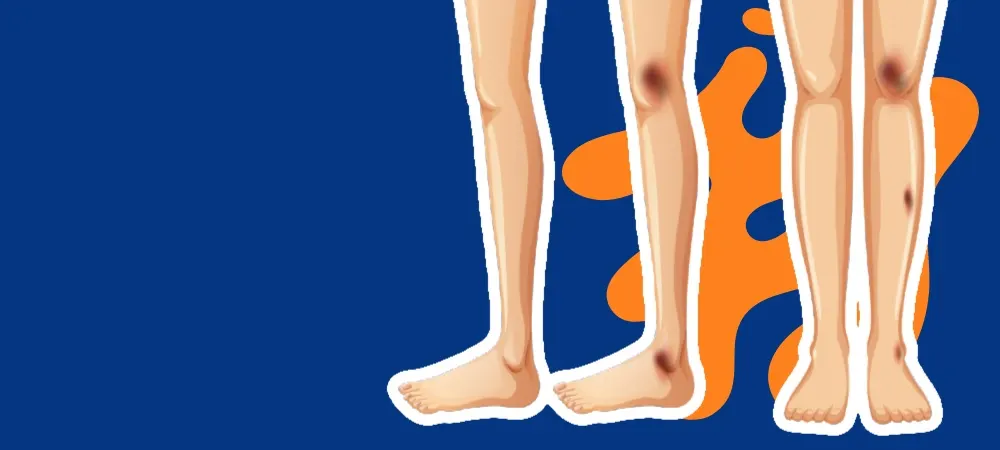
Bruising on the legs is a common occurrence in daily life. Often resulting from various traumas such as falls or impacts, leg bruises can also develop due to the natural aging process or the side effects of certain medications. Conditions such as itching and bruising on the upper leg or bruising on the leg after sports may indicate an underlying health issue. For this reason, it is important to consult a specialist doctor, especially in cases of frequently recurring leg bruises.
What is Bruising on the Legs?
Bruising on the legs, known in medical literature as ecchymosis, is the discoloration of the skin resulting from blood leaking from damaged blood vessels into the tissues under the skin. Bruises, which can appear anywhere on the body, can occur due to various reasons such as minor traumas like impacts, muscle injuries related to exercise, or skin irritation resulting from severe itching. Conditions such as itching and bruising on the lower or upper leg may start with a reddish hue but can eventually turn into different colors such as dark blue, purple, yellow, or green. Bruises can be more common in sensitive areas of the legs. Additionally, the decrease in skin elasticity with age can also make bruises form more easily.
In some individuals, unexplained bruises can appear in different parts of the body, such as bruising on the upper and lower legs, without any trauma. Unexplained bruising on the leg may be related to various health issues such as clotting disorders, liver diseases, or vitamin K deficiency. Therefore, if there are unexplained bruises on the body, especially if they recur frequently, it is important to investigate the underlying cause.
How Does Bruising on the Legs Occur?
Bruising on the legs usually occurs as a result of an impact to the leg, which damages the blood vessels and causes blood to leak out from the damaged vessel. When there is no open wound at the site of the trauma, the blood leaking from the vessels cannot escape and accumulates under the skin. The blood accumulated under the skin causes spots of different colors such as purple, black, brown, or green to form on the surface of the skin. However, vascular damage is not always due to an impact. In conditions that cause the blood clotting mechanism to be impaired, such as aging and medication use, bleeding and associated bruises can also occur in different parts of the body.
Additionally, bruising on the leg after sports is a situation frequently encountered by people involved in sports. Excessive muscle work or muscle injury during sports can cause damage to the blood vessels under the skin. Furthermore, scratching the skin severely, especially in those with sensitive skin, can lead to bruising after itching on the leg.
What Causes Bruising on the Legs?
When it comes to the causes of bruising on the legs, the first thing that comes to mind is impacts to the leg. However, in some cases, pain and bruising on the leg can be a sign of a more serious health problem. Some people's skin is more prone to bruising than others. Accordingly, the main causes and risk factors for bruising on the leg are as follows:
Age: The skin thins and loses its elasticity with age. This makes it easier for bruises to form and can cause them to take longer to heal. In addition, various medications used in old age, such as blood thinners used for various health problems, can also increase the risk of bruising on the leg in the elderly.
Genetic predisposition: According to various studies, people whose family members bruise easily may have skin that is more prone to bruising. Additionally, some genetically transmitted diseases characterized by blood clotting disorders, such as Von Willebrand disease, can cause unexplained bruising on the leg.
Vitamin deficiencies: Not getting enough of certain vitamins through food or impaired absorption of vitamins due to any health problem can cause easy bruising. For example, in cases of severe vitamin C deficiency, scurvy, characterized by symptoms such as anemia, fatigue, unexplained bleeding, and bruising, may occur. In addition to vitamin C, one of the main symptoms of vitamin K deficiency is bleeding disorders and easy bruising. Vitamin K deficiency, which plays an important role in blood clotting, can be seen in people of all ages. However, since breast milk does not contain enough vitamin K, vitamin K deficiency is more common in infants.
Liver diseases: If there is a health problem that negatively affects the normal function of the liver, the blood clotting process may be impaired. For example, the American Liver Foundation states that cirrhosis patients are more prone to easy bruising and bleeding.
Autoimmune diseases: Autoimmune diseases such as rheumatoid arthritis and lupus, where the body attacks its own tissues and organs, can cause bleeding disorders. Some medications used in the treatment of rheumatoid arthritis can also lead to bruising.
Thrombocytopenia: In patients with thrombocytopenia, a health problem characterized by a low blood platelet count, complications such as bleeding disorders and bruising can occur because the blood does not clot properly. Research shows that approximately 5-10% of pregnant or postpartum women have thrombocytopenia. Additionally, various treatments such as cancer therapy can cause a decrease in the number of platelets responsible for blood clotting.
In addition to those listed, rare blood diseases such as factor V deficiency, Bernard-Soulier syndrome, and hemophilia can cause unexplained bruises on the leg.
How is Bruising on the Legs Diagnosed?
During the diagnosis of bruising on the legs, specialists first evaluate the size and shape of the bruises with a physical examination. Then, the patient may be asked questions such as whether there is a family history of easy bruising, whether there is any health problem, or whether there is any medication used regularly. In cases of redness and bruising on the leg, questions such as when the symptoms appeared and whether the patient was exposed to an impact may also be asked. After the physical examination, specialist doctors may use blood tests to determine the exact cause of the bruising on the leg. Thanks to blood tests, the patient's platelet count, vitamin deficiencies, or other health problems can be diagnosed. In some cases, if specialists suspect cancer as the cause of the bruising, a bone marrow biopsy may also be needed.
How is Bruising on the Legs Treated?
The treatment of bruising on the legs varies depending on the factor causing the bruise. Bruises that develop due to minor traumas often heal on their own in a short time without the need for any treatment or with methods such as cold compress application. However, if the cause of the bruise is a more serious health problem, the underlying health problem must first be treated. For example, bruises that develop due to vitamin deficiencies can often heal when the missing vitamin is replaced through food or nutritional supplements. In addition, some medications may be prescribed for patients with low platelet counts, or the platelet count can be increased through methods such as blood transfusion.
Frequently Asked Questions
Bruising on the legs is usually an indication that blood vessels have been damaged as a result of a blow or impact. In some cases, bruises can occur in various parts of the body, including the legs, without any known trauma. Unexplained bruises on the leg can indicate serious health problems such as bleeding disorders, low platelet count, anemia, or liver disease. Bruises that are frequent and widespread without being related to trauma can be a sign of an underlying serious health problem. If the bruises are accompanied by symptoms such as bleeding, swelling called a hematoma in the bruised area, or pain, it is important to consult a specialist doctor. One of the symptoms of vitamin deficiencies, such as vitamin K deficiency, which negatively affects blood clotting, can be easy bruising. In addition to vitamin K, vitamin C deficiency can also cause a health problem known as scurvy, characterized by easy bleeding and bruises. If there is bruising on the leg after trauma such as a fall or impact, or after sports, the leg should be kept above heart level if possible to slow the flow of blood leaking from the damaged vessel to the bruised area. Additionally, applying a cold compress to the bruised area and resting can help the bruise heal in a shorter time. Although stress itself does not directly cause bruising, intense and prolonged stress can lead to rare diseases characterized by symptoms such as bleeding disorders and unexplained bruising, such as Gardner-Diamond syndrome. Anemia can cause symptoms such as itching and bruising on the leg. In addition to iron deficiency anemia, aplastic anemia, a rare blood disease characterized by impaired production of red and white blood cells and platelets, can also cause bruising. The human body needs vitamin B12 to produce blood cells, including platelets. Although it is difficult to say that B12 deficiency directly causes bruising on the leg, anemia associated with vitamin B12 can cause unexplained bruising. A leg bruise usually heals within 2 weeks. It is important to get help from a specialist doctor in case of bruising that lasts longer than 2 weeks and worsens. Iron deficiency can manifest itself with symptoms such as bruising and itching on the leg.
If you notice frequently recurring or unexplained bruises on your legs, consult our specialist ORTHOPEDICS AND TRAUMATOLOGY doctors without delay. With early diagnosis, you can prevent possible health problems. Contact us for an appointment and detailed information.
Commencez par le bon bilan pour Causes, Symptoms, and Treatment Methods for Bruising on the Legs
Partagez vos symptômes avec nos médecins spécialistes ; définissons ensemble le diagnostic et le plan de traitement adaptés.
Attention
Si vos symptômes sont apparus soudainement, évoluent rapidement ou limitent nettement votre vie quotidienne, consultez un médecin sans tarder.
Planifiez votre parcours Causes, Symptoms, and Treatment Methods for Bruising on the Legs avec nos spécialistes.
Remplissez le formulaire ou prenez rendez-vous pour connaître les options de traitement, le déroulement et la préparation.