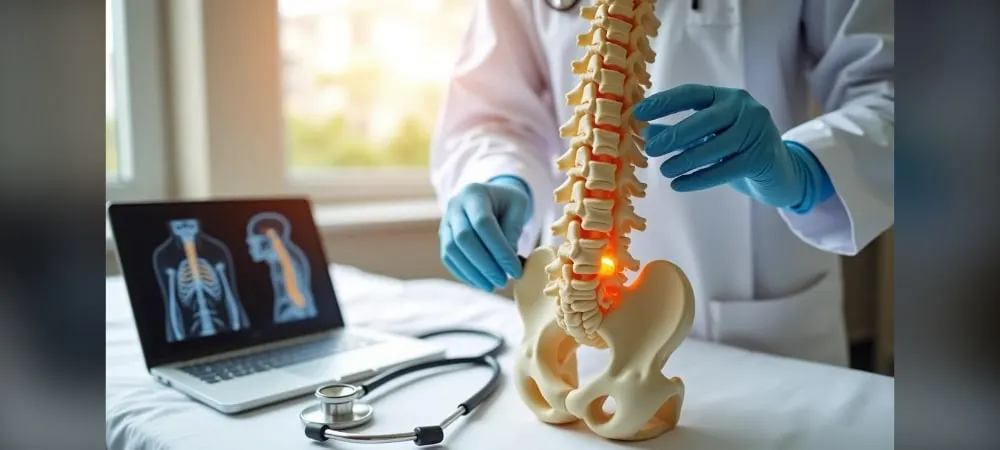
Cauda equina syndrome is a serious health condition that requires emergency intervention. This condition, which affects only 1 in every 30,000 to 100,000 people globally each year, arises from the compression of nerve roots at the base of the spinal cord. It is seen in approximately 3% of all disc herniation cases. Therefore, it is important to be informed about the symptoms, diagnosis, treatment, and causes of cauda equina syndrome. In this article, we will explain all aspects of the condition in detail.
What is Cauda Equina Syndrome?
Your spinal cord extends from the neck region down to the lumbar level. At the L1-L2 vertebral level, the spinal cord ceases to be a single structure and divides into multiple nerve fibers. These nerve fibers resemble a horse's tail in appearance. In fact, the origin of the name "cauda equina" in Latin means "horse's tail".
Anatomy of the Cauda Equina Nerves
The cauda equina nerves control the organs in the pelvic area and the legs. These nerves enable the functioning of your leg muscles, manage sensory perception in your lower limbs, and control your bladder and bowel functions.
Cauda equina syndrome typically arises from the compression of the S2, S3, S4, and S5 nerve roots. When these nerves are under pressure, they cannot perform their functions properly. Similarly, serious problems begin in the pelvic organs and lower limbs.
The most commonly affected spinal levels are between L4-L5 and L5-S1. Any condition that damages the nerve roots in these areas can lead to cauda equina syndrome. The disease typically affects both lower extremities, but the type and severity of symptoms may differ on the right and left sides.
Types of Cauda Equina Syndrome
Cauda equina syndrome is classified in different ways. There are two main types: complete and incomplete. In the complete type, nerve functions are completely lost, while in the incomplete type, partial function loss is observed.
Classification can also be based on the speed of onset. The rapidly developing type presents with sudden symptoms and requires emergency intervention. In the slowly developing type, symptoms gradually increase. The presence of urinary and anal sphincter dysfunction is essential for diagnosis.
How Common is the Condition?
Cauda equina syndrome is a rare condition. It occurs in 1-2% of lumbar disc herniation cases. In the population referred for emergency surgical decompression, the crude incidence is 2.7 cases per 100,000 adults per year.
Certain age groups are at higher risk. Women aged 30 to 39 have the highest incidence at 7.2 per 100,000 women per year. Additionally, cauda equina syndrome most frequently occurs between the ages of 31 and 50.
The disease can occur in both men and women of all ages. However, there is no age limitation in cases that develop after trauma. Therefore, recognizing the symptoms and early intervention is critically important.
Symptoms and Causes of Cauda Equina Syndrome
Symptoms typically appear unexpectedly and immediately affect the person's quality of life. In some cases, symptoms may develop gradually over weeks or months. This variability complicates early diagnosis and can delay emergency intervention.
Main Symptoms
The symptoms of cauda equina syndrome vary according to the severity of pressure on the nerve roots. Saddle-style numbness is the most characteristic sign of the disease. This term describes the loss of sensation in the groin, inner thigh, and perineal area. You experience numbness in the areas where the saddle touches while sitting on a horse.
You may experience tingling, numbness, and weakness in your legs. Loss of motor function can be unilateral or affect both legs. In severe cases, disorders can range from being unable to extend your leg to paralysis of the lower limbs.
You will experience loss of reflexes in your lower extremities. Walking difficulties begin in the feet, and you may have trouble standing. There may be a decrease in sensation or a complete loss of sensation below the waist.
Back and Leg Pain
Severe back pain is often one of the first symptoms observed. The pain is usually bilateral and very intense. You feel pain radiating from the lower back to the legs.
Back pain is often accompanied by pelvic and genital pain. This pain can be strong enough to hinder movement and interfere with daily activities. In some cases, the sensation of pain may be diminished.
Bladder and Bowel Dysfunction
Bladder dysfunction is the most commonly reported symptom. You may experience inability to urinate, urinary incontinence, or a lack of sensation that the bladder is full. Increased frequency of urination, difficulty urinating, changes in urine flow, and urinary retention may occur.
You may begin to lose control over bowel movements. Incontinence, constipation, or loss of bowel control may occur. Loss or decrease of anal tone may be evident. You may not feel that your bowel is full, leading to overflow.
Sudden onset of sexual dysfunction may be observed. Men may experience erectile problems or decreased sexual desire. You may experience loss of sensation in the genital area.
Causes of Cauda Equina Syndrome
The most common cause is a herniated disc in the lumbar region. A large herniated disc can rupture and fall into the canal. Especially large and medium-sized herniated discs located at the L4-L5 or L5-S1 levels directly compress the nerves in the spinal canal.
Spinal stenosis compresses the nerves by narrowing the spinal canal. The presence of malignant tumors and spinal lesions compress the nerves. Spinal infections and the development of epidural abscesses affect the nerve roots.
Severe lumbar spinal injuries from car accidents, falls, and stabbings can lead to the disease. Congenital defects such as arteriovenous malformations are among the rare causes. It can also develop as a complication after lumbar spine surgeries.
Complications and Risks
Obesity is one of the known risk factors. Positionally intensive work can put pressure on the nerve roots. The risk of congenital or acquired spinal canal stenosis increases.
Smoking is a significant risk factor. Studies have shown that smoking is observed 3-4 times more in smokers than in non-smokers. Previous lumbar spine surgeries are also among the risk factors.
If left untreated, serious complications such as permanent paralysis, urinary and fecal incontinence, and sexual dysfunction may arise. Even after surgery, permanent bladder issues, sexual dysfunction, or numbness may occur. Approximately 20% of people experience negative outcomes despite treatment.
Diagnosis of Cauda Equina Syndrome
The diagnostic process requires speed and must be performed with the correct methods. If timely intervention is not made, permanent damage to the nerves may occur. Therefore, it is vital to consult a doctor as soon as symptoms begin.
Physical Examination Process
Your doctor will first listen to your complaints and then perform a physical examination. The muscle strength in your legs will be checked. Sensory tests will be conducted to determine the location and severity of any loss of sensation.
During the examination, you will be asked to stand, sit, and perform toe-walking tests. You will be asked to lift your legs while lying on your back. You will perform bending movements forward, backward, and sideways.
Depending on the nature of your complaints, the muscles and sensation in the anal area may be examined. Evaluating the loss of sensation in the perineal area and the tone of the anal sphincter is very important. Although these examinations may be uncomfortable, they are necessary for diagnosis.
Neurological Assessment
The physician will thoroughly assess your neurological functions. Your reflexes will be checked, and the presence of muscle weakness will be evaluated. Sensory losses will be examined, and the areas of decreased sensation will be identified.
Sensory testing will be performed by evaluating light touch and pinprick sensation in the saddle area, including the buttocks, inner thighs, and perianal region. Your bladder and bowel control will be questioned. Your pain and numbness levels will be determined.
Imaging Tests
MRI imaging is the gold standard method for diagnosing cauda equina syndrome. This is the most commonly used technique to examine the condition of the spinal cord and nerves. MRI is used to identify the cause of pressure on the nerve roots.
Rapidly performed MRI clearly shows the cause and degree of pressure on the nerve roots. It reveals issues such as herniated discs, tumors, or infections. It allows visualization of the lumbar vertebrae, discs, and nerve roots.
In cases where MRI cannot be performed, CT scanning may be used. CT provides clearer images of the bony structures, helping to determine the level of compression or damage. When detailed examination is needed, CT myelogram is preferred.
Electromyography measures the electrical activity of the nerves. It allows assessment of the degree of nerve damage. Loss of nerve function can be determined with EMG.
Is it Acute or Chronic?
Cauda equina syndrome is an emergency condition that requires urgent surgical consultation. You should see a doctor immediately if symptoms are observed. Clinical evaluation should proceed rapidly.
Surgical decompression within 48 hours is critical. The patient must be operated on within 48 hours of the onset of symptoms. Patients who undergo surgery within 48 hours of the onset of symptoms show significant improvement in 80% of cases.
In cases exceeding 48 hours, the likelihood of recovering lost functions is lower. Even if surgery is performed after this period, some functions may be permanently lost. Therefore, early diagnosis is crucial to prevent permanent nerve damage.
Treatment and Recovery of Cauda Equina Syndrome
The treatment of cauda equina syndrome requires emergency surgical intervention. The first step in treatment is to eliminate the pressure on the nerve roots. Following the surgical procedure, a long recovery and rehabilitation process begins.
Surgical Treatment Approach
After diagnosis, emergency surgery is the best treatment option. It aims to quickly relieve pressure on the nerve roots to prevent permanent nerve damage. Typically, discectomy or decompression surgery to widen the spinal canal is performed.
Surgery should generally be performed within 24-48 hours after diagnosis. Significant improvement is observed in patients who undergo decompression within 48 hours of the onset of symptoms. Therefore, early surgical intervention is critical for symptom resolution and prevention of complications.
In cases caused by herniated discs, laminectomy surgery may be performed. If the disease is due to a tumor, the tumor must be surgically removed. In cases where this is not possible, radiation therapy and chemotherapy may also be applied.
Post-Surgery Care
To reduce the risk of infection and alleviate pain after surgery, antibiotic and steroid treatments may be applied. Medication and occasional urinary catheterization are among the necessary measures while waiting for recovery after surgery. Medications for complaints such as pain, spasms, and urinary incontinence may be provided.
It is recommended to start physiotherapy when the patient stabilizes within the first 24-72 hours after surgery. In the initial stage, the goal is to prevent complications, maintain circulation, and prevent muscle wasting with bed exercises. Early rehabilitation is an effective approach to accelerate recovery and ensure functional independence.
Recovery Process and Expectations
Recovery after surgery depends on the degree of nerve damage and how long the nerves were under pressure. If there has been prolonged pressure on the nerves, complete recovery may not be possible. Additionally, functions may improve in the years following surgery, but we may not see improvement in the early postoperative period.
The first 6 months are critical for neurological recovery. Healing of the nerves after surgery takes time, and physical therapy is indispensable during this process. Rehabilitation is applied to regain functions such as walking, muscle strength, and balance.
Long-Term Rehabilitation
The rehabilitation process aims to regain nerve function, prevent muscle wasting, restore walking ability, and support bladder and bowel control. An individual rehabilitation program is prepared for each patient.
The physical therapy program aims to improve walking and mobility, increase muscle strength, restore balance and coordination, and reestablish bladder and bowel management. Pelvic floor exercises, robotic walking therapies, manual therapy, and electrotherapy applications are used in the treatment process.
Robotic rehabilitation systems promote the development of muscle memory through repetitive safe movements. They help establish symmetrical and controlled walking patterns. Similarly, they stimulate the reactivation of nerves and muscles, accelerating the recovery of motor skills.
Inpatient treatment centers offer advantages such as 24-hour monitoring under expert supervision, regular daily sessions, and more effective pain management. Psychological support and increased motivation are also important parts of the rehabilitation process. The patient is strengthened in every aspect, and independence is the goal.
Frequently Asked Questions
Many people wonder what they can do to reduce the risk of cauda equina syndrome. Although the disease often appears suddenly, you can minimize risks by taking some precautions.
If you lose bladder control or have difficulty urinating, seek emergency help. If you experience problems with bowel control or sudden changes in sexual function, go to the doctor immediately. When any of these symptoms develop, you should consider that it is different from ordinary disc herniation attacks and seek emergency help.
How common is cauda equina syndrome? It is a rare condition. It develops in approximately 1-5% of all lumbar disc herniation cases. However, its rarity does not diminish its severity. Every patient with a herniated disc should be aware of the warning signs of this syndrome.
What is the difference from normal disc herniation? In normal disc herniation, unilateral leg pain and numbness are typically observed. In cauda equina syndrome, bilateral symptoms, numbness in the groin and perineal area, and bladder and bowel dysfunctions are prominent.
Does it only arise from disc herniation? No, while disc herniation is the most common cause, it can also arise from different causes. Spinal tumors, epidural abscesses, spinal fractures, severe canal stenosis, spondylolisthesis, and postoperative epidural hematomas are other possible causes.
Is surgical treatment mandatory? Yes, surgical treatment is mandatory. There is no place for conservative treatment. The pressure on the nerve roots must be relieved as soon as possible. Delaying surgery significantly increases the risk of permanent neurological damage.
How long does the recovery process take? In cases where early diagnosis is made and surgery is performed within the first 24 hours, complete recovery is possible. However, in delayed cases, bladder dysfunction, sexual function loss, or leg weakness may be permanent. The recovery process can take months or even years and requires a patient rehabilitation process.
In Summary: Cauda Equina
Although cauda equina syndrome is rare, it is undoubtedly a serious health issue that requires emergency intervention. Recognizing the symptoms can be life-saving. If you see numbness in the groin area, loss of bladder control, or sudden weakness in both legs, do not waste time.
Early diagnosis and surgical intervention within 48 hours significantly increase your chances of recovery. The postoperative rehabilitation process requires patience, but with the right approach, you can largely regain your functions. Pay attention to your spinal health and take warning signs seriously.
Cauda Equina Syndrome: Symptoms, Diagnosis, and Treatment, Cauda equina syndrome is a serious condition requiring emergency intervention, arising from the compression of nerve roots at the base of the spinal cord. Learn about the symptoms, diagnosis, and treatment methods.
When to See a Doctor?
Certain symptoms require emergency intervention, and it is vital to see a doctor immediately. If you feel saddle-shaped numbness in the groin and genital area, go to the emergency room. If you experience pain, numbness, or weakness in both legs, act without delay.
Neurogenic pain often occurs at night and can cause sleep problems. Therefore, you need to seek psychological support from your environment and family. You should frequently consult your doctor for medication adjustments.
Living with the Disease
When cauda equina syndrome becomes chronic, it affects the patient both physiologically and psychologically. You may not want to go out into society due to walking functions and inability to control urination and defecation. Urinary incontinence is the most significant social problem in these patients.
Patients frequently experience urinary infections. The resulting sexual dysfunction can be a problem for both the patient and their partner. Similarly, if there is severe neurogenic pain, medications may be started, which can have side effects.
Having awareness of emergencies is vital. Remember that you should seek medical help immediately for symptoms such as saddle numbness, sudden weakness in both legs, or urinary and fecal incontinence. If these symptoms occur, even hours are crucial.
Ways to Prevent Cauda Equina Syndrome
Although there is no direct method of prevention, it is important to take measures to reduce the risk of herniated discs. You should monitor for symptoms of back pain and sciatica. Especially when new symptoms such as weakness in the legs, numbness, or bladder and bowel issues arise, do not waste time.
Use proper techniques when lifting heavy objects. By bending your knees and keeping your back straight, you reduce the pressure on your spine. Regular exercise strengthens your abdominal and back muscles. Maintain your ideal weight to support spinal health and avoid smoking.
Start with the right assessment for What is Cauda Equina Syndrome? What are its Symptoms? How is it Diagnosed and Treated?
Share your symptoms with our specialist physicians; let us determine the right diagnosis and treatment plan together.
Warning
If your symptoms started suddenly, are progressing rapidly, or significantly restrict your daily life, consult a physician without delay.
Plan your What is Cauda Equina Syndrome? What are its Symptoms? How is it Diagnosed and Treated? journey with our specialists.
Fill in the form or book an appointment to learn about treatment options, the process and preparation.