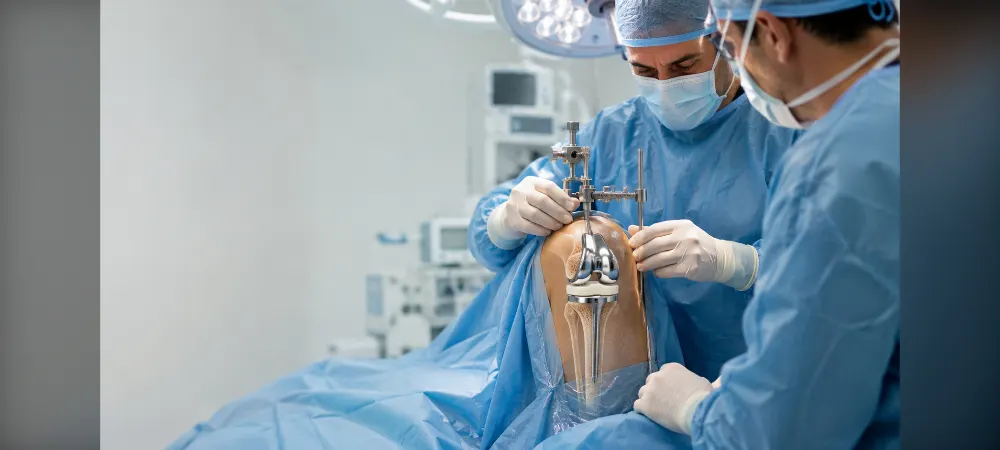
Approximately 20% of patients require a hip replacement revision after their initial hip replacement surgery. Issues such as wear, loosening, recurrent dislocation, or infection may necessitate this procedure. Revision hip replacement surgery is a procedure performed to replace or repair an existing prosthesis.
In this article, we will explain what revision hip replacement surgery is, in which situations it is applied, and the recovery process after hip replacement. We will also cover the pre-operative preparation stages and potential complications.
What is Revision Hip Replacement Surgery?
Definition of Hip Replacement Revision
Hip replacement revision is the procedure of removing a previously implanted prosthesis and replacing it with a new one. The entire prosthesis or only specific parts can be replaced. Every patient's situation is different, so the scope of the surgery varies.
Your doctor will decide which parts need to be replaced before the surgery. In some cases, only the worn socket part is renewed. In other cases, the femoral head, stem, and socket parts are all removed.
Revision hip replacement surgery has the same goals as the initial surgery. The primary aim is to reduce pain and restore mobility. However, the process and methods involved are completely different.
Differences from the Initial Surgery
There are significant differences between the initial hip replacement surgery and a revision. A revision surgery can take several hours. This duration is significantly longer than the initial surgery.
During the surgery, the surgeon usually follows the initial incision. However, the incision may be extended to reach the old prosthetic parts. After the hip joint is opened, the soft tissues are carefully examined.
Your doctor checks for issues such as infection or metal reaction. They determine which parts of the prosthesis are worn, loose, or dislocated. The priority is to preserve as much bone as possible while removing the old prosthesis.
Additional materials, which are rarely needed in the initial surgery, are used during the revision. Bone grafts, special fixation systems, or reinforcement apparatus may be required. In some patients, long-term antibiotic treatment is applied after the surgery.
Complexity of Revision Surgery
Revision hip replacement surgery is technically more difficult. It is not accurate to compare this surgery to changing a car tire. The process requires specialized training and experience.
The results of the surgery are not as predictable as the initial surgery. The risk of complications is higher. In every revision surgery, some loss occurs in the muscles, bones, or both.
Classification methods such as the Paprosky system are used. This system determines which bone structures are missing. Biological reinforcements and synthetic components needed during the surgery are planned in advance.
The surgery requires comprehensive planning. Special implants and tools are prepared. Removing the old prosthesis, cleaning infected tissues, and placing the new prosthesis are detailed procedures.
The recovery process is also longer than the initial surgery. Physical therapy programs are applied more intensively. It may take longer for patients to fully recover.
The durability of the prosthesis after revision surgery is as unpredictable as the first prosthesis. Regular check-ups and careful follow-up are therefore important.
Reasons for Revision Hip Replacement Surgery
Wear and Loosening of the Prosthesis
Bone loss is the most important factor affecting the lifespan of the prosthesis. Small wear particles emerge after the natural wear that occurs in the prosthesis over time. Your body's immune system reacts to these particles and causes bone loss. This process disrupts the connection between the prosthesis and the bone.
Revision surgery performed due to loosening is seen at rates 4 times higher than revision performed due to prosthetic dislocation. Patients who had a prosthesis under the age of 50, male patients, and those with high activity levels are at greater risk.
The quality of the material and the technique used in the initial prosthesis surgery affect the risk of loosening. Failure to fix the prosthesis well to the bone can cause early loosening. Bone loss occurring around the prosthesis over time can also lead to bone fractures.
Recurrent Hip Prosthesis Dislocation
In initial hip replacement surgeries, the dislocation rate varies between 1% and 4%. However, in revision surgeries, this rate can rise from 5% to 20%. Some sources state that annual hip prosthesis dislocation rates are between 0.2% and 10%, and can rise up to 30% after revision.
Hip prosthesis dislocation is one of the most common reasons for hip prosthesis revision surgery. The situation where the femoral head of the prosthesis comes out of its socket manifests itself with sudden and severe pain. Dislocations occurring within the first two years after surgery are classified as 'early dislocation'.
Advanced age, neurological diseases, obesity, and previous hip surgeries increase the risk of dislocation. Also, an inappropriate surgical approach can reduce joint stability. In patients who have experienced multiple hip prosthesis dislocations, it may be necessary to replace a part or all of the prosthesis.
Hip Prosthesis Infection
The infection rate after primary hip replacement surgeries is around 1-2%. This rate is higher in revision surgeries. Infection can occur immediately after surgery or months or even years later.
Infections that occur within the first three months after surgery are called 'early period'. Those that develop between three months and two years are late-period, and those that occur after two years are chronic infections. Early-period infections manifest themselves with excessive pain, swelling, redness, and discharge at the wound site.
Failure to comply with sterility rules during surgery, lack of attention to wound care, and a weak immune system increase the risk of infection. Uncontrolled diabetes lowers the body's resistance to infections and slows down wound healing.
Mechanical Fractures and Damage
Fractured bones that can be seen around the prosthesis components definitely require revision. The decision for surgery is made by looking at factors such as the amount of bone remaining in the region, the looseness of the prosthesis, and the location of the fractures.
Mechanical fractures and damage to prosthetic parts are also among the reasons for revision. In some cases, the metal or plastic parts of the prosthesis may break. Depending on the patient's age, activity level, and the duration of use of the prosthesis, deterioration occurs in the prosthetic components.
Who Is Revision Hip Replacement Surgery Applied To?
High-Risk Patient Groups
Some patient groups carry a higher risk for revision hip replacement surgery. Elderly individuals with weak muscles are at the forefront of these groups. Debilitated patients and those who have previously had a hip fracture are also at similar risk.
The risk of dislocation increases significantly in patients who have undergone multiple hip surgeries. If there is damage to the muscles and tendons around the hip joint, recurrent dislocations may occur. This situation makes revision surgery mandatory.
Overweight individuals, those with osteoporosis, and elderly patients constitute other groups that need attention. In these individuals, the prosthesis lifespan is shorter, so the probability of revision is higher. Surgery can be more complex in patients with infection or thin bones.
Age and Physical Activity Level
The age factor directly affects the need for revision hip replacement surgery. In most elderly patients who receive a hip prosthesis, the prosthesis can last 15-20 years, or even a lifetime. However, the situation changes if the initial surgery is performed at a young age.
In young and active patients, the probability of undergoing one or more revision surgeries is high. The younger and more physically active the patient is, the faster the wear develops. Especially in hip replacements performed in the 40-50 age group, the probability of revision increases.
The patient's lifestyle and physical activities directly affect the lifespan of the prosthesis. Heavy sports, jumping, and high-impact activities can shorten the prosthesis lifespan. The need for revision may increase in patients who choose an active physical lifestyle.
Number and Results of Previous Surgeries
The number of previous hip surgeries affects the revision process. Each surgery causes some loss in the bone and soft tissues. Also, the type of prosthesis and technique used in previous surgeries are important.
If bone loss occurred in the initial surgery, the revision surgery aims to correct the bone loss. Surgical planning is done more comprehensively in patients who have weak and defective bone stock left behind. It is necessary to determine bone defects in detail before the surgery.
Revision rates have not yet been reduced to the desired level in the young patient group. Therefore, longer-lasting prosthetic materials are preferred in patients in this group. Regular check-ups and follow-up after surgery are vital to detect the need for a new revision early.
Pre-Revision Surgery Preparation and Process
Diagnosis and Imaging Tests
A comprehensive evaluation is performed before deciding on revision hip replacement surgery. Your doctor carefully examines your pain level, joint range of motion, and muscle strength. The effects of the previous prosthesis surgery and possible tissue changes are observed in detail. Leg length differences, gait patterns, and joint instability are determined at this stage.
Imaging tests are essential for surgical planning. X-rays show the position of the prosthetic components, bone structure, and possible loosening. Computed tomography clarifies bone loss, deformity, and anatomical details around the prosthesis. Magnetic resonance evaluates the soft tissue, muscle, and nerve status. These imaging methods help the surgeon determine the correct prosthesis size and position.
The risk of infection is evaluated with blood tests. Indicators such as CRP, ESR, and white blood cell count are checked. When necessary, joint fluid analysis is performed to investigate the presence of prosthetic infection. Your doctor may aspirate your hip; in this procedure, joint fluid is taken with a needle and analyzed in the laboratory. At the same time, the patient's general health status and suitability for anesthesia are tested.
Surgery Planning Stage
Pre-operative planning is one of the most important stages of revision surgery. A surgical strategy is created by taking into account bone loss, deformity, and previous prosthetic complications. The Paprosky system determines which support structures are missing in order to estimate the biological reinforcements and synthetic components that will be needed during the surgery.
Robotic or computer-assisted surgical systems are included in the planning for the correct alignment of the prosthesis. If necessary, bone grafts, special revision prostheses, or reinforcement materials are planned before the surgery. The surgeon will make an incision in the patient's hip and remove the new hip and any cement in its place.
The surgery process, possible complications, and rehabilitation are explained to the patient in detail. Expectations are managed, and information about life after surgery is provided. You must tell your doctor completely about your pre-operative health status, the medications you take, and the allergies you have. It is recommended to fast for six hours before the surgery.
Surgical Techniques and Types of Prostheses Used
The surgical approach is determined according to the previous operation and the surgeon's experience. The posterior approach is recommended more as it provides optimal access to the hip socket. Previous skin incisions can be used if they provide sufficient opening. Surgical incisions should be wide enough for the components to be removed comfortably.
The extended trochanteric osteotomy technique is frequently used in revision hip surgery. Various anesthetic techniques can be applied in this procedure. The surgeon will place a new hip prosthesis and may attach a hip that is connected to the bone using acrylic cement or a special coating. Surgery can be more complex for patients with infection or thin bones.
Bone Grafts and Additional Interventions
In cases of bone loss, bone grafts and substances that can replace bone are used. Autografts and allografts are the most commonly preferred materials. Ceramics, demineralized bone matrix, bone morphogenetic protein, and autologous bone marrow can also be used.
Autologous cancellous bone grafts are known as the most effective graft material for filling bone losses. Demineralized bone matrix is rapidly revascularized and is a good carrier for autologous bone marrow. Two important factors in bone healing are the vascularization of the region and mechanical durability. The patient's general health status should be corrected before the surgery, and medications that will prevent bone healing should not be given.
Recovery Process and Complications After Hip Replacement
Recovery Time and Rehabilitation
The length of hospital stay after revision hip replacement surgery varies between 5-10 days. If infection management is involved, this period can extend to months. The recovery process progresses more slowly than the initial hip replacement surgery.
Physical therapy begins immediately after the surgery. Bed rest is performed for the first few weeks, and movement begins with the help of a physical therapist. Depending on the complexity of the surgery, weight-bearing restrictions are applied. You will need to use crutches or a walker for a few weeks.
Special exercises are performed to regain muscle strength and increase joint range of motion. Independent movement becomes possible within the first 6-8 weeks. Full recovery can take between 6 months and 1 year. It has been proven that regular exercise accelerates the recovery process.
Possible Complications and Management
Infection is one of the most serious complications in patients undergoing revision surgery. The risk of infection is slightly higher than in primary total hip replacement. Painkillers, blood thinners, and antibiotics are used regularly.
Other possible complications include hip prosthesis dislocation, bleeding, nerve damage, and blood clotting. Graduated compression stockings and blood thinners are recommended to prevent blood clots. Foot and ankle movement is encouraged immediately after surgery.
Opioids, non-steroidal anti-inflammatory drugs, and local anesthetics are used for pain management. Your doctor applies a combination of these drugs to minimize the need for opioids in addition to alleviating pain.
Long-Term Results and Expectations
Positive long-term results are obtained in the vast majority of patients undergoing revision surgery. Pain relief, increased stability, and better function are expected. However, complete elimination of pain and restoration of function may not always be possible.
Some patients may still experience some pain or dysfunction following revision surgery. Your expectations should be realistic to achieve the best possible results. Recovery varies according to general health status, age, and commitment to rehabilitation.
Regular Check-up and Follow-up Recommendations
Attending regular doctor check-ups after surgery is mandatory. Follow-up is important to ensure that the prosthesis is working properly and that any complications are detected early. You should strictly follow your doctor's recommendations and not miss your regular check-ups.
It is extremely important for patients to have regular follow-ups after surgery and to act in accordance with the physician's recommendations to extend the life of the prosthesis.
Frequently Asked Questions
How long does revision hip replacement surgery take?
The duration of the surgery varies according to the patients' condition. It is usually completed in 2-4 hours. If bone loss is excessive or infection treatment is required, the duration may be longer.
When can I walk after hip replacement revision?
In the first days after surgery, you can take short walks accompanied by a physical therapist. However, crutch or walker support is required for 6-8 weeks. Full independent movement ability is gained within a few months.
Is the lifespan of the first prosthesis and the revision prosthesis the same?
The lifespan of a revision prosthesis is generally shorter than the first prosthesis. Bone quality and the patient's general health status affect the durability of the prosthesis. Therefore, regular check-ups should be performed.
Is revision surgery risky?
Like every surgical intervention, revision surgery has risks. The risk of infection, blood clotting, and dislocation is slightly higher than the initial surgery. However, experienced surgeons can minimize these risks.
Which activities should I avoid after surgery?
You should stay away from high-impact movements such as heavy lifting, running, and jumping. Positions that excessively bend the hip or cross the legs are risky. Your doctor will explain your safe movement limits.
Will I experience pain after hip replacement revision?
Pain is normal in the first weeks after surgery. Painkillers and physical therapy facilitate this process. Most patients feel relief over time. Also, regular exercises accelerate recovery.
When can I return to normal?
Full recovery takes between 6 months and 1 year. You can start light daily activities within a few weeks. Returning to work life depends on the physical requirements of your job. If you work in a desk job, you can return to work after 6-8 weeks.
Is another surgery required after revision surgery?
This depends entirely on the performance of the prosthesis and your body's reaction. In young patients, the need for a second or third revision may arise. In elderly patients, the prosthesis can last a lifetime.
In Summary, Revision Hip Replacement Surgery
Revision hip replacement surgery is a more complex process than the initial surgery. Especially in young and active patients, one or more revisions may be required. Before deciding on surgery, have a detailed discussion with your doctor and keep your expectations realistic.
For a successful result, pre-operative preparation, correct surgical technique, and regular post-operative follow-up are of great importance. Stick to your physical therapy program and follow your doctor's recommendations completely. Therefore, your recovery process will progress faster.
Thanks to regular check-ups, you can detect possible problems early and extend the life of your prosthesis.