If your back or neck pain does not go away despite medication and physical therapy, a laminectomy may be a solution for you. A laminectomy involves the surgical removal of the bone tissue at the back of the vertebra to reduce pressure in the spinal canal. As a result of this procedure, pressure on the nerves is removed and it aims to alleviate symptoms such as pain and numbness.
In this article, we will discuss in detail topics such as what lumbar laminectomy is, how laminectomy is performed, who is eligible for laminectomy, the advantages of laminectomy, and the recovery process after laminectomy.
What Is a Laminectomy and What Is It Used For?
Definition and Purpose of Laminectomy
Bone structures called lamina at the back of your spine cover the nerve canal like a protective roof. Laminectomy is a procedure involving the surgical removal of this lamina bone. Also known in medical terms as decompression surgery, this method eliminates mechanical pressure on the nerve roots and the dural sac.
The primary goal of the procedure is to alleviate symptoms caused by nerve compression. It stands out as the most effective surgical solution for nerve compressions developing due to spinal stenosis, calcified herniated discs, or ligamentum flavum hypertrophy. Thanks to modern microsurgical techniques, this intervention helps you regain your mobility and put an end to your chronic pain.
By creating more space in the spinal canal, the pressure on the spinal cord and nerve roots is reduced. Thus, symptoms of pain, numbness, and weakness in your limbs begin to subside. The removal of the bone tissue aims to relieve symptoms affecting your daily life by freeing the nerves.
What Is a Lumbar Laminectomy?
This surgical procedure, applied to the vertebrae in the lumbar region, relieves bone or connective tissue compressions that narrow the nerve canal. Lumbar laminectomy treats complaints such as leg pain, shortening of walking distance, and weakness, particularly in patients with canal stenosis.
It is the most frequently applied type of laminectomy and targets the lower back. It is generally used in the treatment of lumbar spinal stenosis or herniated discs in the lumbar region. Removing the pressure on the lumbar vertebrae significantly increases your quality of life by enhancing your mobility.
Laminectomy has different variations such as hemilaminectomy and hemilaminotomy. While laminectomy provides broader decompression, hemilaminectomy and hemilaminotomy target a more limited area and prioritize tissue preservation. Which technique is appropriate is determined by whether the stenosis is single-level or multi-level.
Cervical and Thoracic Laminectomy Types
Cervical laminectomy is performed to widen the spinal canal in the neck region. In cases of spinal cord compression due to neck hernias or calcification, it prevents symptoms such as loss of hand dexterity, arm pain, and walking imbalance. Relieving the spinal cord at the neck level minimizes the risk of permanent nerve damage and paralysis.
Similarly, thoracic laminectomy covers the vertebrae in the back region. It is performed to treat nerve compressions and spinal cord pressures at the ribcage level. Although this region has more limited mobility compared to the lower back and neck, it is the most sensitive area of the spinal cord.
The thoracic procedure, applied in conditions such as tumors, trauma, or canal stenosis, aims to prevent paralysis and sensory loss that may occur in the lower extremities. Cervical laminectomy, on the other hand, is performed due to disc herniation, canal stenosis, fracture, or tumor.
In Which Cases Is a Laminectomy Performed?
Laminectomy comes into question when conservative treatment methods yield no results and nerve compression begins to affect your daily life. Generally, non-surgical methods such as physical therapy, pain relief medications, and epidural steroid injections are tried for 6-12 weeks. If pain control cannot be achieved during this process and your walking distance shortens, surgical intervention is evaluated.
Spinal Stenosis
The narrowing of the spinal canal with calcified tissues is the most common reason for laminectomy. Age-related wear and tear and osteoarthritis are the primary causes of canal stenosis. The nutrition of the nerves is disrupted, and progressively worsening muscle weakness, muscle wasting, and loss of reflexes occur in the legs.
You experience pain, numbness, and weakness in the lower back and legs while walking or standing. These symptoms can worsen over time. Particularly, the shortening of your walking distance and pain that does not resolve with rest necessitate surgical intervention. When canal stenosis is not treated, your mobility is severely restricted.
Lumbar and Cervical Herniated Disc
The soft tissue between the discs protrudes and puts pressure on the nerve roots. Symptoms such as severe pain starting in the lower back and spreading to the leg, numbness, and loss of reflex develop. In a cervical herniated disc, arm pain, numbness, and weakness are observed.
The location of the hernia in the spinal canal, the state of calcification, and nerve root anomalies are evaluated in detail. Surgical correction is considered in patients who do not respond to conservative treatment or whose symptoms progressively worsen. Especially if tingling and burning pain spreading to the legs do not pass with rest, a laminectomy can be performed.
Spinal Tumors and Cysts
Tumors, metastases, or epidural abscesses in the spinal canal lead to nerve compression. In such cases, laminectomy functions as a surgical entry portal to reach the mass and protect the nerves. Laminectomy or hemilaminectomy is frequently performed to remove the tumor.
Although cysts are rare, they can create serious pressure on the nerve roots. When ganglion cysts grow within the spinal canal, they cause symptoms similar to a spinal hernia. Pain that occurs even at rest, numbness, or symptoms of muscle paralysis make surgery mandatory.
Degenerative Disc Diseases
Age-related disc degeneration leads to herniation and instability. Deterioration in the disc structure affects the stability of the spine and creates pain that increases with movement. Your pain may increase with prolonged sitting and forward-bending movements.
In cases where no results are obtained from a rehabilitation program regularly applied for six months, a surgical consultation should be sought. In degenerative disc diseases, laminectomy alleviates pressure on the nerve and widens the spinal canal.
Spinal Injuries and Traumas
Spinal fractures and displacements occur as a result of traffic accidents, falls, or sports injuries. When pressure, crushing, or damage develops on the spinal cord, neurological conduction is impaired. Numbness in the arms or legs, and the risk of temporary or permanent paralysis arise.
Pressure caused by trauma is alleviated by removing disc or bone fragments. Stabilization of the spine and shock management require emergency intervention. Laminectomy is performed to correct instability and provide decompression.
Who Is Eligible for a Laminectomy?
Not every patient is a suitable candidate for a laminectomy. Before making a decision for surgery, surgeons meticulously evaluate the severity of your condition and your response to treatment. Laminectomy becomes a suitable surgical option for patients who have complaints originating from nerve compression and whose quality of life has declined.
Patients Who Do Not Respond to Conservative Treatment
Methods such as physical therapy, epidural steroid injections, and pain management are tried for at least 6-12 weeks. If pain control cannot be achieved during this process, your walking distance shortens, and your quality of life drops to an unacceptable level, decompression surgery is considered the primary solution.
Patients experiencing intense lower back, neck, or back pain and who do not respond to conservative treatments are candidates for surgery. If numbness begins in your legs after a walking distance of 100-200 meters and you feel the need to stop, this condition is defined as neurogenic claudication. Similarly, leg pain lasting longer than 3 months and not passing despite physical therapy increases the necessity of surgery.
Laminectomy is considered for individuals who experience continuous pressure on the nerve as a result of a lumbar or cervical herniated disc. Severe tingling and burning pain spreading to the legs due to pressure on the nerve root, which does not pass with rest, indicates the need for surgery.
Patients Exhibiting Neurological Symptoms
Progressively increasing loss of strength, muscle wasting, and loss of reflexes in the legs or arms are definitive signs for surgery. Motor losses such as foot drop or inability to rise on tiptoe require urgent evaluation. If you are experiencing problems such as urinary or fecal incontinence due to spinal cord narrowing, these neurological problems determine your candidacy for surgery.
Cauda Equina Syndrome is the only condition where laminectomy must be performed urgently. There is a loss of bladder and bowel control, numbness in the perineal region, and a sudden risk of paralysis in both legs. In the presence of these symptoms, emergency decompression surgery within the first 24-48 hours is vital to prevent permanent damage.
Preoperative Evaluation Criteria
Before surgery, your health status is evaluated in detail, and necessary examinations are planned by a brain and neurosurgery specialist. MRI or CT scans reveal significant spinal stenosis, herniated discs, or tumors compressing the spinal cord. A canal diameter of less than 10 mm in radiological examination, when evaluated together with clinical findings, indicates a definitive surgical requirement.
Patients who develop spinal tumors, cysts, or permanent nerve compression after trauma are suitable for surgery. Laminectomy performed with proper patient selection provides significant relief by eliminating nerve compression.
How Is a Laminectomy Performed?
The surgical team conducts a comprehensive evaluation before planning the surgery. This process is critical for successful outcomes.
Preoperative Preparation Process
Your health status is examined in detail, and necessary tests are planned by a brain and neurosurgery specialist. Blood tests, MRI, or CT scans clearly reveal the condition of your spine. A physical fitness assessment and an electrocardiogram checking your heart functions are performed.
The medications you use are reviewed. Blood-thinning medications must be stopped before surgery. If you smoke, it is recommended that you quit to accelerate healing. You are asked to fast for 6-12 hours before surgery.
The surgeon shares the details of the surgery, possible risks, and expected outcomes with you. Someone must be ready to take you home after the surgery.
Anesthesia and Surgical Steps
The surgery is performed under general anesthesia. Thus, you are asleep during the procedure. Alternatively, spinal anesthesia may also be applied in some cases. Your heart rate, blood pressure, and blood oxygen level are continuously monitored.
You are placed in a prone position on the operating table. The surgeon makes a small incision in the affected area of your spine. Muscles and soft tissues are carefully pulled aside.
The lamina bone is removed with surgical instruments to eliminate pressure on the nerve roots. Disc fragments or tissues compressing the nerves are cleaned. If necessary, additional procedures such as discectomy or fusion can be applied. Then, the muscles are placed back in their original position, and the incision is closed with stitches or staples.
Micro-Laminectomy and Modern Techniques
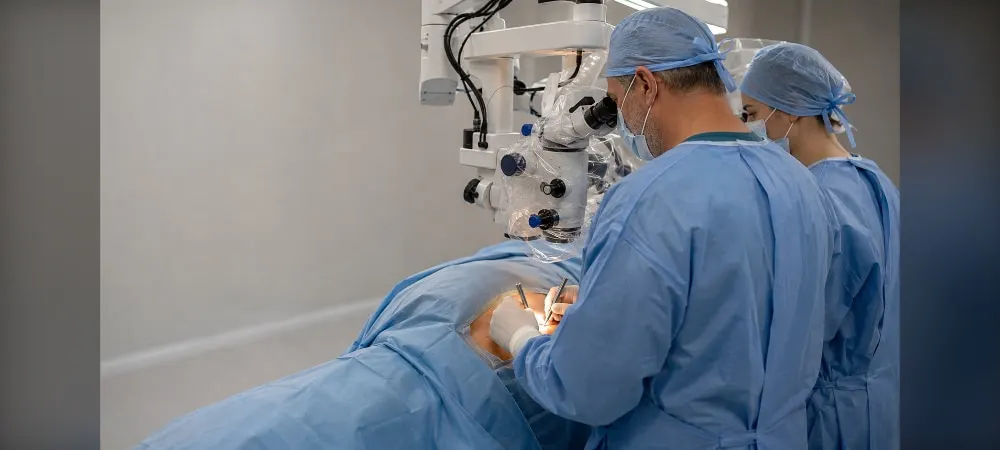
Micro-laminectomy, accepted as the gold standard today, uses high-resolution surgical microscopes. The surgeon magnifies the surgical field 20-40 times to see the nerve fibers and vessels down to the finest detail. Healthy tissues are preserved because work is done only on the bone and connective tissue causing compression.
The procedure is usually completed with small incisions of 2-3 cm. Minimally invasive techniques provide less tissue damage and faster recovery. Endoscopic laminectomy offers the opportunity for precise intervention by using special instruments and a camera.
Duration of Surgery and Hospital Stay
The surgery is usually completed in 1 to 3 hours. The duration varies depending on the patient's condition and the method applied by the surgeon.
Most patients stay in the hospital between 2 and 4 days after surgery. The length of stay varies depending on the scope of the surgery and your general condition. In cases where micro-laminectomy is applied, patients are usually discharged within 24 hours, and in multi-level procedures, within 48 hours. Approximately 4-6 hours after surgery, you are helped to stand up accompanied by expert nurses and physiotherapists.
Recovery Process and Advantages After Laminectomy
The recovery process is the most important stage determining the long-term success of the surgery. Although the recovery period after laminectomy varies from person to person, a significant decrease in pain is usually observed within a few weeks.
First 2 Weeks: Early Recovery Period
Early mobilization regulates blood circulation, minimizes the risk of clot formation in leg veins, and ensures that bowel movements return to normal rapidly. Aches in the surgical area are managed with controlled painkiller protocols applied in the hospital. The old nerve pain in your legs is usually replaced by a mild surgical ache.
There may be movement restriction in the first days, but over time, daily activities become easy to perform. You should avoid bending forward and twisting. Since dissolving sutures are usually used, the hassle of suture removal is eliminated. Thanks to waterproof dressings, you can take a shower on the 3rd day of the surgery.
Physical Therapy and Rehabilitation Program
The physical therapy program starting in the 3rd or 4th week of the surgery supports strengthening the muscles and regaining mobility. It focuses on strengthening core muscles, and a strong muscle structure reduces the load on the surgical area by 40%, preventing the risk of recurrence.
Physical therapy after laminectomy begins 3-6 weeks after surgery. A standard program lasts an average of 3-6 months. When physical therapy is not performed, the risk of developing muscle weakness, joint stiffness, and chronic pain increases.
What Are the Advantages of Laminectomy?
Most patients (70% to 80%) experience significant back pain relief and symptom improvement after laminectomy surgery. The relief of chronic back and leg pain caused by nerve compression is the most important benefit. Mobility and flexibility increase, and you find it easier to perform daily activities and do physical exercise.
With the decrease in pain and increase in mobility, you experience a higher quality of life. You can return to your hobbies, work, and social activities that you previously avoided due to discomfort.
Return to Normal Activities
Patients can usually start returning to their daily routines within 4 to 6 weeks. The time to return to work varies depending on the nature of the job. Desk workers can return to work at the end of the 2nd week with ergonomic chair support. Those working in jobs requiring physical strength, such as construction or heavy industry, are recommended to wait 3 months for muscle recovery to complete.
Possible Risks and Complications
Infection, bleeding, and blood pooling in the surgical area can be observed. Loss of sensation and weakness that may arise as a result of nerve root or spinal cord injury, post-operative temporary or permanent pain sensation, and disruption of balance and stability in the spine are among the possible risks.
Frequently Asked Questions About Laminectomy
Which department should I go to for surgery?
You need to apply to the brain and neurosurgery department. In some cases, orthopedic specialists can also intervene for spine problems.
What is the difference between a laminectomy and a discectomy?
A laminectomy involves the removal of the lamina bone in the vertebra and widens the nerve canal. A discectomy, on the other hand, relieves nerve compression by removing the herniated disc fragment. Both methods serve different purposes.
Will my pain go away completely after surgery?
Many patients experience significant relief in their pain after surgery. However, the full recovery process depends on personal factors, and mild discomfort may persist in some cases.
When can I start walking?
Light walks can be started on the first or second day after surgery. Early mobility supports the healing process.
Is fusion performed in every laminectomy surgery?
The fusion procedure is applied only in certain special cases. It is not mandatory in every surgery and is decided based on the need for stability in the spine.
Will there be weakness in my spine after surgery?
There may be slight weakness in some patients because the lamina is removed. However, this situation is minimized with surgical technique and fusion if necessary.
When can I return to work?
Most patients can return to work life within 4 to 8 weeks after surgery. This period may be longer in jobs requiring physical difficulty.
When can I start driving?
It is not recommended to drive for at least 2 to 4 weeks after surgery. It is also necessary to wait until you stop taking pain medications.
What is a laminectomy defect?
It is the structural gap formed in the area where the spinal bone is removed after surgery. This term seen in radiological reports is the trace of a past surgical operation and is not a disease.
Are there non-surgical treatment options?
Physical therapy, drug therapy, and epidural injections are non-surgical options. However, if nerve compression is severe, laminectomy is the most effective solution.
Laminectomy in Summary
Laminectomy is an effective solution for nerve compressions that do not respond to conservative treatments. If your chronic pain caused by canal stenosis and hernia affects your daily life, this surgery can help you regain your freedom of movement.
Thanks to modern micro-surgical techniques, the recovery process has shortened and success rates have reached 70-80%. When you follow the regular physical therapy program after surgery, you can return to your former activities within a few weeks.
If you have pain lasting longer than six months, it will be beneficial to consult a brain and neurosurgery specialist. With proper patient selection and an experienced surgeon, laminectomy can significantly increase your quality of life.