90% of patients who undergo total knee replacement use the prosthesis without any problems for about 20 years. However, in some cases, the prosthesis may need to be replaced. Revision knee replacement is the procedure of removing the existing prosthesis and replacing it with a new one.
In this article, we will examine in detail what revision knee replacement surgery is, who is a candidate for revision knee replacement, and the reasons for revision knee replacement. Additionally, we will cover pre-surgery preparation, the surgical process, and the recovery period.
What is Knee Replacement Revision?
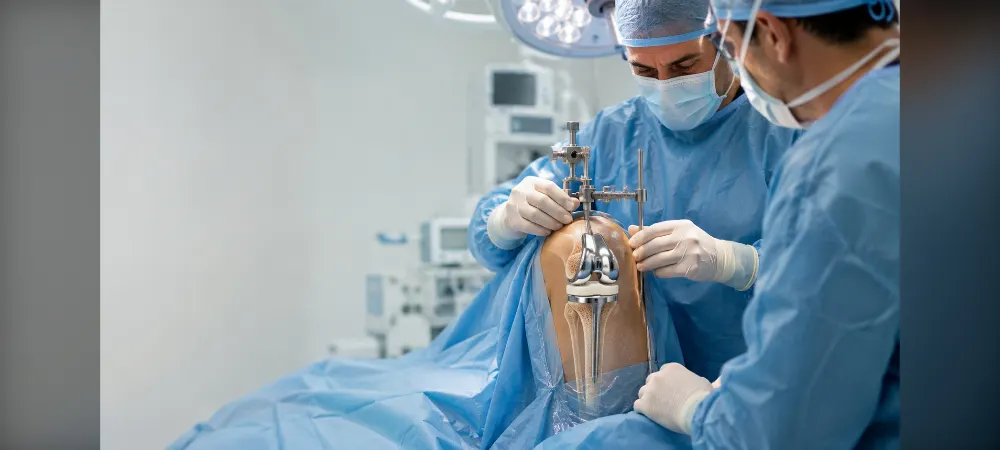
Knee replacement revision is the procedure of removing a previously implanted prosthesis and replacing it with a new one. During the surgery, either the entire prosthesis or only the worn-out component can be replaced. Replacing the entire prosthesis is called a total revision, while replacing a part of it is called a partial revision.
Revision knee replacement surgery is performed when problems such as wear, loosening, or infection arise in the prosthesis. The patient's remaining bone structure is utilized during the surgery. Therefore, revision surgeries can often be the patient's last chance.
Differences from the Initial Prosthesis Surgery
There are significant differences between the initial prosthesis surgery and revision surgery. The initial surgery involves covering the worn surfaces in your knee with metal coatings. Your bone structure is intact, your ligaments are in place, and your anatomical structure is not disrupted.
In contrast, revision surgery is a reconstruction process where you rebuild the biomechanics of the knee from scratch. It requires removing the old prosthesis, assessing bone loss, and placing the new prosthesis. If significant bone loss has occurred, metal augmentations and platform blocks are added to the prosthesis to compensate for it.
Revision knee replacement surgery is more complex and takes longer than the initial surgery. While initial prosthesis surgeries take about 40 minutes, revision surgeries can take 1-2 hours. If a cemented prosthesis was used during the surgery, cement remnants are also cleaned out. Infection control and the management of scar tissue remaining from the previous surgery also make the process more challenging.
Types of Revisions
Revision surgeries are performed in different ways depending on the problem. In revisions performed for reasons other than infection, the removal of the prosthesis and the implantation of the new prosthesis take place in a single session.
In the case of infection, a two-stage revision is required. In the first stage, the infected prosthesis and cements are removed. A spacer, which is a space-filler made of antibiotic-loaded bone cement, is placed into the knee. Antibiotic treatment is initiated. After the infection is brought under control, the new prosthesis is implanted in the second stage. The treatment success rate for infection in the two-stage revision method is reported to be between 97-100%.
Single-stage revisions involve the extensive debridement of the infected prosthesis followed by the implantation of the new prosthesis with antibiotic-loaded cement in the same session. Careful pre-operative planning is carried out to select the most appropriate surgical method for the patient.
Who is a Candidate for Revision Knee Replacement?
The question of who undergoes revision knee replacement surgery is important for understanding the lifespan of the prosthesis and the patient profile. Factors such as age, activity level, and lifestyle directly affect the need for revision.
Need for Revision in Young Patients
Patients who undergo knee replacement surgery at a young age constitute a paradoxical risk group regarding revision. These patients lead a more active lifestyle, use the prosthesis more, and put it under more stress. Consequently, this causes the mechanical parts to wear out and loosen more quickly.
A prosthesis that could last a lifetime in an elderly patient may require revision after 10-15 years in a young and athletic patient. Wear or loosening may be observed over time in young patients. In this case, revision, which is a second prosthesis surgery, may be required.
Revision operations generally take longer than the initial surgery, but they can be successfully performed by experienced surgeons. Especially in the young patient group, since the lifespan of the prosthesis may be shorter, the need for revision can be seen more frequently.
Patients Using Prosthesis at an Advanced Age
In knee replacements performed at advanced ages, patients can use their prosthesis smoothly for life. The requirement for revision is lower in this age group because the lifespan of the prosthesis generally matches the person's life expectancy.
With good planning and an experienced orthopedist for the advanced-age patient group, the success rate of the surgery is over 90%. Conversely, being too late for surgery can cause the muscles around the knee to weaken, deteriorations in the leg axis, and make post-operative recovery more difficult.
Active Lifestyle and Prosthesis Lifespan
In those who maintain an active lifestyle, the knee prosthesis can wear out and lose its function over time. Factors such as the patient being overweight or having an active lifestyle can shorten the lifespan of the prosthesis, necessitating its replacement.
The lifespan of the prosthesis is shortened in overweight individuals, people living a very mobile life, and in situations such as the patient constantly jumping and falling with the prosthesis. Being overweight is another important factor. The load on the knee at every step is several times the body weight. Excess weight continuously stresses the connection between the prosthesis and the bone, accelerating loosening.
Prosthesis Lifespan and Expectations
Modern knee replacements can last an average of 20 to 25 years. A knee replacement prepared using high-quality products used today can be used for up to 20-25 years. However, the lifespan of a knee replacement is not only affected by the use of quality products.
The service life of the knee prosthesis can also vary depending on the experience of the physician performing the surgery, the durability of the prosthesis, and the way the patient uses the prosthesis. With regular follow-up, weight control, and proper use, they can last up to 25 years.
Today, with newly developed top-level technological prostheses, kinematic surgical techniques, and applications such as robot-assisted knee replacement surgery, the lifespan of the prosthesis can be extended even further in young and active individuals.
Reasons for Revision Knee Replacement
Conditions requiring knee replacement revision are generally gathered under six main categories. Each reason requires different treatment approaches.
Infection and Treatment Methods
Prosthesis infection is one of the most serious reasons among the causes of revision knee replacement. The rate of infection after knee replacement surgeries is less than 1%. Infection after primary knee replacement is seen between 0.8% and 1.9%.
Infections are divided into two according to time. Acute infections developing within the first three months after surgery manifest themselves with sudden onset severe pain, fever, and discharge around the prosthesis area. Late-onset infections, which can appear even two years after surgery, occur when bacteria from another part of the body spread to the prosthesis.
In terms of depth, they are classified as superficial and deep infections. While a superficial infection responds positively to antibiotic treatment, a deep infection is a condition where bacteria spread all the way to the prosthesis. Deep infections require surgical methods along with long-term antibiotic treatment.
There are two approaches to treating infection. In early-stage infections, debridement and limited component exchange are performed. In late-stage infections, a two-stage surgical procedure is applied. In the first stage, the infected prosthesis is removed, and a temporary prosthesis is placed with antibiotic cement. In the second stage, after the infection is cleared, the new prosthesis is implanted.
Loosening and Wear of the Prosthesis
Prosthesis loosening is the condition where the prosthesis separates from the bone. Revision surgeries performed due to loosening are 4 times more frequent than revisions due to dislocation.
As a result of friction between the prosthesis components, wear and tear occur on the plastic part. Small particles resulting from wear cause an immune response in the body. This reaction affects the bone around the prosthesis, leading to loosening.
Instability and Gaps in the Knee
For the knee replacement to function properly, the surrounding ligaments must be at the correct tension. A disruption in this balance causes instability. When ligament balance is disrupted while standing or walking, the functionality of the knee is also impaired.
Restriction in Joint Movement and Stiffness
Sometimes sufficient joint range of motion cannot be achieved after surgery. Stiffness occurs as a result of the tissues around the prosthesis being covered with excessively tight connective tissue. Large muscle tissue or the position of the prosthesis components can hinder the range of motion.
Fracture Formation Around the Prosthesis
Periprosthetic fracture is bone fractures occurring around the prosthesis, usually as a result of trauma. Treatment varies depending on the fixation of the prosthesis to the bone and the shape of the fracture. If the prosthesis is not stable, it is replaced with a revision knee replacement.
Osteolysis and Bone Loss
Osteolysis is bone loss developing around the prosthesis. Micro-particles originating from plastic parts accumulate around the prosthesis and activate the immune system. This process leads to bone destruction and loosens the connection between the prosthesis and the bone. Following bone destruction, the bone around the prosthesis weakens and the risk of fracture increases.
Preparation and Tests Before Revision Surgery
A comprehensive evaluation process begins before revision knee replacement surgery. Your doctor requests various imaging and tests to understand the condition of the prosthesis and plan the surgery.
Radiological Imaging Methods
X-ray is the first test requested to evaluate the condition of the prosthesis and the bone structure. These images show the position of the prosthesis and bone loss. However, in some cases, X-rays may not provide sufficient information.
Bone scintigraphy helps when no clear finding of prosthesis loosening can be observed on X-rays. This test contributes to determining whether the prosthesis is loose or not. At the same time, it provides information on whether the loosening is due to infection or wear.
Computed tomography is used to better reveal the bone structure. With CT, the bone structure is examined in three dimensions, and surgical planning is done in more detail. In some cases, MRI may also be necessary for bone and soft tissue evaluation.
Laboratory Tests and Infection Screening
Blood tests are requested to determine whether an infection is present. White blood cell count, sedimentation rate, and C-reactive protein values are measured. These tests support the differential diagnosis of infection.
In situations where there is loosening in the knee and prosthesis, a fluid sample is taken from inside the joint to distinguish infection. Various laboratory analyzes are performed on the fluid taken from the joint using a syringe. Joint fluid analysis holds an important place among infection screenings.
Joint aspiration is essential for identifying the causative bacterium in a patient planned for a single-stage revision. Obtaining a positive culture and antibiogram facilitates surgical planning.
Pre-operative Evaluation
The planning process begins with clinical evaluation. The structural condition of the prosthesis components is analyzed. Your doctor holds a detailed discussion with you about the surgery.
If there is an infection, it must be brought under control before surgery. Appropriate antibiotic treatment is initiated. Your nutritional and metabolic status is optimized. This preparation process increases surgical success.
Patient education and preparation for surgery are also part of the evaluation process. You receive information about surgical risks, expectations, and the recovery process.
Revision Surgery Process and After
How the Surgery is Performed
During the surgical process, your doctor reaches the joint from the location of the scar from the previous surgery. The first step is infection control. It is evaluated which parts of the prosthesis are worn out or loose.
Old prosthesis parts are carefully removed. Preserving the bone is the primary goal. If a cemented prosthesis was used previously, cement remnants are also cleaned out. If bone loss has occurred at this stage, metal augmentations and platform blocks can be added.
Bone surfaces are prepared for the revision prosthesis. In some cases, bone grafts are used. The new prosthesis is cemented into place and secured to the bone. Afterward, the joint capsule is repaired. A drain is placed to evacuate blood and fluid from the surgical area.
Duration and Complexity of Surgery
Revision knee replacement surgery takes an average of 2-4 hours. It is longer compared to initial prosthesis surgeries. Deterioration in the bone structure, scar tissue, and implant exchange increase the complexity of the process.
The surgery is performed under general anesthesia. The longer duration of the procedure means that the work is done in more detail and with more care. Especially in the case of infection, if a two-stage surgery is required, the process takes even longer.
Risks and Complications
Revision surgery carries certain risks. The risk of complications is higher compared to the initial surgery. Infection, blood clots, and implant loosening are among the potential problems.
Deep vein thrombosis may develop after surgery. Early mobilization and preventive treatments reduce this risk. Although nerve injuries are rare, surrounding tissues may be damaged during surgery.
Prosthesis loosening or dislocation may develop. Restriction of movement and stiffness can be permanent in some patients. The risk of fracture in the bone increases especially in weakened bone structure. Wound dehiscence and bleeding are other potential problems.
Recovery Process and Results
The recovery process progresses a little slower compared to the initial surgery. The day after the surgery, you stand up with the assistance of physiotherapists. Early mobilization is important.
Pain control is a priority in the first days. The goals in rehabilitation are to ensure the knee can bend at least 90-100 degrees and to regain muscle strength. If large bone grafts or porous cones were used, you may be asked not to bear full weight for 4-6 weeks. During this period, you use crutches.
You stay in the hospital for an average of 2-3 days. The vast majority of patients achieve a painless and stable knee joint. However, it may not always be possible for the pain to completely disappear and for the knee to reach its former mobility.
Continuing the physical therapy process in a disciplined manner accelerates recovery. The program recommended by your doctor is tailored specifically for you. Regular check-ups are necessary for post-operative follow-up.
Frequently Asked Questions
Patients ask many questions about revision knee replacement surgery. These questions generally focus on the lifespan of the prosthesis, the duration of the surgery, risks, and the recovery process. You can find the answers to the most frequently asked questions below.
How long does a knee replacement last?
The service life of a knee replacement generally extends up to 20-25 years. However, this duration varies depending on many factors. The experience of the surgeon performing the prosthesis, and the quality and durability of the prosthesis used play an important role. Additionally, the way the patient uses the prosthesis directly affects its lifespan.
The plastic and metal alloys making up the knee replacement can wear out over time due to friction caused by movement. As a result of this wear, loosening is observed in the prosthesis. With the expiration of the prosthesis's lifespan, pain complaints start again. In this case, the prosthesis needs to be replaced with a second surgery.
Today, when robotic surgery, durable prostheses, and appropriate surgical techniques are used together, a painless life of 20-25 years is made possible. Factors such as the person's age, weight, diseases, and activity level are variables determining the lifespan of the prosthesis.
How long does a revision surgery take?
Revision knee replacement surgery generally takes 2-3 hours. Especially when anesthesia, surgical preparation, and post-operative recovery times are added, the total duration can be longer. Bone loss, the presence of infection, the condition of connective tissues, and the patient's general health status are factors affecting the duration.
The surgeon's experience and the applied technique also have an effect on this duration. In some cases, the surgery may take several hours. If a two-stage revision is required in case of infection, the process takes even longer. In this case, since each stage requires a separate surgery, the total treatment process can take months.
Is revision surgery risky?
Like every surgical intervention, revision surgery has risks. Since it is more complex than the initial knee replacement, the risk of complications is higher. Infection, bleeding, and movement restriction are among the possible risks.
Deep vein thrombosis may develop after surgery. Blood-thinning injections and compression stockings are used as standard to reduce this risk. Implant loosening, bone fracture, nerve or vascular injury, and pulmonary embolism are other potential risks.
On the other hand, the success rates of revision surgeries are quite high. When performed by experienced surgeons, complications are reduced to a minimum level. Careful pre-operative planning and patient evaluation reduce risks.
What is the recovery time for returning to normal after a revision?
The recovery process varies from person to person, but normal activities can generally be resumed within a few weeks. Most patients become able to perform basic daily activities within 2-3 months. Rehabilitation for up to 6 months may be required for activities such as climbing stairs, long walks, or squatting.
The post-operative rehabilitation process plays a critical role in success. Continuing physical therapy in a disciplined manner accelerates recovery. The recovery process and rehabilitation process continue even after the operation. The condition of the prosthesis is monitored through regular check-ups.
Full recovery can take several months. This process is influenced by factors such as the patient's general health status, the complexity of the surgery, and compliance with the rehabilitation program. Adhering to the program recommended by your doctor positively affects the results.
In Summary, Revision Knee Replacement
Knee replacement revision is an effective treatment method applied when a problem occurs in your existing prosthesis. Although the surgery is more complex than the initial prosthesis, it is successfully performed by experienced surgeons. The vast majority of patients achieve a painless and functional knee after surgery.
When you feel the need for a revision, early evaluation is important. Have a detailed discussion with your doctor and have all your pre-operative tests done completely. Continue your post-operative physical therapy program in a disciplined manner.
With regular check-ups and proper use, your new prosthesis can serve you for many years. Weight control, appropriate activity selection, and compliance with your doctor's recommendations will increase your success.