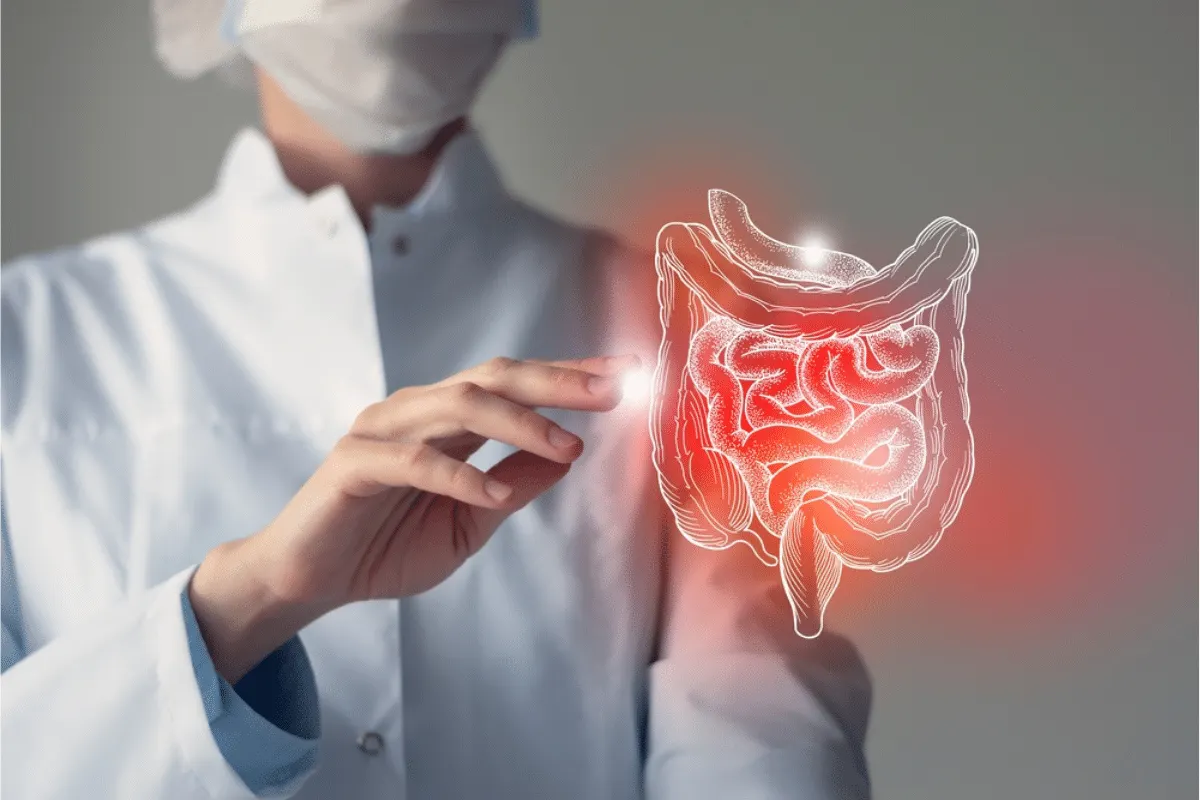
The intestines are organs that occupy a large area in the human body and are connected to various systems. Digestion, defecation, vitamin production, and the intestines, which serve as a living environment for healthy bacteria called probiotics, are known to have many effects on the human body. In this respect, the health of both the small and large intestines is an important step for overall health. One of the problems that may arise when the health of the large intestine is adversely affected is ulcerative colitis. Since ulcerative colitis is a disease that threatens health, it should be treated as soon as possible. This article provides information answering the questions: what is ulcerative colitis, what are its symptoms, types, causes, and diagnostic and treatment methods?
What Is Ulcerative Colitis?
Ulcerative colitis is a condition in which inflammation of the large intestine, also called the colon, persists over a long period due to various causes, forming ulcers (sores) in the large intestine or rectum. In general terms, due to genetic or environmental factors, the healthy balance in the large intestine is disrupted. After this stage, harmful viruses or bacteria may increase in the large intestine. The increased viruses or bacteria activate immune factors in the wall of the large intestine, resulting in inflammation and an immune response. This condition is the body's warning system. If inflammation is not treated in a short time, it damages the colon walls, creating sores and ulceration. This condition is defined as ulcerative colitis.
What Are the Symptoms of Ulcerative Colitis?
Ulcerative colitis, an inflammatory bowel disease, begins in the last part of the large intestine called the rectum and progresses upward toward the upper parts of the colon. In this case, ulcerative colitis may manifest with various symptoms. These symptoms can be listed as follows:
Severe or bloody diarrhea
Frequent need to go to the toilet
Abdominal pain
Cramps in the abdomen
Fatigue, weakness
Anemia
Loss of appetite and weight loss
Nausea, vomiting
High fever
If these symptoms are present, a healthcare facility should be consulted as soon as possible, because if diagnosis is delayed, ulcerative colitis may lead to greater health problems in later stages.
What Are the Types of Ulcerative Colitis?
Ulcerative colitis can be classified according to the location in the large intestine where the disease is seen and where it involves. These types are classified as follows:
1- Proctitis; this type of the disease is seen only in the rectum, the last part of the large intestine
2- Proctosigmoiditis; inflammation of the rectum and a section of the large intestine connected to the rectum.
3- Left-sided colitis; inflammation is only in the left part of the large intestine.
4- Pancolitis; there is inflammation throughout the entire large intestine.
Each type of ulcerative colitis can cause different health problems. In later stages, this may become dangerous to the extent of threatening life. This inflammatory bowel disease should be treated as soon as possible.
What Are the Causes of Ulcerative Colitis?
The exact causes of ulcerative colitis are not known. In this case, the factors that can be listed as causes are based on inflammation of the colon. Although ulcerative colitis is not a contagious disease, one of its causes may be genetic factors. Among those who develop this disease, inflammation of the large intestine is usually seen in first-degree relatives. On the other hand, environmental factors that affect the colon can also cause ulcerative colitis. The most fundamental of the environmental factors is unhealthy nutrition. Fried or sautéed foods, packaged foods with excessive sugar or additives, and not consuming foods essential for intestinal health are factors in the deterioration of intestinal health. At the same time, excessive medication use affects the intestinal flora of the large intestine, causing adverse effects on health. In addition, excessive stress, smoking and alcohol use can be listed among several of the causes. Advancing age, weakening of the immune system, and frequent infectious diseases can also adversely affect the large intestine and cause the disease.
What Are the Diagnostic Methods for Ulcerative Colitis, and How Is It Diagnosed?
Early diagnosis of ulcerative colitis is an important step. In this respect, a person with symptoms of the disease should go to the gastroenterology department of a healthcare facility as soon as possible. After performing a physical examination, the gastroenterologist specialist may basically request blood and stool tests for evaluation. In addition to these tests, a more definitive diagnosis can be made by reaching the colon with colonoscopy and taking a biopsy from that area for examination. On the other hand, if deemed necessary, examination of the final rectal region can be performed with a procedure called flexible sigmoidoscopy. In addition to these, imaging procedures such as MRI (magnetic resonance imaging) and CT (computed tomography) can also be performed in the diagnosis of ulcerative colitis. As a result of all these procedures, the specialist doctor makes a diagnosis and treatment protocols most suitable for the person are initiated. In this process, it is important not to neglect treatment and check-ups to improve the disease. Hisar Hospital Intercontinental Hospitals provide services with doctors who are specialists in gastroenterology.
What Are the Treatment Options for Ulcerative Colitis?
A person diagnosed with ulcerative colitis may have various treatment options depending on the course of the disease. At an early-stage diagnosis, basic-level drug treatments can treat large intestine sores and the inflammatory process. Among drug treatments, anti-inflammatory drugs support healing by preventing inflammation. On the other hand, immunosuppressants to suppress the immune response, as well as corticosteroids to prevent inflammation, and antibiotics to reduce bacterial growth may be recommended by the specialist doctor within a treatment protocol suitable for the person. Alongside drug treatments, biologic agents, TNF-alpha inhibitors and integrin antagonists are other options used in treatment. At this stage, nutritional therapy is also one of the factors positively affecting recovery. Upon the advice of a dietitian, a diet appropriate for the disease should be followed and prohibited foods should be avoided.
On the other hand, if the course of the disease involves loss of appetite, anemia, or inability to eat sufficiently, the patient may need to be hospitalized for effective treatment. In later stages, depending on the severity and spread of the disease, surgical intervention, such as removal of the colon, may be needed for treatment.
What Are the Other Diseases Caused by Ulcerative Colitis?
Ulcerative colitis is a disease that manifests as inflammation of the large intestine and, in later stages, ulceration in the form of sores. Such sores and inflammation prevent the large intestine, which is both a digestive and excretory organ, from fully performing its functions. If this is not treated or treatment is delayed, it may cause other health problems. Other diseases caused by ulcerative colitis can be listed as follows:
Excessive fluid loss from the body due to diarrhea
Blood loss due to bleeding of the sores in the intestines
Thickening of the intestinal wall
Perforation of the intestines
Decreased immunity due to bacteria entering the blood from the large intestine
Problems in blood clotting as a result of disruption of the clotting factor produced in the large intestine
Some liver diseases
Some joint diseases resulting from the involvement of joints
May cause colon cancer in advanced stages.
Ulcerative colitis should be treated in cooperation with a specialist doctor as soon as possible, without causing other health problems, and should not be neglected.
What Are the Long-Term Effects of the Disease and Lifestyle Recommendations?
A person diagnosed with ulcerative colitis should first follow the treatment stages fully after receiving the most appropriate treatment for the course of the disease, and should not neglect check-ups. Even if there is complete recovery after treatment, recurrence of the disease is also possible. Therefore, situations that may cause the disease should be avoided. Nutrition has a very important place at this stage. The calorie and content-appropriate nutrition plan prepared by the dietitian for the person must definitely be followed. To avoid possible intestinal problems, lactose, gluten, fatty and salty foods should be avoided. Such foods can affect the intestines and cause the ailments to reappear. In addition, consuming an appropriate amount of fluid for the person is also important.
Besides nutrition, regular physical activity and exercise are also important steps for recovery and preventing recurrence of the disease. At the same time, excessive stress, which is counted as one of the causes of the disease, should be avoided. Even if ulcerative colitis improves, it is important to always stay under regular medical follow-up.
Frequently Asked Questions About Ulcerative Colitis
What foods worsen ulcerative colitis symptoms?
Milk and dairy products containing lactose, dried legumes, high-fiber foods containing gluten, raw garlic, onion, broccoli, cabbage, Brussels sprouts, corn, mushrooms, some dried fruits, fatty meats and fatty dishes; fatty foods such as hazelnuts, peanut butter and tahini; fruits such as melon and watermelon, spices, tea, coffee, alcohol and similar foods can be difficult to digest in the intestines and may trigger symptoms during ulcerative colitis, thereby increasing complaints. Apart from these foods, there may be foods that affect a person individually; if they cause discomfort, they should be removed from the diet.
What foods are good for ulcerative colitis complaints?
Lean meat, chicken and fish, eggs; fermented foods such as yogurt and kefir; foods such as avocado, oatmeal, cranberry, carrot, banana, peach, cherry and turmeric soothe the digestive system and can therefore be recommended to ulcerative colitis patients. However, they should still be consumed paying attention to portion sizes and excess should be avoided.
How long do ulcerative colitis flare-ups last?
Ulcerative colitis flare-ups can occur due to various causes. Interrupting medications during the treatment process, consuming forbidden foods, and excessive stress can trigger a flare-up. In this case, the duration of a flare-up varies from person to person; it may last a few days or extend up to a few months. Therefore, the treatment process should be taken seriously in every respect.
Although ulcerative colitis is a disease that appears only in the large intestine, it affects the health of the whole body. Therefore, early diagnosis is important. During the treatment process, the treatment protocols and follow-up recommended by the specialist doctor should not be interrupted. At Hisar Hospital Intercontinental hospitals, a gastroenterology specialist doctor provides services in the gastroenterology department to diagnose ulcerative colitis with the most comprehensive examinations and laboratory tests.
Start with the right assessment for Ulcerative Colitis (Inflammatory Bowel Disease)
Share your symptoms with our specialist physicians; let us determine the right diagnosis and treatment plan together.
Warning
If your symptoms started suddenly, are progressing rapidly, or significantly restrict your daily life, consult a physician without delay.
Plan your Ulcerative Colitis (Inflammatory Bowel Disease) journey with our specialists.
Fill in the form or book an appointment to learn about treatment options, the process and preparation.