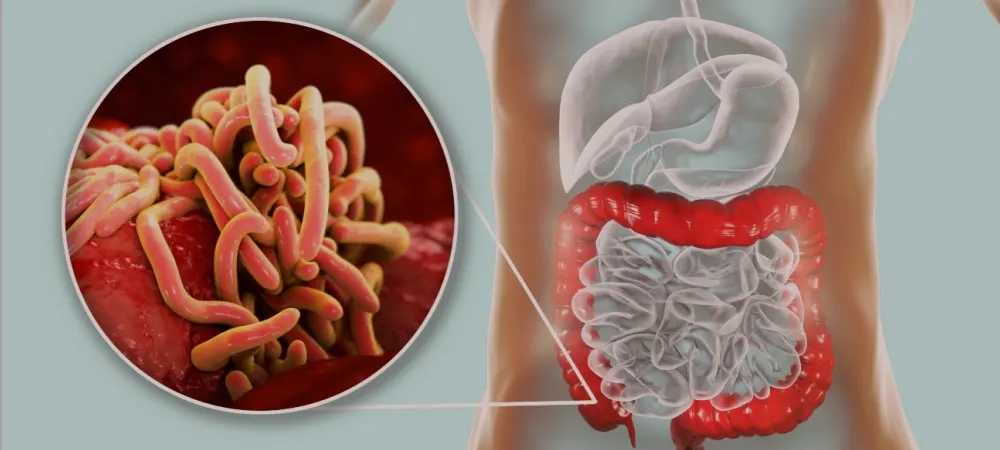
What is a Pinworm?
Pinworms or “Enterobius vermicularis” are parasites that colonize the human intestine. Belonging to the roundworm (nematode) group, the pinworm looks like a tiny whitish thread. Male pinworms are 3-5 mm long, while female worms are 9-12 mm long. Therefore, they are visible to the naked eye and their movement can be observed. Pinworms are frequently transmitted orally and fecal-orally. Pinworms, which fertilize and lay their eggs in the digestive system, can manifest with intense itching around the anus. In addition, they can lead to additional symptoms by negatively affecting various organs and systems. Eggs can remain viable for several days even outside the body.
Pinworm infection is called “Enterobiasis”. It can cause infection by entering the body through direct contact with contaminated objects, inadequate hygiene conditions, eating, or sexual contact. Although the infection is usually seen in children, it can also occur in adults. It can affect people in crowded environments such as schools, nursing homes, kindergartens and parks, and institutional venues. Enterobiasis can often progress asymptomatically. Enterobius vermicularis infection is a preventable and treatable condition. However, the probability of the infection recurring in the body can be high.
How Do Pinworms Develop?
The life cycle of the pinworm is in the gastrointestinal tract cavity. It is an organism that mainly lives in the ileum (small intestine) and cecum (large intestine). Infection begins with the oral ingestion of Enterobius vermicularis eggs. The outer membrane of the eggs taken into the digestive system softens, and when they reach the small intestine, the larvae hatch. After fertilization occurs, pinworms migrate to larger parts of the intestine (colon, appendix, cecum, etc.). While male pinworms die after mating, female pinworms migrate to the anus. This active migration movement usually occurs at night. Pinworms, which lay eggs in and around the anal region, can cause itching.
Due to the egg-laying that takes place in the anal region, scratching this area can be risky in children. Children using their fingers may cause the eggs to break apart with their nails and fingers, spreading to the surrounding area and underwear. In addition, swallowing hands again through the mouth can lead to the formation of a new life cycle. Hatched larvae can return to the anus and cause renewed infections. Within 4-6 hours after oviposition, larvae can hatch and exhibit infectious characteristics. The transformation of larvae into adult worms can take 1-2 months in the small intestine. During this period, no symptoms may be observed. Rarely, infection involvement may occur in other organs.
What Are the Symptoms of Pinworms?
Approximately one third of patients with pinworms do not show any symptoms. However, mild symptoms may usually occur. The most common symptom of pinworms is itching in the anal canal and anus. Especially female pinworms lay their eggs in the anal region at night. For this reason, itching and irritation can be experienced frequently at night. Pinworms can cause sleep problems and restlessness in children and adults. Sleep problems can bring along additional symptoms such as fatigue, weakness, and difficulty concentrating during the day. In infants, pinworm symptoms can appear as restlessness and sleep problems.
In women, the vagina, which is close to the perianal region, can also be negatively affected. There may be itching in the skin around the vagina due to pinworm eggs, and an increase in discharge can be observed. In some infected patients, pinworms can cause blockage in the appendix and inflammation can begin. This condition may be associated with symptoms of appendicitis and abdominal pain. The probability of perianal erythema may also increase due to itching. Superficial bacterial infections can form in the itchy and irritated area. Erythema, warmth, and redness may occur in this infection area. Less commonly, watery diarrhea, nausea, and irritability may be seen in some patients.
How is Pinworm Diagnosed?
Since adult pinworms are parasites visible to the naked eye, they can be detected in bed and clothing. Pinworms emerging from the rectum 2-3 hours after going to bed at night can be checked. Pinworms detected with their white-gray, thin, small thread-like appearance can be seen in underwear or bed sheets. In addition, in cases of severe infection and infestation, pinworms can be detected in the anus during defecation. Since pinworms in stool are not a common occurrence, they are not used for definitive diagnosis. In addition, an examination is required for anal and vaginal pinworm symptoms such as the presence of itching, irritation, and infection. Other methods applied within the scope of making a definitive diagnosis include:
Tape test: It is used to detect pinworm eggs that cannot be seen with the naked eye. As soon as you wake up in the morning, before going to the toilet, washing the genital region, and getting dressed, a piece of transparent tape is pressed onto the anus and perianal region a few times. If the result is negative as a result of checking the tape samples under a microscope for 3 consecutive mornings, a diagnosis is not made.
Subungal and stool samples: Samples can be collected in order to collect egg samples, especially from under the nails of children. Less commonly, stool samples can be analyzed to rule out other health problems.
Serological tests that provide the evaluation of antibodies in the blood are not used for diagnosis.
How is Pinworm Treatment Performed?
Pinworm treatment methods may include prescription and over-the-counter medications, home care recommendations, and lifestyle changes. The pinworm treatment plan includes orally administered anthelmintic (antiparasitic) medications. These medications are taken in two doses at intervals. Pinworms can be killed with drug therapy, but eggs are not affected. The first dose administered can ensure the elimination of existing pinworms, but immature eggs remain alive. Therefore, the 2nd dose is administered two weeks after. With the second dose, infection from newly hatched adult worms that could not be killed in the first treatment can be prevented.
It is recommended that pinworm treatment in children be carried out together with family members and caregivers. In this way, the risk of recurrence of the infection can be prevented. Young pinworms can be particularly more resistant to treatment. Since it may be more difficult to prevent potential new infections, it is important that other children and parents also adhere to the treatment. Pinworm treatment during pregnancy should be provided for individuals with severe symptoms. The use of medication in pregnant women must be consulted with a doctor. In general, side effects of drug treatment may include nausea and vomiting, loss of appetite, diarrhea, and abdominal pain.
Frequently Asked Questions
For pinworms, gastroenterologists dealing with digestive system diseases and proctology specialists dealing with the last part of the digestive system (large intestine, anus, etc.) can be consulted. For pinworms in children and infants, pediatric gastroenterologists can be contacted. In order to ensure the diagnosis and treatment of pinworms, an appointment must be made from the gastroenterology department of health institutions. The appropriate treatment plan for Enterobius vermicularis operating in the digestive system organs is determined by gastroenterology specialists. Intestinal pinworms can be treated with antiparasitic drug therapy. Drug therapy can kill adult pinworms in 2 weeks, but cannot affect the eggs. Therefore, after the first dose, new worms are expected to hatch from the eggs remaining in the body. The 2nd dose is administered for young pinworms and they are eliminated. Worms appearing in the form of black pinworms may indicate a different condition than Enterobius vermicularis. Enterobius vermicularis are gray-white, thin and tiny worms and should not be confused with other intestinal worms. In case of abnormal symptoms and seeing black pinworms, the relevant health institution must be contacted. Pinworm infection develops as a result of the settlement of Enterobius vermicularis eggs in the digestive system as a result of inhaling or swallowing them. Pinworm eggs can be carried and spread through dirty objects (clothing, linens, toilets, etc.), food and beverages, stool, sexual contact, hands and nails. Eggs reaching the intestines crack within a few weeks and reveal pinworms. Severe pinworm infestation can cause perianal skin to crack and become irritated, bacterial infection may occur, and bleeding may be observed. In some cases, pinworms can reach the vagina and urinary tract and lead to abnormal symptoms such as bleeding. According to a small number of studies, severe pinworm infestation after menopause can cause bleeding in the vagina. Pinworm in pregnancy is a risky health problem that can usually be seen in women living in homes with small children and inadequate home hygiene, and in contact with immigrants from underdeveloped and developing countries. It can manifest itself with vaginal discharge and itching at night. Rare symptoms of pinworm in the intestine may include nausea, loss of appetite, diarrhea, and abdominal pain. These symptoms can lead to weight loss in some patients. Although this is not common, it is possible. Cleaning of pinworms in the intestine depends on drug treatment and ensuring hygiene conditions. Antiparasitic drugs taken in 2 doses can ensure the elimination of adult and young pinworms. In addition, washing all clothing, bedding (sheets, duvet covers, etc.), towels and personal items at an appropriate temperature helps prevent the risk of reinfection. As pinworms in the intestines begin to multiply, symptoms may increase and become severe. As a result, abdominal pain, excessive gas formation, and bloating can be observed. In this case, it can lead to abdominal tenderness and cramps.
If you think you or your child has symptoms of pinworms, consult our expert physicians without delay.
Contact us immediately to make an appointment from the Hisar Hospital GASTROENTEROLOGY AND HEPATOLOGY Department.
Start with the right assessment for What is Pinworm (Enterobius Vermicularis)? Symptoms, Diagnosis and Treatment
Share your symptoms with our specialist physicians; let us determine the right diagnosis and treatment plan together.
Warning
If your symptoms started suddenly, are progressing rapidly, or significantly restrict your daily life, consult a physician without delay.
Plan your What is Pinworm (Enterobius Vermicularis)? Symptoms, Diagnosis and Treatment journey with our specialists.
Fill in the form or book an appointment to learn about treatment options, the process and preparation.