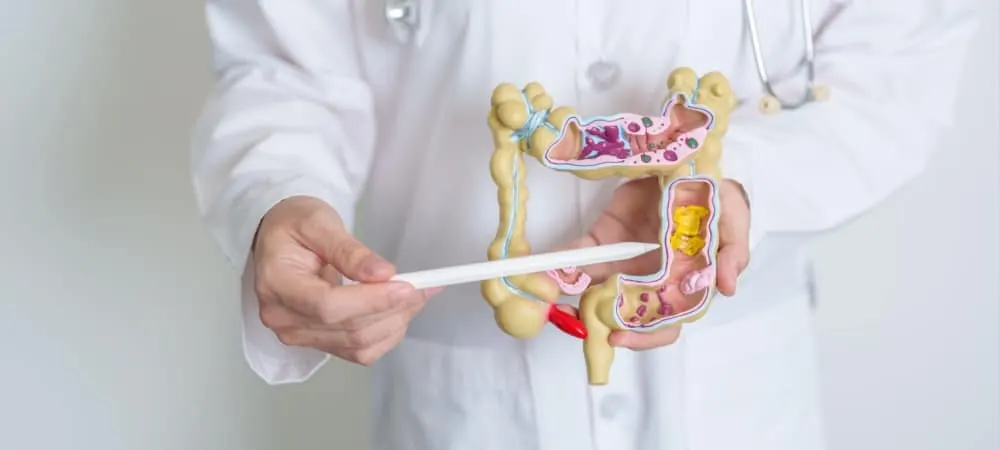
What Is Crohn's Disease?
Crohn's disease is an inflammatory disease that can affect different parts of the gastrointestinal system. Inflammatory bowel diseases are a complex condition that develops in genetically susceptible individuals as a result of inappropriate activation of mucosal immunity, arising from the interaction between the person's gut microbiota and host immunity. Crohn's disease may also arise as a result of this complex condition. It can involve several sites within the digestive tract at the same time.
Crohn's disease causes inflammation in the digestive tract, which leads to conditions such as abdominal pain, diarrhea, fatigue and nutritional loss. The inflammation caused by Crohn's disease most commonly affects the small intestine. It spreads into the deeper layers of the small intestine. The ileum and colon are also frequently involved. The disease can be painful and debilitating, and it can also lead to complications that may result in death. Because of this risk of death, close attention is essential. Crohn's disease can occur in any age group, but the majority of patients are adolescents and young adults aged 15–35 years.
What Are the Symptoms of Crohn's Disease?
Crohn's disease can affect any part of the intestine or the anus. As the disease progresses, its symptoms become more pronounced. The symptoms of Crohn's disease can range from mild to severe. These symptoms usually appear gradually, although there are cases in which they appear acutely. In addition, there may be cases in which signs and symptoms are not apparent.
Crohn's disease mainly affects the intestines, which can lead to malnutrition, diarrhea, weakness and fatigue. Some of the common symptoms of Crohn's disease are as follows:
Diarrhea
Fever
Blood in the stool
Weakness
Abdominal pain
Loss of appetite and weight
Pain or discharge from the anus. Click here for anal fissures.
In the advanced stages of Crohn's disease, although the disease mainly affects the intestinal tract and anus, symptoms may appear systemically and in various forms. These symptoms are an indication that the disease is progressing and require prompt intervention. Some of these symptoms are as follows:
Inflammation of the liver
Inflammation of the bile ducts
Iron deficiency anemia
Joint inflammation
Inflammation of the skin and eyes. Click here to view detailed information.
Kidney stone formation. Click here for detailed information about kidney stones.
If you have these common symptoms or the symptoms seen in advanced stages, you should go to the nearest healthcare facility as soon as possible. Crohn's disease is a condition that, if left untreated, can progress to death.
Crohn's disease can rarely be seen in infants as well. When it occurs in infants, the signs and symptoms are similar to those of Crohn's disease seen in adults. Growth and developmental delay, chronic diarrhea, abdominal pain and cramping, bloody diarrhea, fever, loss of appetite, vomiting, skin and eye manifestations, fatigue and weakness, and anemia may be observed. You can click here for detailed information.
How Does Crohn's Disease Develop?
To date, no definitive cause of Crohn's disease has been identified. Although early research on Crohn's disease suggested that the disease was caused by stress and diet, it is now known that these two factors are not the cause but develop as a result of Crohn's disease.
Among the best-known causes of Crohn's disease is heredity. Research has demonstrated that individuals with a history of this disease in their family have a higher likelihood of developing Crohn's disease. Nevertheless, it is known that many people with this disease have no family history of Crohn's disease.
Another factor in Crohn's disease is the immune system. Crohn's disease may develop as a result of a bacterial or viral infection. Although this has not been sufficiently proven, it is among the theories. Another view is that, in response to an environmental trigger or a microorganism, the immune system attacks the person's own digestive system cells, developing an autoimmune reaction.
How Is Crohn's Disease Diagnosed?
Crohn's disease is often confused with a disease called ulcerative colitis. Crohn's disease and ulcerative colitis are two diseases with similar findings. Some blood tests and laboratory examinations can reveal the inflammation that occurs in Crohn's disease, but they may be insufficient for differential diagnosis from ulcerative colitis. Stool tests can also aid diagnosis, but the most commonly used method for definitive diagnosis is a procedure called colonoscopy. Colonoscopy is an endoscopic procedure performed with a tube that has a light and camera at its tip. It can be used for both diagnosis and treatment. If necessary, capsule endoscopy can also be performed.
Crohn's disease and ulcerative colitis are diseases that can be distinguished through direct visualization of the intestine. Nevertheless, the diagnosis can be further supported by tissue samples taken from the patient during colonoscopy. The diagnosis can also be supported by other diagnostic methods. These methods include radiological examination of the small intestine, computed tomography (CT) of the abdomen and magnetic resonance imaging (MRI).
How Is Crohn's Disease Treated?
Since Crohn's disease has no definitive cause, there is no single treatment that can be used for everyone. The aim of treatment in this disease is directed at slowing the progression of the disease or at the inflammation causing symptoms and signs. Treatments are also used during the remission period, when individuals with chronic Crohn's disease have no signs or symptoms.
Because Crohn's disease is an inflammatory bowel disease, the first step in the treatment of inflammatory bowel diseases is anti-inflammatory medications. Corticosteroids are anti-inflammatory drugs, but they do not work in every Crohn's patient. They are used to improve symptoms in the short term rather than for long-term use.
Biologic agents are molecules obtained from living organisms or from products of living organisms. In the treatment of Crohn's disease, these molecules are used to suppress the immune system.
One of the complications of Crohn's disease is the formation of structures called anal fistulas. Antibiotics can reduce and treat the drainage from these fistulas and abscesses that develop as a result of Crohn's disease. Antibiotics may also be used against harmful bacteria that can cause inflammation in the intestine.
Pain relievers for the pain caused by Crohn's disease and antidiarrheal medications for diarrhea may be prescribed if the doctor deems appropriate. In addition, diet is very important for Crohn's disease. Foods considered risky by the doctor should not be consumed, and vitamins and nutrients that are lacking due to the disease should be obtained through an appropriate dietary program.
In cases where Crohn's disease has progressed significantly, one of the treatment options is surgery. Surgical intervention is resorted to when the disease cannot be brought under control and complications develop. Surgery cannot cure the disease completely, but it is effective in controlling symptoms and signs. Crohn's disease is not cancer. It is an inflammatory bowel disease. It is seen frequently in the small intestine and anal regions and leads to inflammation. Individuals with Crohn's disease should avoid high-caffeine foods, alcohol, cigarettes and high-acid foods. In addition, since the disease affects the intestines and causes problems with nutrient absorption, very fatty and very carbohydrate-rich foods should not be consumed. Crohn's disease is not directly cancer, but long-standing and untreated Crohn's disease can increase the risk of certain types of cancer and may become cancerous. In particular, Crohn's disease affecting the intestines can predispose to some types of cancer due to chronic inflammation. Because Crohn's disease is a condition of the digestive tract, it is generally followed and treated by gastroenterologists. Gastroenterologists are doctors who are trained and specialized in diseases of the digestive system. In addition, depending on the doctor's judgment, surgical intervention may be required in the treatment of Crohn's disease. For this purpose, general surgeons may also be consulted. Crohn's disease is a condition that can progress if left untreated. In patients, it can cause ulcers, abnormal connections between intestines or between the intestine and other organs when ulcers deepen into fistulas, abscesses, and intestinal obstruction. This fistula-type structure can also form in the anus. Crohn's disease can also cause thickening and narrowing of the intestinal wall, in which case intestinal obstruction may occur. Because it affects nutrient absorption, it can lead to malabsorption problems. If the disease progresses to an advanced degree, there is a risk of colorectal cancer. Yes, Crohn's disease can cause gas problems, particularly in the small intestine. Because the disease affects intestinal movements, it can cause the intestines to move either quickly or slowly. As a result, gas problems may arise.
Crohn's disease is a chronic condition that can negatively affect quality of life and requires careful monitoring and appropriate treatment. Managing symptoms, planning a individualized diet, and regular doctor check-ups are of great importance in slowing the progression of the disease and preventing complications.
At Hisar Hospital, Crohn's disease diagnosis and treatment processes are carried out meticulously with our expert gastroenterologists, laboratory facilities and comprehensive follow-up programs. We offer personalized treatment options and a holistic approach at every stage for our patients.
If you would like to learn more about Crohn's disease and other inflammatory bowel diseases, you can visit our Irritable Bowel Syndrome and Bowel Diseases pages. To receive support during the diagnosis, treatment and follow-up processes, you can contact the Hisar Hospital Gastroenterology Department or apply easily through our appointment form.
Start with the right assessment for Crohn's Disease Symptoms, Causes and Treatment Methods
Share your symptoms with our specialist physicians; let us determine the right diagnosis and treatment plan together.
Warning
If your symptoms started suddenly, are progressing rapidly, or significantly restrict your daily life, consult a physician without delay.
Plan your Crohn's Disease Symptoms, Causes and Treatment Methods journey with our specialists.
Fill in the form or book an appointment to learn about treatment options, the process and preparation.