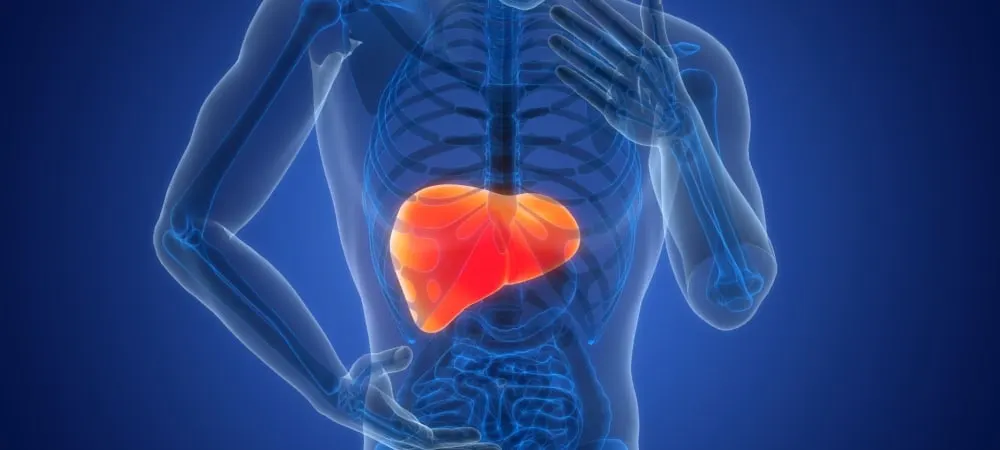
Budd-Chiari Syndrome
The liver is one of the most vital organs sustaining the body's functions. It sits at the center of metabolism and has numerous tasks ranging from bile production to the elimination of toxins. Certain rare diseases can severely impair the functioning of this critical organ. One of these is Budd-Chiari syndrome. Developing due to the occlusion of the hepatic veins, this syndrome requires prompt diagnosis and correct treatment.
What is Budd-Chiari Syndrome?
Budd-Chiari syndrome (BCS) is a rare disease that occurs when one or more of the hepatic veins become blocked. These veins drain blood from the liver to the rest of the body, but when they are blocked, blood flow from the liver is obstructed and pressure within the liver increases. Consequently, liver enlargement, ascites (fluid accumulation in the abdominal cavity), and liver dysfunction occur. Budd-Chiari syndrome is named after the two physicians who described the disease in the 19th century—the British physician George Budd and the Austrian pathologist Hans Chiari. This syndrome can be classified into two types: primary (resulting from a blood clot formed inside the vessel) or secondary (due to external compression or a tumor). BCS is rare but can lead to severe consequences. If not intervened early, liver failure and life-threatening complications may develop.
What Are the Symptoms of Budd-Chiari Syndrome?
The symptoms of Budd-Chiari syndrome can vary depending on the severity of the disease and the extent of the blockage. Symptoms may begin suddenly within a few days or present as a picture progressing insidiously over months. Common findings of Budd-Chiari syndrome include:
Abdominal pain: Felt particularly in the right upper quadrant. It can range from mild discomfort to excruciating pain.
Abdominal swelling (ascites): Caused by the accumulation of fluid in the abdominal cavity. It may be noticed when clothes become tight.
Liver enlargement (hepatomegaly): Can be palpable during physical examination and may cause discomfort.
Jaundice: Yellowing of the skin and eyes, indicating impaired liver function.
Edema in the legs: Swelling may occur in the ankles and legs.
Nausea, vomiting, loss of appetite: Observed especially in conditions approaching liver failure.
Fatigue and weakness: In the chronic form, patients generally complain of low energy.
Acute Budd-Chiari syndrome has a very rapid course, and liver failure, kidney failure, and encephalopathy (deterioration of brain function) may develop. Therefore, a physician should be consulted without losing time when symptoms are noticed.
What Causes Budd-Chiari Syndrome?
The causes of Budd-Chiari syndrome are most often thrombosis (blood clot) developing in the hepatic veins or external compressions. Many genetic and acquired risk factors can play a role in the development of the disease. The primary causes of Budd-Chiari syndrome can be listed as follows:
Coagulation disorders: One of the most common causes. Blood clots can form inside vessels in hereditary or acquired thrombophilia states.
Myeloproliferative disorders: Bone marrow diseases such as polycythemia vera can lead to vascular occlusion through the overproduction of blood cells.
Birth control pills: The risk of blood clotting may increase due to hormonal changes in women.
Pregnancy: The pregnancy process can cause obstruction by exerting pressure on the vascular system.
Cancers: Liver, adrenal, or other abdominal tumors can cause secondary Budd-Chiari syndrome by compressing the veins.
Inflammatory diseases: Diseases involving vasculitis, such as Behçet's disease and systemic lupus erythematosus (SLE), also increase the risk.
Infections: Infections include viral hepatitis, particularly hepatitis B and C, and aspergillus infections. These conditions cause inflammation and vascular damage in the liver. Some chronic infections, such as tuberculosis, can also affect vessel walls.
Liver trauma or surgeries: Can develop as a complication, particularly following a liver transplant.
In some cases, no cause can be found. These conditions are called idiopathic Budd-Chiari syndrome.
How is Budd-Chiari Syndrome Diagnosed?
Budd-Chiari syndrome can be confused with other liver diseases due to its symptoms. Therefore, making an accurate and timely diagnosis is of vital importance. After listening to the patient's history, the physician performs a physical examination and resorts to laboratory and imaging tests. The methods used in the diagnostic process can be listed as follows:
Blood Tests: Liver function tests (AST, ALT, ALP, GGT, bilirubin), coagulation time, and a complete blood count are performed. These tests constitute the first step of the diagnostic process. Elevated liver enzymes, increased bilirubin levels, and decreased albumin levels are observed. Coagulation tests are generally abnormal, and the INR value comes out high.
Ultrasonography (Doppler): Doppler ultrasonography is the preferred initial imaging method. Because Budd-Chiari syndrome is a condition that develops as a result of the obstruction of hepatic veins; therefore, detecting the absence of blood flow or reversed flow in the hepatic veins is important for diagnosis.
CT (Computed Tomography): Computed tomography (CT) and magnetic resonance imaging (MRI) are the gold standard methods for definitive diagnosis. In examinations performed using contrast agents, the inability to visualize hepatic veins or the detection of a filling defect confirms the diagnosis.
Venography: Although hepatic venography is an invasive method, it may be necessary for a definitive diagnosis in doubtful cases. With this method, the anatomy of the hepatic veins can be evaluated in detail, and therapeutic interventions can also be performed simultaneously.
Liver Biopsy: A liver biopsy may be necessary in some cases. Particularly in the chronic form, the demonstration of fibrosis around portal areas and sinusoidal dilatation supports the diagnosis.
How is Budd-Chiari Syndrome Treated?
The treatment of Budd-Chiari syndrome varies depending on whether the disease is acute or chronic, the degree of damage to the liver, and the underlying cause. The primary goals are to clear the blockage, prevent clot formation, and preserve liver functions. Treatment methods are as follows:
Anticoagulant (blood-thinning) medications: Generally the first-line treatment. They prevent the progression of the existing clot and inhibit the formation of new clots.
Diuretics: Used in the treatment of ascites, helping to eliminate excess fluid.
Pain relievers and supportive treatments: Aimed at alleviating symptoms such as abdominal pain and fatigue.
Angioplasty and stent applications: Used to relieve vascular occlusion. A balloon is placed inside the vessel to expand it, and a stent is inserted if necessary.
TIPS (Transjugular Intrahepatic Portosystemic Shunt): Pressure is lowered by creating an artificial vascular pathway inside the liver. It is highly effective in advanced cases.
Bypass surgery: A bridge is created between blood vessels to bypass the obstruction.
Liver transplantation: Budd-Chiari syndrome may require a liver transplantation. It is the last resort, especially in cases where the liver is severely damaged and other treatments fail.
Follow-up and monitoring must continue for life. Regular imaging controls, liver function tests, and monitoring of coagulation parameters are of great importance. The treatment plan can be continuously revised by evaluating the patients' quality of life and functional status.
Frequently Asked Questions About Budd-Chiari Syndrome
Budd-Chiari syndrome can be dangerous if not diagnosed in time and treated appropriately. Obstruction of the liver vessels can lead to severe complications and even liver failure, but with early diagnosis and appropriate medical or surgical treatments, it can be brought under control and quality of life can be preserved. Patients diagnosed with Budd-Chiari need to make certain changes in their lifestyle. First of all, they must use blood-thinning medications regularly and not neglect doctor check-ups.. Alcohol must definitely not be consumed, and salt consumption should be limited. Women planning a pregnancy must certainly be under medical supervision. In addition, if symptoms such as swelling in the legs and fluid accumulation in the abdomen appear, medical help should be sought immediately. If vascular occlusion persists for a long time and the liver's blood circulation is severely disrupted, liver failure may develop. This condition can progress rapidly, especially in the acute form. When failure develops, serious findings such as jaundice, impaired consciousness, and a tendency to bleed appear in patients. Budd-Chiari syndrome may be permanent in some cases, but the disease can be brought under control with appropriate treatment. When vascular obstruction is cleared and complications are prevented, symptoms can largely regress. Permanent damage may occur in the liver in chronic cases, which is why early intervention is very important. One of the common symptoms of Budd-Chiari syndrome is the accumulation of fluid in the abdominal cavity. This condition is called "ascites". As a result of the liver's inability to filter blood properly and increased vascular pressure, fluid leaks into the abdomen. Ascites causes pronounced abdominal swelling. Not every Budd-Chiari patient needs a liver transplant, but a transplant may be necessary if liver failure has developed in advanced-stage disease. Especially if methods such as medications, stent applications, or TIPS do not yield results, a liver transplant can be life-saving. Finding a suitable donor and a timely transplant significantly increase the patient's survival time and quality. In some cases, especially if diagnosed early and the underlying cause can be treated, the disease can heal completely. However, lifelong follow-up and medication are required for many patients. Recovery varies depending on the severity of the disease and the liver's response. Diagnosis is generally made by evaluating clinical symptoms and using imaging methods. In particular, Doppler ultrasound is the first-line diagnostic tool by showing whether there is blood flow in the liver vessels. In more detailed examinations, MR angiography and CT scans are used. In some cases, a definitive diagnosis is made with venography performed by injecting a contrast agent into the vessel. If left untreated, Budd-Chiari syndrome can be fatal. Vital complications such as liver failure, internal bleeding, kidney failure, and brain dysfunction can develop. Thanks to early diagnosis and effective treatment methods, these risks are reduced to a great extent. In modern medicine, life expectancy can be extended with both medical and interventional methods.
Budd-Chiari Syndrome is a disease that can be brought under control with early diagnosis and correct treatment, but can lead to severe consequences when delayed. If you are experiencing abdominal swelling, liver enlargement, sudden-onset abdominal pain, or unexplained liver dysfunction, it is of great importance to consult a specialist without delay.
With its experienced physician staff in gastroenterology and hepatology and advanced diagnostic-treatment facilities, Hisar Hospital Intercontinental offers a holistic approach to its patients at all stages of Budd-Chiari syndrome. You can secure your health by making an appointment for a personalized diagnosis and treatment plan.
}Start with the right assessment for What is Budd-Chiari Syndrome? Symptoms, Causes, and Treatment Methods
Share your symptoms with our specialist physicians; let us determine the right diagnosis and treatment plan together.
Warning
If your symptoms started suddenly, are progressing rapidly, or significantly restrict your daily life, consult a physician without delay.
Plan your What is Budd-Chiari Syndrome? Symptoms, Causes, and Treatment Methods journey with our specialists.
Fill in the form or book an appointment to learn about treatment options, the process and preparation.