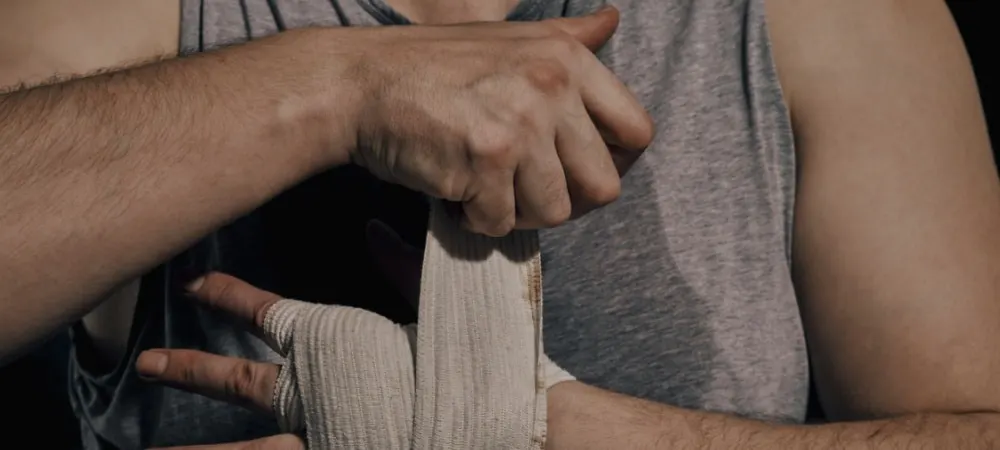
A boxer's fracture is a very common hand injury that can lead to serious complications. This type of injury is frequently encountered, particularly in young adults and active athletes. With correct diagnosis and treatment approach, successful results can be achieved; however, delayed or inadequate treatment may result in permanent loss of function.
What is a Boxer's Fracture?
A boxer's fracture is termed the "fifth metacarpal neck fracture" in the medical literature. This fracture is the type of fracture that occurs in the neck region of the bone structure corresponding to the little finger of the hand. Because this injury generally occurs during a punching motion, it has been named a "boxer's fracture". Amateur boxer's fracture cases are encountered more frequently compared to professional boxers, particularly due to inadequate protection and lack of technique. Metacarpal bones are five long bones located between the wrist and the fingers. The fifth of these forms the base of the little finger, and its anatomically weakest point is the neck region. The bone structure in this region is thinner and more prone to breaking compared to other regions.
When evaluated in terms of fracture type, a boxer's fracture is generally spiral or oblique in character, and angulation and shortening can be seen in the bone fragments. The severity of the injury varies depending on the force and direction of the impact. While it appears as a simple fracture in some cases, complicated cases may also present with displacement of bone fragments or fractures extending into the joint. This type of injury not only affects the bone structure but can also affect the surrounding soft tissues, tendons, and nerve structures. Therefore, it requires a holistic evaluation and treatment approach.
How is a Boxer's Fracture Diagnosed?
The diagnosis of a boxer's fracture is made through a combination of detailed anamnesis, physical examination, and radiological imaging methods. The diagnostic process begins with listening to the patient's complaints and obtaining detailed information about the mechanism of injury.
Physical Examination: During the physical examination stage, visual evaluation of the hand is of great importance. The presence of swelling, bruising, deformity, and open wounds is checked. Pain points are determined via palpation, and bone continuity is evaluated. Limitation of movement, finger position, and rotational deformities are examined carefully.
Radiological Imaging: To confirm the diagnosis, anterior-posterior and lateral X-ray images of the hand are required. On the X-ray, the fracture line formed in the neck part of the fifth metacarpal bone can be clearly seen. Radiographs also provide information about the position of the bone fragments, degree of angulation, and joint involvement. In complex cases, advanced imaging methods such as computed tomography (CT) or magnetic resonance imaging (MRI) can be utilized. These methods are preferred especially in cases of suspected soft tissue injuries, tendon ruptures, or intra-articular fracture fragments.
Neurovascular Evaluation: Neurovascular evaluation is also an integral part of the diagnostic process. Finger circulation, sensory status, and motor functions are checked to rule out accompanying nerve or vascular injuries.
In Which Situations Does a Boxer's Fracture Occur?
A boxer's fracture can occur in various situations and with different mechanisms. The most common cause is the act of striking a hard surface with a closed fist. This can happen through punching a wall in a moment of anger, using incorrect technique during a fight, or uncontrolled movements during sports activities.
Among sports injuries, it is frequently seen during combat sports such as boxing, karate, and kickboxing, as well as team sports such as football, basketball, and volleyball. Trainings or competitions performed without using boxer's fracture gloves constitute a risk factor. Athletes' technical inadequacies, fatigue status, and lack of protection increase the risk of injury. Home accidents also constitute an important cause. Situations such as bumping into furniture corners, hitting doorframes, and heavy objects falling on the hand can lead to a boxer's fracture. Accidents occurring at the workplace are encountered more frequently, especially in those working in heavy industry and construction sectors.
Alcohol and substance use significantly increases the risk of injury due to impaired coordination and poor decision-making. Individuals in this condition tend to engage in dangerous behaviors, resulting in hand injuries. The age factor is also important. Young adults, especially males between the ages of 15-35, constitute the highest risk group. This group is exposed to more injuries due to their high level of physical activity and tendency to engage in risky behaviors at times.
What Are the Symptoms of a Boxer's Fracture?
The symptoms of a boxer's fracture appear immediately after the injury and are usually easily noticed by patients. The symptoms of a boxer's fracture can be listed as follows:
Pain: The most prominent symptom is severe pain felt in the injury region. This pain increases with movement and may persist even at rest.
Swelling: Swelling becomes prominent in the first hours after the injury and concentrates especially on the dorsum (upper surface) of the hand. Localized temperature increase and redness can also be observed along with the swelling. The swelling on the surface of the hand may sometimes appear larger than the injury and cause concern for the patient.
Bruising: Bruising and discoloration appear hours after the injury. The discoloration, which is initially in red-purple tones, turns into yellow-green tones in the following days. This condition is a natural part of the bleeding that occurs under the tissue and the healing process.
Loss of Function: Loss of function is one of the most important symptoms of a boxer's fracture. Patients cannot fully contract their little finger and feel weakness during a fist-making motion. A decrease in grip strength and difficulty in fine motor movements are experienced.
Deformation: Deformity is seen especially in displaced fractures. When viewed from the hand profile, collapse of the metacarpal head or changes in finger position can be noticed. In some patients, it is seen that the prominence of the little finger joint decreases when making a fist. Limitation of movement and a feeling of stiffness are also among frequently seen symptoms. Patients experience difficulty during full opening or closing of the hand. This condition occurs due to both pain and anatomical impairment.
How is Boxer's Fracture Treatment Performed?
The treatment of a boxer's fracture is determined based on factors such as the type of fracture, amount of displacement, patient's age, and activity level. The treatment approach is evaluated in two main categories: conservative (non-surgical) and surgical.
Conservative treatment is preferred in fractures with minimal displacement or within acceptable limits. In this approach, immobilization of the hand in the appropriate position is ensured. A boxer's fracture splint or boxer's fracture cast is generally used. The duration of the boxer's fracture cast ranges between 4-6 weeks and is adjusted according to fracture healing. During the immobilization period, the patient is called for regular check-ups, and radiological follow-up is performed. Analgesic and anti-inflammatory drugs are prescribed for pain control. Cold application and elevation are recommended to reduce swelling.
Boxer's fracture surgery is required in certain special cases. If there is more than 40-50 degrees of angulation (angular deformity) in the fracture, rotation in the finger (rotational deformity), a fracture accompanied by an open wound, or multiple fractures, boxer's fracture surgery may be necessary. In addition, surgery is resorted to if the fracture cannot be properly reduced using methods such as a cast or splint. During the procedure of inserting wires for a boxer's fracture, the fracture is generally either fixed externally with a wire (closed reduction and pinning) or opened openly and fixed internally with materials such as screws, plates, or wires. Which method will be used varies according to the shape of the fracture and the doctor's preference.
The rehabilitation process is an integral part of post-cast treatment for a boxer's fracture. Following the completion of the immobilization period, the physical therapy program is initiated. Physical therapy exercises after a boxer's fracture start initially with passive movements. Then, it transitions gradually to active movements and strengthening exercises.
Frequently Asked Questions
A boxer's fracture occurs in the fifth metacarpal bone located at the level of the little finger in the hand. This bone is the bone most exposed to impact when a punch is thrown. This fracture resulting from trauma causes swelling and deformity, especially on the outer part of the hand. If not treated correctly, finger functions can be affected. A boxer's fracture is generally treated with a cast or splint. If the angle of the fracture is not excessive and the bone has not shifted much from its place, fixation is performed without the need for surgical intervention. The cast ensures proper healing of the bone. It is generally applied for a period of 3 to 6 weeks, and the patient is asked not to use their hand. Surgery is not required for every boxer's fracture. However, if the fracture angle is more than 40-50 degrees, if there is rotation in the finger, if the fracture is displaced, or if an open fracture is in question, surgical intervention becomes mandatory. In addition, surgery is preferred in fractures that cannot be corrected with a cast. Which method will be applied depends on the structure of the fracture. The healing time of a boxer's fracture can generally vary between 4 to 6 weeks. However, full functional recovery can take 6 to 8 weeks depending on the person's age, severity of the fracture, and compliance with treatment. This period may take slightly longer after surgical treatment. Doctor supervision is important for returning to active life. If not treated on time and correctly, a boxer's fracture can lead to permanent problems. Deformity in the finger, limitation of movement, or loss of strength may develop. However, with early diagnosis, correct treatment, and the subsequent physical therapy process, most patients can become able to use their hand completely. Permanent damages are generally seen in neglected cases. Serious complications can arise if a boxer's fracture is not treated. Untreated cases can result in permanent loss of function, deformity, chronic pain, and limitation of movement. In addition to malunion, pseudoartrosis (non-union of bone) may develop. Secondary problems such as tendon adhesions and joint stiffness may also occur. Physical therapy may be required especially after a casting or surgical intervention. Rehabilitation programs are applied for the hand muscles to regain strength and joint movements to return to normal. Thanks to physical therapy, the previous flexibility and strength of the fingers are regained. This process usually takes a few weeks. Surgery becomes mandatory if the fracture angle is more than 40-50 degrees, if there is a rotational disorder in the finger, if multiple bones are broken, or if there is an open fracture. In addition, surgery is preferred if the fracture does not settle into place despite the cast. The surgeon evaluates the condition and determines the most appropriate method. Applying cold compresses in the first days, keeping the hand above heart level, and resting can reduce pain. Pain relievers recommended by the doctor can also be used. Unnecessary hand movements should be avoided, and the fracture region should be protected. If there is excessive pain, this may mean displacement in the fracture, requiring re-evaluation. The return to sports period generally reaches 6 to 8 weeks. However, this period varies depending on the severity of the fracture, treatment method, and the person's healing speed. This period may be slightly longer after surgery. Doctor approval must definitely be obtained before starting sports, and the fracture must be fully healed. If you notice swelling, pain, or deformity in your hand after a trauma, make an appointment with Hisar Hospital Orthopedics specialists immediately. You can safely overcome a boxer's fracture with early diagnosis and correct treatment. Make an Appointment
Start with the right assessment for Boxer's Fracture Symptoms, Diagnostic Methods, and Treatment Options
Share your symptoms with our specialist physicians; let us determine the right diagnosis and treatment plan together.
Warning
If your symptoms started suddenly, are progressing rapidly, or significantly restrict your daily life, consult a physician without delay.
Plan your Boxer's Fracture Symptoms, Diagnostic Methods, and Treatment Options journey with our specialists.
Fill in the form or book an appointment to learn about treatment options, the process and preparation.