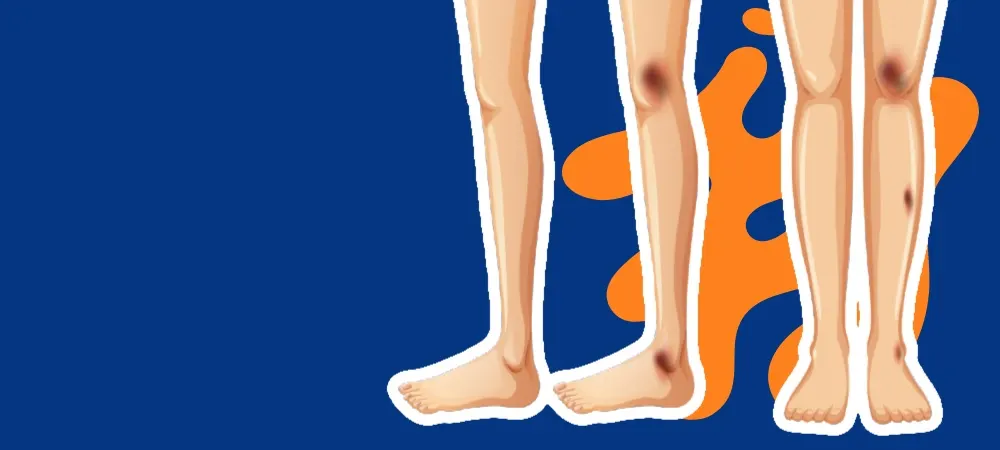
Bruising on the legs is a frequently encountered condition in daily life. Often resulting from various traumas such as falls and impacts, leg bruises can also develop due to the natural aging process or side effects of certain medications. Conditions such as itching and bruising on the upper leg or leg bruising after sports may indicate an underlying health problem. Therefore, it is important to consult a specialist physician, especially for frequently recurring leg bruises.
What is Bruising on the Legs?
Bruising on the legs, known as ecchymosis in medical literature, is the discoloration of the skin resulting from blood leaking from blood vessels into tissues due to the damage of vessels located under the skin for various reasons. Bruises, which can be seen anywhere on the body, usually occur due to different causes such as minor trauma like bumping, exercise-related muscle injuries, or skin irritation resulting from severe itching. Although conditions like itching and bruising on the lower or upper leg start with a reddish shade at first, they can turn into different colors such as dark blue, purple, yellow, or green over time. Bruises can be more common in sensitive areas of the legs. In addition, the decrease in skin elasticity with age can also cause bruises to form more easily.
In some people, unexplained bruises can be seen in different parts of their body, such as bruising on the upper and lower legs, without any trauma. Unexplained bruising on the leg may be related to various health problems such as clotting disorders, liver diseases, and vitamin K deficiency. Therefore, in case of unexplained bruises on the body, especially if they recur frequently, it is important to investigate the underlying cause.
How Do Bruises on the Legs Form?
Bruising on the legs generally forms as a result of an impact to the leg, damaging the vessels and blood leaking out from the damaged vessel. When there is no open wound at the site exposed to trauma, the blood leaking from the vessels cannot escape and accumulates under the skin. The blood accumulated under the skin causes spots in different colors such as purple, black, brown, and green to form on the surface of the skin. However, vascular damage is not always dependent on an impact. In situations that cause the blood clotting mechanism to be disrupted, such as aging and medication use, bleeding and related bruises can also form in different parts of the body.
In addition, leg bruising after sports is a condition frequently encountered by people engaged in sports. Overworking of muscles or muscle injuries during sports can cause damage to the blood vessels under the skin. Furthermore, scratching the skin severely can cause bruising after leg itching to appear, especially in those with sensitive skin.
What Causes Bruising on the Legs?
When the causes of bruising on the legs are mentioned, the first thing that comes to mind is impacts to the leg. However, in some cases, pain and bruising on the leg can be a harbinger of a more serious health problem. Some people's skin is more prone to bruising compared to others. Accordingly, the main causes of leg bruising and risk factors are as follows:
Age: The skin thins and loses its elasticity with age. This situation makes it easier for bruises to form while causing the resulting bruises to take longer to heal. In addition, various medications, such as blood thinners used due to various health problems in old age, can also increase the risk of leg bruising in old age.
Genetic predisposition: According to various studies, people whose family members easily develop bruises may have skin more prone to bruising. In addition, some inherited diseases characterized by blood clotting disorders, such as Von Willebrand disease, can cause unexplained bruising on the leg.
Vitamin deficiencies: Not getting enough of certain vitamins through diet or the impairment of vitamin absorption due to any health problem can cause easy bruising. For example, in the case of severe vitamin C deficiency, scurvy characterized by symptoms such as anemia, fatigue, unexplained bleeding, and bruising can occur. In addition to vitamin C, one of the main symptoms of vitamin K deficiency is bleeding disorders and easy bruising. Vitamin K deficiency, which plays an important role in blood clotting, can be seen in people of all ages. However, since breast milk does not contain enough vitamin K, vitamin K deficiency is more common in infants.
Liver diseases: If there is a health problem that adversely affects the normal function of the liver, the blood clotting process may be disrupted. For example, the American Liver Foundation states that cirrhosis patients are more prone to easy bruising and bleeding.
Autoimmune diseases: Autoimmune diseases such as rheumatoid arthritis and lupus, where the body attacks its own tissues and organs, can cause bleeding disorders. Some medications used in the treatment of rheumatoid arthritis can also lead to bruising.
Thrombocytopenia: Complications such as bleeding disorders and bruising can be seen in patients with thrombocytopenia, a health problem characterized by a low blood platelet count, because the blood cannot clot properly. Studies show that approximately 5-10% of pregnant or postpartum women have thrombocytopenia. Additionally, various treatments such as cancer treatment can cause the number of platelets responsible for blood clotting in the blood to drop.
In addition to those counted, rare blood diseases such as factor V deficiency, Bernard-Soulier syndrome, and hemophilia can cause unexplained bruises on the leg.
How is Bruising on the Legs Diagnosed?
During the diagnosis of bruising on the legs, specialists first evaluate the size and shape of the bruises with a physical examination. Then, questions can be directed to the patient such as whether there is a family history of easy bruising, whether there is any underlying health problem, or whether there is a medication they use regularly. In case of redness and bruising on the leg, questions such as when the symptoms appeared and whether the patient was exposed to trauma can also be asked. Following the physical examination, specialist doctors can benefit from blood tests to accurately determine the cause of bruising on the leg. Thanks to blood tests, the patient's platelet count, vitamin deficiencies, or other health problems can be diagnosed. In some cases, specialists may also need a bone marrow biopsy if they suspect cancer as the cause of bruising.
How is Bruising on the Legs Treated?
The treatment of bruising on the legs varies depending on the factor causing the bruise. Bruises developing due to minor traumas often heal on their own in a short time without requiring any treatment or by methods such as applying a cold compress. However, if the cause of the bruise is a more serious health problem, the underlying health problem must be treated first. For instance, bruises developing due to vitamin deficiencies can often be healed when the missing vitamin is replaced through foods or dietary supplements. In addition, in patients with a low platelet count, certain medications can be prescribed or the platelet count can be increased by methods such as blood transfusion.
Frequently Asked Questions
Bruising on the legs is usually an indicator that blood vessels have been damaged as a result of a blow or impact. In some cases, bruises can occur in various parts of the body, including the legs, without a known trauma. Unexplained bruises on the leg can point to serious health problems such as bleeding disorders, low platelet count, anemia, and liver disease. Frequent and widespread bruises occurring independently of trauma can be a sign of an underlying serious health problem. If bruises are accompanied by symptoms such as bleeding, swelling called hematoma in the bruised area, and pain, it is important to consult a specialist doctor. One of the symptoms of vitamin deficiencies, such as vitamin K deficiency which negatively affects blood clotting, can be easy bruising. Besides vitamin K, vitamin C deficiency can also cause a health problem known as scurvy, characterized by easy bleeding and bruises. If bruising on the leg occurs after traumas such as falls and impacts or after sports, the leg should be kept elevated above heart level if possible, in order to slow down the flow of blood leaking from the damaged vessel to the bruised area. Additionally, applying a cold compress to the bruised area and resting can also help the bruise heal in a shorter time. Although stress itself does not directly cause bruising, intense and long-lasting stress can cause rare diseases characterized by symptoms such as bleeding disorders like Gardner-Diamond syndrome and unexplained bruising. Anemia, meaning lack of blood, can cause symptoms such as itching and bruising on the leg. In addition to iron deficiency anemia, aplastic anemia, a rare blood disease characterized by impaired production of red, white blood cells, and platelets, can also cause bruising. The human body needs vitamin B12 to produce blood cells, including platelets. While it is hard to say that a B12 deficiency directly causes leg bruising, anemia associated with vitamin B12 can cause unexplained bruising. A leg bruise usually heals within 2 weeks. In case of bruising that lasts longer than 2 weeks and worsens, it is important to get help from a specialist doctor. Iron deficiency can manifest itself with symptoms such as bruising and itching on the leg.
If you notice frequently recurring or unexplained bruises on your legs, consult our expert ORTHOPEDICS AND TRAUMATOLOGY doctors without delay. You can prevent potential health problems thanks to early diagnosis. Contact us for appointments and detailed information.
Start with the right assessment for Causes, Symptoms, and Treatment Methods for Bruising on the Legs
Share your symptoms with our specialist physicians; let us determine the right diagnosis and treatment plan together.
Warning
If your symptoms started suddenly, are progressing rapidly, or significantly restrict your daily life, consult a physician without delay.
Plan your Causes, Symptoms, and Treatment Methods for Bruising on the Legs journey with our specialists.
Fill in the form or book an appointment to learn about treatment options, the process and preparation.