Achondroplasia is a genetic condition that affects bone development. Its most well-known feature is the development of long bones that are shorter than normal. Therefore, short stature and disproportionate body structure are among the most prominent physical findings. Although commonly referred to as dwarfism among the public, in medical terms, achondroplasia is simply a specific bone growth disorder and is the most frequent form of such conditions.
What is Achondroplasia?
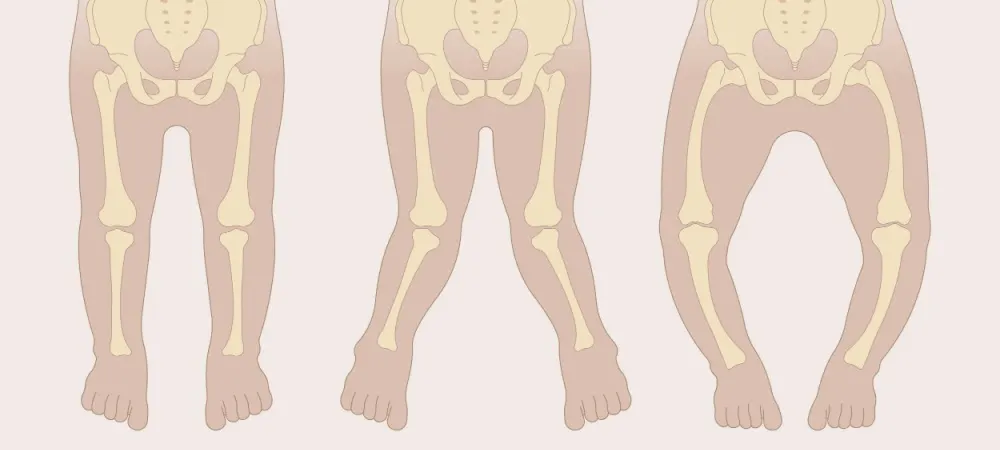
Achondroplasia is an inherited genetic disorder that affects the longitudinal development of bones, particularly in the arm and leg regions. Generally, the body trunk remains of normal size, while a pronounced shortening is observed in the arms and legs. Achondroplasia is the most common form of dwarfism and occurs in approximately one in every 20,000 to 40,000 births.
What Are the Symptoms of Achondroplasia?
Symptoms of achondroplasia can be observed from birth. However, certain symptoms become more prominent during the child's development. The symptoms of achondroplasia include:
Short arms and legs, especially the upper arms and thighs,
An abnormally large head (macrocephaly) and a prominent forehead,
A flattened nasal bridge,
Wide hands with short and thick fingers,
A trident appearance between the fingers (especially between the middle and ring fingers),
Mild weakness in muscle tone (especially in infancy),
Developmental motor delays (such as walking and sitting).
Secondary problems such as spinal curvatures, breathing difficulties, or susceptibility to ear infections may also be observed in some individuals. Musculoskeletal issues developing due to achondroplasia must be monitored at an early age. These symptoms may vary from person to person; however, typical physical features are generally prominent.
What Causes Achondroplasia?
Mutations in the FGFR3 gene are at the forefront of the causes of achondroplasia. Achondroplasia occurs as a result of an alteration (mutation) in the FGFR3 gene, which is one of the genes governing bone development in the body. While this gene normally functions to balance bone growth, the mutation in achondroplasia disrupts this balance and causes bones (especially long bones such as the arms and legs) to remain shorter than normal. Interestingly, this condition is mostly non-hereditary. In other words, in the majority of cases, this genetic alteration is not passed down from the mother or father. Instead, it occurs entirely by chance during fertilization. In the remaining portion, the genetic alteration has been passed from either the mother or the father to the child. If one of the parents has achondroplasia, the risk of transmission to the child is approximately 50%. In short, achondroplasia is a condition of genetic origin, yet it can often appear even if there is no prior similar history in the family. This makes it unique among conditions that are genetic but not inherited.
How is Achondroplasia Diagnosed?
The diagnosis of achondroplasia dwarfism is usually established immediately after birth through a careful evaluation of physical features. In a newborn, typical signs such as short arms and legs, a wide forehead structure, and a noticeably large head and facial proportions are the elements that first catch the attention of physicians. When achondroplasia is suspected based on these physical findings, a genetic test is performed for a definitive diagnosis. This test checks for the specific mutation responsible for achondroplasia in the FGFR3 gene. X-ray imaging is also used to confirm the diagnosis, allowing the developmental pattern of the bones to be examined in detail. Among the types of achondroplasia, the classic form is the most common, and other variants are extremely rare. During the gestational period, especially through detailed ultrasonography performed after the 20th week, risks can be noticed by evaluating the lengths of the baby's arms and legs. However, prenatal ultrasound only determines probability, and definitive diagnosis is still established through tests performed after birth. Mothers of children with achondroplasia can receive genetic counseling during pregnancy to obtain information about their baby's condition, ensuring both a correct diagnosis and early monitoring and planning.
How is Achondroplasia Treated?
Since achondroplasia is a genetic difference, there is no cure that can completely eliminate it. However, this does not mean the condition cannot be managed. The treatment approach focuses more on improving the individual's quality of life, supporting the developmental process, and preventing potential health problems. In the early years, it is of great importance for children to undergo regular pediatric, orthopedic, and neurological evaluations. Physical therapy may be applied to increase muscle strength and support motor skills. Physical therapy for achondroplasia is administered to support muscle strength and increase mobility. If complications such as breathing problems, ear infections, or spinal cord compression develop, medical or surgical interventions may be necessary. Although growth hormone therapy has been tried in some patients, it generally provides a limited effect and may not be suitable for every individual. Another option, limb-lengthening surgery, is a lengthy process and should only be applied in carefully selected cases. This procedure should be evaluated based on functional needs and the individual's life choices rather than aesthetics. In short, achondroplasia treatment is a comprehensive monitoring process carried out with an interdisciplinary approach tailored to the individual's needs.
Frequently Asked Questions
Achondroplasia is inherited in an autosomal dominant manner, meaning a mutation in only one copy of the gene is sufficient. The cause is a specific mutation in a gene named FGFR3. While this gene normally produces a protein that regulates bone growth, the mutation suppresses this process, limiting the growth of long bones. Being genetic does not always mean it is passed down from the family, because the vast majority of cases occur completely at random without this genetic change being present in the parents. In the remaining cases, the gene has been inherited by the child from the mother or father. According to medical classification, achondroplasia is a type of disproportionate dwarfism, meaning a condition where the torso remains of normal length while the arms and legs are significantly shorter. However, because the word dwarfism can sometimes be used in a derogatory sense in society, whether individuals with achondroplasia use this term depends entirely on their personal preference. What matters is focusing on these individuals' personal traits and life skills rather than their physical appearance. A child does not necessarily have to have parents with this condition in order to be born with achondroplasia; in most cases, the genetic mutation occurs spontaneously during pregnancy. Thus, a baby can be born with achondroplasia even if born to a genetically completely healthy mother and father. This condition is described as a random (spontaneous) mutation and is very well documented by modern genetics. Achondroplasia is noticeable in a baby from birth due to its short arm and leg structure. Features such as short arms and legs, a broad forehead, and prominent head size can be observed right from birth. An experienced physician can make a preliminary diagnosis based on these symptoms, but a definitive diagnosis is clarified through genetic tests and radiological imaging. In some cases, suspicion of achondroplasia may also arise during detailed ultrasonography performed in the later weeks of pregnancy. The condition of achondroplasia does not affect intellectual development; it solely concerns bone growth. Babies born with achondroplasia generally have a normal level of intelligence and may experience delays in their motor development. Individuals with achondroplasia can learn, work, make plans, and be productive just like anyone else. Although some misconceptions in society cause confusion on this matter, scientific data clearly show that intelligence is normal. The diagnosis of achondroplasia is confirmed through genetic tests, which search for the mutation causing achondroplasia in the FGFR3 gene. Additionally, bone structure can be examined through X-ray films taken after birth to detect characteristic short bones. There are also some clues during pregnancy; in particular, findings such as short thigh bones in detailed ultrasounds performed in the second half of pregnancy can raise suspicion in doctors. Achondroplasia can be recognized in the newborn period by a large head circumference and limb shortening, but postnatal tests are required to confirm this suspicion. Although growth hormone therapy has been tried in some patients, it generally has a limited effect on short stature due to achondroplasia. If this treatment is administered during childhood when growth plates are still open, a certain degree of height increase can be achieved. However, the results are usually not very dramatic, and the treatment does not have the same effect on everyone. Therefore, the use of growth hormone should only be initiated when deemed necessary after a careful evaluation process. It is possible to increase the height of individuals with achondroplasia through surgical limb-lengthening procedures. This procedure is based on the principle of surgically cutting the bones and gradually lengthening them using special devices. However, the process is quite arduous, long-term, and painful. In addition to the physical burden, the individual must also be psychologically prepared for this process. This method should be considered to increase functionality in daily life rather than for aesthetic concerns. The decision must definitely be made through a joint evaluation of the patient, their family, and the physician. Achondroplasia is a lifelong condition, but this does not mean the individual will constantly struggle with health problems. With appropriate healthcare monitoring and supportive treatments, many individuals with achondroplasia can complete their education, have a career, marry, and start a family. While some individuals may experience complications such as spinal issues, respiratory difficulties, or joint pain, these risks can be minimized with early diagnosis and regular monitoring. Quality of life is directly related to the support received. The disability rate for achondroplasia may vary depending on the limitation in the individual's daily living activities. Individuals living with achondroplasia need to pay attention to certain matters in daily life. First of all, regular doctor check-ups should not be neglected; spinal health, ear infections, respiratory tracts, and joint health require regular monitoring. Ergonomic adjustments—meaning rearranging the living environment to suit body height—are important. Muscle strength should be supported through physical activities, but sudden and strenuous movements that put pressure on the spine should be avoided. At the same time, social support should not be neglected; psychological support, especially during childhood and adolescence, boosts the individual's self-esteem and facilitates social integration. Empathy, patience, and a conscious approach are very valuable for both the individual and their family during this process.
You can contact us to get more information about achondroplasia or to schedule an appointment with our expert ORTHOPEDICS AND TRAUMATOLOGY physicians. Early diagnosis and regular monitoring play a major role in improving the quality of life. Take a step for your health right now!
Start with the right assessment for What is Achondroplasia? Symptoms, Causes, Diagnosis and Treatment
Share your symptoms with our specialist physicians; let us determine the right diagnosis and treatment plan together.
Warning
If your symptoms started suddenly, are progressing rapidly, or significantly restrict your daily life, consult a physician without delay.
Plan your What is Achondroplasia? Symptoms, Causes, Diagnosis and Treatment journey with our specialists.
Fill in the form or book an appointment to learn about treatment options, the process and preparation.