Robotic adrenalectomy is an advanced method used for the surgical removal of the adrenal glands located above the kidneys. Diseases of your adrenal glands can disrupt the hormone balance in your body and seriously affect your blood pressure, weight, and heart rhythm.
In this article, you will find answers to the questions of what robotic adrenalectomy is, who it is performed on, and how it is carried out. You will also learn about the advantages of robotic adrenalectomy and the recovery process after robotic adrenalectomy. This minimally invasive procedure, performed using the Da Vinci robotic surgical system, usually takes 1.5-3 hours, and patients are mostly discharged within 2-4 days.
What are the adrenal glands and why are they important?
The adrenal glands, which sit on top of your kidneys and weigh about 4 grams, produce hormones that give instructions to almost all organs in your body. These small but powerful glands consist of both an outer layer (cortex) and an inner layer (medulla). Both layers produce different hormones and regulate the vital functions of your body.
The role of cortisol, adrenaline, and other hormones
The adrenal glands produce four main groups of hormones that are critical for your body's balance. Each of these hormones plays an important role in regulating different functions of your body.
Cortisol is a glucocorticoid with vital functions. It regulates blood sugar, helps the body respond to stress, and reduces inflammation. It also increases protein breakdown in muscles, supports new protein synthesis in the liver, and accelerates fat breakdown in adipose tissue. In stressful situations, your cortisol levels rise and put your body into action. While cortisol strengthens your immune system, it also reduces the risk of depression and anxiety.
Aldosterone is the most important mineralocorticoid regulating water-salt balance. It promotes sodium reabsorption and potassium excretion in the kidney tubules, thereby keeping the amount of water in the body and blood pressure under control. The balanced functioning of this hormone is vital for maintaining your body's fluid-electrolyte balance.
Adrenaline and noradrenaline are catecholamines produced in the medulla of the adrenal gland. These hormones trigger the "fight or flight" response in moments of danger. They speed up the heartbeat, raise blood pressure, and accelerate breathing. In this way, your body can quickly mobilize in stressful situations. Adrenaline also raises the body's energy level by increasing blood sugar. Of these hormones, 80% is adrenaline and 20% is noradrenaline.
The adrenal glands also produce sex steroids (DHEA, DHEAS, androstenedione, testosterone, and estrogen). These hormones influence the development of the male genital system during development in the womb and play a role in the development of sexual characteristics during puberty.
Effects of adrenal gland diseases on the body
If the adrenal glands do not function properly, serious health problems can occur in the body:
Cushing's syndrome occurs when there are high levels of cortisol in the body for a long time. Its most common symptoms are:
- Weight gain (especially in the face, trunk, and back)
- Pink-purple stretch marks on the skin
- Thinning of the skin and easy bruising
- Excess hair growth and menstrual irregularities in women
- Decreased sexual desire in men
In addition, severe fatigue, muscle weakness, depression, anxiety, hypertension, headache, and type 2 diabetes may also be seen.
Conn's syndrome (primary hyperaldosteronism) results from the adrenal glands producing too much aldosterone. This causes loss of potassium and an increase in sodium and water in the body. As a result, hypertension that is difficult to control, heart problems, risk of stroke, muscle cramps, weakness, fatigue, and excessive thirst may occur.
Pheochromocytoma is usually a benign tumor of the adrenal gland and causes excessive secretion of adrenaline/noradrenaline hormones. It manifests with episodes of high blood pressure, palpitations, headache, and excessive sweating.
Addison's disease is a condition in which the adrenal gland cannot produce enough cortisol and aldosterone. Patients usually experience weakness, low blood pressure, loss of appetite, weight loss, and chronic fatigue.
The health of your adrenal glands is of great importance for your overall health. Diseases of these glands can lead to hormonal imbalances and serious health problems. Therefore, advanced surgical methods such as robotic adrenalectomy can be life-saving in the treatment of these diseases.
What is robotic adrenalectomy?
Robotic adrenalectomy, a breakthrough in the treatment of adrenal gland diseases, is the removal of the adrenal glands using technological methods. This method stands out as a modern technique that has largely replaced traditional open surgery. As a minimally invasive procedure, robotic adrenalectomy allows you to precisely treat problems in the adrenal glands, which have a complex anatomy.
Da Vinci robotic surgical system
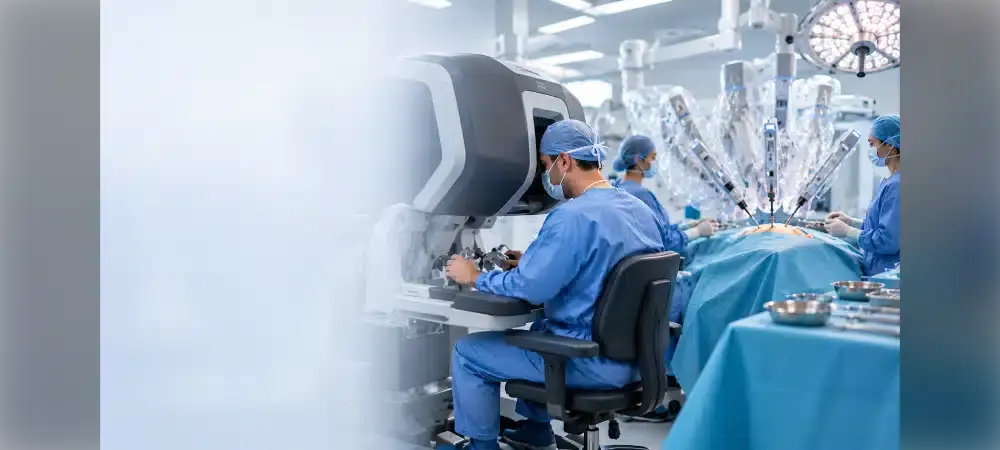
The most commonly used technology in robotic adrenalectomy is the Da Vinci robotic surgical system. This system allows the surgeon to perform the operation by controlling the robotic arms from a console. The system consists of the following components:
- The control console where the surgeon sits and directs the operation
- Robotic arms and surgical instruments working on the patient
- A high-resolution imaging system
Sitting at the console a few steps away from the operating table, the surgeon controls the robotic instruments in real time and with high precision. During the surgical procedure, robotic instruments with 2-3 joints are used to perform tasks such as cutting, suturing, and separating tissues. The robotic arms mimic the surgeon's hand movements and intervene precisely on the adrenal gland.
Advantage of minimally invasive surgery
As a minimally invasive surgery, robotic adrenalectomy offers many advantages. While open surgery requires large incisions in the abdomen or flank, robotic surgery is performed with only 3-4 keyhole-sized incisions. Thanks to these small incisions:
- Less bleeding and less need for blood transfusion
- Less pain and discomfort
- Shorter hospital stay
- Better cosmetic results
- Faster recovery compared to open surgery
In addition, in this method the abdominal cavity is inflated with carbon dioxide gas, and a laparoscopic lens connected to a high-resolution camera is placed in the abdomen to visualize the internal organs. In this way, the surgeon can reach the adrenal gland with minimal damage to the body.
Difference in visualization and precision
One of the most important features of robotic adrenalectomy is the superior visualization and precision it offers. The system provides the surgeon with the following capabilities:
- Three-dimensional, high-resolution imaging system
- Tremor-free surgical movements
- Superior maneuverability in narrow anatomical spaces
- Precise instruments that can mimic wrist movements
- Tremor filtration
Considering the complex vascular structure and deep location of the adrenal glands in particular, the visualization and precision advantages provided by robotic surgery are of great importance. The surgeon performs the operation seated comfortably at the console, which reduces fatigue during long procedures.
Thanks to the increased range of motion of the multi-jointed robotic arms, robotic adrenalectomy allows more precise dissection than conventional laparoscopic methods. This is especially important for protecting the delicate vessels and nerves around the adrenal gland. In addition, the surgeon works with a three-dimensional high-resolution image at all times and can clearly see the anatomical structures in the adrenal region.
In which situations is robotic adrenalectomy performed?
Some diseases and tumors that develop in the adrenal glands can be treated with robotic adrenalectomy. This modern surgical approach is preferred especially for masses that disrupt hormone balance or show a tendency to grow. The precision and minimally invasive nature of robotic surgery provide a great advantage in complex operations in the adrenal region.
Hormone-secreting tumors
Robotic adrenalectomy is most often performed to treat hormone-producing (functional) adrenal masses. These tumors disrupt your normal hormone balance and cause various problems in your body. Hormonally active tumors usually require surgical intervention because they cannot be fully controlled with medication. Robotic adrenalectomy offers an effective solution for removing such masses and speeds up the recovery process after surgery.
Pheochromocytoma
Pheochromocytoma is a tumor that develops in the inner part (medulla) of the adrenal gland and secretes excessive amounts of adrenaline and noradrenaline. Overproduction of these hormones causes the following symptoms:
- Episodes of severe hypertension
- Heart palpitations and sweating
- Headache and anxiety
- Tremor and nervousness
Robotic surgery is particularly preferred for the treatment of pheochromocytoma. This is because, in this delicate operation, careful manipulation and removal of the tumor is of great importance. Before robotic adrenalectomy, medication must be started to lower blood pressure.
Conn's syndrome (aldosteronoma)
Conn's syndrome occurs in the presence of a tumor (aldosteronoma) in the adrenal gland that produces the hormone aldosterone. This causes high blood pressure and low potassium levels. Symptoms of the syndrome include:
- Hypertension that is difficult to control
- Muscle weakness and cramps
- Excessive thirst and frequent urination
- Fatigue and exhaustion
In Conn's syndrome, robotic adrenalectomy completely corrects hypertension in 50% of patients. In other patients, it provides a marked improvement in blood pressure and a reduction in the number of medications used.
Cushing's syndrome
Cushing's syndrome results from excessive cortisol production by the adrenal gland. This leads to significant physical changes and health problems. Its symptoms are:
- Rounding of the face ("moon face" appearance)
- Excessive fat accumulation in the abdominal area
- Pink-purple stretch marks on the skin
- Muscle weakness and bone loss
- Memory problems, loss of attention and concentration
- Hypertension and high blood sugar
In the treatment of Cushing's syndrome, the aim is to lower the high cortisol levels in the body. Instead of medication, complete removal of the tumor with robotic adrenalectomy offers an effective solution.
Growing or malignant adrenal masses
Robotic adrenalectomy is also preferred in the following situations:
- Adrenal masses larger than 4 cm (the risk of malignancy increases)
- Masses that show growth of 1 cm or more on follow-up imaging
- Lesions with suspicious features on imaging
- Metastatic lesions or malignant tumors such as adrenocortical carcinoma
Robotic surgery offers a great advantage, especially in obese patients, large masses, or tumors that secrete excessive hormones. Three-dimensional imaging and tremor-free operation give surgeons the opportunity to intervene precisely in these complex cases.
Advantages of robotic adrenalectomy
Compared with conventional surgical methods, robotic adrenalectomy offers patients many important benefits. This modern approach both reduces the risk of complications during surgery and increases your comfort after surgery.
Less bleeding and pain
Blood loss during robotic adrenalectomy is generally limited to 50-100 mL, and fewer than 2% of patients need a blood transfusion. At the same time, thanks to controlled dissection techniques, the risk of bleeding is also significantly reduced. This results in less pain after surgery.
The surgeon's precise intervention and the tremor-free operation of the robotic arms minimize the sensation of pain. In addition, your need for pain medication after surgery decreases. In other words, you are more comfortable during your recovery.
Surgery through small incisions
Robotic adrenalectomy is performed by making only 3-4 small (0.5-1 cm) openings in your abdominal wall. Open surgery, on the other hand, requires large incisions in the abdomen or flank. Small incisions both give better cosmetic results and speed up wound healing.
Because of these small incisions, tissue damage in your body is also minimized. Thus, the risk of wound infection is reduced and the likelihood of scarring after surgery decreases.
Rapid recovery process
The recovery process after robotic adrenalectomy is much faster than after open surgery. Thanks to the small incisions and minimal tissue damage, your body recovers more quickly. This advantage of the minimally invasive approach also positively affects your mobility after surgery.
In addition, patients who undergo robotic surgery generally experience less pain and can mobilize earlier. This reduces the risk of complications and contributes to a faster improvement in your overall health.
Shorter hospital stay
The hospital stay after robotic adrenalectomy is generally between 1 and 4 days. Some studies show that the average hospital stay is 4.1 days. In conventional open surgery, this period is much longer.
A shorter hospital stay both reduces your risk of hospital-acquired infection and helps you feel better psychologically.
Quick return to daily life
After robotic adrenalectomy, most patients can return to full activity and working life within an average of 3-4 weeks. This period is considerably shorter than after open surgery.
A quick return to daily life also provides important social and economic advantages. You can return to your working life earlier, spend time with your loved ones sooner, and regain your normal routine in a short time.
However, robotic surgery also has disadvantages, such as high cost and longer operating time. Nevertheless, the patient comfort and clinical advantages it provides outweigh these disadvantages.
Recovery process after surgery
The recovery process after robotic adrenalectomy is as important as the success of the surgery. Your hospital stay after robotic surgery is generally limited to 1-3 days, which is a significant advantage compared with open surgery (5-7 days). Your recovery experience may vary depending on your individual health status, the type of surgery, and possible complications.
Monitoring hormone levels
Regular checking of your hormone levels after surgery is vital. Your doctor will request blood, urine, and sometimes saliva tests to measure cortisol, aldosterone, and other hormones. This follow-up shows whether your body is adapting to the new hormonal balance and allows possible problems to be detected early.
Possibility of temporary hormone therapy
If you have undergone unilateral adrenalectomy because of Cushing's syndrome, you may need temporary cortisol therapy until your remaining adrenal gland starts to function normally. It is important to be patient during this process. However, if both of your glands have been removed, lifelong hormone replacement therapy will be necessary.
Especially in patients with Cushing's syndrome, the risk of adrenal insufficiency after surgery is close to 100%, and in tumors producing mild cortisol excess this rate is around 60%. Your doctor will adjust the dose and duration of hormone therapy according to your regular blood tests.
Time to return to physical activity
It is recommended that you get out of bed and take short walks on the first day after surgery. This helps your bowels start working normally and reduces the risk of clot formation in the legs.
During the first two weeks, you are advised to walk on level ground 4-6 times a day. You should avoid heavy lifting and strenuous physical activity for about 4 weeks. You can generally return to full activity and working life within 3-4 weeks.
Risk of complications and their management
The complication rate after robotic adrenalectomy varies in the literature between 1.7% and 30.7%. The most common complications include wound infection (22.4%), lung collapse (11.2%), and deep vein thrombosis (7.5%).
Symptoms such as severe fatigue, low blood pressure, loss of appetite, abdominal pain, weakness, fainting, nausea, vomiting, and mental confusion may be signs of adrenal insufficiency and require urgent intervention.
Multidisciplinary follow-up process
Follow-up after robotic adrenalectomy varies depending on the reason for the surgery. The first check-up is usually done in the first week after discharge at the endocrinology and surgery outpatient clinics. Multidisciplinary follow-up with the urology, endocrinology, anesthesiology, and radiology departments is essential for a successful recovery.
If you had surgery because of pheochromocytoma, you may need to be followed for at least 10 years because of the risk of the tumor recurring years later. In cases of adrenocortical cancer, regular imaging studies are performed every 3-6 months in the first years because of the risk of recurrence.
In Summary: Robotic Adrenalectomy
In conclusion, robotic adrenalectomy has brought major progress in the treatment of adrenal gland diseases. Compared with conventional open surgery, this modern method offers less pain, less bleeding, and a shorter hospital stay.
Although your adrenal glands are small, they are vital for the hormone balance in your body. Diseases of these glands can seriously affect your blood pressure, weight, and overall health. For example, conditions such as Cushing's syndrome, Conn's syndrome, and pheochromocytoma can significantly reduce your quality of life.
Thanks to the Da Vinci system, robotic surgery gives your surgeons three-dimensional imaging and precise intervention. In this way, your adrenal glands can be reached with only a few small incisions in the abdominal area. This speeds up your recovery after surgery.
After surgery, regular checking of your hormone levels and following your doctor's recommendations are of great importance. You can generally return to your daily life within 3-4 weeks.
As with all surgical procedures, robotic adrenalectomy has some risks. However, when performed by experienced surgeons, the complication rate is quite low. In addition, a multidisciplinary follow-up process increases your success after surgery.
In summary, robotic adrenalectomy offers an effective, safe, and comfortable option for the treatment of your adrenal gland diseases. This modern method allows rapid recovery and a quick return to your daily life. Therefore, if you have a problem with your adrenal glands, it would be useful to discuss the option of robotic surgery with your doctor.
Frequently Asked Questions
Who is robotic adrenalectomy suitable for? It is performed on patients who have a tumor or functional disorder of the adrenal gland and who are suitable for surgery.
Is robotic surgery more advantageous than open surgery? Yes, it offers important advantages such as less blood loss, less pain, and faster recovery.
How long does the recovery process after surgery take? After operations performed with laparoscopic or robotic methods, patients are usually discharged within 1-2 days. Return to daily activities most often occurs within 1 week.
Will there be a large scar after surgery? No. Because robotic surgery is performed through small incisions, it leaves minimal scarring from a cosmetic standpoint.
Is the hormone balance disrupted after the adrenal gland is removed? If only one adrenal gland is removed, the other adrenal gland usually continues to meet hormone production. Some patients may need temporary medication.
Will a mass form again after surgery? The removed mass does not form again in the same area. However, depending on certain genetic or rare syndromes, a new mass may develop in the other adrenal gland.
Which method is suitable for me? Your specialist doctor will decide which surgical method is suitable, taking into account the size, location, and hormonal activity of the mass and your general health status.