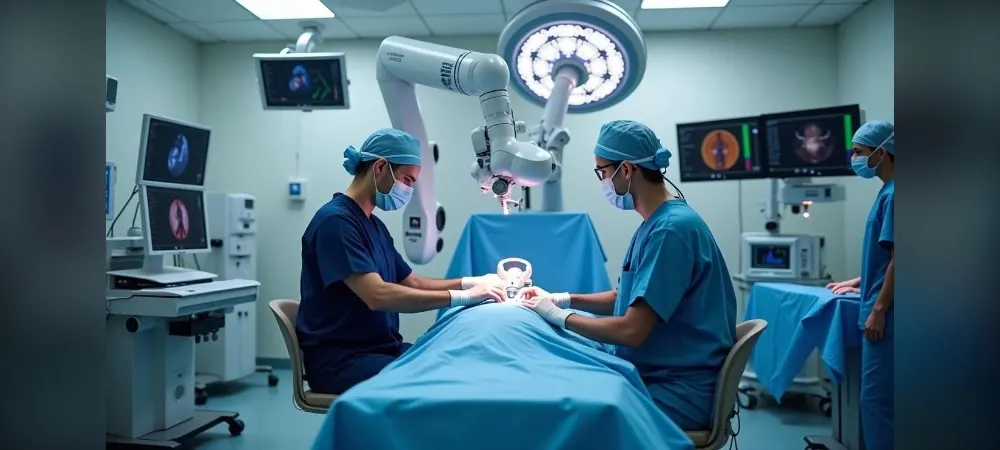
Robotic pancreatic resection is the most advanced minimally invasive surgical method used in the treatment of pancreatic cancer and other pancreatic diseases. Instead of the large 15-30 cm incisions used in traditional open surgery, this procedure is performed through only 4 to 5 small 8 mm ports, offering significant advantages provided by modern medicine.
Robotic surgical techniques in the field of pancreatic surgery ensure less blood loss and accelerate your recovery process. If you are wondering how robotic pancreatic surgery is performed, the surgeon sits at a console next to the operating table and precisely controls the robotic arms with their own hand movements. In addition, the robotic system allows the surgeon to work with a three-dimensional and 10-15 times magnified view, ensuring that even the smallest vessels are clearly visible.
In this article, you will learn what robotic pancreatic resection is, who it is suitable for, and the advantages it provides in clear and understandable language. We will examine the benefits offered by robotic surgery and the surgical process step by step, especially for diseases that are difficult to diagnose early, such as pancreatic cancer.
What is Robotic Pancreatic Resection?
Robotic surgery is the most advanced technology used in pancreatic operations. It provides extraordinary ease for surgeons in complex and high-risk procedures involving the pancreas. Robotic pancreatic resection is a minimally invasive procedure performed by the surgeon inserting special robotic arms and a high-definition camera through a few small ports (approximately 8 mm) opened in the abdominal wall, without making a large incision.
The place of robotic surgery in pancreatic surgery
Pancreatic surgery has traditionally been a challenging field requiring large incisions. First of all, the pancreas is a difficult-to-reach organ due to its location within the abdomen and the delicate structures surrounding it (major blood vessels, nerves). However, robotic technology has made it possible to reach the challenging parts of the pancreas with less trauma.
While robotic surgery allows minimally invasive intervention on the pancreas, it enables the surgeon to perform procedures on patients using less invasive methods. In addition, robotic pancreatic surgery provides the surgeon with three-dimensional imaging and displays the operative field in a magnified view. Thus, a better field of view and precision are achieved.
Especially in serious conditions such as pancreatic cancer, the robotic surgery technique offers significant advantages. Clearer visualization and removal of the tumor, as well as the clearance of lymph nodes, can be performed more effectively thanks to the precision of robotic surgery.
Components of the robotic system
The robotic surgery system operates via a platform commonly known as the da Vinci Surgical System and consists of three main components:
Surgeon Console: This is the control center where the surgeon sits and views the magnified surgical field through 3D glasses. Here, the surgeon translates hand movements to the robotic arms.
Patient-Side Robotic Arms: These are the arms that operate within the patient's abdominal cavity, with a camera and surgical instruments attached to their tips. These arms can rotate at angles (540 degrees) that the human wrist cannot reach and completely eliminate hand tremors.
Vision Cart: This is the system that includes the high-definition image processor, light source, and monitors.
The robotic system is not a setup where a robot performs surgery on its own. In this system, the robot is a high-tech assistant completely under the control of the surgeon, mimicking their hand movements one-to-one or even more precisely.
Differences that distinguish robotic surgery from other methods
Robotic surgery has distinct advantages compared to traditional open surgery and the laparoscopic method:
Robotic surgery allows surgeons to have a much greater range of motion. Furthermore, while standard laparoscopy has a 2D image, in robotic surgery the surgeon sees a clear 3D image with a sense of depth.
The robotic system filters out even the slightest tremor in the surgeon's hands and does not reflect it onto the robotic arms. This feature is of great importance when working on a delicate organ such as the pancreas.
In addition, the instruments at the tips of the robotic arms feature a "wrist" technology that can rotate and bend 540 degrees in ways that the human wrist cannot. This feature offers the surgeon incredible mobility in narrow and deep areas.
As a result, robotic pancreatic resection is the most advanced technology used in pancreatic surgery, offering patients less pain, faster recovery, and better outcomes.
In Which Conditions Is It Performed?
Robotic pancreatic resection can be used in the treatment of various pancreatic diseases. Although this innovative surgical method is not suitable for every patient, it offers significant advantages in certain situations. So, in which diseases can this technology be preferred?
Pancreatic cancer cases
Robotic surgery can be preferred, particularly in early-stage pancreatic cancer cases. This technology is more effective in patients where the tumor is in the early stage and has not spread to surrounding vessels. Ideal candidates for robotic pancreatic surgery are generally patients whose tumors have not invaded surrounding tissues.
Important note: The general health status, age, and other medical history of patients are important factors affecting the applicability of the robotic technique. A comprehensive preoperative evaluation is mandatory.
In addition, patients who have not previously undergone major abdominal surgery that could cause adhesions and who are not excessively overweight are more suitable for this procedure.
Benign tumors and cysts
Benign pancreatic masses refer to non-cancerous growths or lesions. These masses do not invade neighboring tissues or spread to other parts of the body. The robotic surgical approach is preferred in the following conditions:
Mucinous cystic neoplasms (MCNs) with malignant potential
Intraductal papillary mucinous neoplasms (IPMNs)
Neuroendocrine tumors
Robotic resection is an ideal option for symptomatic, growing, or bothersome benign masses. For these tumors, robotic surgery provides faster recovery and fewer complications through a minimally invasive approach.
Chronic pancreatitis and other special conditions
Chronic pancreatitis is the continuous inflammation of the pancreas. Robotic surgery may be considered when it causes severe pain that does not respond to medical treatment, or when it leads to dilation of the pancreatic duct and stones. In these cases, robotic techniques can be effective for removing diseased pancreatic tissue or performing a drainage procedure.
However, there are also situations where robotic surgery is not suitable:
Patients with advanced stage and widespread metastatic pancreatic cancer
Individuals with poor general health status
Patients with severe chronic diseases
Remember: Robotic pancreatic surgery is successfully used in the treatment of many pancreatic diseases, both benign and malignant (cancer). However, it may not be suitable for every patient. It should be kept in mind that robot-assisted laparoscopic surgery can be applied to all types of pancreatic diseases, including pancreatic adenocarcinoma, neuroendocrine tumors, cystic tumors, and chronic pancreatitis.
How is Robotic Pancreatic Surgery Performed?
If you are wondering about the pancreatic surgery process, robotic surgery is one of the most precise methods offered by modern medicine. Robotic pancreatic surgery requires detailed planning, ranging from preoperative preparations to the postoperative recovery process. In this section, we will examine the surgical process step by step.
Preoperative preparation process
Before robotic pancreatic resection, a comprehensive evaluation is performed. First, the patient's general health status is examined in detail. The following tests are performed during this process:
Blood tests: Hemogram, liver and kidney function tests, coagulation parameters
Cardiologic examination: Heart health check via ECG and, if necessary, ECHO
Pulmonary function test: Measurement of lung capacity
Nutritional assessment: Checking albumin and protein levels
In the preoperative period, improving nutritional status is of great importance. This is because pancreatic cancer patients are generally prone to weight and muscle loss. Therefore, a high-calorie, high-protein diet is recommended. If necessary, the diet is supported with special medical nutritional solutions.
Setup of the robotic system
When the day of surgery arrives, anesthesia is administered first. Then, the robotic system is prepared. The following steps are followed during this stage:
A few small incisions (approximately 1 cm) are made in the abdominal region, and thin, tube-like instruments called trocars are placed. Instead of a large 15-20 cm incision, these small incisions make a huge difference in the patient's recovery. The robotic arms and camera are also placed inside the abdomen.
The surgeon sits at a special computer console located in a corner of the operating room. Through this console, the surgeon controls the robot's arms and the 3D camera. Thanks to high-definition imaging and 3D technology, the surgeon sees the pancreas and surrounding structures very clearly.
Tumor removal and lymph node dissection
The most critical stage of robotic pancreatic surgery is the tumor removal. In this process:
The surgeon performs the intervention by moving the robotic arms through a special console. A clear and realistic view is obtained thanks to the 3D camera. The diseased part of the pancreas is separated from the surrounding structures with very precise movements using the robotic arms.
The precise dissection capability offered by the robotic system ensures that the tumor is separated from delicate vascular and nerve structures around it with millimeter precision. Thanks to this precision, the risk of bleeding is minimized. In addition, the goal of robotic surgery is to complete the operation using a minimally invasive method without compromising the oncological principles of open surgery.
Along with the tumor, surrounding lymph nodes are also cleared. This procedure is quite important to prevent the spread of cancer. Robotic surgery provides a great advantage, especially in procedures requiring precision such as lymph node dissection.
Postoperative care and follow-up
Following robotic pancreatic surgery, patients are generally kept under observation for a few days. Pain is controlled with the help of medications. Thanks to minimally invasive surgery, the recovery process is much faster compared to open surgery.
The length of hospital stay for patients is shortened, and the return to daily activities is accelerated. For pancreatic cancer patients, this rapid recovery is extremely important in terms of being able to start chemotherapy without delay.
Postoperative nutrition is also an issue that requires attention. Digestive problems may be experienced due to the removed part of the pancreas. Therefore, the postoperative diet needs to be planned carefully. In addition, blood sugar levels are monitored due to the risk of diabetes.
Full recovery usually takes 6-8 weeks, but patients can often return to their normal lives within a few weeks.
What are the Advantages of Robotic Surgery?
Robotic surgery in pancreatic treatment offers distinct benefits compared to traditional methods. Today, in the fight against pancreatic disorders, robotic technology provides patients with significant advantages in terms of comfort and safety. Why is this method increasingly preferred? Here are the primary benefits provided by robotic pancreatic resection.
Less bleeding and risk of infection
Robotic pancreatic resection significantly reduces the risk of bleeding thanks to its precise dissection capability. 3D imaging and tremor-free, versatile robotic arms make it possible to separate the tumor from delicate vascular and nerve structures around it with millimeter precision. This delicate work means less damage to tissues.
At the same time, the risk of infection decreases thanks to small incisions. Minimally invasive methods significantly reduce the risk of infection compared to traditional open surgery. Thus, your postoperative recovery process proceeds more smoothly.
Smaller incisions and aesthetic benefits
Robotic surgery is performed without making large incisions in the abdominal region, by creating only a few small ports. This minimally invasive approach causes very little tissue damage. Instead of the large incisions in traditional open surgery, only a few small holes are sufficient in the robotic method.
In addition, minimally invasive methods leave less noticeable scars aesthetically. This positively affects the quality of life after surgery, especially in young patients.
Faster recovery process
The recovery process after robotic pancreatic surgery is much faster compared to traditional surgery. Patients feel less pain and experience a faster recovery process. Thanks to it being minimally invasive, pain is minimized and the length of hospital stay is shortened.
The vast majority of patients feel significantly less pain compared to open surgery because there is no large abdominal incision, and they require fewer painkillers. As a result, it allows you to return to your daily life faster.
Increased surgical precision
Robotic systems offer the surgeon a 3-dimensional and extremely clear imaging opportunity. Thanks to robotic arms, movements so small that they would be impossible with the human hand can be easily performed. All these features ensure a much more precise operation process.
Especially in complex organs like the pancreas, robotic surgery provides a major advantage. Three-dimensional imaging makes it easier for surgeons to make more accurate decisions during surgery. The technological advantages offered by robotic pancreatic surgery accelerate the patient's recovery process with precise dissection and minimal bleeding.
For Whom Is It Not Suitable?
Like any surgical method, robotic pancreatic resection is not a suitable option for every patient. Patient selection is of critical importance for a successful surgery. In some cases, traditional open surgery may be a safer option, or no surgical intervention may be recommended.
Advanced stage and widespread metastatic patients
Only about 20% of patients diagnosed with pancreatic cancer are suitable candidates for surgery. Unfortunately, in most patients, the disease may be in an advanced stage at the time of diagnosis. Especially if the cancer has encircled major surrounding blood vessels (Stage 3) or has spread to distant organs such as the liver (Stage 4), robotic surgery is generally not recommended.
The robotic surgery technique is ideal for patients whose tumor is in the early stage and has not spread to surrounding vessels. However, if the tumor has encircled vital arteries and veins around the pancreas, minimally invasive surgery ceases to be a suitable option. In these cases, surgical intervention is not recommended as neither robotic nor open surgery will provide a benefit.
Robotic pancreatic resection can be a lengthy procedure. Therefore, the patient's general health status must be at a level that can tolerate this process. Conditions such as severe heart or lung failure can make prolonged anesthesia risky.
For patients whose general health status is too poor to tolerate the position and duration required by robotic surgery, this major operation may not be suitable. The decision is made in an oncology board meeting where factors such as tumor type, stage, patient age, general health status, and comorbidities are evaluated.
In addition, if the patient has severe malnutrition, their nutritional status may need to be corrected first. Because malnutrition can increase the risk of postoperative complications.
Technical limitations and previous surgeries
Applying robotic surgery can be difficult or impossible in patients who have previously undergone numerous major abdominal surgeries and have advanced intra-abdominal adhesions. Dense adhesions inside the abdomen can restrict the mobility of the robotic arms.
In addition, in cases where the tumor is very large, traditional open surgery may be preferred instead of the robotic method. This is because removing large tumors with robotic surgery can be technically more challenging.
Although robotic pancreatic resection is a technological superiority, patient selection is of critical importance for success. While deciding on surgery, the patient's condition is evaluated from many aspects and the most appropriate treatment method is determined. In some cases, open surgery may be a safer and more effective option.
Robotic Pancreatic Resection in Summary
Robotic pancreatic resection is one of the most important advancements offered by modern medicine in the field of surgery. Compared to traditional open surgery, the robotic method provides patients with less pain, faster recovery, and an earlier return to daily life. However, as with any treatment method, the patient's condition determines the applicability of robotic surgery.
The robotic system offers your surgeon the opportunity to work with a three-dimensional and magnified view. Thus, critical vessels and nerves are seen more clearly during surgery. In addition, the tremor-free and versatile mobility of the robotic arms significantly increases the precision of the surgery.
Robotic surgery can be preferred especially in early-stage pancreatic cancer, benign tumors, and some chronic pancreatitis cases. However, it may not be suitable for advanced cancer patients or individuals with poor general health. Every patient's condition is different, and the treatment decision is made as a result of comprehensive evaluations by an expert team.
As a result, robotic pancreatic resection provides significant advantages in surgical treatment when correct patient selection is made. Small incisions in the abdominal region, less bleeding, a reduced risk of infection, and a faster recovery process are among the foremost of these advantages. In case of suspected pancreatic disease, it is recommended that you discuss the robotic surgery option with your doctor. Because early diagnosis and appropriate treatment are the keys to success in combating pancreatic diseases.
Frequently Asked Questions
How long does robotic pancreatic surgery take?
Robotic pancreatic surgery is usually completed within 3-4 hours. However, this duration may vary depending on the patient's condition and the complexity of the procedure to be performed. Some sources indicate that this duration can be between 4-6 hours. A longer surgery duration is not always a negative situation; sometimes it means the surgeon is working meticulously to do what is best for you.
Does SGK (Social Security Institution) cover robotic surgery?
The cost of robotic surgery is higher due to the special instruments used. Although SGK covers a portion of the surgery, a significant out-of-pocket difference fee usually arises. This situation varies depending on the SGK agreements of the hospital where the surgery will be performed. It is recommended that you discuss the cost issue with the hospital and your doctor before the surgery.
Does the robot perform the surgery, what is the role of the surgeon?
No, this is a common misconception. The surgery is performed entirely by the surgeon, not the robot. The robot is an advanced instrument system that transmits the surgeon's hand and wrist movements more precisely to the surgical field, eliminates tremors, and provides exceptional visualization. Success depends entirely on the skill and experience of the surgeon operating the robot.
How long does the recovery process take?
The recovery process after robotic pancreatic surgery is generally fast. Patients are kept under observation for a few days after the operation. Full recovery may take 6-8 weeks, but most patients return to their normal lives within a few weeks. Return to a desk job can be possible within 4-8 weeks. Thanks to small incisions, recovery is faster compared to open surgery, and patients feel less pain.
Robotic pancreatic resection is a minimally invasive method in the treatment of pancreatic cancer and other diseases. It provides less blood loss and rapid recovery.