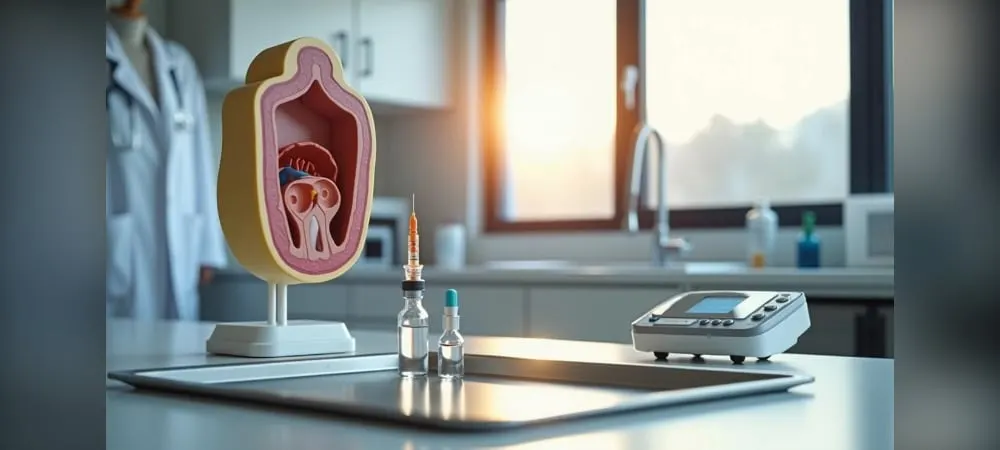
Hormone therapy for prostate cancer plays a vital role, especially for patients with advanced or high-risk disease. In this treatment method, testosterone production is suppressed using GnRH (Gonadotropin-Releasing Hormone) analogs. Thus, prostate cancer hormone therapy medications aim to eliminate the growth-promoting effect of testosterone on cancer cells. Furthermore, the patient's condition is evaluated before starting treatment, and the treatment plan is determined based on the patient's general health status and the size of the tumor.
In this article, we will explain all the details you need to know about prostate hormone therapy, how the treatment is administered, and the potential side effects in simple language. You will find answers to your questions regarding the duration of hormone therapy, methods of administration, and how it may affect your quality of life.
The role of hormone therapy in prostate cancer
Testosterone, the most important androgen in the male body, plays a critical role in the growth and spread of prostate cancer cells. Prostate cancer is one of the most common types of cancer in men, and hormone therapy holds an important place in the treatment process for patients. Accepted as the standard treatment approach for advanced prostate cancer, this method slows down or stops the growth of cancer cells by altering the hormone balance in the body.
The effect of testosterone on cancer cells
Prostate cancer cells are physiologically dependent on androgens to develop, proliferate, and maintain their functions. While 90-95% of androgens in the body are produced by the testes, only about 5% originate from the adrenal glands. Approximately 95% of the testosterone that enters prostate cancer cells is converted into dihydrotestosterone (DHT) via the 5-alpha reductase enzyme. DHT has the ability to bind to the androgen receptor (AR) 10 times more strongly than testosterone and creates a more potent hormonal effect.
Androgens act as fuel by promoting the proliferation of prostate cancer cells. Testosterone forms a DHT-AR complex, binds to the promoter regions of target genes in the cell nucleus, and generates signals that cause cancer cells to grow. Research shows that even at low physiological testosterone levels (below 2.4 ng/ml), the proliferation of prostate cancer cells remains dependent on androgens.
The primary goal of hormone therapy
The primary goal of hormone therapy is to reduce testosterone levels to castration levels and thereby prevent the growth of prostate cancer cells. This treatment is also known as androgen deprivation therapy (ADT) and works by cutting off the cancer cells' source of nutrition. The treatment acts either by reducing testosterone production in the body or by blocking testosterone from binding to receptors in prostate cancer cells.
Standard hormone therapy aims to maintain testosterone levels at castration levels, either medically or surgically, and to improve the patient's quality of life. With this treatment method:
Tumors can be shrunk in metastatic (spread to other parts of the body) prostate cancer
The growth rate of the cancer can be slowed
Relief of symptoms is possible
The effectiveness of other treatments, such as radiotherapy, can be increased
As for the question of how long hormone therapy for prostate cancer lasts, this varies depending on the patient's clinical condition, the stage of the cancer, and the response to treatment. Especially in advanced prostate cancer, treatment can be long-term and sometimes even lifelong. In addition to its clinical benefits, ADT also has side effects that affect many systems in the body. Therefore, the duration and method of treatment should be planned individually for each patient.
In conclusion, hormone therapy helps cancer cells die or grow more slowly by lowering testosterone levels in prostate cancer. Although this treatment cannot completely eliminate prostate cancer on its own, it plays an important role in extending survival and improving quality of life, especially in patients with advanced-stage disease.
GnRH analogs and the testosterone suppression mechanism
The approach of lowering testosterone levels in prostate cancer treatment forms the basis of treatment success. Testosterone suppression therapy is an effective method for controlling the progression of prostate cancer. At the center of this method are GnRH (Gonadotropin-Releasing Hormone) analogs.
How do GnRH analogs work?
GnRH analogs are synthetic proteins that act on the pituitary gland located in the brain. Normally, when testosterone levels in the body drop, the hypothalamus secretes GnRH and stimulates the pituitary gland to trigger the production of luteinizing hormone (LH). LH, in turn, stimulates the testes to produce testosterone.
The difference between GnRH analogs and natural GnRH is their ability to remain bound to receptors for a longer period. While the binding time of natural GnRH is approximately 6 minutes, this duration is 3.5 hours for leuprolide and 5.5 hours for triptorelin. This prolonged binding leads to continuous stimulation of the pituitary gland, and a short-term increase in LH and testosterone is observed initially.
This temporary increase is known as a "flare" or "hormone surge" and lasts for about 2 weeks. However, as a result of continuous stimulation, the pituitary gland begins to stop producing LH, and thus testosterone production is inhibited.
What is medical castration?
Medical castration is the suppression of testosterone production using medications. This method aims to reduce testosterone levels to castration levels (50 ng/dl or below) without surgical intervention. While the answer to how long hormone therapy for prostate cancer lasts varies depending on the patient's condition, medical castration is mostly a long-term form of treatment.
The most commonly used drugs for medical castration are LHRH (Luteinizing Hormone-Releasing Hormone) agonists. Major LHRH agonists available in Turkey include leuprolide (Lupron, Eligard), goserelin (Zoladex), and triptorelin (Trelstar). These drugs are usually administered via injection or as implants placed under the skin.
GnRH antagonists are another group of drugs used for medical castration. Unlike LHRH agonists, GnRH antagonists such as degarelix (Firmagon) do not cause an initial increase in testosterone and lower testosterone levels more rapidly.
Differences from surgical castration
Androgen suppression therapy can be administered in the form of surgical castration (bilateral orchiectomy) or medical castration. Surgical castration is the surgical removal of the testes and is an irreversible procedure. In contrast, medical castration is generally reversible when treatment is discontinued, and testosterone production can resume.
The effectiveness of both methods is similar. In a systematic review involving more than 6,600 patients with advanced prostate cancer, no difference was found between GnRH agonists and orchiectomy in terms of 2-year overall survival.
Medical castration is currently preferred more often than surgical castration. The reason for this is that it is reversible and has fewer psychological effects. Furthermore, thanks to long-acting formulations, it offers flexibility in administration at different time intervals (from 1 month to 12 months).
In conclusion, GnRH analogs, which hold an important place among prostate cancer hormone therapy medications, play a critical role in prostate cancer treatment by effectively suppressing testosterone production.
How is hormone therapy for prostate cancer administered?
Hormone therapy is an effective treatment method used in both early and advanced stages of prostate cancer. This treatment can be administered in different ways depending on the patient's condition and needs.
Injection administration methods
LHRH agonists and GnRH antagonists are usually administered via injection. These drugs slow down or stop the growth of prostate cancer cells by suppressing testosterone production. Injections can be given at different time intervals depending on the patient's needs:
Monthly injections
3-month injections
6-month injections
The most commonly used injection drugs in Turkey include leuprolide (Eligard, Lupron), goserelin (Zoladex), and triptorelin (Trelstar). These drugs are usually injected under the skin or into the muscle. However, some GnRH antagonists, such as degarelix (Firmagon), can only be used as monthly injections.
Injections must be administered regularly under medical supervision and monitored with blood tests during the treatment. Regular monitoring of PSA levels, in particular, is an important indicator for evaluating the response to treatment.
Oral medications
Some hormone therapy drugs developed in recent years are available in oral form. This provides an advantage in terms of increasing patient comfort and requiring fewer doctor visits.
Relugolix (Orgovyx) is the first oral GnRH receptor antagonist approved by the FDA. Taken once daily, this drug can lower testosterone levels without the need for injections or implants. Clinical studies have shown that testosterone suppression was successfully achieved in 96.7% of patients receiving relugolix treatment.
Abiraterone (Zytiga) is another oral medication that blocks androgen production in the body. It is used daily and is usually prescribed in combination with a steroid called prednisone. Additionally, other oral medications such as ketoconazole can also be used for hormone therapy in prostate cancer.
Treatment duration and follow-up
The question of how long hormone therapy for prostate cancer lasts depends on many factors. The duration of treatment varies according to the stage of the cancer, its spread, the patient's general health, and the response to treatment.
In a study conducted in 10 hospitals in Spain, it was determined that high-risk prostate cancer patients benefited more from 24 months of hormone therapy, while there was no significant difference between 4 months and 24 months of treatment in intermediate-risk patients. Notably, 78.5% of patients with high-risk prostate cancer survived at the 10-year follow-up after 24 months of hormone therapy, whereas this rate was 67% in those who received 4 months of treatment.
While short-term hormone therapy usually lasts 6-12 months, long-term treatment can last 2-3 years or longer. In some advanced cases, hormone therapy may continue for a lifetime.
Regular doctor check-ups and PSA monitoring are essential during treatment. It is also important to measure bone density because long-term hormone therapy can increase the risk of bone thinning (osteoporosis).
Types of drugs used in hormone therapy
Hormone drugs used in prostate cancer treatment play a decisive role in the success of the treatment. Each of these drugs prevents the growth of cancer cells by reducing the effect of male hormones through different mechanisms.
LHRH agonists and antagonists
LHRH agonists bind to LHRH receptors in the pituitary gland, causing a temporary increase in testosterone levels initially. However, as a result of continuous stimulation, they suppress testosterone production. The main LHRH agonists used in Turkey are:
Leuprolide (Lupron Depot, Eligard)
Goserelin (Zoladex)
Triptorelin (Trelstar)
These drugs are usually administered as injections or implants placed under the skin.
LHRH antagonists, on the other hand, lower testosterone levels more rapidly by preventing LHRH from binding to receptors and do not cause the "testosterone flare" problem seen initially. Degarelix (Firmagon) is administered via injection, and Relugolix (Orgovyx) is an LHRH antagonist used in oral tablet form.
Anti-androgen drugs
Anti-androgens act by preventing testosterone in the body from binding to androgen receptors in prostate cancer cells. First-generation anti-androgens include:
Flutamide
Bicalutamide (Casodex)
Nilutamide (Nilandron)
These drugs are usually used in combination with testosterone-lowering treatments. They are particularly useful for controlling the testosterone flare that may occur in the first weeks when starting treatment with LHRH agonists.
Second-generation anti-androgens block the androgen receptor more potently and specifically than first-generation drugs. Apalutamide (Erleada), Darolutamide (Nubeqa), and Enzalutamide (Xtandi) are in this group.
New generation drugs: Enzalutamide, Abiraterone
Enzalutamide blocks the androgen receptor, preventing the binding of testosterone and dihydrotestosterone; it also prevents the androgen receptor from being transported to the cell nucleus and binding to DNA. Thus, it stops the growth of the cancer more effectively. It is taken orally daily and does not require steroid use.
Abiraterone (Yonsa, Zytiga) reduces testosterone production by inhibiting the CYP17A1 enzyme. It suppresses testosterone produced not only in the testes but also in the adrenal glands and tumor tissue. It is taken orally daily and is used in combination with a steroid called prednisone.
However, new-generation drugs also have side effects. While extreme fatigue, headache, hot flashes, and concentration problems may be seen in those using enzalutamide, liver toxicity and cardiovascular problems are more common in those using abiraterone.
In clinical studies, it has been shown that enzalutamide treatment is more effective than abiraterone in PSA response and preventing disease progression in patients. For example, in a study by Soleimani et al., the PSA response was 61.6% in the enzalutamide group, while it was 43.8% in the abiraterone group.
Side effects and points to consider
Although hormone therapy is effective in prostate cancer treatment, the drop in testosterone levels in the body can cause some side effects. Since these side effects can affect your quality of life, it is important to know what you might encounter during the treatment process.
Decreased libido and fatigue
The drop in testosterone levels most significantly affects sexual functions. Loss of libido and erectile dysfunction (erection problems) are seen in 50-80% of patients. This situation may continue throughout the treatment and may last for 3-12 months even after the treatment ends in some patients.
When you experience sexual problems, it is important to communicate openly with your partner and seek help from your doctor when necessary. Treatments such as phosphodiesterase-5 inhibitors and penile injections can be helpful during this period.
Extreme fatigue is also a common side effect of hormone therapy. You may feel constantly tired during treatment or get tired more quickly while performing your daily activities. Regular exercise is the most effective way to reduce fatigue.
Bone thinning and muscle loss
Long-term hormone therapy can lead to a decrease in bone density (osteoporosis). Research shows that the risk of bone fracture can rise up to 45% in long-term treatment. Therefore, it is recommended to have a bone density measurement before starting hormone therapy.
To protect your bone health:
Engage in regular physical activity
Take calcium and vitamin D supplements (with doctor's recommendation)
Avoid smoking and excessive alcohol consumption
The drop in testosterone levels can also lead to a decrease in muscle mass and an increase in body fat percentage. Studies have shown that there is a 2.4% increase in body weight in patients receiving hormone therapy. Light resistance exercises and a protein-rich diet are recommended to prevent muscle loss.
Psychological effects and quality of life
Depression is quite common in patients receiving hormone therapy. Clinically significant depression is seen in approximately one in every six patients. Research shows that men receiving hormone therapy for prostate cancer are 23% more likely to be diagnosed with depression and receive 29% more psychiatric treatment compared to those receiving other treatments.
Furthermore, the risk of depression increases as the duration of treatment extends. While the risk increases by 12% in those receiving treatment for less than six months, the risk rises to 37% in those receiving treatment for one year or more.
Hot flashes, night sweats, and mood swings are also common problems. Engaging in regular exercise, trying relaxation techniques such as meditation, and receiving psychological support when necessary can help you cope with these problems.
The answer to the question of how long hormone therapy for prostate cancer lasts varies from person to person, but keep in mind that side effects may become more pronounced with long-term treatment. Therefore, regular doctor check-ups and early detection of side effects are of great importance.
In summary: Hormone therapy in prostate cancer
In conclusion, hormone therapy plays a very important role in prostate cancer treatment. This treatment slows down or stops the growth of cancer cells by lowering testosterone levels in the body. How long the treatment will last is a personalized matter and varies according to the stage of the cancer, its spread, and the patient's response to treatment.
Hormone therapy is usually administered in the form of injections or oral medications. LHRH agonists and antagonists, anti-androgens, and new-generation drugs are widely used in treatment. While some patients benefit from short-term treatment, long-term treatment may yield more effective results in high-risk patients.
However, hormone therapy can have side effects such as decreased libido, fatigue, bone thinning, and muscle loss. These side effects can affect your quality of life. Therefore, regular doctor check-ups, a balanced diet, and physical activity are of great importance.
Additionally, receiving psychological support during treatment can also be very beneficial. You can try relaxation techniques to cope with problems such as hot flashes and mood swings, and you can seek help from a specialist when necessary.
Remember that every patient's response to treatment is different. Communicating openly with your doctor will help you manage the treatment process in the best way possible. Through regular check-ups and PSA monitoring, the effectiveness of the treatment can be evaluated, and changes can be made to the treatment plan if necessary.
Frequently Asked Questions
How long does hormone therapy for prostate cancer last? The duration of treatment varies from person to person. In high-risk patients, 24-month treatment yields more effective results, while there may not be a significant difference between 4-month and 24-month treatment in intermediate-risk patients. In some cases, treatment may last a lifetime.
How are hormone therapy side effects managed? Regular check-ups are important for side effects. For sexual problems, phosphodiesterase-5 inhibitors; for fatigue, regular exercise; and for bone health, calcium and vitamin D supplements (with doctor's recommendation) can be helpful. Receiving psychological support is also recommended.
What happens if hormone therapy does not work? If your treatment loses its effectiveness, other hormone drugs, anti-androgens, chemotherapy, or different options such as radium-223 may be offered. Even if your initial treatment loses its effectiveness, there are usually other treatment paths you can try.
How will I be monitored during treatment? Regular follow-up is performed with PSA blood tests, tomography scans, and bone scans. Your doctor will also evaluate your symptoms and check the effectiveness of the treatment.
Hormone therapy for prostate cancer prevents the growth of cancer cells by suppressing testosterone production. The duration of treatment varies according to the patient's condition and the stage of the cancer.