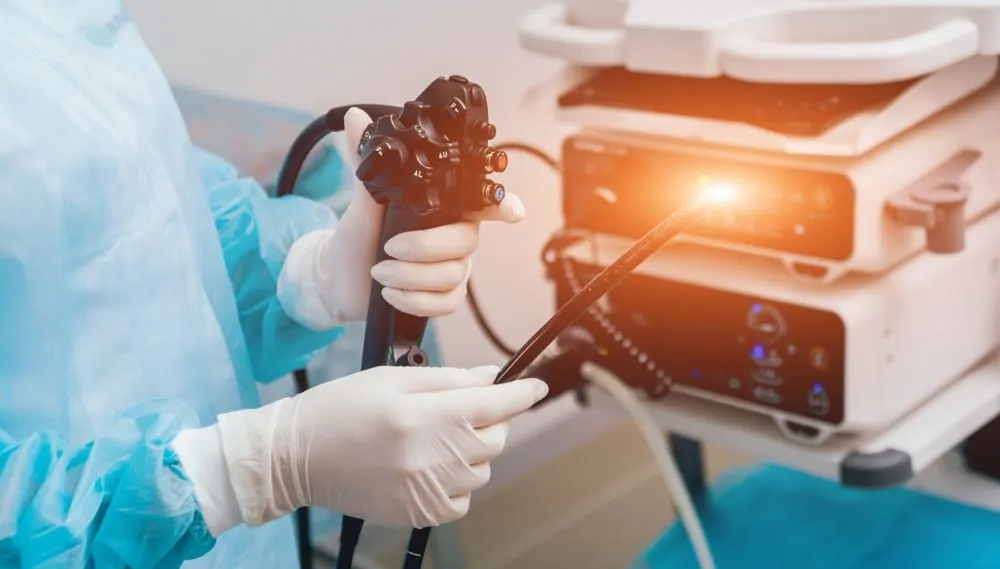
Endoscopic submucosal dissection (ESD) is a method used to remove areas of the gastrointestinal tract that carry a risk of becoming cancerous or that are already cancerous. This minimally invasive procedure is performed using a flexible, tube-like device called an endoscope. The term "submucosal" in the name refers to the fact that the procedure targets tumors located beneath the mucosal lining of the gastrointestinal tract. ESD supports more minimal and precise procedures. Because developing tumors may be close to muscle tissue and therefore difficult to remove by other methods, endoscopic submucosal dissection is generally the preferred approach.
What Are the Advantages of ESD (Endoscopic Submucosal Dissection)?
ESD is a procedure that requires expertise and precision. Performed by gastroenterologists specialized in this field, this method offers a number of advantages. The advantages of ESD can be listed as follows.
ESD is an outpatient procedure. Following the procedure, patients are generally discharged on the same day.
It involves less invasive intervention compared with traditional methods. As a result, the recovery period is shorter.
No abdominal incision is required. If the tumor is located in the upper gastrointestinal tract, the endoscope is inserted through the mouth; if it is located in the lower gastrointestinal tract, the endoscope is inserted through the anus.
During the procedure, a high rate of complete lesion removal can be achieved.
During the procedure, appropriate samples can be taken for histopathological examination.
During the procedure, the surgeon can remove the entire tumor in one piece.
Because the organ in which the lesion or tumor developed is not altered by surgery, the patient's quality of life is preserved.
Provided that the cancer has not spread to the lymph nodes or to other regions, ESD is accepted as an early treatment method for esophageal and stomach cancer.
Compared with traditional methods, ESD is accepted as an early treatment method with numerous advantages. Because it allows a tissue sample to be obtained for detailed pathological screening and because the entire area at risk of cancer is removed when the sample is taken, ESD becomes a procedure that is applied more widely every year.
What Are the Application Methods of ESD (Endoscopic Submucosal Dissection)?
Endoscopic submucosal dissection is performed by a gastroenterologist and consists of several steps. Before the procedure, to prevent the patient from panicking or feeling pain, a sedative medication is given intravenously. Once the patient is calm, ESD procedures begin in the operating room. Depending on the location of the tumor, the endoscope is advanced toward the target area through the mouth or the anus. Thanks to the high-resolution camera at the tip of the endoscope, the risk of damage to surrounding tissues is minimized. After the location of the tumor has been identified, the boundaries of the lesion are marked using a special instrument passed through the endoscope tube. To separate the lesion or tumor from the muscle wall, a solution is injected into the underlying layer of the target area. In this way, surrounding tissues are subjected to minimal damage. During the procedure, the lesion is precisely removed from the submucosal layer using an electrosurgical knife with a high-frequency electrical current. The excised tissue is removed from the body through the endoscope and sent to the relevant laboratory units for cancer screening.
Endoscopic submucosal dissection is a procedure that requires expertise. To prevent tissue damage that may develop as a result of the operation and to achieve success in a single procedure, it should be carried out with physicians who are experts in their field.
What Are the Indications for ESD (Endoscopic Submucosal Dissection)?
During preliminary examinations performed by the physician, the size, location and histopathological characteristics of the lesion are determined. Based on these characteristics, it is determined whether the patient is suitable for the ESD method. The ESD procedure can be used to treat tumors and lesions that develop in the submucosa, which lies between the lining of the organs of the gastrointestinal tract and the muscle wall. It is also a method that can be used for benign lesions and lesions with a risk of early-stage cancer in the stomach, intestines and esophagus. The health conditions that specifically lead specialists to choose the ESD method can be listed as follows.
Barrett's esophagus, a complication of gastroesophageal reflux disease (GERD)
Early-stage cancerous tumors, including colorectal cancer, stomach cancer and esophageal cancer
Colon polyps
Tumors of the esophagus or colon that have not yet penetrated the deeper layers of the gastrointestinal wall
What Is the Recovery Process Like After ESD (Endoscopic Submucosal Dissection)?
ESD, which offers the chance of early intervention in tissue that is becoming cancerous, is a procedure with a low risk of complications. With this method, which allows all cancerous tissue to be removed in a single procedure, effective early intervention in cancer development can be achieved. A study showed that the 5-year survival rate after ESD was 95%.
In the recovery period immediately following ESD, some complaints may be experienced that last for a few days. Because of the endoscope used during the procedure, people may develop a sore throat. This pain generally goes away on its own within a few days. Healing of lesions removed with the ESD method is usually rapid. Since no physiological damage is caused to the organ targeted during the procedure, patients generally do not experience any physiological complaints or discomfort.
Special solutions may be injected into the relevant area so that the tumor can be treated more comfortably and so that the risk of damage to surrounding tissues can be minimized. This may cause symptoms such as gas or bloating for a short time in patients. However, these complaints decrease and disappear within a few days after the operation. To ensure that these complaints are not severe and resolve more quickly, patients are advised to eat light and soft foods.
After the ESD procedure, patients are generally discharged on the same day. However, in some cases the physician may consider it appropriate to keep the patient under observation, and in such cases a one-night hospital stay may be arranged.
Thanks to the ESD method, detailed intervention on lesions or cancerous tissue is possible. The recurrence rate of cancer is therefore low. However, follow-up and check-ups after surgery must absolutely not be neglected. If a recurrence occurs, the chance of early intervention can be seized once again.
ESD is a special procedure performed in certain hospitals in Turkey. Hisar Hospital Intercontinental, as one of these hospitals, is an institution that carries out outstanding work in early diagnosis and intervention in cancer. Thanks to endoscopic submucosal dissection performed by specialist physicians within Hisar Hospital Intercontinental, early intervention in cancer developing in the gastrointestinal system can be achieved.
Frequently Asked Questions:
The duration of the ESD procedure varies depending on the number or size of polyps in the area to be treated, and on the location and size of the lesion or early-stage tumor. The duration may also vary depending on the endoscopic images obtained during the procedure, but the procedure usually lasts between half an hour and several hours. Endoscopic submucosal dissection can be performed on people in whom early-stage cancer has developed in the esophagus, stomach or colon. It is also a method that can be used to remove certain types of non-cancerous polyps that cannot be treated during routine colonoscopy. After the procedure, patients may temporarily experience symptoms such as sore throat, gas, bloating, stomach discomfort or vomiting. If the pain is severe, it can be controlled with certain painkillers that the physician may recommend. Light and soft foods may be preferred so as not to trigger stomach problems. After surgery, care may be taken to rest for a few days, and daily activities may be resumed after consulting the physician. Endoscopic submucosal dissection makes it possible to remove tumors, lesions or polyps detected at an early stage from the body without the need for surgery. With this method, which offers the chance of early intervention in gastrointestinal cancers, the progression of cancer or its spread to other regions of the body (metastasis) can be prevented. ESD is a procedure performed with minimally invasive techniques, without damaging the organ in which the tumor was detected. Complications of endoscopic submucosal dissection may vary depending on where in the digestive system the cancer developed and on the size of the cancerous tissue. Bleeding, pain, perforation of the digestive tract, or scarring that narrows the esophagus are among the complications of ESD. However, when the procedure is performed by a surgeon who is an expert in the field, the risk of complications can be minimized. After surgery, patients are usually discharged home on the same day. In some rare cases, the physician may want to keep the patient under observation in the hospital for one night. Recurrence of lesions in patients who undergo the ESD procedure for esophageal and stomach cancer is a rare occurrence. The recurrence rate of these cancers is very low. However, as a precaution, check-up appointments scheduled at the intervals recommended by the physician must not be missed, and the necessary tests must be done. If any suspicious situation is encountered, it must not be ignored and the necessary examinations must be carried out.