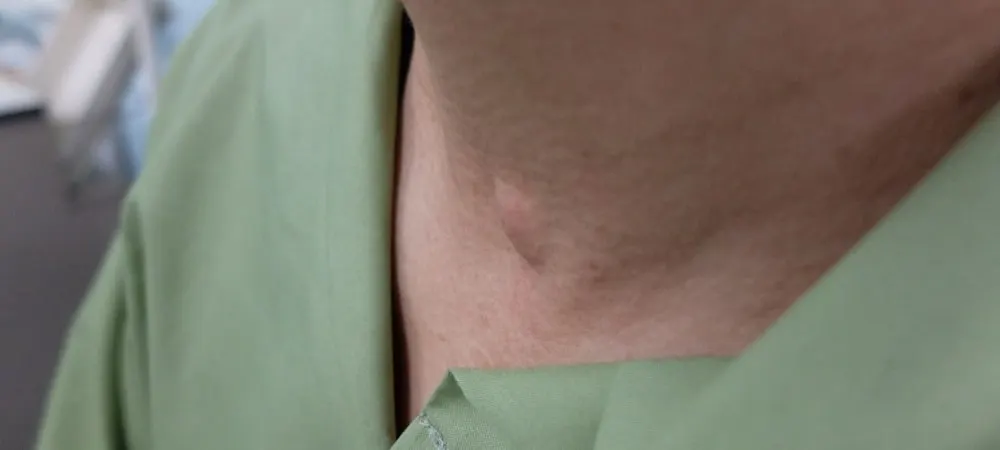
Lipoma
Lipomas are generally harmless accumulations of fatty tissue located just under the skin that often do not require treatment. Depending on their location in the body, they may cause certain issues. Lumps that appear in various regions can be considered indicators of a disease. For example, Madelung's disease can manifest itself with lumps in the neck, arms, and chest. Diseases such as diabetes and high cholesterol can increase the risk of lipoma formation in the body.
What is a Lipoma?
A lipoma can be defined as a benign soft tissue tumor that can appear in various parts of the body. A subcutaneous lipoma can be seen as a large bulge on the skin. It is usually not hard to the touch and can feel like modeling clay. It may show mobility under the skin when touched. They are frequently experienced on the neck, torso, shoulders, and arms. A lipoma on the face can be confused with a pimple. However, unlike pimples, lipomas form deeper, so it may not be possible to clear them by squeezing or using skincare products. For treatment, a procedure where the fatty tissue is drained by creating a small opening with the help of a cutting tool such as a scalpel and needle in a sterile environment may be preferred.
What Are the Symptoms of a Lipoma?
The clearest symptom that allows a lipoma to be noticed is lumps that appear as large, soft-tissue bulges on the skin. The symptoms that can arise with the formation of a subcutaneous lipoma and the characteristics of the lumps are as follows:
The lumps have their own boundaries. They have an encapsulated structure and do not spread to other tissues.
Lipomas do not normally cause pain, but pain may be felt depending on variables such as their location and size.
The form of the lump resembles a smooth, round bump. It has a symmetrical appearance.
When touched, the fatty tissue can move, and temporary changes in its shape may be observed.
When a lipoma occurs on the face or body, it can be disturbing because it is visible. However, when it forms around organs, it may not be noticed as it does not show symptoms. For example, if a lipoma forms inside the abdomen, it may not be understood from the outside.
How Does a Lipoma Form?
The mechanism and causes leading to the formation of lipomas have not been clearly determined. A lipoma under the skin or within a muscle can occur as fatty tissues accumulate and grow within a capsule structure. Some of the reasons that pose a risk for the formation of lumps can be listed as follows:
Genetic predisposition can affect the storage and proliferation of fatty tissues. Mutations in DNA can increase the production of lipomas.
Trauma to tissues can lead to lump formation. A lipoma may form in the area after a severe impact.
Chronic diseases such as diabetes and cholesterol can pose a risk. High blood sugar and cholesterol levels in the blood are characterized by lipomas. Although not definitive, the formation of a lipoma on the eyelid can be associated with cholesterol.
Multiple hereditary lipomatosis is a genetic condition and can manifest itself with lumps seen on the abdomen, arms, and legs.
Gardner syndrome can lead to the formation of lipomas and tumors. It can manifest itself with symptoms of a cancerous lipoma.
Madelung's disease can be experienced with lumps that form symmetrically in areas such as the neck, chest, and arms.
Adiposis dolorosa can be seen more frequently in women aged 35-50 who have obesity problems.
How is a Lipoma Diagnosed?
A physical examination and listening to the patient's symptoms may be sufficient for a lipoma diagnosis. An idea can be formed by listening to the patient's family health history. Besides this, although lumps are defined as benign tumors, the physician may apply a detailed examination. Imaging methods such as CT (computed tomography) and MRI (magnetic resonance imaging) can be used to examine details such as where the lumps have reached and whether the tissues are cancerous cells. In some cases, a biopsy can be performed by taking a sample from the lipoma.
How is a Lipoma Treated?
When a lipoma forms, treatment may not be needed if there are no symptoms. Lumps may not be responsive to treatment with oral medications or injections. Generally, interventions are made with techniques such as surgical removal of the fatty tissue or opening the skin tissue to drain it. The application and management of the treatment may vary depending on the region where the lump formed and its size.
To treat a lipoma on the forehead, it may be preferred to make an incision over the lump in a sterile environment and remove the fat. Depending on the size of the wound opened, stitches may be appropriate. Similar interventions can be applied for a genital lipoma. When a lipoma is seen above the eyebrow, since these lumps are smaller in size, they can be removed by creating an opening with the help of a syringe. For the treatment of a lipoma under the eye, shrinkage can be achieved by using AHA-BHA acids due to the sensitivity of the area. In addition, injections of steroid contents and laser treatments can also be utilized. Surgical procedures can also be preferred when treating a lipoma that appears inside the eye.
While it is easier to detect and intervene in a patient with a lipoma on the head, it can be challenging to surgically remove large lumps that form deeper. With the liposuction procedure, thick and long needles are used, and larger amounts of fat can be drained.
Frequently Asked Questions
After lipomas are treated and cleared, they can reform as long as the risk factors affecting their formation continue. After the formation and treatment of a lipoma on the hand, one may encounter the formation of a new lump as a result of damage to the same area. In the case of a lipoma on the face triggered by a disease, the problem can appear again and again as long as the disease factor is not eliminated. The formation of a lipoma inside the ear is not a common situation. Since ears contain very small amounts of fatty tissue, although not common, lipoma formation can be seen. Diseases that can show lipoma formation throughout the body, such as cholesterol, diabetes, and Madelung's disease, can also pose a risk for lipomas formed in the ear. Lumps seen in the ear may not be a distinguishing symptom of a disease. After seeing a lipoma on the face or head, surgical procedures can be resorted to for aesthetic appearance. The formation of images such as scars and stitch marks after lipoma surgery on the face and head may not be desired by patients. Protecting the surgical area from infection and stimuli such as sunlight during the healing process can help the skin heal. Professional procedures such as skincare applications and laser treatments can be utilized for the treatment of scars formed after the healing process. Lipomas are normally painless structures. For example, a lipoma that appears on the nose does not cause any complaints or pain in the person; it may only cause discomfort in terms of appearance. Lipomas known as angiolipomas, which also contain blood vessels, can be seen as painful. Besides these, pain can also occur indirectly due to lumps located near joints and bones. Lipomas are generally small and harmless structures. Since the eyes and their surroundings are sensitive areas, a lipoma under the eye may scare people, but it may not cause any problems. If the lumps reach very large sizes and compress nearby joints, they can become dangerous. These cases can be intervened by a doctor by providing a sterile area. In some cases, patients may confuse lumps with pimples and have them processed by non-experts. Failure to perform the surgical intervention correctly can lead to problems such as infection, bleeding, and scarring. If a lipoma is present inside the eye and shows growth, vision problems may occur, and intervention may be required to stop the progression. Since lipomas are known as benign, fatty tumors, it may be thought that patients have cancerous structures. Lipomas cannot turn into cancer cells due to their formation foundations. In some cases, they can be confused with liposarcomas. Liposarcomas are malignant soft tumor structures and, unlike lipomas, they are hard and develop deeper in the skin. They can also spread over a wider area in terms of size. Lipomas are generally harmless and may not require treatment. For example, when a lipoma forms on the eye, it may not cause any problems related to vision. Large-sized lumps that develop near the joints of joints and bones can restrict movement. When it forms on the neck, it can also cause difficulty in situations such as moving the head or taking a lying position. Although surgical procedures are frequently preferred in the treatment of lipomas, they can also be treated without surgery. In cases where lipoma surgery is not applied, steroid injections, injections of chemicals that help shrink fatty tissues, and laser treatment can be preferred. Since lipoma surgery can be risky for the eye area, laser applications can be resorted to. When a white lipoma is desired to be removed by surgery, the time required varies depending on the size and location of the lump. While the surgery time can be half an hour or less when a lipoma forms in a small size under the eye, it can take 2-3 hours to surgically remove a large lump that has formed within a muscle. To get a definitive answer, it would be more appropriate to get detailed information from the doctor who will perform the surgery. The necessity of applying stitches in lipoma surgery may vary depending on the location and size of the lump. After the removal of small-sized lipomas, the wound is covered with a bandage and can close on its own over time. Since large incisions may be required in surgeries for lumps located in deeper parts of the skin, stitches may be preferred.
Although a lipoma is often harmless, it can cause growth, pain, aesthetic concerns, or movement restriction. Lipomas that form especially on the face, neck, around the eyes, and near joints must be evaluated by a specialist physician.
At Hisar Hospital Intercontinental;
✔ Experienced physician staff
✔ Advanced imaging technologies
✔ Sterile and safe surgical applications
✔ Treatment approaches that consider aesthetic concerns
lipoma diagnosis and treatment are planned specifically for the individual.
For any swelling or lumps you notice on your body, make an appointment with our Dermatology specialists without delay and secure your health.
Start with the right assessment for What is a Lipoma? Symptoms, Causes, and Treatment Methods
Share your symptoms with our specialist physicians; let us determine the right diagnosis and treatment plan together.
Warning
If your symptoms started suddenly, are progressing rapidly, or significantly restrict your daily life, consult a physician without delay.
Plan your What is a Lipoma? Symptoms, Causes, and Treatment Methods journey with our specialists.
Fill in the form or book an appointment to learn about treatment options, the process and preparation.