What Is Dermatologic Surgery? What Are Its Diagnosis and Treatment Methods?
The branch of dermatology that supports differential diagnosis of skin diseases and deals with the treatment of conditions requiring complex treatment, such as skin cancer, is called ‘’Dermatologic Surgery’’. Like all other fields of dermatology, dermatologic surgery covers the diagnosis, identification and treatment of diseases of the skin and its layers, and it also aims to minimize the risk of the disease recurring. It is possible to support improving a person's quality of life with comprehensive, individualized and comfortable treatments.
What Is Dermatologic Surgery?
The treatment field that is a sub-branch of the main discipline of dermatology and examines skin cancers and the lesions and conditions that develop as a result is called dermatologic surgery. Skin health, cosmetic concerns, aesthetic procedures and many medical surgical interventions are carried out within the scope of dermatologic surgical treatments. Dermatologic surgery is concerned not only with skin health but also with the health of adjacent tissues that complement and protect our skin, such as nails and hair. Together with developing and advancing technology and medical techniques, many new methods have begun to be applied in dermatologic surgery. It is possible to achieve many successful results in dermatologic surgery, which is strengthened by many different techniques, both to reduce aesthetic concerns and to strengthen the health of the protective skin layers.
What Treatments Are Commonly Performed in Dermatologic Surgery?
The treatment techniques and methods most preferred in dermatologic surgery are generally clustered around certain diseases. These conditions and their treatments can be listed as follows:
Diagnosis and treatment of skin cancers
Mohs surgery
Microscopically controlled surgery
Treatments for hair loss and restoration of the scalp
Scar (mark) treatments
Anti-aging treatment techniques
Applications for the improvement and reduction of birthmarks and acquired lesions
Dermabrasion treatment
Dermal needling and chemical peeling treatments
Cryotherapy
Botulinum toxin treatments
Laser treatments
Incisional and excisional biopsy
Nail surgery
Electrosurgery
How Is Dermatologic Surgical Treatment Performed?
In specific dermatologic surgical methods, there are basic and principal treatment techniques specific to the diseases and to the person's health condition. All of these procedures must absolutely be performed by a dermatologist in an official healthcare institution. The most common of these treatment methods are explained below:
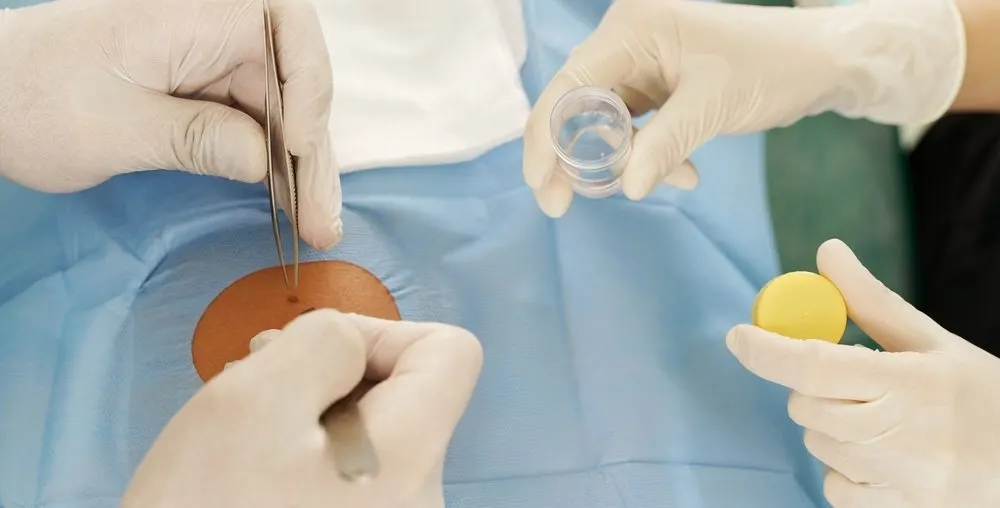
Skin Biopsy: The name given to the procedure in which tissue is taken from an area where disease is suspected and examined. Skin biopsy is performed under local anesthesia. A piece between 3 and 5 millimeters is taken from the skin. This piece is then sent to pathology for examination. In this way, many diseases can be diagnosed and identified. There are two different biopsy methods in skin biopsy: incisional and excisional. In excisional biopsy, the lesioned area is removed with a small blade or punch, whereas in incisional biopsy, smaller areas are cut with a scalpel.
Electrocautery (Electrocoagulation): The electrocautery is used during surgical interventions to cut and seal wounds in the body. Electrocoagulation is the general name given to interventions and applications performed with this device. In this procedure, which is performed under regional (local) anesthesia, electrical energy is first converted into heat. At the point where this heat energy is applied, the blisters are burned and destroyed. The conditions treated with the electrocoagulation technique are as follows:
Problems such as warts, calluses, ingrown nails, seborrheic keratosis, molluscum, moles and cutaneous horns can be treated with electrocautery.
Cryotherapy: Cryotherapy is a freezing technique used as a scientific treatment method. First, damage is created in the lesioned area by exposure to liquid nitrogen gas. Following this application, melting occurs in the lesioned area. Then the area, encountering a temperature of -196 degrees, freezes and swells. Afterwards, it accumulates fluid and forms a crust, turning into a passive, inactive, painless tissue in which the disease does not progress. After cryotherapy, redness and bruising may be seen in and around the treated area. These are expected to resolve within a few weeks; otherwise, a physician's examination is essential. Cryotherapy is most commonly applied to conditions such as warts, keloids, ingrown nails, basal cell skin cancers, alopecia areata, cheilitis, certain skin tumors and molluscum contagiosum, and very successful results can be achieved.
Laser Treatments: Laser treatment is one of the techniques widely used among dermatologic surgical methods. It is mostly applied in the treatment of lesions such as moles, age spots and sun spots, warts and calluses. In laser treatment, there are three different techniques: photothermal, photomechanical and photochemical. The most suitable technique is selected according to the patient's complaint and the size and distribution of the lesion, and the method of application is determined and the treatment is directed. In addition, the laser technique, which is also used for epilation, is among the most popular applications of recent times.
Chemical Peeling: Chemical peeling, one of the lightest applications among dermatologic surgical procedures, is, as its name suggests, a peeling procedure applied to the uppermost layer of the skin. Through this procedure, the skin is deeply cleansed as it is freed from dead skin and the dirt and microorganisms that accumulate on it.
Mohs Surgery: It is a procedure that enables the removal of skin tumors and cancers. It is a surgical method aimed at preventing the proliferation, growth and spread of malignant cells.
What Are Dermatological Diseases?
Human skin is both the greatest link between the body and the outside world and the largest protective shield for the entire body. As the largest detox organ, the skin reflects and signals many health problems, both internal and external. The main branch of dermatology aims to protect skin health, keep overall body health at the highest level, and keep both cellular and systemic immunity at the highest level. Therefore, the diagnosis, identification and early treatment of skin diseases are very important. The most common skin diseases can be listed as follows:
Warts and moles
Skin cancers and tumors
Ingrown nails
Lesions developing on the scalp
Calluses
What Are the Treatment Methods for Dermatological Diseases?
There are many surgical, reconstructive and protective applications for skin diseases. Thanks to these treatment methods, which cover both the deeper layers and the outermost layer of the skin, aesthetic concerns are first overcome. In addition, while the integrity and health of the skin are preserved, general body health is also protected and immunity is supported. Some treatment methods and current applications for dermatological diseases can be listed as follows:
Dermapen: Also known as collagen induction, this application is one of the skin rejuvenation treatments. The skin's collagen production system is stimulated through microneedling. It is performed using very small needles with millimeter-scale tips, while supporting the skin layer's own renewal process.
Frequently Asked Questions About Dermatologic Surgical Treatments
Dermatologic surgical applications offer quite a variety of treatment techniques, since they help preserve both general health and immunity as well as skin integrity and aesthetic appearance. Naturally, patients and individuals wishing to undergo these applications may have questions in mind. The most important questions about dermatologic surgical applications are listed as follows: The most important issue regarding dermatologic applications is who performs the procedure. All procedures, whether complex or basic, must absolutely be performed by a dermatologist. Procedures performed by unqualified individuals may lead to many problems such as burns, scars, allergies and hygiene issues. Human skin protects the entire body from external factors, and in addition, it can become quite sensitive in many areas. However, since the most suitable technique and method is applied to the tissue where the lesion and disease are located in dermatologic surgical procedures, the risk of leaving a scar is generally very low. Thanks to developing and advancing medical applications and techniques such as aesthetic sutures, cosmetic concerns have been minimized. As with all treatments, rest should be taken under physician supervision and according to recommendations. The treated area should be kept clean. Cream, medication, lotion, etc. should not be used except as recommended by a doctor. Do not forget to seek information and advice from a dermatology specialist and surgeon for all dermatological conditions and your treatments. For early diagnosis, get examined in a timely manner, before your complaints progress, and take the step toward healthy days.