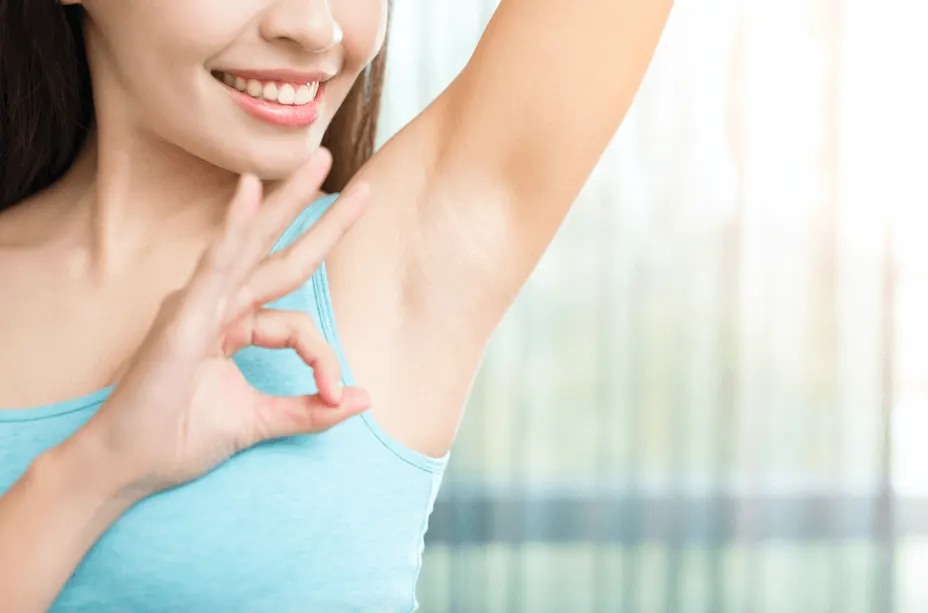
Are you sweating too much? Do your hands, feet and armpits in particular sweat heavily? Are the armpits of your clothes always wet? Are you embarrassed to raise your arm? It is possible to be free of these and many similar problems with Botox application...
Excessive sweating (hyperhidrosis) has for years been an uncomfortable cosmetic and social problem for both women and men, caused in particular by overactivity of the sweat glands, which increases the sweat released onto the skin surface. Affecting 1% of the population, this problem appears especially in the armpits, palms and soles of the feet. Excessive sweating of the face may also occur. Since the amount of sweat varies from person to person, it is very important to evaluate the sweating and make a diagnosis.
Approach to Sweating Treatment
Before starting sweating treatment, the causes of the sweating are investigated. Although sweating can cause serious distress for the person, treatment options are quite limited. Powders, creams or sprays used for treatment do not have the ability to completely stop sweating; they can only delay it for a short time. With Botox, however, you have the means to achieve very effective and long-lasting results.
What Is Botox?
Botox, which has been used safely for about 30 years, is a toxin secreted by a bacterium called 'Clostridium Botulinum'. Since nerve fibers activate the sweat glands, the transmission between the sweat glands and nerve endings is interrupted by the protein in Botox, which reduces the activity of the sweat glands.
How Is Botox Applied?
Botox treatment is one of the methods that can be used for excessive sweating. Botox, which can be applied in a short time of about 30 minutes, is used especially for sweating of the armpits, palms and soles of the feet. Armpit application is easier and much less painful than hand and sole application. Since hand and sole application is painful, a short-term anesthesia is generally required.
What Should Be Done Before Botox Application?
Before the Botox procedure, an iodine-starch test is performed on the areas where the patient has complaints. As a result of the test, the active areas causing excessive sweating are identified, and Botox medication is injected under the skin to a depth of approximately 2 mm into these areas using extremely fine-tipped needles. In this application, which does not require anesthesia, a locally acting cream may be used before the procedure in very sensitive patients. The procedure is repeated at long intervals of 6-8 months. You can return to your daily life immediately after the procedure, which lasts 10-15 minutes. You can see the results of this application, which can benefit everyone aged 18-65, within 2-4 days.
Who Should Not Receive Botox?
Pregnant women,
Breastfeeding mothers,
Patients with an infection on their skin,
Patients with neurological diseases such as Myasthenia Gravis (muscle weakness seen especially in the muscles),
Patients using aminoglycoside-type antibiotics,
Patients with rheumatoid arthritis using penicillamine,
Botox is not administered to patients taking immune-weakening drugs such as Cyclosporin, or antimalarial drugs such as chloroquine.
This method, which can be applied to both women and men in many age groups, should only be performed by a knowledgeable, expert physician.
Updated on 18.05.2015.