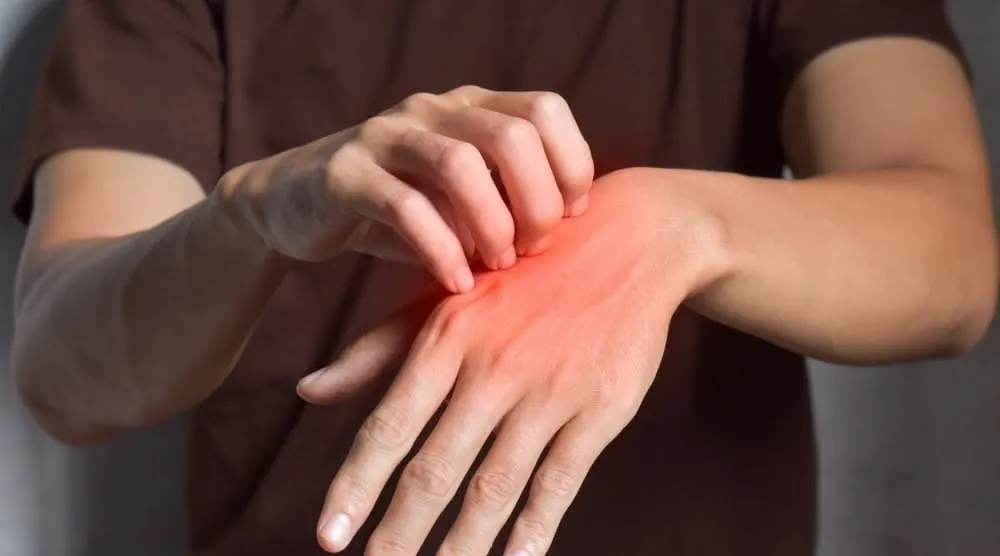
Scabies is a contagious skin condition. It is usually seen when microscopic mites called Sarcoptes Scabiei settle on the body. Symptoms of the disease include severe itching, itching that worsens especially at night, skin rashes, redness, blisters and crusting. Scabies can occur at any age and in any socioeconomic group, but it is more common in crowded living conditions and in places where hygiene standards are low.
What Is Scabies?
Scabies is a disease caused by the mite called Sarcoptes Scabiei settling in the body, which causes itching all over the body. These tiny parasitic insects burrow into the skin tissue beneath the surface. Over time, they cause small red spots on the skin and severe itching. Scabies spreads easily from person to person. Animals can also be infected with scabies, but the structure of the mites is slightly different. The scabies parasite, which usually affects pets, cannot adapt to living on the human body. However, people may show a type of reaction to the mites on your pet.
What Are the Symptoms of Scabies?
Infected people may have had scabies for 4-6 weeks before experiencing the early symptoms of red rash and swelling. Very small spots on the skin may resemble bumps or pimples. The rash spreads slowly over a few weeks or months. In addition to redness, some symptoms of scabies include:
Intense itching that gets worse at night and can make it difficult to sleep
Swellings that sometimes become infected as a result of scratching
Thin grayish or skin-colored lines in the rash on the skin
Blisters, redness and small red spots on the skin
Crusting over the rashes
Irritation, sores and infections of the skin as a result of intense itching
Itching that increases when the skin warms up, such as when taking a hot shower or getting into bed
Also, children infected with scabies may itch all over their bodies, and children may be irritable or tired due to sleeplessness caused by nighttime itching.
How Does a Scabies Bite Occur?
Most scabies patients can carry 10 to 15 mites, and each mite is less than half a millimeter long. Therefore, mites are very difficult to notice. When viewed with the naked eye, they may look like small black dots on the skin. A scabies bite usually appears as small red spots or blisters. These blisters are usually concentrated in skin folds and between the fingers. Itching becomes especially noticeable at night and gets worse over time.
How Is Scabies Diagnosed?
In most cases, the doctor can make a diagnosis based on the appearance of the rashes and the patient's description of the itching. Some methods used in diagnosing scabies include:
Skin scraping examination: The doctor takes scrapings from specific areas of the skin and examines them under a microscope. These scrapings are examined under the microscope to confirm the presence of the scabies parasite, Sarcoptes Scabiei, and its eggs.
PCR tests: Molecular tests such as PCR (polymerase chain reaction) may be requested by the doctor to support the diagnosis of scabies. These tests can identify the DNA's of scabies parasites and confirm the diagnosis.
How Is Scabies Treated?
In the treatment of scabies, the two most commonly used treatment methods prescribed by the doctor to kill the scabies mite are permethrin cream treatments. The doctor may ask you to apply the prescribed medication to the entire body from the neck down. Sometimes the lotion may need to be applied twice under the doctor's supervision. In some cases, the doctor may recommend antihistamines, which can be taken orally or applied as a cream, to relieve itching.
Because scabies spreads very easily, it is important that everyone in the home and other close contacts be treated at the same time. This helps prevent the spread of the disease and reduces the risk of reinfection. In addition, the personal belongings of the infected person (for example, clothing, sheets, towels) should be washed frequently or dried at high temperature. This can help kill the parasites. Surfaces and environments the infected person has come into contact with should be cleaned and disinfected. In particular, the bedroom, armchairs and other furniture should be cleaned and vacuumed regularly.
After treatment, it should be monitored regularly whether the symptoms have disappeared and whether the lesions on the skin have healed. If necessary, the doctor may reevaluate the treatment or suggest another treatment method. Your healthcare provider will probably ask you to apply the medication to your entire body from the neck down. Sometimes you may need to apply the lotion twice. If new symptoms appear, further treatment may be needed.
What Is the Process After Scabies Treatment?
In the post-treatment period, you should consult a doctor if the symptoms on the skin do not decrease quickly, or if the symptoms worsen or reappear. Some practices to consider in the post-treatment period include:
Doctor check-ups: After treatment, the condition of the patient and of other people living in the same home as the infected person is regularly checked by the doctor. This is because in some cases the treatment may need to be repeated or changed. In addition, family members' adherence to treatment and follow-up is important to help reduce the spread of infection and the risk of reinfection.
Personal and environmental hygiene: Scabies mites can survive for up to two to three days on the surfaces of contaminated clothing, bedding or towels used by the patient. To eliminate scabies mites, the sheets and clothing used by the infected person must be washed. It is important to wash and dry items in hot water.
Frequently Asked Questions
Scabies can develop on any part of the skin. However, mites prefer to burrow into certain areas of the body. Some of the most common places for itching and rashes include:
Hands: Mites like to initially burrow into the skin between the fingers and around the nails.
Arms, elbows and wrists: The starting point is usually skin folds such as between the fingers, wrists, elbows, armpits, nipples, waist, genital area and buttocks. These areas are moist and warm, where scabies mites can easily reach the skin and multiply.
The duration of scabies can vary depending on how early treatment is started and how well the patient responds to appropriate treatment. Usually, scabies symptoms improve within a few days after the patient starts treatment. Eliminating the scabies parasite from the body and complete recovery from the disease may take a few weeks. Applying a cool compress may be beneficial for scabies. Cold applications can help numb the itching and reduce inflammation. Scabies and hives are two different skin conditions in terms of their skin symptoms and causes. Scabies is an infection caused by mites, while hives is an allergic reaction. In scabies, rashes are usually in folded areas such as between the fingers and on the inside of the wrists and elbows, while in hives, rashes can appear anywhere on the body. Hives are raised welts or patches, usually itchy. They can be red, pink or the same color as your skin. They can appear as individual spots, patches or a large connected raised area. The scabies rash, on the other hand, looks like blisters or pimples, pink swellings filled with fluid on top. Scabies can also cause gray lines in addition to red swellings on the skin. Another common symptom that distinguishes scabies from hives is the rash and intense itching that worsen at night. Scabies is not a self-limiting disease. As long as the scabies mites and their eggs remain in the skin, itching and rash continue. If scabies is not treated, symptoms may gradually increase and become more severe, seriously affecting people's quality of life. Untreated or delayed scabies can lead to skin injuries and bacterial infections. Crusted scabies, also known as Norwegian scabies, is the most severe form of scabies. It is more common in people with weakened immune systems and in the elderly. It results from a heavy infestation caused by the scabies parasite. Scabies is a highly contagious skin infection and can easily spread through skin-to-skin contact. Direct contact with an infected person is the most common route of transmission. The incubation period for scabies is usually 4 to 6 weeks. However, the incubation period may vary depending on the infected person's immune system, the number of parasites and the amount of parasite exposure. Infected people can transmit scabies during the incubation period, even before symptoms begin to appear. Treatment of scabies during pregnancy should be carefully planned, taking into account the health of the expectant mother and the baby. Generally, for scabies treatment during pregnancy, doctors may prescribe safe and effective medications applied to the skin.
Scabies is a condition that presents with severe itching that worsens at night. Early diagnosis and treatment help relieve symptoms and reduce transmission. Therefore, it is important for people with scabies symptoms to make an appointment at the dermatology outpatient clinic and begin treatment.
Start with the right assessment for What Is Scabies? What Are Its Symptoms?
Share your symptoms with our specialist physicians; let us determine the right diagnosis and treatment plan together.
Warning
If your symptoms started suddenly, are progressing rapidly, or significantly restrict your daily life, consult a physician without delay.
Plan your What Is Scabies? What Are Its Symptoms? journey with our specialists.
Fill in the form or book an appointment to learn about treatment options, the process and preparation.