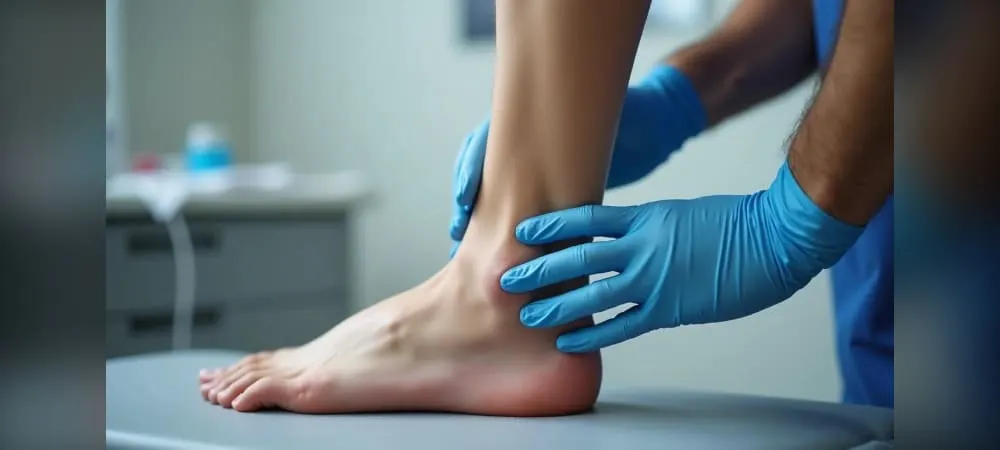
Tendon tears are a common health problem that you can encounter at any age and in all segments of society. Even elite athletes such as Kevin Durant, Rafael Nadal, and David Beckham have been sidelined due to tendon injuries at some point in their careers. Caused by overuse, aging, or trauma, these injuries generally lead to pain, stiffness, and loss of strength. In this article, we will explain topics such as what tendon tears are, their causes and symptoms, diagnostic methods, and how tendon tears are treated.
What Are Tendon Tears?
What Is a Tendon and Its Role in the Body
Acting as a strong bridge between your muscles and bones, tendons are connective tissues that make movement in your body possible. There are more than 400 tendons in your body, and each connects specific muscle groups to bones.
The power generated when your muscles contract is transmitted to the bones via tendons, and thus movement occurs. For example, your tendons work constantly while walking, running, or bringing a glass to your mouth. These structures provide both durability and flexibility, helping your joints stay in the correct position.
Tendons also store energy during muscle contraction and protect your muscle and bone tissues against sudden strains. They play a vital role in the realization of coordinated and controlled movement.
Definition of a Tendon Tear
A tendon tear means the partial or complete rupture of these strong connective tissues. The size of the tear varies depending on the region where it is located, how it occurred, and your level of physical activity.
While only a portion of the tendon is damaged in partial tears, the tendon is completely ruptured in full tears. Partial tears generally show less pronounced symptoms, whereas full tears manifest with sudden loss of strength and noticeable pain.
Tendon tears can occur particularly during strenuous movements. Your tendons can be exposed to a load above their capacity during a sudden jump, a forceful throw, or a sprint requiring explosive power. Tears can also emerge as a result of long-term wear and tear.
If not recognized and treated in time, the tendon structure deteriorates and the muscle-bone connection weakens, which can severely restrict your mobility. Tendons in certain regions are more prone to tearing due to their tasks and the stress they are exposed to.
Frequency of Tendon Tears
Tendon tears are among the most frequently encountered musculoskeletal problems. More than 5 million people worldwide suffer from tendon injuries every year. In studies conducted, tendon injuries have been detected in 8 to 9 out of every 10,000 people.
From an average perspective, 2 out of every 10 people are at risk of encountering any tendon problem at least once in their lifetime. It is particularly more common in those who actively play sports and individuals who constantly perform the same movements due to their work.
While it is associated with sports injuries in young people, it is seen more frequently due to degenerative processes as age advances. Statistically, men over the age of forty constitute the highest risk group.
Causes of Tendon Tears
Overuse and Repetitive Movements
Most tendon tears occur as a result of wear and tear caused by overuse or inappropriate loading on the tendon beyond what it can carry. Performing the same movements repeatedly in your job, sport, or daily activities increases your likelihood of damaging a tendon.
Sports such as basketball, volleyball, swimming, tennis, rowing, and weightlifting are among the activities that can put you at excessive risk of a tear. As a result of constant loading on specific muscle groups in athletes, the tendon structure weakens over time and small tears develop. These micro-injuries accumulate over time and can lead to a full-thickness tear.
Not only athletes, but also painters, carpenters, and people who perform overhead work have a high risk of tears. Similarly, desk workers may also experience tendon strain due to remaining in incorrect postures or positions for long periods.
Aging and Degeneration
As you age, your tendons lose their elasticity and become more susceptible to injury. Since most rotator manchet (rotator cuff) tears are largely caused by normal wear and tear that comes with aging, people over the age of 40 are at greater risk.
As you age, blood flow to your tendons decreases. Without good blood flow, your body's ability to repair tendon damage is impaired, which can ultimately lead to a tendon tear. Furthermore, bone spurs often develop on the underside of the acromion bone with age. When you raise your arms, these spurs rub against the rotator cuff tendon, weakening the tendon over time and increasing the likelihood of a tear.
If there is a degenerative tear in one shoulder, the probability of a rotator cuff tear is higher in the contralateral shoulder even if there is no pain in that shoulder. When a tendon weakens over time, experiencing a sudden injury is more likely.
Trauma and Accidents
Tendon tears can also appear suddenly. If you fall on your outstretched arm or lift something very heavy with a sudden movement, you can tear your tendon. Falls, impacts, or a sudden movement can cause tears in tendons.
Sudden and forced movements of the foot lead especially to Achilles tendon ruptures. Direct exposure of the Achilles tendon to trauma can also cause ruptures. Most tears in young adults result from a traumatic injury such as a fall.
Risk Factors
Certain conditions increase your risk of a tendon tear. Age is an important factor, and tendon ruptures generally occur more frequently in the 30-40 age range. Tendon ruptures are seen more often in men compared to women.
Inadequate warm-up, muscle imbalances, and insufficient flexibility are among the factors that increase the risk. Chronic diseases such as diabetes and rheumatoid arthritis can increase the risk of tendon tears. Certain medications you use can weaken the tendon and cause it to tear. Excessive weight and anatomical disorders are also among the risk factors.
Symptoms of Tendon Tears
Symptoms of tendon tears vary depending on the size of the tear and which tendon is affected. Symptoms can differ from person to person; some of you may feel superficial pain, while others may experience severe discomfort.
Pain and Tenderness
Suddenly developing pain in the region where the tear has occurred is the most common symptom of tendon tears. This pain is usually felt as sharp and stabbing. It increases during movement and may decrease with rest.
If you have a rotator cuff tear in your shoulder, you may feel a sharp pain when lifting your arm above head level. In patellar tendon tears in the knee, intense pain is experienced during squatting or climbing stairs. Tenderness in the injury area and a feeling of discomfort that increases with touch are also typical.
Severe pain is felt when pressure is applied to the tear area. Trying to move it causes sharp, piercing pain.
Stiffness and Restricted Movement
When lying down at night or waking up in the morning, a feeling of stiffness and pain occur in the relevant region. This stiffness is more intense at night and upon waking from sleep.
Restriction of movement is experienced when the joint where the tendon is located is used. The inability to perform a bending movement in the relevant joint is in question. Especially in full tears, the patient cannot actively straighten their knee.
Loss of Strength
A marked decrease in muscle strength is among the most distinctive findings of tendon tears. Tendons enable muscles to connect to bones and generate force; in the event of this connection breaking, muscle strength in the affected area decreases dramatically.
A patient with a ruptured Achilles tendon has difficulty rising onto their heel. Similarly, someone experiencing a biceps tendon tear in the elbow has severe difficulty lifting a heavy object with a wrist movement. In the case of a tendon rupture in the arm, the inability to open your arms sideways occurs.
Other Physical Findings
Swelling in the injury area and bruising due to blood accumulation under the skin may occur. Within a few hours, intense swelling and bleeding-related bruising develop in the region.
Some patients state that they heard a "popping sound" or "crack" at the moment of the tear. At the second the injury is experienced, a loud explosion or a sound similar to the tearing of thick fabric is heard. A feeling of crepitus may be seen during movement.
When large tendons such as an Achilles tendon rupture or quadriceps tendon rupture are damaged, a gap is felt in the injury area. A depression or gap that can be obviously felt with a finger forms just above the kneecap. A gap or depression can be noticed behind the elbow in the region where the tendon is normally located.
Diagnostic Methods for Tendon Tears
Physical Examination
When you consult your physician, the diagnostic process begins with a detailed physical examination. The physician first asks how your injury occurred, in which movements you feel pain, and how long your complaints have been continuing. Patient history and physical examination are quite important in the diagnosis of tendon tears.
Physical examination is the fundamental diagnostic method. Most of the time, a sensitive examination performed following a thorough questioning and interpretation of your complaints is sufficient for a definitive diagnosis. Your doctor carefully examines the injury region, checking whether there is swelling and tenderness.
The gap formed in the tear area can be easily felt in the examination performed with fingers. This finding is pronounced especially in full patients (full tears). Furthermore, the story told by the patient and the detailed physical examination performed usually give sufficient clues to make the diagnosis.
In applications with shoulder pain, since problems in the neck region can also cause shoulder and arm pain, necessary checks are also made in the neck region. The physician evaluates in which positions pain occurs by moving your arm in different directions.
The Thompson test is an important examination method used in Achilles tendon tears. In the event of no plantar flexion in your foot when your calf muscle is squeezed, the test is considered positive, and this finding is 100% reliable in full tears.
Imaging Techniques
To make a definitive diagnosis and see the severity of the injury, it is necessary to resort to X-ray, ultrasound, or MRI scans. If your symptoms are severe or do not improve with treatment, you may need to have these tests performed.
Magnetic resonance imaging (MRI) is the most sensitive method in determining the degree and localization of the tear. Thanks to MRI, how far the ruptured ends have moved away from each other, whether there is damage in the surrounding cartilage structure, and the quality of the remaining tissue are clearly determined. The gold standard method providing the most reliable and most detailed information in orthopedic practice is magnetic resonance imaging.
Ultrasonography is a practical method that can quickly show the tear and bleeding in the tissue by using sound waves. When performed by an experienced physician, a quick diagnosis can be made with shoulder ultrasound. However, in late Achilles tendon tears, there is a 20% margin of error in ultrasonography, especially in partial tears.
Direct radiographs are useful for evaluating patella position. The tendon itself, which is a soft tissue, is not seen on X-ray films, but since the tendon is ruptured, the force pulling the kneecap upward disappears, and the kneecap drops lower than the level it should normally be. X-ray is usually used to check the condition of bones.
Points to Consider During the Diagnostic Process
When the possibility of an Achilles tendon tear is kept in mind, reaching a diagnosis is usually easy, but some of the tears can be overlooked by patients or physicians. Encountered especially in elderly patients or cases presenting late to the physician, the frequency of this situation has been reported as 12-28% in various studies.
In patients presenting late, scar formation along with tendon healing causes a change in anatomy, which can prevent correct evaluation. Therefore, applying to a doctor in the early period after the injury facilitates the diagnostic process.
How Are Tendon Tears Treated?
The treatment approach is determined according to the size and location of the tear and your general health status. While non-surgical methods are generally preferred in partial tears, surgical intervention is required in full tears.
Conservative Treatment Methods
Small and partial tears can be treated with rest, ice application, and anti-inflammatory medications. In the first 48-72 hours of the injury, ice application is performed once or twice an hour, lasting 10-15 minutes each time.
When there is partial damage in the tendon and the healthy region of the tendon functions, non-surgical treatments can be applied. Cast and splint therapy, physical therapy, and regenerative orthopedics methods are among conservative treatments.
Damage depending on tendon nutritional disorders developing on a degenerative background can be treated without surgery. Painkiller medications are used for pain control, and it is recommended to avoid movements that restrict daily activities.
Physical Therapy and Rehabilitation
Physical therapy rehabilitation constitutes a vital stage of the treatment process. In situations where sufficient physical therapy is not performed after surgery, tendons adhere to each other and movement restriction occurs.
The rehabilitation program is individualized according to the specific needs of the patient. In the first stage, ice therapy and rest are applied to reduce post-operative swelling and pain. Afterwards, the joint range of motion is gradually increased with controlled movements.
While strengthening exercises help muscles regain their strength, flexibility exercises increase the range of motion. Passive or limited active movements applied in the early rehabilitation period reduce the formation of adhesions around the tendon.
Surgical Treatment
Complete ruptures or cuts in tendons require surgery. It is necessary to repair tendon cuts within the first 15 days. In prolonged periods, a shortening occurs in the tendon length, and this makes it difficult to suture the tendon ends end-to-end.
In surgery, the ruptured tendon is repaired by suturing or by performing tissue grafting from other regions. In delayed cases, tendon ends move away from each other and repair may become impossible; tendon transfer surgery is performed in such situations.
After surgery, the hand is taken into a cast splint and active movement restriction is applied for the required periods according to the content of the injury. Protective splinting and controlled movement protocols in the early post-surgical period play a critical role both in reducing the risk of re-rupture and in accelerating functional return.
How Do Tendon Tears Heal?
Since tendons have less blood supply compared to other tissues of the body, their capacity to repair themselves is limited. Small and superficial tears can heal over time with appropriate rest, medication therapy, and physical therapy.
However, full-thickness tendon tears generally do not heal on their own. In such situations, the tendon needs to be anatomically sutured back to its original place with surgical intervention. The main goal is to re-establish tendon integrity and transition to planned rehabilitation that will reduce the development of adhesion.
Recovery Process After Treatment
The recovery process depends on the size of the tear, the treatment method, and your general health status. In the event of a finger tendon rupture, if there is a surgical process, the recovery period can find up to five weeks.
A period of four to six months is required for the Achilles tendon to heal after the surgical process. In the event of a tendon rupture in the hand, the recovery process with the use of a splint or a different hand stabilizer can find up to eight weeks.
Patience, regularity, and expert guidance are the keys to successful rehabilitation. Starting to use this region again before the damaged tendon structure is completely healed can cause existing problems to turn into a larger problem.
Frequently Asked Questions
Is it possible to prevent a tendon tear?
Yes, taking certain precautions can reduce risk factors. Definitely warm up and stretch your muscles before playing sports. Avoid sudden, excessive strains and listen to your body. Strengthen your muscles by exercising regularly and preserve the flexibility of your joints. However, you cannot completely control age and genetic factors.
What happens if a tendon tear is not treated?
Untreated tendon tears lead to chronic pain and permanent movement restriction. Over time, muscle weakness increases and your joint functions deteriorate. Therefore, early diagnosis and appropriate treatment prevent long-term complications.
When should I go to the doctor?
If you felt a sudden and severe pain, heard a popping sound, or cannot move the relevant region, consult a doctor immediately. Pain, swelling, and loss of strength that do not pass within a few days also require evaluation. Late presentations make the treatment process difficult.
When can I return to my daily activities?
This depends entirely on the severity of the tear and the applied treatment. In small tears, you can start light activities within a few weeks. After surgical treatment, full recovery can take months. You must complete the rehabilitation program recommended by your doctor completely.
How should the process of returning to sports be?
The return to sports should be gradual and controlled. Start with light exercises first, then slowly increase the intensity. If you rush, the risk of re-injury increases. Proceed under the guidance of your physiotherapist and do not ignore the signals of your body. Full recovery generally takes four to six months.
In Summary, Tendon Tears
Tendon tears are a common health problem that can be treated effectively with the right approach. When these injuries—which occur as a result of overuse, aging, or sudden traumas—are recognized in time, your chance of recovery is quite high. It is of critical importance not to ignore symptoms such as pain, swelling, and loss of strength.
Your treatment options vary according to the size of the tear. While rest and physical therapy may be sufficient in small tears, surgical intervention may be required in full tears. Nonetheless, you can return to your daily activities in a healthy way with a patient rehabilitation process and regular exercises. Listen to the signals of your body and prevent permanent problems with early intervention.
Start with the right assessment for What Are Tendon Tears? What Are the Symptoms? How Is It Diagnosed and Treated?
Share your symptoms with our specialist physicians; let us determine the right diagnosis and treatment plan together.
Warning
If your symptoms started suddenly, are progressing rapidly, or significantly restrict your daily life, consult a physician without delay.
Plan your What Are Tendon Tears? What Are the Symptoms? How Is It Diagnosed and Treated? journey with our specialists.
Fill in the form or book an appointment to learn about treatment options, the process and preparation.