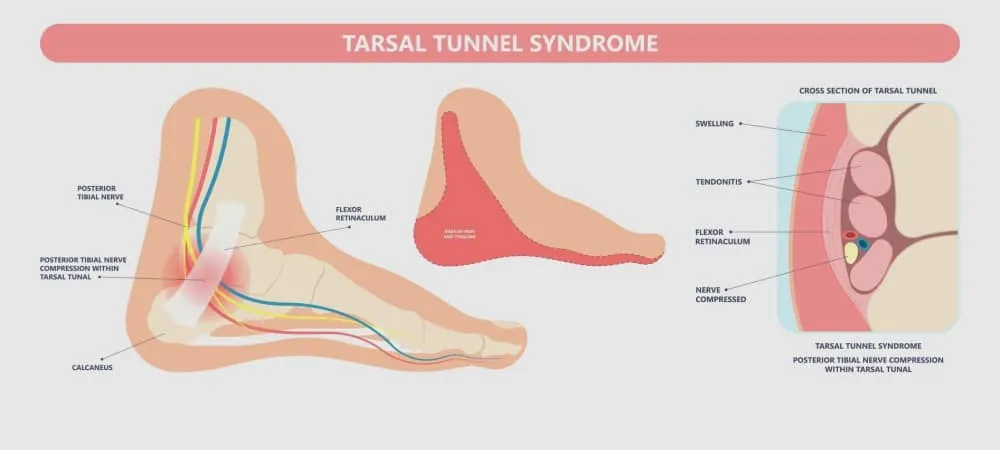
Tarsal tunnel syndrome (TTS) is a nerve compression that occurs in the ankles. The tarsal tunnel is a passage located on the inner side of the ankle. The connective tissue passing over the foot and the ankle bones are the structures that form the tarsal tunnel. In addition to the tibial nerve, blood vessels and tendons pass through the tarsal tunnel. Damage can occur as a result of certain reasons creating pressure on the nerves in the tarsal tunnel, and tarsal tunnel syndrome may develop. Both intrinsic and extrinsic factors can contribute to the development of TTS. In some cases, it may not arise due to any specific cause. In other cases, it may stem from health problems such as hypothyroidism, diabetes, arthritis, etc.
Tarsal tunnel syndrome affects the feet, including the toes. It can often mimic medical conditions such as diabetic neuropathy and plantar fasciitis, and therefore may not be easily diagnosed. It can also be confused with carpal tunnel syndrome, but carpal tunnel syndrome is a nerve compression seen in the wrists. Tarsal tunnel syndrome is less common compared to carpal tunnel syndrome. In general, symptoms can be controlled with non-surgical treatment methods. Incorrect diagnosis and treatment methods can lead to complications such as functional impairments and deformity.
What is Tarsal Tunnel Syndrome?
Tarsal tunnel syndrome or “tibial nerve dysfunction” is defined as the compression of the tibial nerves extending to the ankle. The tibial nerve, which is one of the two branches where the sciatic nerve divides in the leg, is a nerve that extends toward the ankle. This nerve is responsible for sensation and movement in the foot. The tibial nerve passes through a canal in the ankle formed by connective tissue and bones. This canal is called the “tarsal tunnel” and allows the nerve to reach the sole of the foot.
Due to various reasons, the tissues around the tarsal tunnel can become inflamed and swollen. These swollen tissues can put pressure on the nerve and cause pain. When the tibial nerve is compressed within the tarsal tunnel, the formation of “tarsal tunnel syndrome” occurs. Symptoms may manifest when pressure is applied to the nerves passing through the tarsal tunnel and nerve damage occurs. However, it is estimated that there are more people worldwide who are not clinically diagnosed. Women make up the majority of cases, and it can be seen in every age group. Cases with an unknown cause, i.e., “idiopathic” cases, are seen more rarely. Compression of the nerves located in the front part of the foot is known as “anterior tarsal tunnel syndrome”.
What Are the Symptoms of Tarsal Tunnel Syndrome?
Tarsal tunnel syndrome in the foot may not be easily distinguished from other health problems. Symptoms should be observed carefully and subjected to a physical examination. Compression of the tibial nerve can cause mild or severe symptoms and can disrupt daily life. The symptoms of tarsal tunnel syndrome can often be listed as follows:
A common symptom of tarsal tunnel syndrome is pain. Pain radiating to the toes and the sole of the foot may occur when the person stands, wears certain shoes, walks, or runs. The pain worsens during movement and subsides with rest. Conversely, some individuals may experience severe pain at night and less pain when walking. In advanced stages of tarsal tunnel syndrome, intense pain may be seen even during rest.
Along with pain, sensations of burning, tingling, numbness, pins and needles, or electric shocks may occur in the feet.
It may manifest as weakness in the foot and toe muscles, or a lack of curling abilities.
Depending on the stage and severity of the symptoms, partial or complete loss of sensation may occur in the soles of the feet of some patients.
In advanced cases of tarsal tunnel syndrome, deformities caused by muscle weakness may occur.
In some individuals, inward turning of the sole of the foot, as well as gait and posture abnormalities, may be seen.
Symptoms may appear intermittently or may develop constantly.
How is Tarsal Tunnel Syndrome Diagnosed?
There is no specific test for the diagnosis of tarsal tunnel syndrome. Diagnosis is made through family history, medication use, presence of injury and trauma, medical history, physical examination, and functional and imaging tests. Indicators evaluated during diagnosis are as follows:
Physical examination: The presence of symptoms such as weakness in the feet, loss of sensation, numbness, pain, swelling, edema, and gait disturbance is examined.
Tinel test: Pain and tingling are observed as a result of touching or tapping lightly on the area where nerve compression exists just below the ankle. The tarsal tunnel syndrome test describes this finding as the “Tinel sign”.
Electromyography (EMG): Tarsal tunnel syndrome EMG findings show the measurement of electrical activity in the nerves and muscles. Tarsal tunnel syndrome EMG provides information about muscle and nerve function.
Nerve conduction tests: These help in evaluating electrical activity along the nerve. They can be useful, especially in patients considering surgery, to determine the cause and extent of nerve damage.
MRI: Provides detailed imaging of bones and soft tissues. Examining the structures around the nerve compression can be important. It is possible to image the presence of a mass, injury, or nerve damage.
Additional methods such as blood and urine tests, X-rays, and computed tomography may be used to identify possible medical conditions that may contribute to tibial nerve compression.
How is Tarsal Tunnel Syndrome Treated?
Medication, physical therapy, and surgery have a place in the treatment of tarsal tunnel syndrome. The physician decides which treatment will be applied according to the stage of TTS. If you also have numbness, weakness, or deformity in your ankle and foot, it is recommended that you consult an orthopedics and traumatology physician as soon as possible.
Tarsal tunnel syndrome is a disease characterized by pain, numbness, and muscle weakness that develops as a result of the compression of the tibial nerve in the ankle.
Pain, numbness, burning, tingling, electric shock sensations in the foot and toes, muscle weakness, and gait disturbances are the most common symptoms.
Diagnosis can be made with physical examination, Tinel test, EMG, nerve conduction tests, and imaging methods such as MRI and X-ray.
Medication, physical therapy methods, and in some cases, surgical interventions can be applied. The treatment process is determined according to the patient's complaints and the stage of the disease.
While carpal tunnel syndrome is seen as a result of nerve compression in the wrist, tarsal tunnel syndrome occurs with the compression of the tibial nerve in the ankle.
Tarsal tunnel syndrome is a condition that reduces the quality of life and can lead to serious complications when it progresses. If you are also experiencing numbness, tingling, or pain in your ankle, consult an Orthopedics and Traumatology specialist without delay.
To make an appointment with our specialist physicians at Hisar Hospital Intercontinental, use our online appointment page or contact us immediately.
Start with the right assessment for What is Tarsal Tunnel Syndrome (TTS)? Symptoms, Diagnosis, and Treatment Methods
Share your symptoms with our specialist physicians; let us determine the right diagnosis and treatment plan together.
Warning
If your symptoms started suddenly, are progressing rapidly, or significantly restrict your daily life, consult a physician without delay.
Plan your What is Tarsal Tunnel Syndrome (TTS)? Symptoms, Diagnosis, and Treatment Methods journey with our specialists.
Fill in the form or book an appointment to learn about treatment options, the process and preparation.