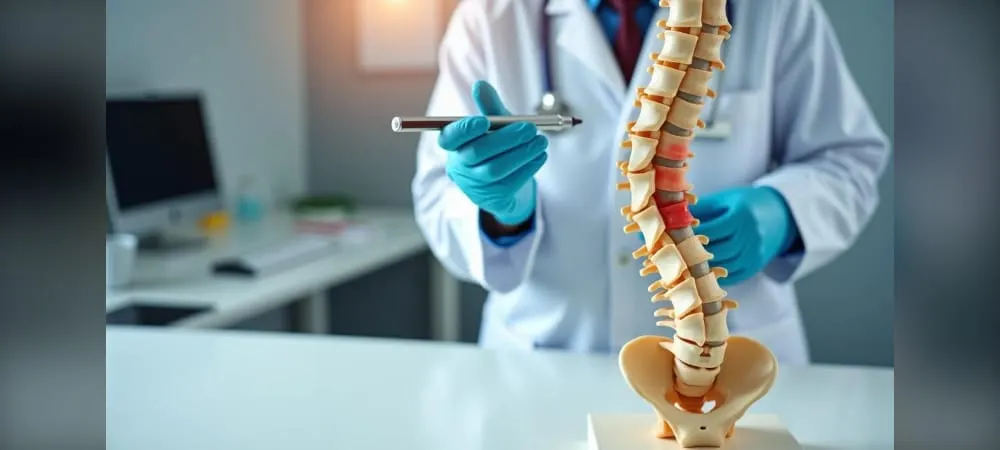
Spondylodiscitis is a serious and complex infectious disease affecting your spine. Spinal infections account for approximately 2-7'sini of all spinal infections. As it progresses, it can lead to severe pain, restricted mobility, and neurological issues. Early diagnosis is of vital importance to prevent the progression of the disease.
In this article, we will discuss in detail topics such as what spondylodiscitis is, what the symptoms of spondylodiscitis are, the causes of spondylodiscitis, how spondylodiscitis is diagnosed, and treatment options for spondylodiscitis. We will also answer your frequently asked questions about spinal infection.
What is Spondylodiscitis (Spinal Infection)?
Definition of Spondylodiscitis
Spondylodiscitis is an infectious disease affecting one or more of your vertebral bones and the discs between adjacent vertebrae. It occurs when microorganisms infect your vertebral bones, the discs between the vertebrae, or both together. It is usually bacterial in origin and constitutes the most common form of spinal infections.
In recent years, its incidence has been gradually increasing due to the aging population, the rise in immunosuppressive therapies, and the increasing number of spinal surgeries. It is a condition that progresses silently but can lead to severe consequences. It should not be dismissed as a simple cause of back pain and must be evaluated holistically.
How the Disease Develops
Infection often does not spread to your spine directly from the outside. It usually reaches your spine via the hematogenous route, meaning through the bloodstream. Bacteria originating from any focus of infection in your body can be carried to your spine via the blood.
Infections in different regions, such as urinary tract infections, respiratory tract infections, dental infections, and skin infections, can spread to your spine. Therefore, you may sometimes not remember a distinct history of infection other than lower back or back pain.
More rarely, it can also develop via direct inoculation after spinal surgery or spread from adjacent tissue. Especially if you have had previous surgeries involving the application of metallic screws, your risk of infection increases because microorganisms find an easier place to attach.
Affected Regions in the Spine
The lumbar region is most frequently affected, followed by the thoracic and cervical regions. The infection can involve different structures in your spine:
Disc tissue: Pain and restricted mobility can occur due to the development of infection in the disc space.
Vertebral bones: When the infection spreads to the bone, there is a risk of structural weakening and collapse. It can exert pressure on your vertebrae and cause compression fractures.
Surrounding soft tissues: The development of an abscess can lead to pressure on your nerves. As this process progresses, your spine ceases to be merely a source of pain and transforms into a risky condition regarding your nervous system and spinal stability.
The infection can compress your spinal cord and lead to certain functional issues. In cases where it directly affects your spinal cord, paralysis can develop.
Causes and Risk Factors of Spondylodiscitis
Bacterial Agents
Bacterial infections are responsible for the vast majority of spondylodiscitis causes. The most frequently encountered bacterium is Staphylococcus aureus, which is held responsible for 40-60% of cases. This bacterium is normally found on your skin, but under appropriate conditions, it can mix into your bloodstream and reach your spine.
Among Gram-negative bacteria, E. coli, Klebsiella, and Pseudomonas species are frequently seen, especially in urinary tract-related infections. Streptococcus species mostly originate from dental infections. In developing countries, the tuberculosis bacterium (Mycobacterium tuberculosis) remains an important cause of spondylodiscitis. Furthermore, if you consume raw milk and dairy products or have close contact with animals, you carry the risk of infection related to the Brucella bacterium.
Fungal Agents
Fungal infections are rarer compared to bacteria. However, if your immune system is weakened, you remain vulnerable to such infections. Candida and Aspergillus are the most commonly encountered fungal types.
Your probability of a fungal infection increases following long-term antibiotic use or if you are receiving immunosuppressive therapy. In this case, the natural balance of bacteria in your body is disrupted, and fungi find the opportunity to multiply.
Conditions That Weaken the Immune System
Your immune system is your primary line of defense against infections. If you have diabetes, your risk of infection increases 2-3 times. Diabetes prevents your immune cells from functioning properly.
If you are receiving cancer treatment, using medications after an organ transplant, or have an HIV infection, your immune system is severely suppressed. Chemotherapy and organ transplant medications deliberately lower your immunity, leaving the door open to infections.
Intravenous substance use is an important risk factor in the young age group. Shared needles cause bacteria to enter your bloodstream directly. Similarly, long-term intravenous catheter use also creates a gateway for infection.
Advanced Age and Chronic Diseases
If you are over 50 years old, the risk increases significantly. With age, your immune system weakens, and your resistance to infections decreases.
If you have chronic kidney failure or are undergoing dialysis treatment, vascular access routes provide a suitable environment for infection. Liver cirrhosis and alcoholism also negatively affect your immune functions.
If you have previously undergone spinal surgery, your postoperative infection risk is between 1-4%. This rate increases even further, especially if materials such as screws and rods were used, if you underwent a long surgical duration, or if you had revision surgery. Obesity and poor nutritional status are also among the factors that increase the risk of infection.
What Are the Symptoms of Spondylodiscitis?
Spondylodiscitis symptoms begin insidiously, which causes a delay in diagnosis. The time elapsed from the onset of symptoms to the correct diagnosis averages 2-6 months. Pain generally takes first place. Back or lower back pain is seen in 85-95% of cases.
Back and Lower Back Pain
The most frequent and earliest symptom is continuous, deep, and throbbing pain. This pain is different from mechanical pain. It does not resolve with rest and increases over time. It exhibits a character that increases with movement but also continues during rest.
Night pain is prominent and can wake you from sleep. It intensifies especially at night. In cases with a known history of cancer or infection risks such as diabetes or organ transplant, spinal pain must definitely be taken seriously. In case of pain lasting longer than 3 weeks and increasing, investigation is definitely carried out.
The pain is usually localized in the infected area. There is tenderness in the lower back region. When pressed or lightly tapped, you feel extreme tenderness in that area. It can be confused with a herniated disc or degenerative diseases.
Fever and General Feeling of Malaise
Elevated fever is seen in 35-60% of cases. However, it may not be seen in every patient. It usually manifests as a mild fever and night sweats rather than a high fever. Sweating, loss of appetite, weight loss, and general fatigue may accompany it.
You experience fatigue and a feeling of early tiredness. A general feeling of illness and loss of energy occurs. Even if you do not have another known problem, these symptoms can continue for a long time. Unexplained weight loss may be observed.
Restricted Mobility and Muscle Spasm
Muscle spasm and tenderness are prominent around the infected area. There is significant restriction in your spinal movements. You experience limitation in daily activities and difficulty in moving.
A significant decrease in spinal movements and a feeling of stiffness occur. You experience difficulty while performing your normal activities. You generally adopt a posture that protects the painful area. In infections that occur postoperatively, there may be swelling, redness, and discharge at the wound site.
Neurological Symptoms
As the infection progresses, nerve structures are affected, and neurological symptoms such as numbness and loss of strength are added to the clinical picture. You may feel numbness in your arms and legs, loss of sensation, and weakness in muscle strength. These findings set in very insidiously in some patients.
In advanced cases, pain radiating to the legs or weakness appears. In the event of the infection spreading to the epidural space or forming an abscess, nerve compression develops. Weakness in the legs, symptoms of nerve compression, and in advanced cases, bladder-bowel dysfunctions can be observed. Neurological involvement constitutes an indication for emergency surgery. Another symptom that must be taken seriously is partial or complete paralysis.
How Is Spondylodiscitis Diagnosed?
A systematic evaluation process is required to reach a correct diagnosis. Since the symptoms of the disease can be confused with other spinal problems, a careful examination must be performed.
Physical Examination and Medical History
Your doctor first listens to your complaints and evaluates your medical history in detail. Questions are asked about when your symptoms started, the character of the pain, and conditions carrying infection risks. Surgeries you have undergone, your chronic diseases, and the medications you use provide important clues in the diagnostic process.
During the physical examination, tenderness in your lower back region is checked. Your spinal movements are evaluated, and it is checked whether there is a muscle spasm. In advanced cases, a neurological examination is performed to investigate loss of strength, sensory changes, and reflex disorders in your legs.
Imaging Methods (MRI, CT, X-ray)
Imaging tests are applied to detect physical changes in your spine. Direct X-ray is generally the first method applied, but it may appear completely normal in the early stages of the disease. It can take weeks for findings to appear.
Magnetic resonance imaging is the gold standard in the diagnosis of spondylodiscitis. MRI imaging shows 96% sensitivity and 92% specificity. MRI taken with contrast material shows infection, inflammation in the vertebra and disc, and whether there is an abscess in the spinal canal at a very early stage. Signal reduction in vertebral bodies on T1-weighted images and signal increase on T2-weighted images are typical findings.
Computed tomography is effective in evaluating infection-related bone destruction. It is also used as a guide for biopsy procedures.
Laboratory Tests
Blood tests are used to determine infection indicators. The sedimentation rate is elevated in 77-90% of cases. C-reactive protein increases with 95-100% sensitivity. These values are also used to monitor treatment response.
Blood cultures help detect the causative microorganism. However, the positivity rate of blood cultures is between 40-60%. They must definitely be taken before antibiotics are started.
Special tests are applied in cases suspected of Brucella and tuberculosis. The tuberculosis skin test and specific serological tests assist in diagnosis.
Biopsy and Culture Tests
Microbiological diagnosis forms the basis of treatment planning. A CT-guided percutaneous needle biopsy is performed to obtain a tissue sample and culture. Samples taken directly from the infection area provide the most reliable results.
The sensitivity of biopsy cultures is between 50-70%. Determining the causative agent is critical in terms of arranging targeted antibiotic therapy. Prior antibiotic use can significantly reduce culture yield. Therefore, it is recommended to wait at least a 4-day antibiotic-free interval if possible.
Histopathological examination is valuable in differentiating granulomatous infections. The presence of caseating granulomas in the tissue sample strengthens the diagnosis of tuberculosis.
Spondylodiscitis Treatment and Surgical Options
The treatment plan is determined according to the type and prevalence of the infection and your general health status. The main goal is to bring the infection under control, reduce pain, and preserve the stability of your spine.
Antibiotic and Antifungal Therapy
Antibiotic therapy is the cornerstone of spondylodiscitis treatment. The duration of treatment generally varies between 6-12 weeks. Intravenous antibiotics are administered for the first 2-4 weeks, after which it is switched to oral treatment based on your clinical and laboratory response.
An antibiotic appropriate for the causative microorganism is selected according to culture results. If the causative agent cannot be determined, empirical treatment with broad-spectrum antibiotics is started. Antibiotics covering the Staphylococcus aureus bacterium are particularly preferred.
Your treatment response is evaluated with regular follow-ups of CRP values. When the CRP shows a downward trend, it is understood that the treatment is effective. Treatment is applied for at least 3 months in Brucella infection and at least 6-9 months in tuberculous spondylodiscitis.
Antifungal medications are used in fungal infections. Treatment is carried out with voriconazole or liposomal amphotericin B, and the duration can reach 6-12 months.
Pain Management and Rest
Pain relievers and anti-inflammatory medications alleviate your severe pain. In some cases, you may need stronger pain relievers.
A corset or support is applied for the stabilization of your infected spinal region. Corset use can last 8-12 weeks. Rest and activity restriction support the healing of the infected area. However, long-term bed rest is not recommended due to muscle weakness and thromboembolic risks.
Physiotherapy and Rehabilitation
Physiotherapy is applied to regain your mobility capacity, increase your muscle strength, and ensure your spinal stability. This treatment is necessary to prevent muscle weakness, especially after long-term rest. It supports your return to daily living activities and accelerates your rehabilitation process.
Conditions Requiring Surgical Intervention
Surgical treatment is required in approximately 10-20% of patients. Surgical indications are:
Progressive or severe neurological deficit: Nerve compression due to epidural abscess or spinal instability
Unresponsiveness to antibiotic therapy: Inability to control the infection despite appropriate treatment
Spinal instability: Significant destruction and loss of stability in the vertebra
Severe deformity: Development of kyphosis or risk of progression
Large abscess formation: Epidural or paravertebral abscesses that need to be drained
The surgical approach is planned according to the localization of the infection. Cleaning of the infected tissue, abscess drainage, canal decompression, and stabilization with a screw-rod system when necessary are applied.
Treatment Process and Recovery
The duration of treatment can be long. Postoperative antibiotic therapy administered in the hospital continues intravenously or orally for a long time. Your doctor regularly monitors your sedimentation and CRP values at regular intervals. Treatment is terminated with the resolution of your clinical complaints and the return of your blood values to normal.
With early and appropriate treatment, the mortality rate has been reduced to below 5%. The vast majority of patients show complete recovery, but chronic pain and spinal stiffness may remain permanent in some cases.
Frequently Asked Questions
You found answers to the questions most frequently wondered about by patients regarding the disease. This information will help clarify what is on your mind throughout your treatment process.
How long does spondylodiscitis treatment take?
The duration of treatment varies according to the microorganism causing the infection and the severity of the disease. Antibiotic therapy usually lasts 6-12 weeks. It is administered intravenously in the hospital for the first 2-4 weeks, after which you continue with medications taken orally at home.
The total recovery process can vary between 3-6 months. In some cases, the treatment duration can be between 3 weeks and 3 months. The vertebral bone and disc tissue are areas with poor blood circulation, therefore it takes time for antibiotics to reach here in sufficient quantities. Discontinuing treatment early can lead to a recurrence of the infection.
Is spinal infection contagious?
No, spondylodiscitis is not a directly contagious disease. Transmission from person to person is out of the question. The infection usually reaches your spine via the blood from an infection focus in another region of your body.
Urinary tract, lung, dental, or skin infections can be carried to your spine via your bloodstream. More rarely, it develops in the form of direct inoculation during spinal surgery or spread from an adjacent tissue infection. This risk increases especially if you have a condition that weakens your immune system.
Does spondylodiscitis require surgery?
Surgery is not required in most cases. 70-80% of patients recover completely with long-term antibiotic therapy alone. 80-90% of patients improve without surgical intervention with antibiotic therapy and supportive care.
However, surgery becomes mandatory in certain special cases. Surgery may be required if no response is obtained from antibiotic therapy, if the disease progresses, if nerve compression develops, or if a fracture occurs in the spine. Furthermore, surgical intervention also becomes inevitable in cases of large abscess formation, spinal instability, and severe structural deterioration.
What happens if it is not treated?
Untreated or delayed spondylodiscitis leads to serious complications. As the infection progresses, your vertebral bones weaken, and deformities and nerve damage can develop in the spine. Permanent neurological losses, chronic pain, and loss of stability in the spine occur.
Infections that are not well treated can cause progressive destruction in the spine, creating deformities reaching as far as kyphosis. Epidural abscess can cause spinal cord compression and pose a life-threatening danger. Sepsis, meaning the spread of the infection into the blood, can develop a life-threatening systemic response.
Does spinal infection recur?
The relapse rate is between 5-10% in patients who receive antibiotic therapy for an appropriate duration and dose. However, the probability of recurrence is higher if your risk factors continue.
The risk of relapse increases in cases of uncontrolled diabetes, immunosuppression, or intravenous drug use. Therefore, regular follow-up after treatment and the control of risk factors carry great importance. The recurrence of pain, unexplained fever, night sweats, or weight loss after the end of treatment can be symptoms of relapse.
In Summary, Spondylodiscitis
Although spondylodiscitis is a serious spinal infection, it can be successfully treated when diagnosed early. The vast majority of patients recover completely with long-term antibiotic therapy and do not require surgery. If you have lower back pain lasting longer than 3 weeks, night pain, and unexplained fever, definitely consult your doctor.
The most important factor at this point is to be patient. The treatment process can be long, but regular medication use and attending follow-ups ensure your full recovery. Completing the treatment duration recommended by your doctor is of vital importance to prevent the recurrence of the infection.
Start with the right assessment for What is Spondylodiscitis (Spinal Infection)? What Are Its Symptoms? How Is It Diagnosed and Treated?
Share your symptoms with our specialist physicians; let us determine the right diagnosis and treatment plan together.
Warning
If your symptoms started suddenly, are progressing rapidly, or significantly restrict your daily life, consult a physician without delay.
Plan your What is Spondylodiscitis (Spinal Infection)? What Are Its Symptoms? How Is It Diagnosed and Treated? journey with our specialists.
Fill in the form or book an appointment to learn about treatment options, the process and preparation.