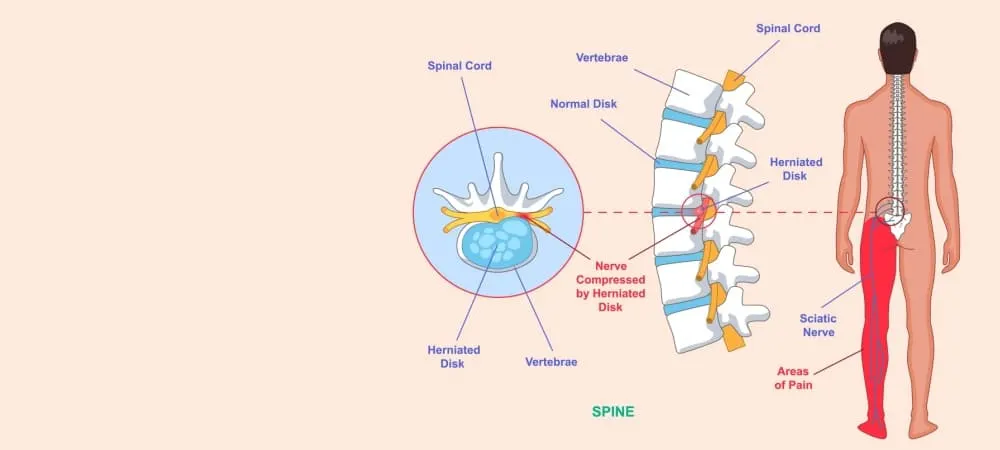
What is Sciatica? Symptoms and Treatment
Sciatica is the name given to a common painful condition that occurs due to damage or irritation of the sciatic nerve. Along with the pain, symptoms of tingling and numbness in the back or hip region may also be observed. While the pain is tolerable in some cases, the condition may have progressed to the extent that some individuals cannot perform their daily activities.
What is Sciatica?
Sciatica is the nerve network known in medical language as the “nervus ischiadicus”, which starts from the hip and extends down to the legs. This nerve is the longest and thickest nerve network in the body. This nerve is a bundle originating from 5 different nerve roots branching off from the spinal cord. The sciatic nerve descends symmetrically down both sides of the body. Individuals with sciatica experience intense pain in the areas where these nerves pass. In this condition, lower back pain, hip pain, and numbness in the legs are frequently seen. In fact, in some cases, it can reach down to the toes.
Conditions that can be cited as causes of sciatica include a herniated disc or an abnormally enlarged spinal bone compressing the nerve roots. Symptoms such as inflammation, pain, and numbness are observed in the affected areas. Although sciatica causes quite severe pain, sciatica pain associated with a herniated disc usually heals within a few weeks or months with appropriate treatment. In individuals with severe sciatica pain, surgical intervention is considered in cases where non-surgical methods are insufficient.
What are the Symptoms of Sciatica Pain?
The symptoms of sciatica pain vary depending on the cause of the condition, the progression level of nerve damage, and the individual's pain threshold. Sciatica pain can occur in any area where the sciatic nerve passes. Generally, the areas where the pain is prominently felt include between the lower back and hip, and around the thigh and calf. While the pain sometimes proceeds at a very mild level, at other times it can turn into a burning and sharp sensation. In some cases, it can cause a stinging sensation similar to an electric shock. The pain often worsens in situations such as coughing, sneezing, or sitting in the same position for a long time. Although the sciatic nerve passes symmetrically on both sides of the body, the pain is usually felt on one side. In some people, symptoms such as severe numbness and tingling in the legs and feet, muscle weakness, and decreased reflexes may be observed.
How is Sciatica Diagnosed?
Both physical examination and imaging methods are utilized in the diagnosis of sciatica. During the physical examination, the patient's muscle strength and the sharpness of their reflexes are checked by the doctor. Methods utilized in diagnosis other than physical examination include the following:
X-ray: With the aid of an X-ray, the regions where the nerve roots emerge from the spine are examined and mechanical changes are revealed.
Magnetic Resonance Imaging (MRI): MRI is a diagnostic method in which various parts of the body are imaged using radio waves. With the detailed image obtained of the back region, herniated discs and pinched nerves are detected.
CT Scan: Also known as computed tomography, this application is a diagnostic method performed using X-rays. The radiographic contrast agent given to the body stains the tissues, allowing a detailed image of the target organ to be obtained. A detailed image of the spinal cord and surrounding nerves is obtained.
Electromyography (EMG): This is a method where the responses of muscles and nerve cells to electrical signals are measured. With this diagnostic method, the extent of nerve damage is measured.
What are the Sciatica Treatment Methods?
The main goal in sciatica treatment is to prevent movement limitation by reducing pain and numbness. Surgical and non-surgical methods can be preferred in treatment. The methods used in the treatment of sciatica include the following:
Medical treatment: Medical treatment provides symptomatic relief of pain. Anti-inflammatory drugs, corticosteroids, antidepressants, and opioids are utilized in relieving sciatica pain.
Physical therapy: Exercises that can prevent nerve compression are recommended to the patient by physical therapy specialists. Regular exercises are recommended with physical therapy for posture correction and improvement of movement range.
Steroid injection: Corticosteroids are a group of drug substances that function in eliminating both pain and inflammatory conditions. Applying a steroid injection around the nerve root where the pain is located helps alleviate symptoms. However, this treatment method cannot be applied whenever desired. A limited number of injections is recommended within a year.
Alternative therapy methods: Massage therapies applied by chiropractic specialists can help relax painful areas and reduce symptoms.
Surgical Intervention: In cases where sciatica cannot be controlled with medical treatment methods or physical therapy, surgical intervention is considered as a last resort. The first application in surgical intervention is discectomy. In discectomy, the parts of the herniated disc pressing on the nerve root are attempted to be removed surgically. With the disappearance of pressure and crushing on the nerve root, the pain eases. Another surgical method is laminectomy. With laminectomy, the back part of the spine called the lamina is removed under general anesthesia. Thus, the pain decreases as the pressure on the nerve is lifted.
When is Surgical Intervention Necessary for Sciatica Pain?
Surgical intervention is not recommended immediately for sciatica pain. Healthcare providers do not resort to surgical treatment methods in the first place unless there is advanced nerve damage or sciatica pain prevents performing daily tasks. If there is sciatica pain to an extent that affects daily life and prevents continuing the normal work routine, and the response to non-surgical treatment methods applied between 6 and 8 weeks is insufficient, surgical intervention is recommended.
What are Non-Surgical Treatment Methods?
In the presence of mild nerve damage and tolerable nerve pain, non-surgical treatment methods are utilized. These methods include the following:
Cold compress: Applying cold to the area where the pain is located helps reduce pain and swelling in the early stages when sciatica pain starts. Cold application can be done for twenty minutes 1 or 2 times a day.
Hot compress: While cold application is beneficial in the first days of pain onset, a transition to hot application can be made in following days. For a hot compress, hot application can be made to the painful area for twenty minutes several times a day.
Doing stretching and exercise movements: Applying the correct exercise movements under the guidance of specialized physiotherapists or physical therapy specialists provides significant benefits in relieving pain.
What is the Recovery Process for Sciatica Pain Like?
The recovery process of sciatica pain varies depending on the treatment method applied, the severity of the pain and other symptoms, and the underlying cause of the sciatica pain. Mild sciatica pain can usually heal on its own within a period of 4 to 6 weeks without needing professional interventions. However, in advanced cases where non-pain symptoms are also present, professional support is definitely required, and spending a long waiting period leads to a decrease in the response given to treatment.
Frequently Asked Questions About Sciatica
Sciatica is a neural problem whose prevalence is increasing gradually. Although sciatica is a condition that can manifest in almost anyone, the probability of manifesting is higher in certain individuals. These individuals include obese people, diabetes patients, tobacco product users, and those doing physically demanding and heavy work. The main reason for sciatica pain is compressions in the roots of the nerve bundles forming the sciatic nerve. These compressions are caused by disc herniations in the spine, bone spurs, and tumoral formations. Preventing sciatica pain is not always possible, but certain points to consider can reduce the formation of pain. These points include:
Regular exercise and an active life: Doing exercises that will strengthen the back and lower back region and engaging in activities that will strengthen the muscles in that area can help prevent possible nerve compressions.
Not standing for a long time: Standing for a long time can trigger sciatica pain as it leads to increased pressure on the nerves. Therefore, in situations where standing for a long time is necessary, the feet should be rested at regular intervals.
Sciatica pain is a chronic condition and has a recurring characteristic. Although mild sciatica pain can heal on its own without requiring any treatment, the pain can recur when situations such as standing for a long time or sitting in a wrong position occur. The department that should be consulted first for sciatica pain is orthopedics and traumatology. The orthopedic specialist may make a referral to a physical therapy specialist when deemed necessary after the orthopedic treatment applied. Sciatica is easily distinguished from other diseases by sharp, widely spreading severe pain that occasionally causes numbness and tingling. Since sciatica pain manifests due to nerve compression, nerve compression must be treated as quickly as possible. If the damage and pressure on the nerve are not treated, situations such as gradually increasing pain, muscle weakness and loss of strength in the legs, permanent nerve damage, and loss of function in the legs can be encountered. In order not to face these irreversible situations, sciatica pain must be treated as soon as possible. Sciatica can be a serious health problem that negatively affects your quality of life. Successful results can often be achieved with early diagnosis and correct treatment methods.
As Hisar Hospital, we are by your side in the diagnosis and treatment of sciatica with our experienced orthopedics and traumatology specialists. If you have complaints of pain, numbness, or tingling in your back, hip, or legs, you can contact us without wasting time.
Get an Online Appointment Now
Explore Our Department of Orthopedics and Traumatology
Start with the right assessment for What is Sciatica? Symptoms, Causes and Treatment Methods
Share your symptoms with our specialist physicians; let us determine the right diagnosis and treatment plan together.
Warning
If your symptoms started suddenly, are progressing rapidly, or significantly restrict your daily life, consult a physician without delay.
Plan your What is Sciatica? Symptoms, Causes and Treatment Methods journey with our specialists.
Fill in the form or book an appointment to learn about treatment options, the process and preparation.